










@2026 – All Right Reserved. TheDefenseWatch.com
- Home
- Defense Systems
- Missiles & Precision Weapons
- UGM-133 Trident II D5 Missile
UGM-133 Trident II D5 Missile
Defense Systems Full Specifications
1. General Information
| Name / Designation | UGM-133A Trident II (D5 / D5LE) |
| Type / Role | Submarine-Launched Ballistic Missile (SLBM), Strategic Nuclear Deterrence |
| Country of Origin | United States |
| Manufacturer | Lockheed Martin Space |
| Service Entry / Year Introduced | 1990 |
| Operational Status | Active (life-extended) |
2. Performance & Range
| Range | >4,000 nmi (7,360 km) full load; up to ~6,220 nmi (11,520 km) reduced load; estimates to 12,000 km |
| Speed | Terminal ~Mach 24 (~18,030 mph / 8,060 m/s) |
| Ceiling / Altitude Limit | Sub-orbital ballistic trajectory |
| Accuracy (CEP) | ~90–100 m |
| Warhead Type | Nuclear (thermonuclear MIRV) |
3. Guidance & Targeting
| Guidance System | Mk 6 astro-inertial (inertial + stellar reference; GPS updates possible in testing) |
| Targeting Mode | Autonomous inertial with stellar update |
| Launch Platform Compatibility | Ballistic missile submarines (SSBNs) |
| Seeker Type | Astro-inertial navigation (no terminal seeker on RV in standard config) |
4. Physical Characteristics
| Length | 13.41–13.58 m (44 ft 6.6 in) |
| Diameter | 2.11 m (6 ft 11 in / 83 in) |
| Wingspan | N/A (ballistic missile) |
| Launch Weight | ~58,500–59,090 kg (130,000 lb) |
| Propulsion | Three-stage solid-propellant rocket |
5. Warhead & Payload
| Warhead Weight | Payload up to ~2,800 kg |
| Explosive Type | Thermonuclear (W76 ~90–100 kt; W88 475 kt) |
| Detonation Mechanism | Nuclear fuzing systems |
| Payload Options | 1–8 (or up to 12 lighter) MIRVs; low-yield W76-2 option |
6. Operational Use & Capabilities
| Operational Range Type | Long / Intercontinental |
| Deployment Platform | Submarine (SSBN) |
| Target Types | Strategic targets, hardened facilities, area targets |
| Combat Proven | No (deterrence / test-proven only) |
| Users / Operators | United States, United Kingdom |
PROS
- Extremely long intercontinental range from submerged launch platforms
- High accuracy (CEP ~90–100 m) enabling strikes on hardened targets
- MIRV capability for multiple independent warheads
- Proven reliability with extensive successful flight tests
- Survivable sea-based second-strike contribution to nuclear triad
CONS
- High unit and program sustainment costs
- Nuclear-only strategic role limits conventional flexibility
- Dependent on specialized ballistic missile submarines
- Treaty constraints on warhead numbers and configurations
- Aging system requiring continuous life-extension investments
UGM-133 Trident II D5 SLBM Missile
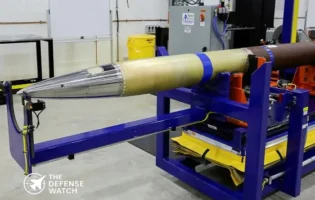
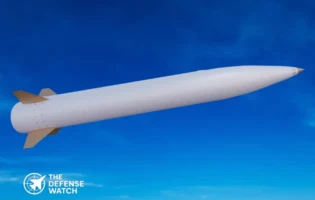
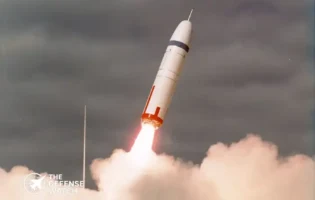
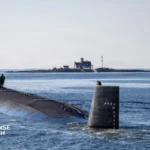
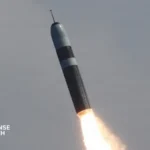
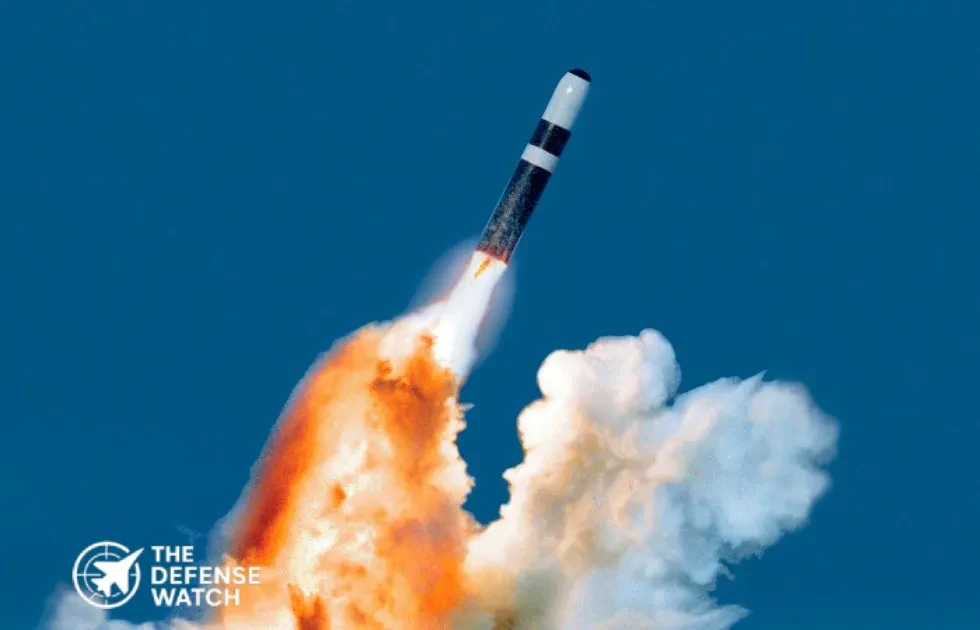
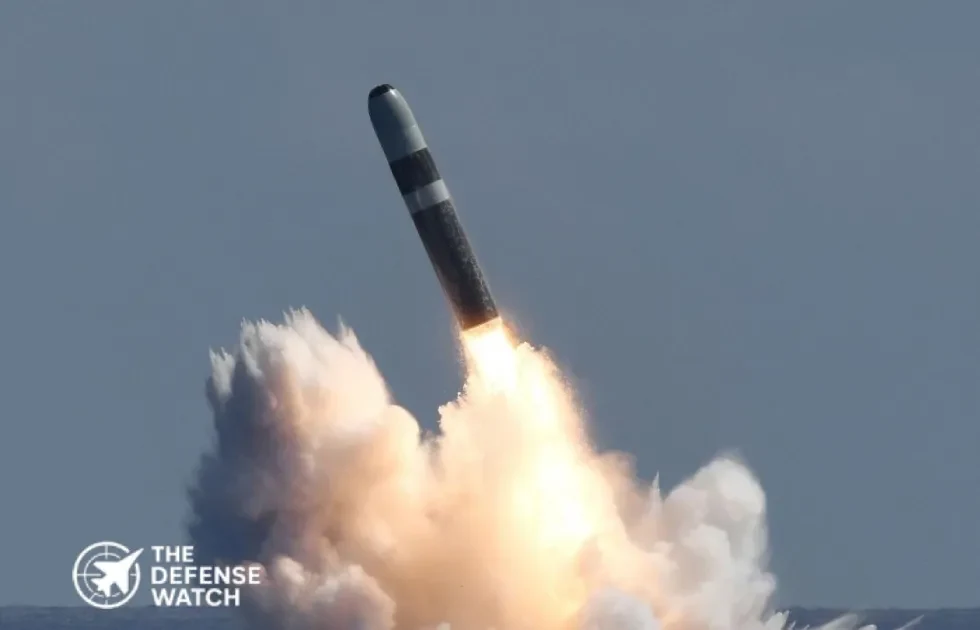
The UGM-133 Trident II, also known as the Trident D5, stands as a cornerstone of U.S. strategic nuclear deterrence. This three-stage, solid-propellant submarine-launched ballistic missile (SLBM) provides a survivable second-strike capability from Ohio-class and future Columbia-class ballistic missile submarines.
Overview/Introduction
Introduced into service in 1990, the Trident II D5 delivers intercontinental reach with high accuracy against hardened targets. It forms the sea-based leg of the U.S. nuclear triad and is also operated by the United Kingdom under the Polaris Sales Agreement on Vanguard-class (and future Dreadnought-class) submarines. The system emphasizes reliability, with over 160 successful test launches recorded since design completion.
Manufacturer
Lockheed Martin Space (formerly Lockheed Missiles and Space Company) in Sunnyvale, California, serves as the prime contractor. Propulsion stages involve contributions historically from Hercules/Thiokol and United Technologies; current motor production is consolidated under Northrop Grumman in some accounts. The missile has undergone life-extension programs (D5LE) to maintain operational status into the 2040s and beyond.
Speed and Range
The Trident II reaches terminal speeds of approximately Mach 24 (about 18,030 mph or 8,060 m/s). Official range figures cite greater than 4,000 nautical miles (approximately 7,360 km) with a full payload of eight Mk-5/W88 warheads. Reduced payload configurations extend range to roughly 6,220 nautical miles (about 11,520 km). Maximum published estimates reach up to 12,000 km under lighter loads.
Cost/Price
The U.S. Navy lists a unit cost of $30.9 million in 1987 dollars (approximately $87–88 million in recent inflation-adjusted terms). This figure excludes warheads. Sustainment, life-extension, and production contracts continue, reflecting ongoing investment in the strategic weapons system.
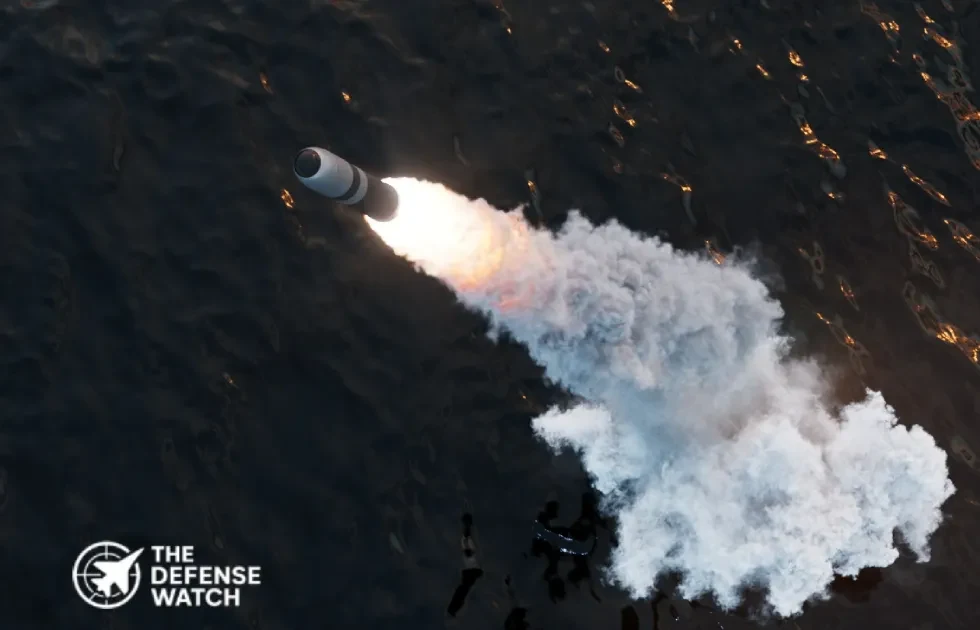
Guidance relies on the Mk 6 astro-inertial system (inertial with stellar updates), achieving a reported circular error probable (CEP) of about 90–100 meters. The missile carries multiple independently targetable reentry vehicles (MIRVs) with W76 (approximately 90–100 kt) or W88 (475 kt) warheads, subject to treaty limits (typically up to eight). It launches from submerged submarines via gas-generator ejection before first-stage ignition.
The Trident II remains a key element of U.S. and UK strategic forces, supporting nuclear deterrence through survivability, accuracy, and range.
Disclaimer Note
The information provided on TheDefenseWatch.com is for general informational purposes only. While we strive to ensure the accuracy, completeness, and timeliness of our content regarding defense and aerospace products, technologies, and specifications, we cannot guarantee that all information is 100% accurate or up-to-date due to the evolving nature of military technology and classified data.TheDefenseWatch.com does not warrant the reliability, suitability, or availability of the information for any specific purpose. Users are advised to consult official sources, such as manufacturers, government publications, or defense agencies, for precise and verified data before making decisions based on our content.We are not affiliated with any defense manufacturers, governments, or military organizations mentioned. Opinions, reviews, and ratings reflect expert analysis but are subjective and should not be considered endorsements. TheDefenseWatch.com is not responsible for any errors, omissions, or consequences arising from the use of this website’s content.External links are provided for convenience and do not imply endorsement. TheDefenseWatch.com reserves the right to update or modify content without prior notice. By using this website, you agree to our Privacy & Cookies Policy.
New Arrivals
Popular Comparisons
-
 Tejas Fighter Jet vs F-16 Fighting Falcon: Capability Compared
View Comparison →
Tejas Fighter Jet vs F-16 Fighting Falcon: Capability Compared
View Comparison → -
Rafale Fighter Jet vs F-16 Fighting Falcon : Which Fighter Has the Edge?
View Comparison →
-
Su-57 Fighter Jet vs J-20 Fighter Jet: Stealth and Air Combat Compared
View Comparison →
-
Mirage 2000 vs Tejas Mk1A: Legacy Combat Power vs Indigenous Modernization
View Comparison →
-
Rafale Fighter Jet vs F-22 Raptor: Which Air Dominance Fighter Has the Edge?
View Comparison →
-
Tejas Fighter Jet vs. Rafale Fighter Jet: India’s Indigenous Fighter Meets France’s Proven Multirole Combat Aircraft
View Comparison →
-
F-22 Raptor vs. F-35 Joint Strike Fighter: Which Fifth Generation Fighter Has the Edge?
View Comparison →
-
F-35A vs. F-22 Raptor: Which U.S. Stealth Fighter Dominates Modern Air Combat?
View Comparison →
-
AGM-114 Hellfire vs. AGM-179 JAGM: Which U.S. Precision Missile Is Better?
View Comparison →
-
Patriot (PAC-3) vs. THAAD: Complete Missile Defense System Comparison, Capabilities, Range, and Strategic Roles
View Comparison →
- Bell Boeing Wins $19.8M V-22 Tactical Software Support Contract

- Honeywell Wins $53.9M Navy Contract for WSN-7 Gyro Components
- Lockheed Martin Wins $76.6M Trident II D5LE2 Development Contract
- Lockheed Martin Gets $871.2M F-35 Site Support Contract Increase
- Pete Hegseth Texas Enlistment Ceremony: Hegseth Tells Military Families, We Have Their Back
- U.S., Denmark and Greenland Reach Security Agreement to Expand American Military Presence
- SpaceX Wins Three More NASA Crew Missions in $946 Million ISS Contract
- U.S. Clears Potential $24.3 Billion F-35 Sale to Saudi Arabia
- Type 99B Tank Training Shows China’s Shift Toward Networked Armored Warfare
- JRC Integrated Systems Gets $47.4M SLCM-N Support Contract