








@2026 – All Right Reserved. TheDefenseWatch.com
- Home
- Catalog
- Compare
- BGM-109 Tomahawk vs. AGM-158 JASSM: Which Long Range Precision Strike Missile Offers Greater Strategic Advantage?
BGM-109 Tomahawk vs. AGM-158 JASSM: Which Long Range Precision Strike Missile Offers Greater Strategic Advantage?
BGM-109 Tomahawk vs. AGM-158 JASSM: High-Level Comparison
1. Executive Summary / Tactical Overview
The BGM-109 Tomahawk and AGM-158 Joint Air-to-Surface Standoff Missile (JASSM) are among the United States’ most capable long range precision strike weapons, but they serve different operational purposes. The Tomahawk is primarily a sea launched cruise missile designed for deep land attack over very long distances, while the JASSM is an air launched stealth cruise missile optimized for penetrating heavily defended airspace.
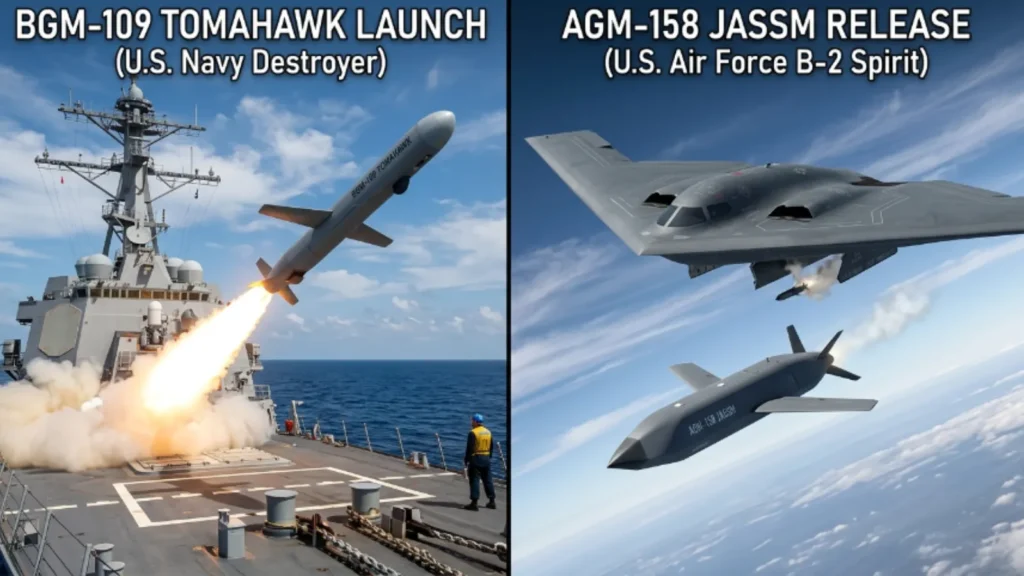
Both missiles deliver precision conventional strikes, yet their launch methods, survivability, and employment concepts make them complementary rather than direct replacements.
2. Technical Specifications Table
| Metric | BGM-109 Tomahawk | AGM-158 JASSM |
|---|---|---|
| Manufacturer | Raytheon (RTX) | Lockheed Martin |
| Type | Long Range Cruise Missile | Stealth Air Launched Cruise Missile |
| Launch Platform | Surface Ships, Submarines | Fighter Aircraft, Bombers |
| Length | 5.56 m | 4.27 m |
| Weight | ~1,300 kg | ~1,020 kg |
| Warhead | 450 kg High Explosive | 450 kg Penetrating Blast Fragmentation |
| Range | 1,600 km or more (latest variants) | Approximately 370 km (Baseline) |
| Extended Range Variant | N/A | JASSM-ER: Over 925 km |
| Speed | High Subsonic (Mach 0.74) | High Subsonic (Mach 0.7 to 0.9) |
| Guidance | INS, GPS, TERCOM, DSMAC | INS, GPS, Imaging Infrared Seeker |
| Stealth Design | Limited Radar Signature Reduction | Low Observable Stealth Airframe |
| Mission Type | Strategic Deep Strike | Penetrating Precision Strike |
| Operational Status | Active | Active |
3. Key Capability Pillars
Long Range Strike Capability
The Tomahawk excels in strategic deep strike missions launched from hundreds of miles offshore. Naval vessels can attack fixed land targets without entering hostile air defense zones.
The standard JASSM offers a shorter range but leverages the mobility of aircraft. The extended range JASSM-ER significantly increases strike distance, allowing aircraft to launch outside many enemy air defense envelopes.
Advantage: Tomahawk for maximum stand off range, JASSM-ER for flexible air launched operations.
Stealth & Survivability
The AGM-158 JASSM was specifically engineered with stealth shaping and radar absorbing materials, making it difficult for modern integrated air defense systems to detect and intercept.
The Tomahawk flies extremely low using terrain following navigation, reducing exposure to radar, but it lacks the same level of low observable shaping found on the JASSM.
Advantage: AGM-158 JASSM
Guidance & Precision
Tomahawk combines GPS, inertial navigation, Terrain Contour Matching (TERCOM), and Digital Scene Matching Area Correlation (DSMAC), allowing precise strikes over very long distances.
JASSM employs GPS, inertial navigation, and an imaging infrared seeker that identifies the target during the terminal phase, improving accuracy against hardened or defended targets.
Advantage: Slight edge to JASSM for terminal target discrimination.
Launch Flexibility
Tomahawk is launched vertically from destroyers, cruisers, and submarines, making it ideal for naval strike operations without relying on nearby airbases.
JASSM is carried by numerous aircraft including:
- F-35 Lightning II
- F-15E Strike Eagle
- F-16 Fighting Falcon
- B-1B Lancer
- B-2 Spirit
- B-52 Stratofortress
Aircraft can rapidly reposition and strike emerging targets across multiple theaters.
Advantage: JASSM for operational flexibility.
Payload & Target Set
Both missiles carry warheads weighing approximately 450 kilograms, enabling destruction of:
- Command centers
- Air defense sites
- Hardened bunkers
- Airfields
- Ammunition depots
- Infrastructure targets
The JASSM’s penetrating warhead is particularly effective against fortified structures.
Survivability Against Modern Air Defenses
Modern integrated air defense systems increasingly challenge conventional cruise missiles.
Tomahawk depends on:
- Low altitude terrain masking
- Route planning
- Long range launch
JASSM combines:
- Stealth shaping
- Passive guidance
- Reduced infrared signature
- Air launched flexibility
Against advanced systems, JASSM generally has a higher probability of penetrating defended airspace.
Advantage: AGM-158 JASSM
4. Strategic Verdict
The BGM-109 Tomahawk remains the premier naval land attack cruise missile, offering unmatched stand off range and enabling U.S. Navy surface ships and submarines to conduct precision strikes without exposing aircraft or crews to hostile air defenses. It is the preferred choice for opening phases of major conflicts and sustained maritime strike campaigns.
The AGM-158 JASSM is the superior option for penetrating contested airspace. Its stealth design, advanced guidance system, and compatibility with a broad range of U.S. and allied aircraft make it highly effective against high value targets protected by sophisticated air defense networks. The JASSM-ER further enhances this capability by extending launch distances while preserving survivability.
Overall, these missiles are designed to complement each other. The Tomahawk provides unmatched sea based strategic reach, while the JASSM delivers flexible, survivable, and highly accurate air launched precision strike capability in heavily defended environments.
| |
| Price | |
| Our Rating | |
| Manufacturer | Raytheon Technologies Lockheed Martin |
| Category | Missiles & Precision Weapons Missiles & Precision Weapons |
1. General Information
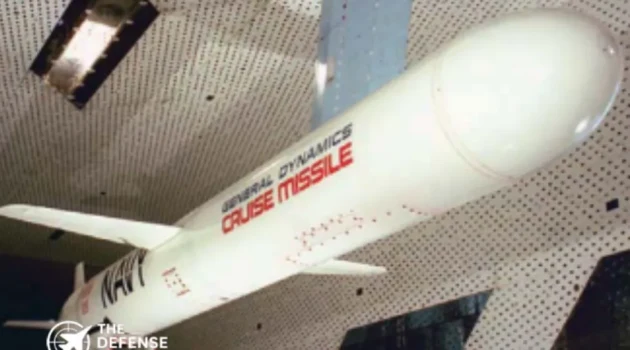
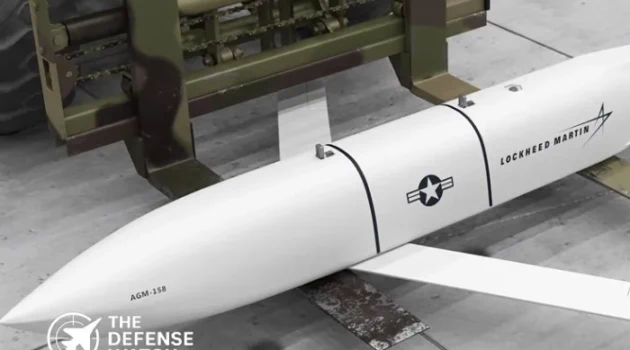
| Name / Designation | BGM-109 / RGM-109 / UGM-109 Tomahawk (TLAM) AGM-158 JASSM |
| Type / Role | Long-range subsonic cruise missile; land-attack and maritime strike Air-to-Surface Stealth Cruise Missile |
| Country of Origin | United States United States |
| Manufacturer | Raytheon (RTX); originally General Dynamics Lockheed Martin |
| Service Entry / Year Introduced | 1983 Early 2000s |
| Operational Status | Active (Block V current production/recertification) Active |
2. Performance & Range
| Range | ~1,600–1,700 km (Block IV/V conventional); up to ~2,500 km historical nuclear 370 km+ (Baseline) |
| Speed | Subsonic (~Mach 0.74 / 880–920 km/h) Subsonic |
| Ceiling / Altitude Limit | Low-level flight, typically 30–50 m AGL Low-altitude penetration profile |
| Accuracy (CEP) | Approximately 10 m or better with full guidance suite Precision strike with IIR guidance |
| Warhead Type | High-explosive unitary; multi-effects (Block Vb); earlier cluster (retired) Penetrating blast-fragmentation |
3. Guidance & Targeting
| Guidance System | GPS / INS / TERCOM / DSMAC; active radar (anti-ship variants) GPS/INS with IIR terminal seeker |
| Targeting Mode | Pre-planned with in-flight retargeting (Block IV/V); fire-and-forget elements Fire-and-Forget |
| Launch Platform Compatibility | Surface combatants (Mk 41 VLS), attack submarines Tactical Fighters and Strategic Bombers |
| Seeker Type | DSMAC optical correlator; multi-mode for Maritime Strike (Block Va) Imaging Infrared |
4. Physical Characteristics
| Length | 5.56 m (without booster); 6.25 m (with booster) Approx. 4.3 m |
| Diameter | 0.52 m Approx. 0.55 m |
| Wingspan | 2.67 m Approx. 2.7 m |
| Launch Weight | ~1,300–1,600 kg (with booster) Approx. 1,000 kg |
| Propulsion | Solid-fuel booster + Williams International turbofan Turbofan engine |
5. Warhead & Payload
| Warhead Weight | Approximately 450 kg class (unitary) Approx. 450 kg |
| Explosive Type | High-explosive unitary; Joint Multiple Effects Warhead System Penetrator warhead |
| Detonation Mechanism | Impact / delay / proximity options depending on variant Impact or delay fuse |
| Payload Options | Conventional only (nuclear retired) Conventional |
6. Operational Use & Capabilities
| Operational Range Type | Long Long |
| Deployment Platform | Sea (surface ships and submarines) Air-Launched |
| Target Types | Fixed land targets, infrastructure, ships (later variants) Fortifications, infrastructure, air defenses |
| Combat Proven | Yes Yes |
| Users / Operators | United States, United Kingdom, Australia, Japan, and others United States, Select Allies |
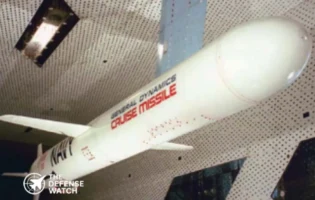

|
Disclaimer Note
The information provided on TheDefenseWatch.com is for general informational purposes only. While we strive to ensure the accuracy, completeness, and timeliness of our content regarding defense and aerospace products, technologies, and specifications, we cannot guarantee that all information is 100% accurate or up-to-date due to the evolving nature of military technology and classified data.TheDefenseWatch.com does not warrant the reliability, suitability, or availability of the information for any specific purpose. Users are advised to consult official sources, such as manufacturers, government publications, or defense agencies, for precise and verified data before making decisions based on our content.We are not affiliated with any defense manufacturers, governments, or military organizations mentioned. Opinions, reviews, and ratings reflect expert analysis but are subjective and should not be considered endorsements. TheDefenseWatch.com is not responsible for any errors, omissions, or consequences arising from the use of this website’s content.External links are provided for convenience and do not imply endorsement. TheDefenseWatch.com reserves the right to update or modify content without prior notice. By using this website, you agree to our Privacy & Cookies Policy.

New Arrivals
Popular Comparisons
-
 Su-57 Fighter Jet vs J-20 Fighter Jet: Stealth and Air Combat Compared
View Comparison →
Su-57 Fighter Jet vs J-20 Fighter Jet: Stealth and Air Combat Compared
View Comparison → -
Mirage 2000 vs Tejas Mk1A: Legacy Combat Power vs Indigenous Modernization
View Comparison →
-
Rafale Fighter Jet vs F-22 Raptor: Which Air Dominance Fighter Has the Edge?
View Comparison →
-
Tejas Fighter Jet vs. Rafale Fighter Jet: India’s Indigenous Fighter Meets France’s Proven Multirole Combat Aircraft
View Comparison →
-
F-22 Raptor vs. F-35 Joint Strike Fighter: Which Fifth Generation Fighter Has the Edge?
View Comparison →
-
F-35A vs. F-22 Raptor: Which U.S. Stealth Fighter Dominates Modern Air Combat?
View Comparison →
-
AGM-114 Hellfire vs. AGM-179 JAGM: Which U.S. Precision Missile Is Better?
View Comparison →
-
Patriot (PAC-3) vs. THAAD: Complete Missile Defense System Comparison, Capabilities, Range, and Strategic Roles
View Comparison →
-
AIM-120 AMRAAM vs. AIM-9X Sidewinder: Complete Air-to-Air Missile Comparison, Range, Speed, and Combat Roles
View Comparison →
-
Patriot PAC-3 vs. Russian S-400 Triumf: Which Air Defense System Is More Capable?
View Comparison →
- Next Generation Jammer NGJ-MB: From ALQ-99 to Distributed Electronic Warfare

- India China Border Tech Race: How Both Sides Are Modernizing the LAC in 2026
- Finland Orders More Than 100 Patria TREMOS 120 mm Mortar Systems
- Lockheed Martin Secures A$1.32 Billion AIR6500 Contract to Expand Australia’s Integrated Air and Missile Defense
- Pakistan Warns Iran Over Houthi Attacks as Saudi Arabia Strikes Yemen
- Russia Unveils Dan-T Air-Launched Drone With 450-Km Strike Range
- Bangladesh Army Type 59 Tank Explodes During Live-Fire Exercise, Killing Two Soldiers
- Iranian Ballistic Missile Attack Damages US A-10 and F-15s at Jordan Base
- Lockheed Martin Secures $826 Million JASSM and LRASM Contract Modification
- Northrop Grumman Lumberjack Demonstrates Quantum Navigation in GPS-Denied Flight Test