
- Home
- Defense Systems
- Defense Systems
- Freyja Missile Defense System
Freyja Missile Defense System
Defense Systems Full Specifications
1. General Information
| System Name | Freyja / FREYJA (FP-7.x based) |
| Manufacturer | Fire Point (prime) with European partners |
| Country of Origin | Ukraine (pan-European collaboration) |
| Type / Role | Surface-to-Air / Anti-Ballistic Missile System |
| In Service | No (development; target 2027) |
| Year Introduced | Projected 2027 |
| Unit Cost | ~USD 700,000 per interceptor (estimated) |
2. Performance & Capabilities
| Maximum Engagement Range | up to 200 km |
| Maximum Engagement Altitude | ~24 km |
| Target Types | Ballistic missiles (primary); aircraft, cruise missiles possible |
| Interception Probability | Not publicly established |
| Reaction Time | Network-dependent (not specified) |
| Radar Detection Range | Up to ~250 km (compatible AESA radars) |
3. Missile Specifications
| Missile Type | FP-7.x interceptor |
| Missile Length | 7.25 m |
| Missile Weight | Not publicly detailed |
| Warhead Type | Kinetic / high-explosive (details limited) |
| Warhead Weight | up to 150 kg |
| Speed | 1,500–2,000 m/s |
4. Radar & Fire Control
| Radar Type | AESA (multiple compatible) |
| Radar Name | Hensoldt TRML-4D (primary example); also Giraffe, Ground Master, KRONOS, etc. |
| Detection Range | Up to ~250 km |
| Tracking Capacity | ~1,500 targets (TRML-4D class) |
| Guidance System | Semi-active imaging infrared seeker |
| Fire Control System | NATO-standard C2 (e.g., Kongsberg FDC) |
5. Launcher & Mobility
| Launcher Type | Mobile / lightweight truck-mounted |
| No. of Missiles per Launcher | Not publicly detailed |
| Reload Time | Not publicly detailed |
| Mobility Platform | Fire Point mobile launcher design |
| Crew Required | Not publicly detailed |
6. Command & Control
| C2 System | NATO-compatible (Kongsberg FDC example) |
| Connectivity | Link-16 / secure data links |
| Network Capability | Yes (open architecture, multi-sensor) |
| Operation Mode | Networked / integrated |
7. Operational Use
| Primary Operator | Planned: Ukraine + Denmark, France, Germany, Italy, Netherlands, Norway, Spain, Sweden, UK |
| Combat Proven | No |
| Conflict History | None (developmental) |
| Notable Feature | Low-cost terminal ballistic intercept with European sensor integration |
PROS
- Significantly lower interceptor cost than Patriot PAC-3, enabling higher volume production and stockpiles
- Open architecture allows integration with multiple existing NATO radars and C2 systems
- Composite airframe reduces weight and potentially radar signature relative to legacy metallic designs
- Designed for terminal-phase ballistic missile intercepts relevant to current European threat environments
- Strong multinational political and industrial backing accelerates potential fielding
CONS
- Still developmental; first interceptions planned no earlier than late 2027 and unproven in combat
- Relies on foreign seekers, radars, and C2 components, creating integration and supply-chain dependencies
- Terminal-phase focus limits engagement envelope compared with some mid-course or layered systems
- Production scaling and solid-rocket motor capacity remain to be fully demonstrated
- Performance against advanced maneuvering or hypersonic threats is not yet established
Freyja Anti-Ballistic Missile Defense System
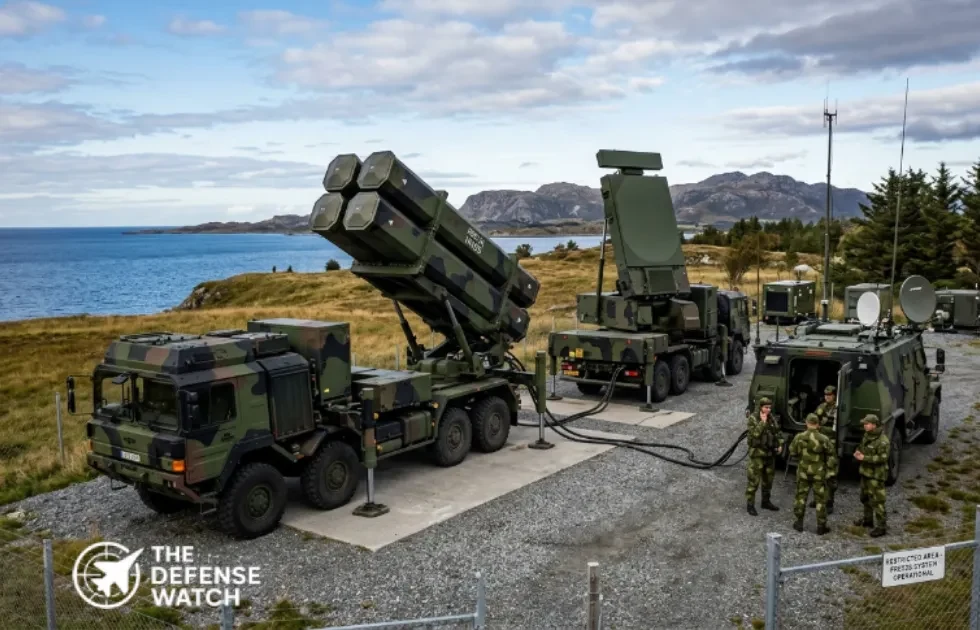
The Freyja (also styled FREYJA or Freya) missile defense system is a developing pan-European anti-ballistic missile (ABM) “system of systems” designed to intercept short- and medium-range ballistic missiles in the terminal phase. Unveiled in 2026 by Ukrainian company Fire Point amid ongoing Russian ballistic attacks on Ukraine, it aims to provide a lower-cost, higher-volume alternative to systems such as the U.S. Patriot PAC-3. Rather than a standalone national system, Freyja is built as an open-architecture network that integrates existing NATO-standard sensors, command posts, and data links.
Manufacturer and Origin
Fire Point, a Ukrainian defense firm known for its FP-series strike systems, serves as prime contractor and design authority. It supplies the interceptor while European partners provide radars, tracking, and command-and-control elements. Key collaborators include Germany’s Hensoldt (TRML-4D AESA radar) and Diehl Defence (infrared seeker technology from the IRIS family), along with contributions from Saab, Thales, Leonardo, Kongsberg, and others. Nine European nations joined Ukraine in the Integrated Anti-Ballistic Defense Coalition in July 2026 to accelerate development, with first interceptions targeted for late 2027 and operational capability sought within roughly 12 months of the coalition launch.
Purpose and Capabilities
Freyja addresses the cost imbalance of using multi-million-dollar interceptors against cheaper ballistic threats. The core interceptor is the FP-7.x, a composite-material evolution of Fire Point’s FP-7 (itself drawing on Soviet 48N6 heritage from the S-300/S-400 family). Measuring 7.25 m in length, it reaches speeds of 1,500–2,000 m/s (approximately Mach 4.4–5.9) and is intended for engagements at altitudes around 24 km (15 miles). Stated maximum range is up to 200 km. It employs a semi-active imaging infrared seeker. The system is multifunctional for both air-defense and missile-defense roles but prioritizes ballistic threats. It is designed for mobile launchers and network-centric operation via Link-16 and similar NATO data links.
Cost
A primary advantage is price: Fire Point estimates the interceptor at approximately USD 700,000 per shot, compared with roughly USD 3.8–5 million for a Patriot PAC-3 engagement. This supports higher production rates and larger stockpiles.
The system remains in development and is not yet combat-proven. Its success depends on successful integration of Ukrainian missile production with European sensors and industrial capacity.
Disclaimer Note
The information provided on TheDefenseWatch.com is for general informational purposes only. While we strive to ensure the accuracy, completeness, and timeliness of our content regarding defense and aerospace products, technologies, and specifications, we cannot guarantee that all information is 100% accurate or up-to-date due to the evolving nature of military technology and classified data.TheDefenseWatch.com does not warrant the reliability, suitability, or availability of the information for any specific purpose. Users are advised to consult official sources, such as manufacturers, government publications, or defense agencies, for precise and verified data before making decisions based on our content.We are not affiliated with any defense manufacturers, governments, or military organizations mentioned. Opinions, reviews, and ratings reflect expert analysis but are subjective and should not be considered endorsements. TheDefenseWatch.com is not responsible for any errors, omissions, or consequences arising from the use of this website’s content.External links are provided for convenience and do not imply endorsement. TheDefenseWatch.com reserves the right to update or modify content without prior notice. By using this website, you agree to our Privacy & Cookies Policy.
New Arrivals

Popular Comparisons
-
 J-10C vs JF-17 Thunder: Which Fighter Is More Capable?
View Comparison →
J-10C vs JF-17 Thunder: Which Fighter Is More Capable?
View Comparison → -
Tejas vs Gripen: Key Differences and Capabilities
View Comparison →
-
Tejas vs MiG-21 Bison: How India Replaced Its Iconic Supersonic Fighter
View Comparison →
-
F-35 vs F-16: Stealth, Sensors and Combat Roles
View Comparison →
-
Tejas Fighter Jet vs F-16 Fighting Falcon: Capability Compared
View Comparison →
-
Rafale Fighter Jet vs F-16 Fighting Falcon : Which Fighter Has the Edge?
View Comparison →
-
Su-57 Fighter Jet vs J-20 Fighter Jet: Stealth and Air Combat Compared
View Comparison →
-
Mirage 2000 vs Tejas Mk1A: Legacy Combat Power vs Indigenous Modernization
View Comparison →
-
Rafale Fighter Jet vs F-22 Raptor: Which Air Dominance Fighter Has the Edge?
View Comparison →
-
Tejas Fighter Jet vs. Rafale Fighter Jet: India’s Indigenous Fighter Meets France’s Proven Multirole Combat Aircraft
View Comparison →


- Pratt & Whitney Begins $100 Million Polish Expansion for F-35 Engine Parts

- Northrop Grumman Wins $43.9 Million Contract for Trident II Rocket Motor Facilities
- Ukraine Drone Strikes Disrupt Russian Data Centers, Raising Questions About AI Infrastructure Security
- Lockheed Martin Wins $114.6 Million Contract to Redesign F-35 Navigation Systems
- Project Agincourt Pushes Pentagon to Speed Up Autonomous Weapons Fielding
- Northrop Grumman Factory Expansion Aims to Increase B-21 Raider Production
- France Orders Four More SAMP/T NG Air Defense Systems
- France and UAE Revive Rafale F5 Fighter Development Partnership
- P-800 Oniks Missile: Range, Speed and BrahMos Comparison
- Ukrainian Drone Unit Caused 70% of Simulated U.S. Brigade Casualties in Germany Exercise

Fighter Jets
-
 F-100 Super Sabre
-
North American F-86 Sabre
-
Northrop YF-23 Fighter
-
Rafale F5 Fighter
-
SU-57 Felon Stealth Fighter
-
Boeing F/A-XX Fighter
-
JF-17 Thunder Fighter Jet
-
F-47 Fighter Jet
-
MIG-31 Fighter Jet
-
J-10CE Fighter Jet
-
Chengdu J-10 Fighter Jet
-
Chengdu J-10C Fighter Jet
-
Gripen E Fighter Jet
-
Tejas Mk1A Fighter Jet
-
Tejas Mk‑2 Fighter Jet
-
F-16V Viper Block 70 Fighter Jet
-
F-15EX Eagle II Fighter
-
F-15E Strike Eagle Fighter
-
F/A-18E/F Super Hornet Fighter Jet
-
Saab Gripen F Fighter Jet
-
JAS 39E/F Gripen Fighter Jet
-
JAS 39 Gripen Fighter Jet
-
F-35A Lightning II Fighter Jet
-
F/A-18F Super Hornet







Recent Compares
-
J-10C vs JF-17 Thunder: Which Fighter Is More Capable?
View Comparison →
-
Tejas vs Gripen: Key Differences and Capabilities
View Comparison →
-
Tejas vs MiG-21 Bison: How India Replaced Its Iconic Supersonic Fighter
View Comparison →
-
F-35 vs F-16: Stealth, Sensors and Combat Roles
View Comparison →
-
Tejas Fighter Jet vs F-16 Fighting Falcon: Capability Compared
View Comparison →
Latest Defense Systems
10 Compares Defense Systems
-
J-10C vs JF-17 Thunder: Which Fighter Is More Capable?
View Comparison →
-
Tejas vs Gripen: Key Differences and Capabilities
View Comparison →
-
Tejas vs MiG-21 Bison: How India Replaced Its Iconic Supersonic Fighter
View Comparison →
-
F-35 vs F-16: Stealth, Sensors and Combat Roles
View Comparison →
-
Tejas Fighter Jet vs F-16 Fighting Falcon: Capability Compared
View Comparison →
-
Rafale Fighter Jet vs F-16 Fighting Falcon : Which Fighter Has the Edge?
View Comparison →
-
Su-57 Fighter Jet vs J-20 Fighter Jet: Stealth and Air Combat Compared
View Comparison →
-
Mirage 2000 vs Tejas Mk1A: Legacy Combat Power vs Indigenous Modernization
View Comparison →
-
Rafale Fighter Jet vs F-22 Raptor: Which Air Dominance Fighter Has the Edge?
View Comparison →
-
Tejas Fighter Jet vs. Rafale Fighter Jet: India’s Indigenous Fighter Meets France’s Proven Multirole Combat Aircraft
View Comparison →
- Pratt & Whitney Begins $100 Million Polish Expansion for F-35 Engine Parts
- Northrop Grumman Wins $43.9 Million Contract for Trident II Rocket Motor Facilities
- Ukraine Drone Strikes Disrupt Russian Data Centers, Raising Questions About AI Infrastructure Security
- Lockheed Martin Wins $114.6 Million Contract to Redesign F-35 Navigation Systems
- Project Agincourt Pushes Pentagon to Speed Up Autonomous Weapons Fielding