







@2026 – All Right Reserved. TheDefenseWatch.com
- Home
- Catalog
- Compare
- Patriot PAC-3 vs. Russian S-400 Triumf: Which Air Defense System Is More Capable?
Patriot PAC-3 vs. Russian S-400 Triumf: Which Air Defense System Is More Capable?
Patriot PAC-3 vs. Russian S-400 Triumf: High-Level Comparison
1. Executive Summary / Tactical Overview
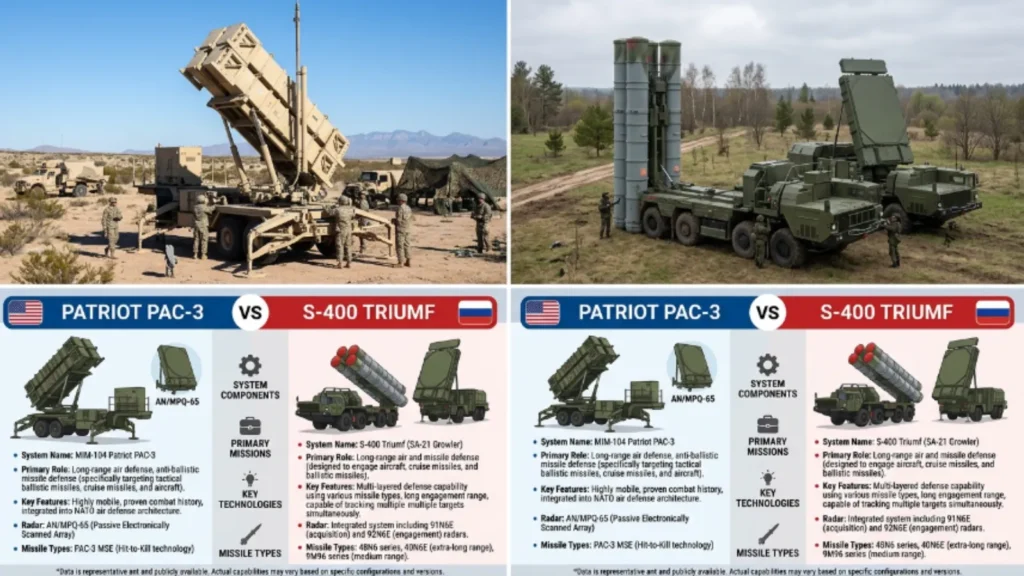
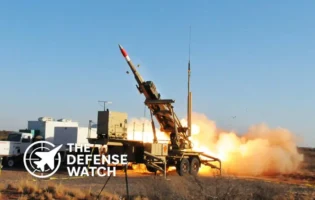
The Patriot PAC-3 and Russia’s S-400 Triumf represent two of the world’s most advanced ground-based air and missile defense systems, but they were designed with different operational priorities. Patriot PAC-3 focuses on precision interception of ballistic missiles, cruise missiles, and aircraft using hit-to-kill technology, while the S-400 emphasizes long-range, layered air defense with multiple missile types capable of engaging diverse aerial threats over extended distances.
2. Technical Specifications Table
| Specification | Patriot PAC-3 MSE | S-400 Triumf |
|---|---|---|
| Country | United States | Russia |
| Manufacturer | RTX (Raytheon) & Lockheed Martin | Almaz-Antey |
| Entered Service | 2015 (PAC-3 MSE) | 2007 |
| Mission | Air & Missile Defense | Long-Range Air Defense |
| Maximum Engagement Range | Up to 160 km (aircraft), about 60 km (ballistic missiles) | Up to 400 km (40N6 missile) |
| Minimum Engagement Range | About 3 km | About 2 km |
| Maximum Engagement Altitude | About 35 km | Up to 30 to 35 km |
| Interceptor Speed | Over Mach 4 | Up to Mach 14 (selected interceptors) |
| Radar | AN/MPQ-65 AESA (future LTAMDS upgrade) | 91N6E Big Bird AESA with supporting radars |
| Target Tracking | More than 100 targets | Up to 300 targets |
| Simultaneous Engagements | Multiple targets | Up to 36 targets simultaneously |
| Missile Types | PAC-3 CRI, PAC-3 MSE, GEM-T | 40N6, 48N6DM, 9M96E2, 9M96E |
| Ballistic Missile Defense | Excellent | Good |
| Cruise Missile Defense | Excellent | Excellent |
| Aircraft Defense | Excellent | Excellent |
| Mobility | High | High |
| Launch Method | Vertical Launch | Vertical Launch |
| Crew | Approximately 3 to 5 per launcher | Approximately 3 to 5 per launcher |
3. Key Capability Pillars
Ballistic Missile Defense
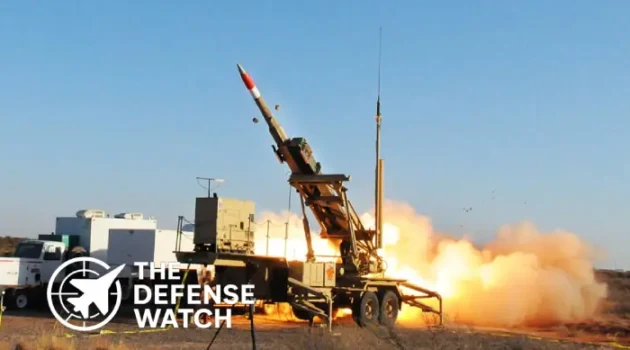
Patriot PAC-3 is optimized for defeating tactical ballistic missiles using hit-to-kill technology. Instead of relying on fragmentation, the interceptor destroys incoming missiles through direct kinetic impact, resulting in exceptional accuracy against high-speed threats.
The S-400 also possesses ballistic missile defense capability but was primarily designed as a long-range air defense system. While it can intercept certain ballistic missiles, it generally relies on proximity-fused interceptors rather than dedicated hit-to-kill technology.
Advantage: Patriot PAC-3
Long-Range Air Defense
The S-400 clearly dominates in maximum engagement distance. Its 40N6 missile reportedly reaches targets up to 400 kilometers away, allowing operators to establish extensive defensive coverage against aircraft, airborne early warning platforms, and support aircraft.
Patriot PAC-3 has significantly shorter engagement ranges but places greater emphasis on terminal defense and protecting critical infrastructure.
Advantage: S-400 Triumf
Radar and Sensor Network
Patriot employs the AN/MPQ-65 phased-array radar and is transitioning toward the LTAMDS radar, offering improved 360-degree coverage and enhanced detection of advanced threats.
The S-400 utilizes several radar systems, including the 91N6E Big Bird surveillance radar and engagement radars, enabling layered target tracking across large sectors.
Both systems integrate with wider national air defense networks.
Advantage: Even
Missile Variety
One of the S-400’s greatest strengths is its ability to fire multiple interceptor types from the same launcher.
These include:
- 40N6 for ultra-long-range engagements
- 48N6DM for long-range interception
- 9M96E2 for medium-range threats
- 9M96E for highly maneuverable targets
Patriot primarily employs PAC-3 MSE and GEM-T missiles, focusing on high-probability interception rather than engagement variety.
Advantage: S-400 Triumf
Combat Experience
Patriot systems have been extensively deployed by the United States and allied nations in Saudi Arabia, Iraq, Israel, Kuwait, Poland, Germany, Romania, Japan, South Korea, and Ukraine. They have accumulated decades of operational experience against ballistic missiles, cruise missiles, and drones.
The S-400 has been deployed by Russia, China, India, Turkey, Belarus, and other operators. While it has been used operationally, significantly less verified combat data is publicly available compared to Patriot.
Advantage: Patriot PAC-3
NATO Integration
Patriot is fully integrated into NATO’s Integrated Air and Missile Defense architecture, allowing interoperability with allied sensors, command networks, and missile defense systems.
The S-400 is designed for integration within Russian military command structures and export customers using Russian defense networks.
Advantage: Patriot PAC-3
4. Strategic Verdict
Both systems are among the most capable surface-to-air missile systems in service, but they excel in different operational environments.
The Patriot PAC-3 is optimized for defending critical military bases, cities, and infrastructure against ballistic missiles, cruise missiles, drones, and advanced aircraft. Its combat-proven hit-to-kill interceptors, extensive operational history, and seamless NATO interoperability make it a preferred choice for integrated missile defense.
The S-400 Triumf is designed to establish a broad anti-access and area denial umbrella through long-range surveillance and layered missile options. Its extended engagement range and diverse interceptor inventory provide significant flexibility against aircraft and airborne support assets over large areas.
In practice, overall effectiveness depends not only on published specifications but also on crew training, sensor integration, electronic warfare conditions, logistics, intelligence support, and the broader air defense network in which each system operates. Neither system can be definitively declared superior in every scenario, as each was engineered to meet different strategic and operational requirements.

| |
| Price | |
| Our Rating | |
| Manufacturer | Raytheon Technologies Almaz-Antey Corporation |
| Category | Defense Systems Defense Systems |
1. General Information
| System Name | MIM-104 Patriot PAC-3 S-400 Triumf (SA-21 Growler) |
| Manufacturer | Raytheon Technologies Almaz-Antey Concern |
| Country of Origin | United States Russia |
| Type / Role | Surface-to-Air Missile (SAM) System Long-Range Surface-to-Air Missile System |
| In Service | Yes Yes |
| Year Introduced | 1981 2007 |
| Unit Cost | USD 1 Billion (Estimated per Battery) USD 500 Million (Estimated per Battery) |
2. Performance & Capabilities
| Maximum Engagement Range | 160 km 400 km |
| Maximum Engagement Altitude | 24 km 30 km |
| Target Types | Aircraft, Ballistic Missiles, Cruise Missiles, UAVs Aircraft, Cruise Missiles, Ballistic Missiles, UAVs |
| Interception Probability | 90% (Short-Range Missiles) 80–90% (depending on target type) |
| Reaction Time | 9–15 seconds 10 seconds |
| Radar Detection Range | 150–300 km Up to 600 km |
3. Missile Specifications
| Missile Type | PAC-3 MSE / GEM-T 48N6DM / 40N6E / 9M96E2 |
| Missile Length | 5.0 m 7.5 m |
| Missile Weight | 312 kg 1,800–1,900 kg |
| Warhead Type | Fragmentation / Proximity Fuse HE-Fragmentation / Proximity Fuse |
| Warhead Weight | 90 kg 150 kg |
| Speed | Mach 4.5 Up to Mach 14 |
4. Radar & Fire Control
| Radar Type | Active Electronically Scanned Array (AESA) Radar Phased Array / AESA |
| Radar Name | AN/MPQ-65 91N6E Big Bird / 92N6 Grave Stone |
| Detection Range | 150–180 km 600 km |
| Tracking Capacity | 125+ Targets 300 Targets |
| Guidance System | Command + Semi-Active Radar Homing Inertial + Active / Semi-Active Homing |
| Fire Control System | Automated Digital Fire Control System Automated Command Post 55K6E |
5. Launcher & Mobility
| Launcher Type | Mobile / Truck-Mounted Mobile / Truck-Mounted |
| No. of Missiles per Launcher | 4–16 4 |
| Reload Time | 30–60 minutes 30–60 minutes |
| Mobility Platform | M983 HEMTT Truck / Tatra 8x8 BAZ-64022 / MAZ-7910 8×8 Trucks |
| Crew Required | 3–5 personnel 3–5 personnel |
6. Command & Control
| C2 System | Integrated command and control for real-time engagement Battle Management & Control (BMC) |
| Connectivity | Secure, encrypted data links Secure Radio / Data Link |
| Network Capability | Network-centric, interoperable with allied systems Yes (Layered Defense Integration) |
| Operation Mode | Autonomous, semi-autonomous, networked Autonomous / Networked |
7. Operational Use
| Primary Operator | USA, Germany, Japan, Israel, South Korea Russia, China, India, Turkey |
| Combat Proven | Yes Limited (Operational Readiness Confirmed) |
| Conflict History | Iraq War, Yemen, Ukraine Syrian Air Defense Network |
| Notable Feature | Multi-Layered Defense Capability Multi-missile, multi-target defense capability |

|
Disclaimer Note
The information provided on TheDefenseWatch.com is for general informational purposes only. While we strive to ensure the accuracy, completeness, and timeliness of our content regarding defense and aerospace products, technologies, and specifications, we cannot guarantee that all information is 100% accurate or up-to-date due to the evolving nature of military technology and classified data.TheDefenseWatch.com does not warrant the reliability, suitability, or availability of the information for any specific purpose. Users are advised to consult official sources, such as manufacturers, government publications, or defense agencies, for precise and verified data before making decisions based on our content.We are not affiliated with any defense manufacturers, governments, or military organizations mentioned. Opinions, reviews, and ratings reflect expert analysis but are subjective and should not be considered endorsements. TheDefenseWatch.com is not responsible for any errors, omissions, or consequences arising from the use of this website’s content.External links are provided for convenience and do not imply endorsement. TheDefenseWatch.com reserves the right to update or modify content without prior notice. By using this website, you agree to our Privacy & Cookies Policy.

New Arrivals
Popular Comparisons
-
 Su-57 Fighter Jet vs J-20 Fighter Jet: Stealth and Air Combat Compared
View Comparison →
Su-57 Fighter Jet vs J-20 Fighter Jet: Stealth and Air Combat Compared
View Comparison → -
Mirage 2000 vs Tejas Mk1A: Legacy Combat Power vs Indigenous Modernization
View Comparison →
-
Rafale Fighter Jet vs F-22 Raptor: Which Air Dominance Fighter Has the Edge?
View Comparison →
-
Tejas Fighter Jet vs. Rafale Fighter Jet: India’s Indigenous Fighter Meets France’s Proven Multirole Combat Aircraft
View Comparison →
-
F-22 Raptor vs. F-35 Joint Strike Fighter: Which Fifth Generation Fighter Has the Edge?
View Comparison →
-
F-35A vs. F-22 Raptor: Which U.S. Stealth Fighter Dominates Modern Air Combat?
View Comparison →
-
AGM-114 Hellfire vs. AGM-179 JAGM: Which U.S. Precision Missile Is Better?
View Comparison →
-
Patriot (PAC-3) vs. THAAD: Complete Missile Defense System Comparison, Capabilities, Range, and Strategic Roles
View Comparison →
-
AIM-120 AMRAAM vs. AIM-9X Sidewinder: Complete Air-to-Air Missile Comparison, Range, Speed, and Combat Roles
View Comparison →
-
BGM-109 Tomahawk vs. AGM-158 JASSM: Which Long Range Precision Strike Missile Offers Greater Strategic Advantage?
View Comparison →
- Next Generation Jammer NGJ-MB: From ALQ-99 to Distributed Electronic Warfare

- India China Border Tech Race: How Both Sides Are Modernizing the LAC in 2026
- Finland Orders More Than 100 Patria TREMOS 120 mm Mortar Systems
- Lockheed Martin Secures A$1.32 Billion AIR6500 Contract to Expand Australia’s Integrated Air and Missile Defense
- Pakistan Warns Iran Over Houthi Attacks as Saudi Arabia Strikes Yemen
- Russia Unveils Dan-T Air-Launched Drone With 450-Km Strike Range
- Bangladesh Army Type 59 Tank Explodes During Live-Fire Exercise, Killing Two Soldiers
- Iranian Ballistic Missile Attack Damages US A-10 and F-15s at Jordan Base
- Lockheed Martin Secures $826 Million JASSM and LRASM Contract Modification
- Northrop Grumman Lumberjack Demonstrates Quantum Navigation in GPS-Denied Flight Test