







@2026 – All Right Reserved. TheDefenseWatch.com
- Home
- Catalog
- Missiles & Precision Weapons
- Bloodhound Missile
Bloodhound Missile
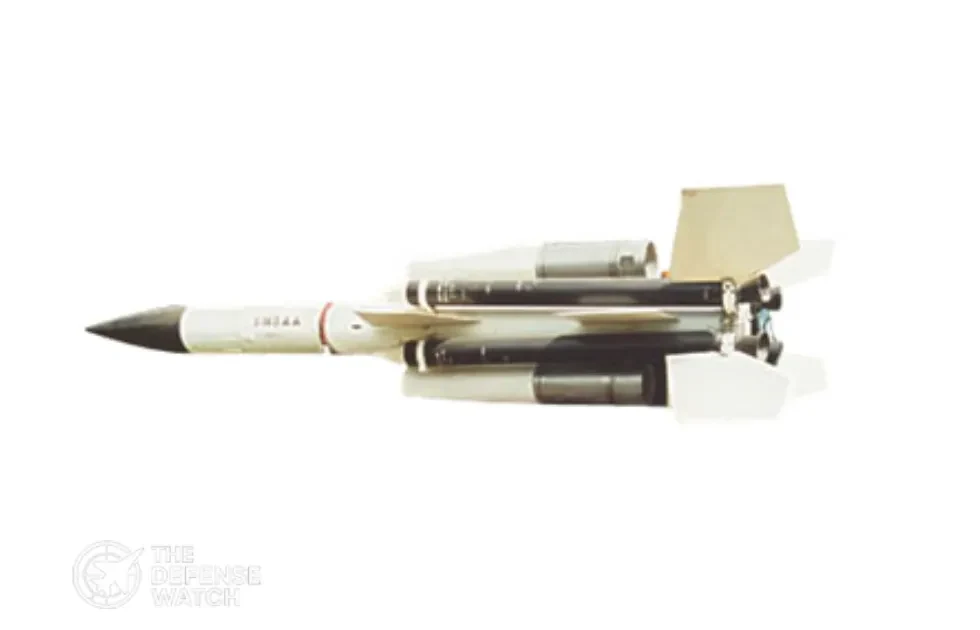
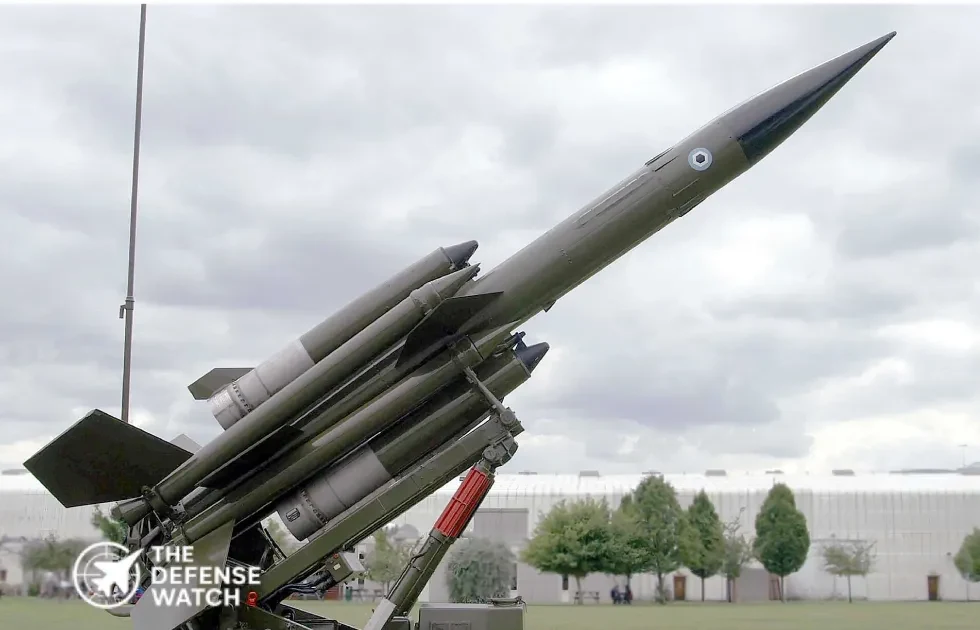
Full Specifications
1. General Information
| Name / Designation | Bristol Bloodhound (Mk 1 / Mk 2) |
| Type / Role | Surface-to-Air Missile (SAM), Area Air Defense |
| Country of Origin | United Kingdom |
| Manufacturer | Bristol Aeroplane Company / BAC (Ferranti guidance |
| Service Entry / Year Introduced | Mk 1: 1958; Mk 2: 1964 |
| Operational Status | Retired (RAF 1991; Switzerland 1999) |
2. Performance & Range
| Range | Mk 1: ~50–80 km; Mk 2: ~85–185 km |
| Speed | Mach 2.7 |
| Ceiling / Altitude Limit | High altitude (up to ~60,000 ft class) with later low-level improvements |
| Accuracy (CEP) | Effective with proximity detonation (not precision strike CEP) |
| Warhead Type | Continuous-rod high-explosive |
3. Guidance & Targeting
| Guidance System | Semi-active radar homing |
| Targeting Mode | Semi-active (ground radar illumination) |
| Launch Platform Compatibility | Fixed ground launchers |
| Seeker Type | Semi-active radar |
4. Physical Characteristics
| Length | Approx. 8.45 m (with boosters, Mk 2) |
| Diameter | 54.6 cm |
| Wingspan | Approx. 2.83 m |
| Launch Weight | Approx. 2.83 m |
| Propulsion | 4 × solid-fuel Gosling boosters + 2 × Thor ramjets |
5. Warhead & Payload
| Warhead Weight | Approx. 170 kg class |
| Explosive Type | Continuous-rod |
| Detonation Mechanism | Proximity fuse |
| Payload Options | Conventional continuous-rod |
6. Operational Use & Capabilities
| Operational Range Type | Medium to Long |
| Deployment Platform | Ground (fixed sites) |
| Target Types | High-altitude aircraft/bombers (later improved low-level) |
| Combat Proven | No combat firings recorded; extensive training and alert service |
| Users / Operators | United Kingdom, Australia, Sweden, Switzerland, Singapore |
PROS
- High maximum speed of Mach 2.7 for engaging fast bombers
- Extended range capability suitable for area defense
- Semi-active radar guidance with continuous-wave improvements on Mk 2
- Continuous-rod warhead effective against aircraft structures
- Proven multi-decade operational service across several countries
CONS
- Primarily fixed-site deployment limited mobility
- Early Mk 1 versions vulnerable to jamming and low-altitude performance issues
- Complex dual-propulsion system required specialized maintenance
- Retired from service; no modern production or upgrades available
- High historical development and acquisition costs relative to contemporary systems
Bloodhound Missile: UK Cold War SAM System
The Bristol Bloodhound was a British long-range surface-to-air missile system developed during the Cold War to counter high-altitude bomber threats. Designed primarily to protect strategic sites such as RAF V-bomber bases, it provided area air defense against Soviet aircraft. Entering service in the late 1950s, the Bloodhound became one of the most capable Western SAM systems of its era through continuous upgrades and served multiple operators until the end of the Cold War.
Manufacturer
Developed by the Bristol Aeroplane Company (later British Aircraft Corporation) in partnership with Ferranti for radar and guidance electronics, the Bloodhound originated under the code name Red Duster. The Mk 1 variant entered Royal Air Force service in 1958, followed by the improved Mk 2 in 1964. Production involved British industry, with testing conducted in the UK and at the Woomera range in Australia.
Speed and Range
The Bloodhound Mk 2 achieved a maximum speed of approximately Mach 2.7. Propulsion combined four solid-fuel Gosling booster rockets for launch with two Bristol Siddeley Thor ramjet engines for sustained flight. Operational range for the Mk 2 extended to roughly 85–185 km depending on engagement parameters, with effective high-altitude performance and later improvements against lower-level targets. The system used semi-active radar homing, with continuous-wave illumination on the Mk 2 for better resistance to jamming.
Cost/Price
Exact modern unit costs are not applicable as the system is retired. Historical figures include approximately £23 million for RAF Mk 1 production (1958–1962) and a Swiss purchase of about 200 Mk 2 missiles in the mid-1960s valued at SFr 380 million at the time. The Bloodhound remained in RAF service until 1991 and with Switzerland until 1999.
The missile measured about 8.45 m in length with boosters, 54.6 cm in diameter, and weighed around 2,270 kg. It carried a continuous-rod warhead with proximity fusing optimized for aircraft targets. Deployed from fixed ground sites, it supported UK home defense, RAF Germany, and export operators including Australia, Sweden, Switzerland, and Singapore. The Bloodhound represented a key element of British and allied air defense architecture during the Cold War.
Reviews
Disclaimer Note
The information provided on TheDefenseWatch.com is for general informational purposes only. While we strive to ensure the accuracy, completeness, and timeliness of our content regarding defense and aerospace products, technologies, and specifications, we cannot guarantee that all information is 100% accurate or up-to-date due to the evolving nature of military technology and classified data.TheDefenseWatch.com does not warrant the reliability, suitability, or availability of the information for any specific purpose. Users are advised to consult official sources, such as manufacturers, government publications, or defense agencies, for precise and verified data before making decisions based on our content.We are not affiliated with any defense manufacturers, governments, or military organizations mentioned. Opinions, reviews, and ratings reflect expert analysis but are subjective and should not be considered endorsements. TheDefenseWatch.com is not responsible for any errors, omissions, or consequences arising from the use of this website’s content.External links are provided for convenience and do not imply endorsement. TheDefenseWatch.com reserves the right to update or modify content without prior notice. By using this website, you agree to our Privacy & Cookies Policy.

New Arrivals
Popular Comparisons
-
 Su-57 Fighter Jet vs J-20 Fighter Jet: Stealth and Air Combat Compared
View Comparison →
Su-57 Fighter Jet vs J-20 Fighter Jet: Stealth and Air Combat Compared
View Comparison → -
Mirage 2000 vs Tejas Mk1A: Legacy Combat Power vs Indigenous Modernization
View Comparison →
-
Rafale Fighter Jet vs F-22 Raptor: Which Air Dominance Fighter Has the Edge?
View Comparison →
-
Tejas Fighter Jet vs. Rafale Fighter Jet: India’s Indigenous Fighter Meets France’s Proven Multirole Combat Aircraft
View Comparison →
-
F-22 Raptor vs. F-35 Joint Strike Fighter: Which Fifth Generation Fighter Has the Edge?
View Comparison →
-
F-35A vs. F-22 Raptor: Which U.S. Stealth Fighter Dominates Modern Air Combat?
View Comparison →
-
AGM-114 Hellfire vs. AGM-179 JAGM: Which U.S. Precision Missile Is Better?
View Comparison →
-
Patriot (PAC-3) vs. THAAD: Complete Missile Defense System Comparison, Capabilities, Range, and Strategic Roles
View Comparison →
-
AIM-120 AMRAAM vs. AIM-9X Sidewinder: Complete Air-to-Air Missile Comparison, Range, Speed, and Combat Roles
View Comparison →
-
BGM-109 Tomahawk vs. AGM-158 JASSM: Which Long Range Precision Strike Missile Offers Greater Strategic Advantage?
View Comparison →
- Lockheed Martin Secures A$1.32 Billion AIR6500 Contract to Expand Australia’s Integrated Air and Missile Defense

- Pakistan Warns Iran Over Houthi Attacks as Saudi Arabia Strikes Yemen
- Russia Unveils Dan-T Air-Launched Drone With 450-Km Strike Range
- Bangladesh Army Type 59 Tank Explodes During Live-Fire Exercise, Killing Two Soldiers
- Iranian Ballistic Missile Attack Damages US A-10 and F-15s at Jordan Base
- Lockheed Martin Secures $826 Million JASSM and LRASM Contract Modification
- Northrop Grumman Lumberjack Demonstrates Quantum Navigation in GPS-Denied Flight Test
- Northrop Grumman PGK E5 Adds Anti-Jamming to 155mm Artillery
- Russia Markets Drone Like Missiles In Egypt As Su-57 Debuts At Africa Air Show
- Qatari-Gifted Air Force One Emergency Slide Deploys Before Trump Flight