

Executive Summary: Iran’s Islamic Revolutionary Guard Corps has established a multi-tiered control mechanism over the Strait of Hormuz — the conduit for roughly one-fifth of global oil supply — using island checkpoints, government-to-government arrangements, detailed vessel vetting, and in some cases reported transit fees. The system, documented by Reuters after interviews with 20 industry and government sources, represents a deliberate strategic shift from wartime disruption to institutionalized control. The implications extend from global energy markets to international maritime law and U.S. naval strategy.
Iran Tightens Grip on the World’s Most Critical Oil Chokepoint
Iran’s de facto control of the Strait of Hormuz has moved beyond battlefield improvisation. A detailed investigative report by Reuters — drawing on interviews with 20 shipping, government, and intelligence sources — reveals that Tehran has erected a formalized, multi-tiered clearance system to decide which vessels may transit the narrow waterway separating the Persian Gulf from the Gulf of Oman.
The Strait of Hormuz, just 34 kilometers wide at its narrowest point, carries roughly 20 percent of global seaborne oil trade and 20 percent of the world’s liquefied natural gas (LNG) exports. Its effective closure since late February 2026 has sent energy prices surging and triggered warnings from Western governments about an imminent global food crisis.
The new Iranian system — now operating under what Tehran has designated the Persian Gulf Strait Authority, established in recent weeks — goes well beyond simple military obstruction. It represents a calculated attempt to institutionalize wartime leverage into long-term strategic and economic power.
How the System Works: Vetting, Diplomacy, and Fees
Outside of formal government arrangements, the primary pathway for commercial vessels is an IRGC-administered vetting process. Ship owners and operators must submit a detailed “affiliation document” through an intermediary, disclosing the ship’s cargo value, flag state, origin and destination, registered owner and manager, and full crew nationalities.
Multiple Iranian state agencies are involved in reviewing submissions: the Ports and Maritime Organization, the Ministry of Industry, Mine and Trade, the national shipping organization, and a representative of the Supreme National Security Council. The IRGC, which carries broad oversight over Iranian security operations, holds final evaluative authority.
For countries with direct diplomatic relations with Tehran, a separate government-to-government track exists. India — which imports approximately 90 percent of its oil needs and about half its gas, much of which passes through Hormuz — routes vessel clearance requests through its embassy in Tehran, liaising directly with IRGC and Iranian navy contacts, according to a senior Indian shipping ministry official.
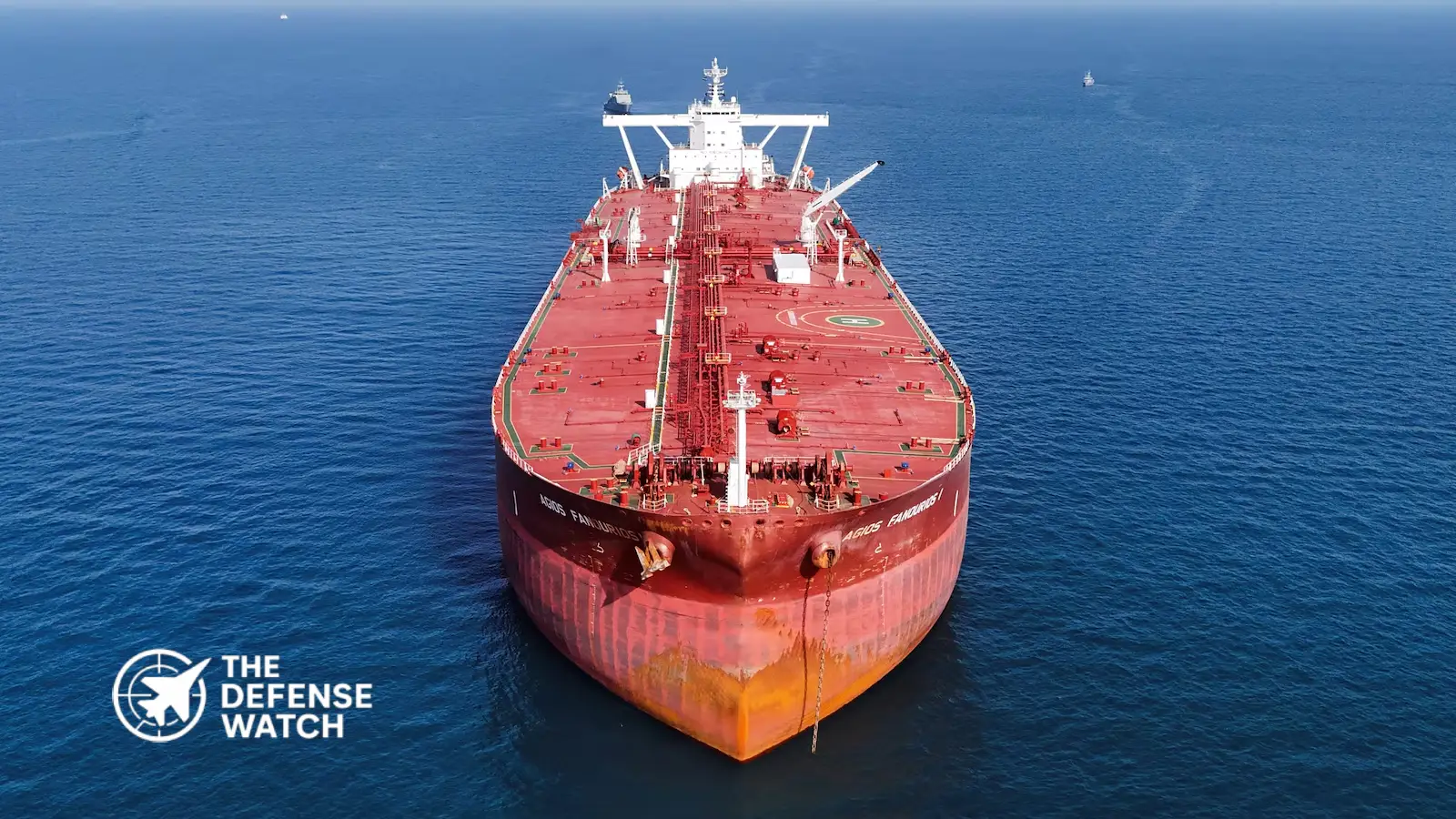
Iraq negotiated directly with Iran for passage of the Maltese-flagged tanker Agios Fanourios I, a 330-meter crude carrier loaded with Iraqi oil and bound for Vietnam. The tanker, stranded off the coast of Dubai since late April, finally transited the strait on May 10 following a direct arrangement brokered by Iraq’s prime minister. Even then, IRGC speedboats intercepted the vessel as it passed Hormuz Island — reportedly on suspicion of smuggled cargo — turning a standard five-hour passage into a two-day ordeal.
“Once we were informed Agios passed Hormuz, we breathed a sigh of relief,” said one individual monitoring the passage, according to Reuters.
The Fee Question: Legal Gray Zone and Sanctions Exposure
Perhaps the most legally consequential dimension of Iran’s new system is the reported extraction of fees for transit clearance. Under international maritime law, states cannot charge for passage through an international strait. Iran has denied imposing such levies.
However, Reuters found that payments have been made in some cases. The transfers are closely guarded secrets, as ship owners making such payments face compound legal exposure: violations of international maritime law, potential breach of U.S. Treasury sanctions (which prohibit payments benefiting the IRGC, a designated foreign terrorist organization), and possible loss of maritime insurance coverage.
“Violators would also lose their insurance coverage for making payments that could benefit the IRGC,” two maritime insurance experts told Reuters.
Reports from Lloyd’s List Intelligence, dating to March 2026, suggested Iran had been imposing unusually high transit charges — with some foreign media reports citing figures as high as $2 million per vessel for guaranteed passage. Iran has disputed those figures.
The U.S. Treasury has issued explicit warnings that IRGC-related Hormuz transit payments are not authorized for American entities.
Strategic Context: From Wartime Closure to Permanent Control
The current crisis traces directly to February 28, 2026, when coordinated U.S. and Israeli airstrikes on Iran killed Supreme Leader Ali Khamenei. Iran’s immediate response was to close the Strait of Hormuz to foreign shipping. The IRGC issued navigation warnings, deployed sea mines, boarded and damaged merchant vessels, and seized at least two commercial ships. Fourteen crisis-related casualties — 12 seafarers and 2 port workers — have been recorded as of mid-May.
The U.S. responded with a counter-blockade of Iranian ports beginning April 13, and launched Operation Project Freedom to escort stranded vessels out of the Gulf. That operation was paused on May 6 following what U.S. officials described as “great progress” in Pakistan-mediated ceasefire talks.
At the United Nations, diplomatic resolution has been blocked by geopolitical fault lines: China and Russia vetoed a Security Council resolution on April 7 that would have demanded freedom of navigation in the strait.
China’s foreign ministry, responding to the Reuters findings, called for Hormuz to be opened and stated that “such arrangements should comply with international law and practice.” Beijing stopped short of condemning Iran’s clearance system directly.
Maritime analysts now assess that Tehran is deliberately transforming its wartime military leverage into a long-term structural claim over the world’s most critical energy transit corridor.
Global Impact: Energy, Food, and Alliance Stability
The cascading effects of the Hormuz closure extend well beyond oil markets. The United Kingdom’s Foreign Secretary, Yvette Cooper, warned on May 19 that the world is “sleepwalking into a global food crisis,” citing the disruption of fertilizer and fuel flows through the strait.
“We cannot risk tens of millions of people going hungry because one country has hijacked an international shipping lane,” Cooper stated, calling for the strait’s reopening within weeks.
The United Nations has echoed those warnings, noting a six-month window before food security disruptions escalate into a humanitarian crisis.
The U.S. naval posture in the Persian Gulf and Gulf of Oman remains elevated, though the administration has pursued diplomatic off-ramps. NATO allies, including the U.K., Germany, and Japan, have declined Washington’s requests to join a formal military escort operation — complicating allied coordination in one of the world’s most strategically sensitive waterways.
Analysis: A New Paradigm for Maritime Chokepoint Control?
What Iran has constructed is not merely a wartime obstruction strategy. It is an embryonic toll-and-vetting regime over an international strait — an arrangement with no clear precedent in the post-WWII international maritime order.
The Persian Gulf Strait Authority functions, in effect, as an extraterritorial regulatory body over waters that international law designates as a transit passage open to all flags. Tehran’s framing — invoking “legitimate security concerns of coastal states” — echoes language China has used to assert administrative authority over contested waters in the South China Sea.
The implications for U.S. naval strategy and global freedom of navigation are significant. If Iran’s control mechanism stabilizes into an accepted norm — even informally — it could embolden other coastal states with geographic leverage over critical waterways to adopt similar approaches.
For the Pentagon, the central question is whether ongoing diplomatic negotiations will roll back Iran’s structural gains before they harden into a new status quo. The answer will shape maritime security policy for years to come.
