Executive Summary
- The U.S. State Department approved a possible Foreign Military Sale to Saudi Arabia valued at an estimated $24.3 billion, covering 48 F-35 Lightning II aircraft and 49 Pratt & Whitney F135-PW-100 engines. The package remains subject to the U.S. congressional process.
- The proposed transaction includes far more than aircraft and engines. Secure communications, cryptographic equipment, electronic warfare database support, software, training, simulators, spare parts, maintenance and U.S. technical support are also included.
- The potential transfer would introduce a fifth-generation stealth fighter capability into Saudi Arabia’s existing F-15, Eurofighter Typhoon and Tornado fleet, while placing renewed attention on Washington’s long-standing requirement to preserve Israel’s qualitative military edge in the Middle East.
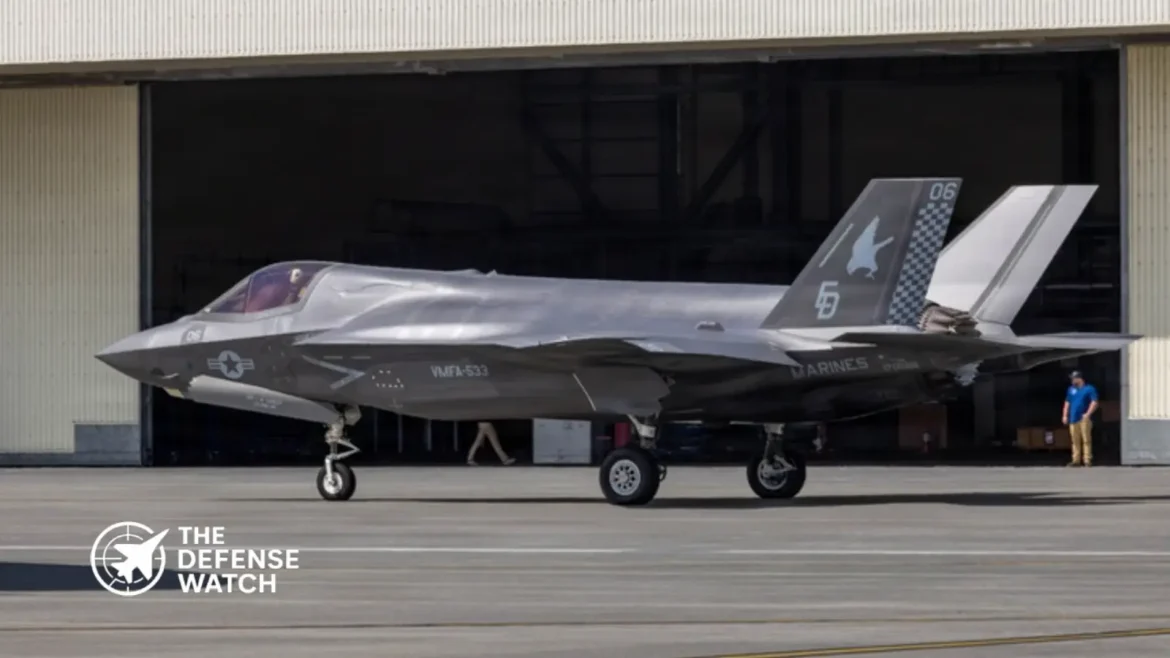
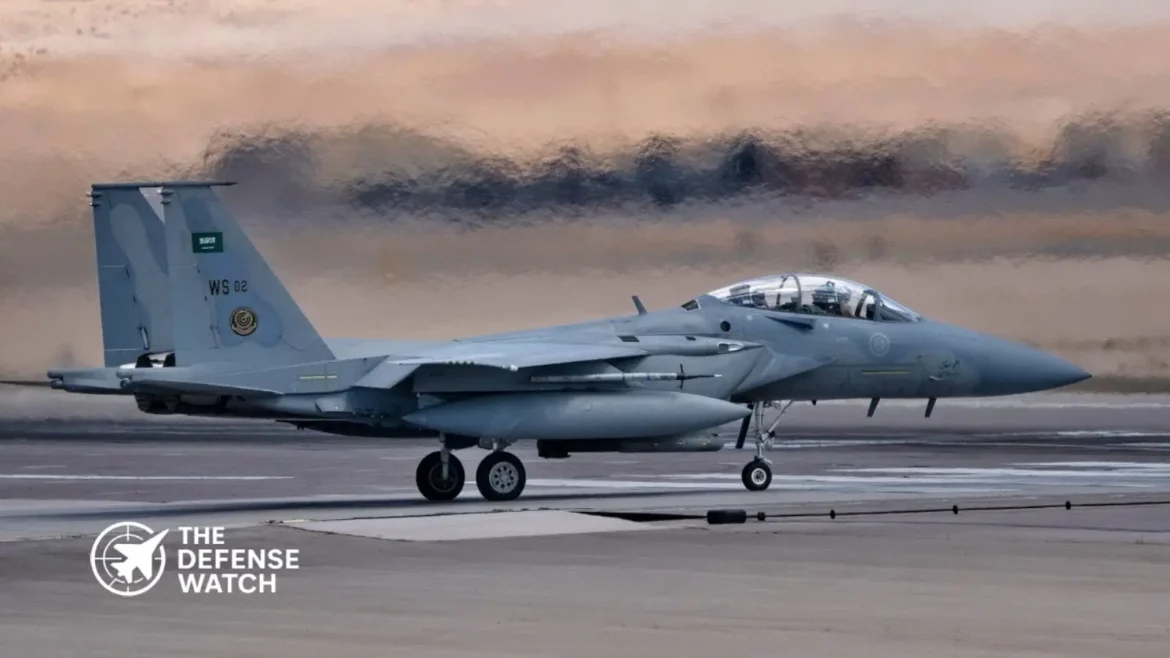
The United States has approved a possible $24.3 billion sale of 48 F-35 Lightning II fighters to Saudi Arabia, marking a major step in Riyadh’s long-running effort to obtain a U.S. fifth-generation combat aircraft. The State Department notified Congress on September 17, 2026, under Transmittal No. 26-69, with the proposed package also including 49 Pratt & Whitney F135-PW-100 engines and extensive equipment, training and sustainment support.
The approval does not mean Saudi Arabia has received the aircraft or that a final purchase contract has been signed. Reuters reported that the proposal still requires congressional approval, leaving the transaction subject to further U.S. government and legislative action.
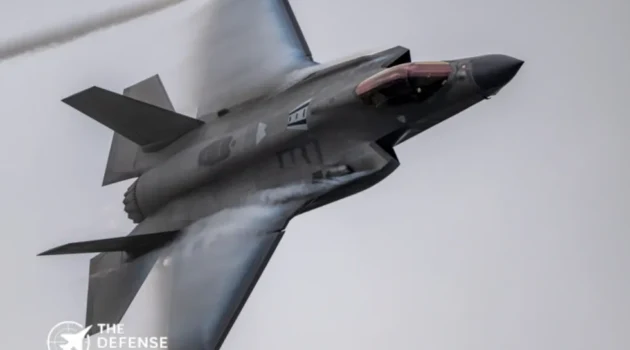
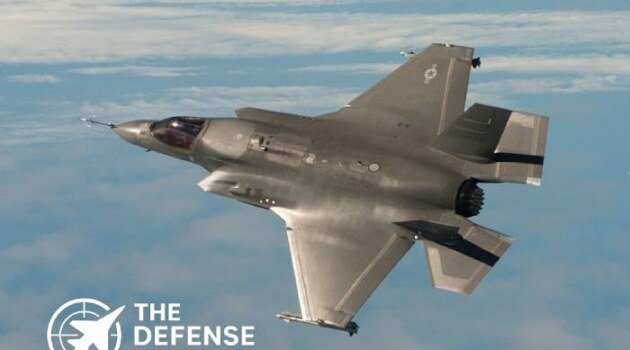
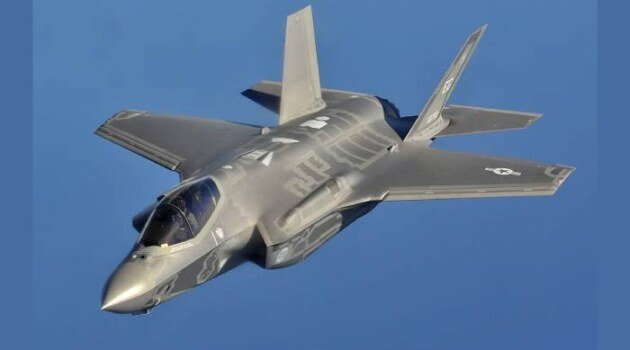
If completed, the sale would make Saudi Arabia the second country in the Middle East to operate the F-35 after Israel. It would also give the Royal Saudi Air Force access to a combat aircraft built around low-observable design, sensor fusion and networked operations, capabilities that differ materially from the fourth-generation fighters currently forming the core of Saudi air power.
What the $24.3 Billion Package Includes
The State Department notification identifies the requested aircraft as conventional takeoff and landing F-35s. That configuration corresponds to the F-35A used by the U.S. Air Force and most international F-35 operators. Janes has identified the Saudi request as involving the F-35A.
Item Proposed quantity or value F-35 Lightning II aircraft 48 F135-PW-100 engines 49 Estimated total package value $24.3 billion Aircraft configuration Conventional takeoff and landing Principal contractors Lockheed Martin Aeronautics, Pratt & Whitney Congressional status Proposed sale under congressional notification The 49 engines include 48 installed engines and one spare, according to the State Department notification. The package also includes secure communications equipment, precision navigation and cryptographic equipment, AN/PYQ-10 simple key loaders, KIV-78 cryptographic appliques and electronic warfare database support.
Other elements include aircraft and munitions support equipment, spare parts, repair and return support, software, technical documentation, training equipment, simulators, transportation, ferry and refueling support, maintenance assistance and U.S. government engineering and logistics services.
This distinction is important when assessing the $24.3 billion figure. It is the estimated value of the proposed Foreign Military Sale package, not the purchase price of 48 aircraft alone.
A Fifth-Generation Addition to Saudi Air Power
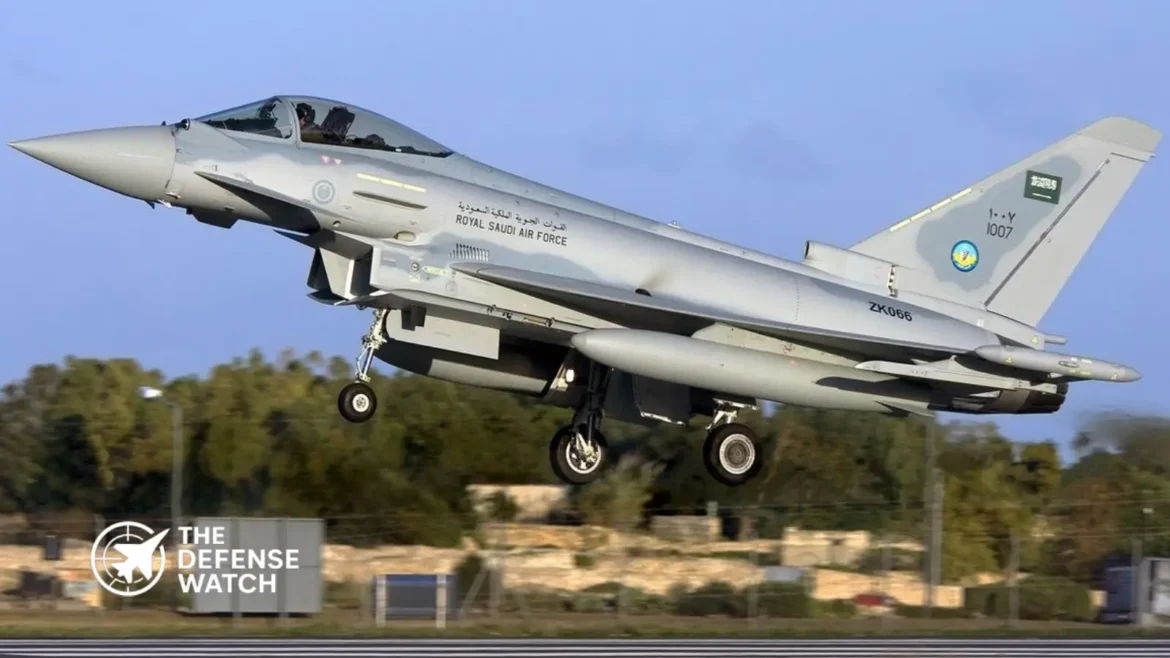
Saudi Arabia already operates a large and diverse combat aircraft fleet. Reuters reported that the Royal Saudi Air Force operates Boeing F-15s alongside European Tornado and Typhoon fighters. Janes has reported that the Saudi fighter inventory includes F-15SA aircraft as well as older F-15 variants, Eurofighter Typhoons and Panavia Tornados.
The F-35 would add a different class of capability to that force.
The most significant change would not simply be another fighter airframe. The F-35 is designed around low-observable characteristics, integrated sensors, onboard data processing and secure networking. Lockheed Martin describes the aircraft as a connected fighter intended to combine sensing, information sharing and combat operations across a wider force.
For Saudi Arabia, that could improve the ability to conduct operations in environments where aircraft survivability depends on reducing detection opportunities and sharing information between airborne and surface systems.
The State Department itself describes the proposed sale in terms of stronger homeland defense, improved interoperability with U.S. and allied forces, and enhanced Saudi air-to-air and air-to-ground self-defense capabilities.
The package therefore has an operational dimension beyond fighter numbers. Training, simulators, software, electronic warfare support and secure communications would be necessary to establish and sustain a functioning F-35 fleet.
Why the F-35 Changes the Saudi Fighter Mix
Saudi Arabia’s existing fighter fleet provides substantial capacity, but the F-35 belongs to a different technological generation.
Capability areaExisting Saudi fighter fleetProposed F-35 capability Fighter generation Primarily fourth-generation and upgraded variants Fifth-generation Low observability Varies by aircraft and configuration Core aircraft design feature Sensor integration Advanced on newer aircraft Central design feature Networking Modern systems already in service Deeply integrated into aircraft architecture Air-to-air missions Established capability Enhanced with integrated sensors and networking Air-to-ground missions Established capability Enhanced with low-observable and sensor capabilities Sustainment model Multiple aircraft families Adds another U.S.-managed fighter ecosystem The comparison should not be interpreted as meaning that the F-35 would replace Saudi Arabia’s existing aircraft. A 48-aircraft purchase would instead create a relatively small fifth-generation component within a much larger mixed fleet.
That fleet structure could give Saudi planners different options for assigning aircraft according to mission, threat environment and available support infrastructure.
Israel’s Qualitative Military Edge Becomes a Central Issue
The most consequential policy question surrounding the proposed sale is its relationship to Israel’s qualitative military edge, commonly referred to as QME.
U.S. policy has long required Washington to consider the effect of arms transfers to Middle Eastern states on Israel’s military advantage. The State Department has previously described QME as a major factor in regional defense cooperation and has specifically linked the F-35 to efforts to preserve Israel’s technological advantage.
Israel currently operates the F-35 and has built operational experience with the aircraft over several years. A Saudi F-35 fleet would therefore create another regional operator of the same basic fifth-generation platform. Reuters reported that this could test Washington’s approach to maintaining Israel’s QME.
The State Department’s September 17 notification nevertheless concluded that the proposed sale would not alter the military balance in the region. That is the U.S. government’s stated assessment of the proposed configuration and support package.
The practical question for policymakers is how the United States would maintain the capability gap between Israel and Saudi Arabia while allowing Riyadh access to the F-35 ecosystem. That assessment can involve aircraft configuration, software, weapons integration, electronic warfare capabilities, training, operational restrictions and the broader package of systems available to each country.
The public notification does not provide enough detail to establish how every element of a potential Saudi F-35 configuration would compare with Israel’s F-35I fleet. Claims about specific Saudi avionics, weapons or software limitations should therefore be treated cautiously unless confirmed by U.S. government documentation or a finalized agreement.
Technology Security and Saudi-China Relations
Another issue is protection of sensitive U.S. defense technology.
The F-35 is not simply a conventional fighter aircraft that can be transferred without a wider security framework. Its operational effectiveness depends on software, mission data, secure communications, maintenance systems and a large supporting information architecture.
The proposed Saudi package includes classified and unclassified software delivery and support, technical documentation, electronic warfare database support and secure communications equipment.
That makes technology security an important part of any eventual implementation.
Reuters reported that congressional scrutiny could pose challenges to the transaction and noted existing concerns in Washington about deeper military cooperation with Riyadh.
This issue is particularly relevant because Saudi Arabia has also expanded defense and technology relationships with China. The United States would therefore have to manage not only the transfer of the aircraft themselves but also the security of the broader infrastructure required to operate and maintain them.
The public State Department notification does not disclose classified safeguards or detailed restrictions that could apply to the Saudi fleet. Those elements should not be assumed until formally disclosed.
Industrial and Sustainment Implications
The proposed transaction would also create a substantial long-term sustainment relationship between Saudi Arabia and the U.S. F-35 industrial base.
Lockheed Martin Aeronautics and Pratt & Whitney are identified as the principal contractors. The package includes engine support, maintenance assistance, spare parts, training, simulators, software and engineering services.
For Saudi Arabia, this means the acquisition would extend well beyond aircraft delivery. Building an F-35 capability requires trained personnel, secure facilities, maintenance capacity, mission planning infrastructure and a supply chain able to support the aircraft over its service life.
For the United States, the transaction would deepen an existing defense relationship with one of its largest arms customers. Reuters reported that Washington and Riyadh already agreed in 2025 to a broader defense cooperation package valued at nearly $142 billion.
The F-35 proposal is separate from that earlier package and should not be treated as part of the same $142 billion figure.
Congressional Review Remains a Key Milestone
The State Department’s determination starts the congressional notification process. It does not represent completion of the sale.
Congress has historically played an important role in reviewing major U.S. arms transfers, and the Saudi F-35 proposal is likely to receive particular attention because of its strategic implications.
Congressional records show that lawmakers have already introduced legislation seeking to disapprove proposed U.S. defense sales to Saudi Arabia. For example, S.J. Res. 216 was introduced in the Senate on September 16, 2026, although the publicly available record does not establish that it specifically targets the F-35 package announced the following day.
The distinction matters. The F-35 notification is a new proposed transaction, while congressional actions involving other Saudi defense sales should not automatically be presented as direct action against this specific aircraft package.
What Happens Next
Several steps remain before Saudi Arabia could actually field the aircraft.
First, the proposed sale must pass through the U.S. congressional process. If the transaction proceeds, the United States and Saudi Arabia would then have to negotiate the final terms of the Foreign Military Sale.
The final agreement could determine the actual configuration, quantities, support arrangements, delivery schedule and other details. The State Department notification provides the maximum scope and estimated value of the proposed package, rather than a final delivery contract.
Production capacity and the wider F-35 program schedule would also affect when Saudi Arabia could receive aircraft. The aircraft is already being produced for a growing international customer base, meaning a new Saudi requirement would have to be incorporated into an established global production and sustainment system.
For Riyadh, the strategic value is therefore not limited to acquiring 48 aircraft. The more important development is potential entry into the U.S.-led F-35 ecosystem, with its associated training, software, logistics, networking and sustainment architecture.
For Washington, the decision connects several objectives that can pull in different directions: strengthening Saudi defense capabilities, deepening U.S.-Saudi security cooperation, preserving Israel’s qualitative military edge and protecting sensitive fifth-generation aircraft technology.
Those questions will become more concrete if Congress permits the proposed sale to advance into final negotiations.
The interception comes amid a renewed wave of Houthi attacks against Saudi targets and rising security concerns around critical infrastructure and airspace.
Takeaways
Saudi Arabia says its air defenses intercepted a Houthi drone south of Mecca before it entered the city’s prohibited airspace, while Houthi officials deny targeting the holy city.
Saudi Air Defenses Intercept Houthi Drone Near Mecca
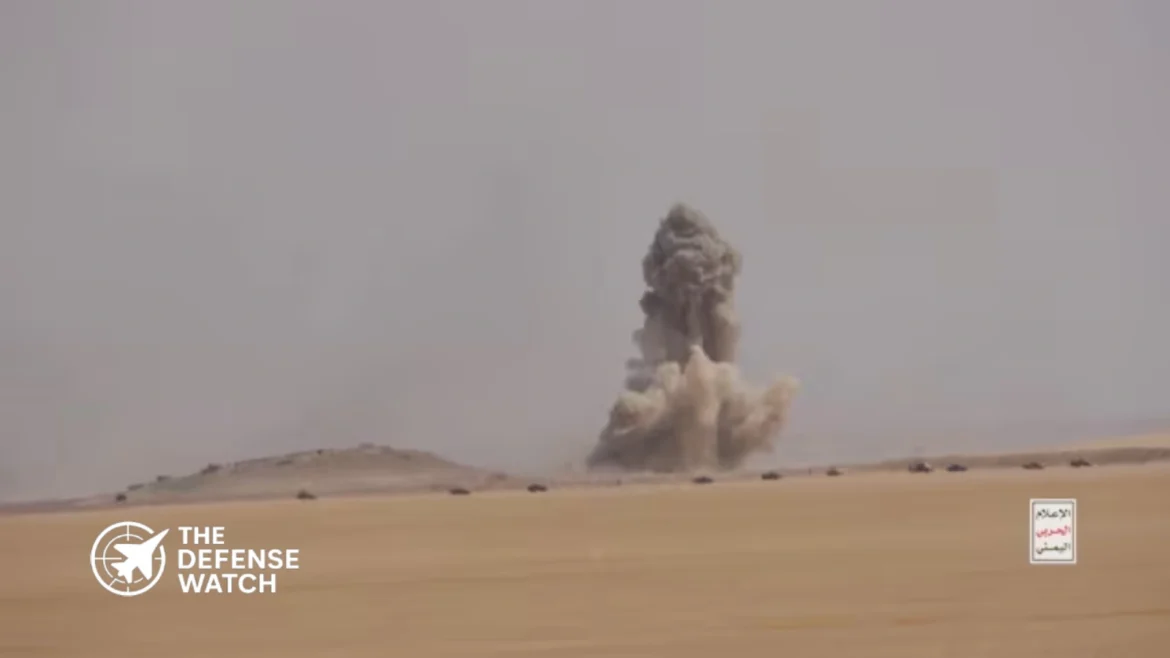
Saudi air defenses destroyed a Houthi drone south of Mecca before it entered the holy city’s prohibited airspace, according to Saudi-led coalition spokesman Maj. Gen. Turki al-Malki. The interception took place Tuesday evening and was reported by Saudi authorities on Wednesday, Sept. 16.
The incident comes as Saudi Arabia faces a renewed series of attacks linked to the Yemen conflict. Reuters reported that the latest interception occurred during a broader escalation involving Houthi attacks on Saudi targets and growing security concerns across the region.
Saudi authorities said the drone was destroyed before entering Mecca’s restricted airspace. The Saudi account identifies the incident as a significant air defense engagement because of the location near one of Islam’s holiest cities.
Saudi Account Of The Interception
According to the Saudi-led coalition, the drone was detected south of Mecca and intercepted before it could enter prohibited airspace.
Saudi Arabia has not publicly identified the drone’s specific model, launch location, payload, flight path or the air defense system used to destroy it. Those details remain undisclosed.
That distinction is important because the available reporting establishes the interception, but does not provide enough technical information to determine the exact type of unmanned aircraft or the specific interceptor used.
Saudi Press Agency reporting confirms that the Royal Saudi Air Defense Forces intercepted and destroyed the drone while it was attempting to enter the airspace of Makkah.
Houthis Deny Targeting Mecca
Houthi officials have denied that the group targeted Mecca.
Reuters reported that Mohammed al-Farah, a member of the Houthi political bureau, rejected the Saudi allegation and said the claim was false in comments carried by the Houthi-run SABA news agency.
As a result, the available evidence supports reporting that a drone was intercepted south of Mecca and that Saudi authorities attributed it to the Houthis. The stated intention to target the holy city remains disputed.
That distinction should remain clear in coverage because the Saudi and Houthi accounts differ on the intended target.
Why The Location Matters
Mecca is home to the Grand Mosque and is the destination for millions of Muslim pilgrims. Saudi authorities have therefore maintained stringent security restrictions around the city and its airspace.
Al-Malki described Mecca’s security as a red line, according to Reuters.
The reported interception also illustrates a broader challenge for Saudi air defenses. Unmanned aircraft can provide an attacking force with a relatively low-cost way to threaten infrastructure, military facilities and population centers.
For the defender, the problem involves more than simply destroying individual drones. A modern counter-drone architecture generally depends on early detection, tracking, identification and the selection of an appropriate defeat mechanism.
The Saudi government has not disclosed enough information about this particular engagement to establish which combination of sensors, command-and-control systems or interceptors was involved.
Saudi Arabia Faces Wider Drone And Missile Threats
The Mecca incident follows other attacks involving Saudi territory.
Reuters reported that Houthi forces announced attacks against Saudi targets during the previous week, including an attack on an air base on Monday. Saudi coalition officials said that attack wounded 13 civilians.
The renewed attacks come after years in which fighting between Saudi Arabia and the Houthis had substantially declined under a ceasefire and reduced cross-border hostilities.
Reuters reported that the conflict has intensified again after Houthi forces pushed back forces aligned with Yemen’s internationally recognized government earlier this month. Saudi Arabia has subsequently become more directly involved in the renewed fighting.
The security challenge also extends beyond individual military installations.
Saudi Arabia recently reported attacks against its East-West Pipeline, a major oil transportation route connecting production areas in the kingdom’s east with the Red Sea. Saudi authorities attributed that attack to drones launched from Iraq and said the strikes caused casualties and damage.
These incidents demonstrate why Saudi air defense requirements extend across a large geographic area and include both conventional military targets and critical infrastructure.
Air Defense Implications
The latest Saudi air defenses interception provides a useful example of the operational value of layered air defense around sensitive locations.
A drone approaching a protected area can be difficult to defeat if it remains undetected until the final stages of its flight. Effective defense therefore depends on creating enough detection and engagement opportunities before the aircraft reaches its protected target area.
The available reporting does not establish how far from Mecca the drone was detected or how long the Saudi defense network tracked it before engagement.
It also does not identify whether the engagement relied on a surface-to-air missile, gun-based system, electronic warfare equipment or another counter-unmanned aircraft method.
That information gap prevents a reliable assessment of the technical performance of the specific Saudi system involved.
Nevertheless, the successful interception indicates that Saudi Arabia’s air defense network was able to detect and defeat the reported unmanned threat before it entered the restricted airspace over Mecca.
The 2017 Precedent
The latest incident follows a previous Houthi missile launch toward the Mecca area in 2017.
Reuters reported that al-Malki described the September 2026 drone interception as the second Houthi attempt to target Mecca following a ballistic missile launch in July 2017.
Saudi Press Agency reporting from July 2017 also documented the interception of a ballistic missile launched toward the Mecca region.
The two incidents differ technically. The 2017 incident involved a ballistic missile, while the latest reported engagement involved an unmanned aircraft. That difference matters for air defense because drones and ballistic missiles present different detection, tracking and engagement challenges.
What Comes Next
The immediate operational significance of the latest incident is that Saudi air defenses prevented the reported drone from entering Mecca’s prohibited airspace.
The longer-term significance will depend on whether similar attacks continue and how Saudi Arabia adapts its counter-drone and wider air defense architecture.
Saudi authorities have not released technical details about the intercepted aircraft or the weapon system that destroyed it. Without those details, claims about the drone’s capabilities, payload or intended mission cannot be independently established from the current reporting.
For now, the confirmed picture is narrower: Saudi authorities say a Houthi drone was intercepted south of Mecca on Tuesday evening, the drone was destroyed before entering restricted airspace, and Houthi officials deny that Mecca was the intended target.
The incident adds another layer to an increasingly complex air defense environment in Saudi Arabia, where military sites, major cities and energy infrastructure are all exposed to different forms of unmanned and missile threats.

Houthi Attacks on Saudi Arabia Mark Major Regional Escalation
Houthi attacks on Saudi Arabia have added a new cross-border front to the widening conflict involving Iran, the United States and their regional partners.
The Iran-aligned Houthi movement said it launched missiles and drones against targets deep inside Saudi Arabia on Tuesday, September 8. Saudi authorities said attacks affected civilian and economic sites in Abha, Khamis Mushait, Jazan and Najran, with 73 people wounded, including women and children.
The strikes came as U.S. forces conducted their own escalation against Iran, destroying five Iranian crude oil carriers after the Islamic Revolutionary Guard Corps attempted to strike a U.S. Navy warship with ballistic missiles on two occasions over two days.
The simultaneous developments show how fighting that had centered on U.S. and Iranian forces is increasingly affecting neighboring countries, energy infrastructure and maritime routes.
Takeaways
The latest attacks have widened the conflict geographically, placing Saudi civilian and energy infrastructure under renewed pressure while U.S. and Iranian forces continue direct military exchanges.
Saudi Energy Infrastructure Comes Under Attack
The Houthi attacks focused on some of Saudi Arabia’s most strategically important southern areas.
The Houthis said their forces targeted a Saudi airbase in Khamis Mushait and assets belonging to Saudi Aramco in Abha, Najran and Jazan. Saudi officials confirmed fires at several sites and said the attacks wounded 73 people.
Reuters reported that satellite imagery showed a large black smoke cloud over the Jazan refinery and white smoke near an oil distribution center in Abha. The imagery provided an independent indication that energy-related facilities were affected, although the full extent of physical damage remained unclear.
The attacks are significant because Saudi Arabia has increasingly relied on routes through the Red Sea as the conflict has constrained traffic through the Strait of Hormuz.
The U.S. Energy Information Administration reported that oil and petroleum liquid flows through Bab el-Mandeb averaged 8.1 million barrels per day in the second quarter of 2026, compared with 5.4 million barrels per day in the fourth quarter of 2025. The increase reflected Saudi efforts to reroute crude away from the Strait of Hormuz.
That makes renewed attacks around southwestern Saudi Arabia more important than a conventional cross-border exchange. Damage or prolonged disruption to infrastructure connected to Red Sea export routes could affect an already strained global energy system.
U.S. Forces Destroy Five Iranian Oil Carriers
The Saudi attacks occurred alongside a separate escalation between Washington and Tehran.
U.S. Central Command said its forces destroyed five Iranian crude oil carriers on September 8 after the IRGC targeted a U.S. Navy warship with ballistic missiles twice during the previous two days. CENTCOM said the warship avoided the attacks and that no American personnel were harmed.
The five vessels identified by CENTCOM were the M/T Kaviz, M/T Charminar, M/T Horizon 1 and M/T Riesco in the Gulf of Oman, along with the M/T Derya near Kharg Island.
CENTCOM said the ships were connected to what it described as a multibillion-dollar shadow network used to finance Iran’s Islamic Revolutionary Guard Corps and regional partners. U.S. forces directed crews to abandon the vessels before the ships were struck and rendered inoperable.
The action followed U.S. strikes against three other Iranian crude carriers on September 5. The expanding maritime campaign adds pressure on Iran’s oil export infrastructure while Washington seeks to restrict Tehran’s ability to finance military operations.
Iran Reports Retaliatory Missile Strike
Iran subsequently said it launched a ballistic missile attack against a U.S. base near Al Azraq in eastern Jordan.
Reuters reported that the claim came through an IRGC statement carried by Iranian state media. At the time of reporting, Jordan and the U.S. military had not independently confirmed the attack.
That distinction is important for accurate reporting because the status and effectiveness of the reported strike remained unverified.
The wider sequence nevertheless shows the increasingly interconnected nature of the conflict. Iranian military pressure on U.S. forces is occurring alongside attacks by the Houthis against Saudi Arabia and continued threats to maritime traffic around the Red Sea and Gulf.
Why the Bab el-Mandeb Matters
The Houthi attacks on Saudi Arabia also carry implications beyond the immediate battlefield.
The Bab el-Mandeb connects the Red Sea with the Gulf of Aden and is an important route for oil, container shipping and other commercial traffic. Saudi Arabia has used infrastructure connected to the Red Sea to redirect some oil flows away from the Strait of Hormuz.
EIA data shows how much the regional conflict has already altered those patterns. Oil and petroleum liquid flows through Hormuz averaged only 4.9 million barrels per day in the second quarter of 2026, compared with 21.6 million barrels per day in the fourth quarter of 2025. At the same time, Bab el-Mandeb flows increased to 8.1 million barrels per day.
This creates a strategic vulnerability. If both major routes face sustained disruption, producers and consumers have fewer practical alternatives.
EIA has previously noted that Saudi Arabia can redirect some crude through the East-West pipeline toward Yanbu and use alternative routes through the Suez Canal and Sumed pipeline. However, those options are more limited and can be more expensive than normal shipping routes.
Conflict Pressure Extends Into Aviation and Trade
The military escalation is also being reinforced by economic measures.
The U.S. Treasury Department announced sanctions on September 8 targeting 36 entities and individuals connected to Iran’s aviation sector. Treasury said the action was designed to restrict networks used to move weapons, personnel and illicit cargo and to limit Iran’s access to aircraft and sensitive aviation technology.
The measure forms part of Washington’s broader economic pressure campaign against Tehran.
Taken together with attacks on oil carriers, the sanctions show that the conflict is being fought through multiple channels: military strikes, maritime interdiction, financial restrictions and pressure on aviation networks.
What the Saudi Attacks Mean for Regional Security
The latest Houthi attacks on Saudi Arabia represent a significant expansion in the geographic reach of the current conflict.
Saudi Arabia has fought the Houthis for more than a decade as part of the broader Yemen war, but hostilities had eased substantially after the 2022 ceasefire. Reuters reported that the ceasefire has now broken down as Saudi-backed Yemeni forces conduct a multipronged offensive against Houthi-held areas.
The renewed fighting inside Yemen provides a direct context for the latest cross-border strikes.
The Houthi ability to reach Saudi military and economic targets also reinforces the importance of layered air and missile defense across the kingdom. Protecting energy infrastructure requires more than defending individual facilities. It requires persistent detection, tracking, interception and rapid recovery after an attack.
For Saudi Arabia and its partners, the challenge is therefore both military and economic. Even limited physical damage can create wider effects if attacks force temporary shutdowns, disrupt shipping schedules or increase insurance and transportation costs.
Energy Markets Remain a Key Pressure Point
Oil prices responded to the latest developments, although Reuters reported that Brent crude remained below $100 per barrel despite the renewed disruptions. The benchmark had risen to its highest level since July 23 as the conflict intensified.
The market reaction reflects the central role of energy infrastructure in the current confrontation.
The Strait of Hormuz and Bab el-Mandeb are not interchangeable routes. They serve different geographic functions, but disruption at either chokepoint can increase shipping costs and reduce the flexibility available to producers and traders.
The attacks on Saudi facilities therefore have significance beyond the immediate damage assessment. If cross-border strikes become persistent, the risk shifts from isolated incidents toward a broader threat to regional energy logistics.
Bottom Line
The latest Houthi attacks on Saudi Arabia have opened another pressure point in an already expanding Middle East conflict.
Missile and drone strikes on Abha, Khamis Mushait, Jazan and Najran wounded 73 people and caused fires at energy-related sites, according to Saudi authorities. At the same time, U.S. forces destroyed five Iranian crude oil carriers after attempted Iranian attacks on a U.S. Navy warship.
The immediate military picture remains fluid, but the strategic concern is clear. Fighting is no longer confined to isolated exchanges between U.S. and Iranian forces. Saudi energy infrastructure, Red Sea shipping and Gulf maritime traffic are increasingly exposed to the same conflict.
For Washington and its regional partners, protecting those networks will be central to limiting the conflict’s wider military and economic effects.
The United States has approved a potential $5 billion sale of Joint Direct Attack Munition Extended Range, or JDAM-ER, weapons to Saudi Arabia, giving the Royal Saudi Air Force a major proposed expansion of its precision air-to-ground arsenal. The State Department announced the approval on September 4, with Boeing identified as the principal contractor.
Takeaways
The proposed U.S. sale would significantly expand Saudi Arabia’s inventory of extended-range precision-guided air-to-ground weapons while deepening U.S. support for the Royal Saudi Air Force.
The proposal is a Foreign Military Sale, meaning the September 4 decision authorizes the possible transaction but does not mean a final contract has already been signed or that all weapons have been delivered.
The package would provide Saudi Arabia with more than 10,000 JDAM-family guidance kits and associated bomb bodies. Aviation Week reported that the proposed inventory includes 10,004 precision-guided weapons, including 5,004 weapons in the 500-pound class and 5,000 in the 2,000-pound class.
Proposed JDAM-ER Package At A Glance
| Item | Quantity | Role |
|---|---|---|
| KMU-572 JDAM guidance kits | 5,004 | 500-pound class weapons |
| KMU-556 JDAM guidance kits | 5,000 | 2,000-pound class weapons |
| BLU-111 bomb bodies | 5,004 | 500-pound general-purpose bomb |
| BLU-117 bomb bodies | 5,000 | 2,000-pound general-purpose bomb |
| Estimated package value | $5 billion | JDAM-ER and associated equipment |
| Principal contractor | Boeing | Weapon system |
The quantities and configuration reported for the proposed package indicate that Riyadh is seeking both lighter and heavier JDAM-ER configurations rather than concentrating on a single bomb class.
What JDAM-ER Adds To The Standard JDAM
JDAM is fundamentally a guidance system rather than a completely new bomb body. The U.S. Air Force describes the system as a tail kit that converts conventional free-fall bombs into GPS-aided precision weapons using an inertial navigation system and satellite navigation.
Standard JDAM provides a relatively inexpensive way to turn existing bomb inventories into precision weapons. The conventional system has a published range of up to approximately 15 miles, depending on launch conditions and configuration.
JDAM-ER adds a modular wing kit to the weapon. Boeing says the system can be fitted to existing JDAM weapons and provides more than triple the range of the conventional JDAM, with demonstrated performance exceeding 40 nautical miles.
That difference is operationally important because greater glide range allows an aircraft to release its weapon farther from the target. It does not turn JDAM-ER into a powered cruise missile, but it increases the distance between the launching aircraft and the target while retaining the basic JDAM guidance architecture.
Boeing also says the ER wing kit can be installed or removed as required, giving operators greater flexibility in configuring their weapons inventory.
Why The Range Increase Matters
The principal military value of JDAM-ER is not simply greater distance. It is the combination of precision, relatively low weapon complexity and increased release distance.
A conventional JDAM requires the launching aircraft to approach closer to the target area. Increasing the weapon’s glide range gives aircraft more options for attack geometry and can reduce the time they spend operating inside the engagement zones of some shorter-range air defense systems.
Boeing says JDAM-ER allows aircraft to attack targets farther outside the effective range of many air defenses while retaining GPS-aided guidance.
The distinction is important. JDAM-ER should not be treated as a universal solution to modern integrated air defense systems. Its effectiveness depends on factors including launch altitude, speed, target location, navigation conditions, enemy sensors and the density and reach of opposing air defenses.
Its principal advantage is therefore additional standoff rather than immunity from air defense.
A Large Expansion Of Saudi Precision Weapons
The proposed package would represent a substantial addition to Saudi Arabia’s existing inventory of U.S.-supplied precision-guided munitions.
Saudi Arabia has previously purchased JDAM-related equipment from the United States. A 2015 U.S. government notification, for example, included thousands of JDAM tail kits as part of a broader air-to-ground weapons package for the Royal Saudi Air Force.
The new proposal is considerably different in scale and configuration because it centers on the extended-range version.
The proposed 5,004 KMU-572 kits are associated with the 500-pound class, while the 5,000 KMU-556 kits support the heavier 2,000-pound class. The package therefore combines a large number of lighter weapons with an equally significant quantity of heavier weapons.
This gives Saudi planners a broader selection of weapon weight classes for different target sets without requiring a completely new aircraft weapon interface.
Compatibility Could Reduce Integration Burden
One of JDAM-ER’s more significant characteristics is its relationship with the existing JDAM architecture.
Boeing says JDAM-ER uses the existing JDAM aircraft interface and is designed to minimize aircraft software changes on platforms that already support JDAM. The company also describes the weapon as retaining the baseline JDAM logistics approach.
That matters for a large foreign military operator because introducing a new air-to-ground weapon can require aircraft software changes, weapons separation testing, training, mission-planning updates and new logistics procedures.
A system that builds on an established weapon interface can reduce some of those integration requirements, although individual aircraft configurations still require appropriate testing and certification.
For Saudi Arabia, which operates U.S.-origin combat aircraft including the F-15SA, the ability to build on an existing JDAM ecosystem could be particularly relevant. Boeing identifies the F-15 family among the aircraft associated with its broader JDAM portfolio.
The F-15SA And Saudi Airpower
Saudi Arabia’s F-15 fleet forms a major component of its conventional airpower. The Royal Saudi Air Force operates the F-15SA, an advanced derivative of the F-15 family equipped for multirole operations.
The aircraft’s combination of payload capacity, range and modern avionics makes it suitable for carrying large numbers of precision-guided air-to-ground weapons.
The proposed JDAM-ER purchase therefore fits an existing Saudi force structure rather than requiring Riyadh to create an entirely new strike capability around a new aircraft.
This is one reason the proposed sale is strategically significant. The United States would be expanding the weapons available to an established Saudi combat aircraft fleet rather than simply transferring an isolated munition.
Precision And Magazine Depth
Another important aspect of the proposal is quantity.
Modern air warfare increasingly places pressure on precision-munition inventories because aircraft may need to attack numerous targets during sustained operations. A large inventory of guided weapons can give an air force greater ability to conduct repeated strike missions without relying exclusively on more expensive or more complex standoff missiles.
JDAM-ER occupies a useful position between conventional JDAM and longer-range powered weapons.
It provides greater reach than the basic JDAM while retaining a relatively straightforward glide-weapon design. Boeing’s broader precision-guided munitions portfolio describes JDAM and its derivatives as affordable weapons intended to provide mass and flexibility alongside more expensive systems.
That combination can be important in a prolonged campaign where the number of weapons available may be as significant as the performance of any individual munition.
Separate $750 Million AGT-1500 Engine Sale
The JDAM-ER approval was accompanied by a separate U.S. decision involving Saudi Arabia’s land forces.
The State Department approved a possible $750 million sale of AGT-1500 tank engines, with Honeywell identified as the principal contractor. Reuters reported the engine transaction separately from the $5 billion JDAM-ER package.
The AGT-1500 is the gas turbine engine used in the M1 Abrams family. U.S. government defense trade records identify the AGT-1500 as an engine for the M1 tank series.
The two proposed transactions therefore cover different parts of Saudi Arabia’s force structure: JDAM-ER would strengthen air-launched precision strike capacity, while the engine package would support the sustainment of Saudi armored forces.
Broader U.S. Defense Relationship With Riyadh
The proposed sale also illustrates the breadth of the U.S.-Saudi defense relationship.
Saudi Arabia remains a major operator of U.S.-origin combat aircraft, armored vehicles and weapons. U.S. government records show a long history of Saudi purchases involving JDAM systems, guided bombs and other air-to-ground weapons.
For Washington, continued weapons sales provide a mechanism for sustaining interoperability between U.S. and Saudi forces while supporting the readiness of a major Gulf military.
For Riyadh, access to U.S. precision weapons provides additional depth to an air force already structured around American aircraft and weapons systems.
The JDAM-ER proposal is therefore more than a single ammunition purchase. It extends an established weapons architecture and adds greater standoff capability to Saudi air operations.
What Happens Next
The September 4 announcement represents an approval for a potential Foreign Military Sale, not a completed acquisition.
The proposed transaction must proceed through the Foreign Military Sales process, including negotiations over final quantities, configuration, pricing, delivery schedules and contractual terms.
The $5 billion figure is an estimated value for the proposed package and associated support. The final value can change as the two governments negotiate the actual agreement.
The same distinction applies to the separate $750 million AGT-1500 engine proposal.
If completed, however, the JDAM-ER transaction would give Saudi Arabia more than 10,000 extended-range precision-guided weapons and substantially increase the number of targets its combat aircraft could engage while maintaining greater separation from defended areas.
Why The JDAM-ER Sale Matters
The proposed Saudi purchase highlights a broader trend in air warfare: increasing demand for precision weapons that provide standoff range without the cost and complexity of a large powered missile inventory.
JDAM-ER does not replace cruise missiles or other dedicated long-range strike weapons. Instead, it fills a different role by extending the reach of an established bomb and guidance system.
For Saudi Arabia, that means more options for using its existing combat aircraft against fixed targets while reducing the need to rely solely on shorter-range guided bombs.
For the United States, the deal would deepen an established defense relationship with a key Gulf partner and place a large quantity of U.S.-designed precision weapons into the hands of a major regional air force.
The immediate significance is therefore straightforward: if the proposed sale proceeds, Saudi Arabia will gain a much larger precision-strike magazine and a meaningful increase in the standoff range available to its JDAM-equipped aircraft.

Executive Summary:
Pakistan’s Makkah Joint Defence Agreement with Saudi Arabia and Türkiye could develop into a wider economic partnership covering investment, energy, industrial production, technology and defense manufacturing. The agreement itself does not create an automatic economic bloc, however, and Pakistan’s ability to convert strategic ties into sustained investment will depend on macroeconomic stability, regulatory reforms, infrastructure and project execution.
Pakistan’s Makkah Defense Pact Opens A Wider Economic Question
The Pakistan Makkah defense pact signed with Saudi Arabia and Türkiye on August 7 has immediate military and geopolitical implications, but its longer-term importance may extend into investment, energy security and industrial cooperation. Reuters reported that the agreement treats an armed attack against one member as an attack against all, while the three governments have emphasized its defensive character and have not presented it as a replacement for existing alliances.
For Pakistan, the economic dimension is particularly significant because Islamabad continues to balance external financing requirements with efforts to attract foreign capital, strengthen reserves and move from stabilization toward sustainable growth.
The strategic relationship with Saudi Arabia already has an important financial component. In April, Pakistan’s Finance Ministry said Saudi Arabia had committed an additional $3 billion in deposits and agreed to extend an existing $5 billion Saudi deposit for a longer period, providing support for Pakistan’s external financing position.
That existing financial relationship means the Makkah agreement is being signed on top of established economic ties rather than creating them from scratch.
Saudi Capital Could Support Pakistan’s Energy And Infrastructure Priorities
Energy is one of the clearest areas where closer Pakistan-Saudi relations could produce measurable economic effects.
Pakistan has historically relied heavily on imported energy, making global oil prices and foreign exchange availability important variables for its balance of payments. Saudi financing has previously helped Islamabad manage part of that exposure.
The Saudi Fund for Development said in 2025 that its oil derivatives financing for Pakistan had reached approximately $6.7 billion since 2019. The latest agreement at that time provided $1.2 billion for oil derivative imports.
More recently, Pakistani officials have been discussing a potential new Saudi oil financing arrangement reportedly worth $6.7 billion over 15 years, with a proposed five-year grace period and a 1 percent interest rate. The proposal was still under discussion and should not be treated as a finalized financing commitment.
If implemented, such financing could reduce short-term pressure on Pakistan’s foreign exchange position and provide greater predictability for energy imports. It would not, by itself, resolve the structural problems affecting Pakistan’s energy sector, including circular debt, transmission constraints and the financial condition of state-owned utilities.
That distinction is important. External financing can provide liquidity, but lasting energy security requires domestic reforms and investment in generation, transmission, distribution and indigenous energy production.
Investment Is The Bigger Test Of The Makkah Partnership
The central economic question is whether political and security confidence can translate into actual capital deployment.
Pakistan and Saudi Arabia already have an economic cooperation framework covering areas including energy, industry, mining, information technology, tourism, agriculture and food security. Islamabad has also been seeking Saudi participation in major projects and investment opportunities across the economy.
Saudi investment could be particularly important in capital-intensive sectors where Pakistan faces financing constraints.
Potential areas include:
Sector Potential Economic Role Energy Oil, gas, refining, renewable power and electricity infrastructure Mining Development of mineral resources and processing capacity Logistics Ports, transport corridors and warehousing Agriculture Food security, processing and export-oriented production Digital economy Data infrastructure, IT services and technology Manufacturing Industrial projects and supply-chain development Tourism Hospitality, transport and related services Defense industry Joint production, maintenance and technology cooperation The economic logic is straightforward. Saudi Arabia has access to significant investment capital and is pursuing economic diversification under Vision 2030, while Pakistan has a large domestic market, a substantial labor force, natural resources and geographic access to South and Central Asian markets.
The difficult part is turning that complementarity into commercially viable projects.
Türkiye Adds An Industrial And Technology Dimension
Türkiye’s role is different from Saudi Arabia’s.
Ankara has developed a substantial domestic defense industry and industrial base spanning aerospace, naval systems, unmanned aircraft, electronics, armored vehicles and precision weapons. Pakistan and Türkiye already cooperate in areas including naval shipbuilding, aerospace and defense modernization.
The new trilateral framework could therefore provide a platform for combining Saudi financing with Turkish industrial expertise and Pakistani manufacturing capacity.
For the defense sector, that could potentially support joint ventures involving maintenance, components, unmanned systems, naval platforms, electronics and other military technologies.
However, a defense agreement does not automatically create industrial integration. Successful joint production requires export controls, intellectual property arrangements, financing structures, technical standards, supply-chain agreements and long-term procurement commitments.
These mechanisms would have to be negotiated separately.
Pakistan’s Defense Industry Could Gain From Greater Regional Integration
The defense-industrial dimension deserves particular attention because the three countries bring different capabilities to the relationship.
Pakistan has an established defense production sector and experience developing and exporting aircraft, armored vehicles, naval systems and other military equipment. Türkiye has expanded its defense exports and developed advanced domestic platforms and subsystems. Saudi Arabia is seeking to increase domestic defense production as part of its broader economic diversification strategy.
This creates a potential industrial model in which:
- Saudi Arabia provides capital and access to Gulf markets.
- Türkiye contributes engineering, systems integration and industrial technology.
- Pakistan contributes manufacturing capacity, engineering manpower and established defense-production experience.
Such cooperation could be relevant to unmanned systems, naval platforms, ammunition, electronics, maintenance and other areas where regional production capacity is increasingly important.
For the United States and other Western defense suppliers, the development is also worth watching because greater regional defense-industrial cooperation can affect future procurement patterns, technology partnerships and supply-chain relationships.
At the same time, the scale of any future cooperation remains uncertain until specific contracts, production agreements and investment commitments are announced.
Trade Remains A Major Weakness
Security cooperation among Pakistan, Saudi Arabia and Türkiye is considerably deeper than their three-way commercial integration.
Pakistan’s trade relationship with Saudi Arabia remains dominated by energy imports and a relatively narrow range of exports. Pakistan also has significant room to increase commercial trade with Türkiye.
The broader opportunity lies in moving beyond government-to-government agreements toward private-sector investment and supply-chain integration.
Pakistan could potentially expand exports in areas such as:
- Textiles and apparel
- Rice and processed food
- Surgical instruments
- Sports goods
- Leather products
- Pharmaceuticals
- Engineering goods
- Information technology services
Saudi Arabia’s large investment program and Türkiye’s industrial base could also create opportunities for Pakistani suppliers to become part of regional manufacturing and logistics networks.
But this requires more than diplomatic access. Pakistani exporters need competitive energy costs, reliable infrastructure, predictable taxation, efficient customs procedures and stable commercial regulations.
Pakistan’s Macroeconomic Position Remains The Main Constraint
The Makkah agreement comes while Pakistan is still implementing a major economic reform program supported by the International Monetary Fund.
The IMF completed Pakistan’s third review under its Extended Fund Facility and second review under the Resilience and Sustainability Facility in May 2026. The decision unlocked approximately $1.1 billion under the EFF and about $220 million under the RSF, taking combined disbursements under the two arrangements to about $4.8 billion.
The IMF continues to emphasize fiscal discipline, stronger public finances, improved competition, higher productivity, state-owned enterprise reform and energy-sector viability.
Those issues directly affect foreign investment.
A major Saudi or Turkish investor evaluating a multibillion-dollar project will look beyond diplomatic agreements. The investment decision will depend on currency stability, taxation, repatriation rules, energy availability, contract enforcement, infrastructure and the ability of Pakistani institutions to execute projects on schedule.
This is why the Makkah pact should be viewed as an enabling political framework rather than an economic guarantee.
Remittances Already Give Saudi Arabia Strategic Economic Importance
The relationship also extends well beyond government financing and investment.
Saudi Arabia is a major source of remittances for Pakistan. The State Bank of Pakistan reported that Pakistani workers sent home $1.025 billion from Saudi Arabia in May 2026 alone.
Total Pakistani workers’ remittances reached $38.1 billion during July-May of fiscal year 2026, up 9.2 percent from the same period a year earlier. Saudi Arabia was the largest source among the countries listed by the central bank in its May data.
This provides another economic foundation for the strategic relationship.
Labor mobility, skills development and technology transfer could therefore become important components of the broader partnership, particularly as Saudi Arabia continues developing large infrastructure, tourism, technology and industrial projects.
What The Pact Could Mean For U.S. Defense Strategy
From a U.S. defense perspective, the development is significant because it reflects a broader trend toward regional states building additional security relationships outside traditional alliance structures.
The agreement does not eliminate Saudi Arabia’s existing security relationship with Washington, nor does it replace Türkiye’s NATO membership. Reuters reported that the Makkah agreement complements existing arrangements rather than replacing them.
Its importance lies instead in the growing willingness of regional powers to combine their own military capabilities, financing and industrial resources.
For Washington, that could create both opportunities and challenges.
Greater regional defense capacity can reduce pressure on U.S. forces and strengthen the ability of partners to protect critical infrastructure and maritime routes. At the same time, expanding indigenous defense production could gradually reduce dependence on Western suppliers in selected categories.
The eventual impact will depend on whether the agreement remains primarily a political commitment or develops into a structured defense-industrial and operational framework.
Execution Will Determine Whether The Economic Promise Becomes Real
The Makkah pact gives Pakistan an opportunity to connect defense diplomacy with economic policy, but the agreement itself cannot solve Pakistan’s structural economic problems.
The most important indicators to watch over the next 12 to 24 months will be concrete rather than rhetorical:
- Signed investment agreements: Whether announced Saudi and Turkish investment plans become legally binding projects.
- Energy financing: Whether proposed Saudi financing arrangements are finalized and implemented.
- Industrial projects: Whether joint ventures establish actual production facilities inside Pakistan.
- Trade growth: Whether bilateral trade moves beyond existing commodity patterns.
- Defense manufacturing: Whether the three countries establish joint production or technology partnerships.
- Infrastructure execution: Whether major projects move from memorandums to construction and operation.
- Economic reforms: Whether Pakistan improves the regulatory and financial conditions required to retain foreign investment.
The economic potential is substantial, but the distinction between announced investment and realized investment is critical.
Pakistan already has extensive experience with large foreign investment announcements that take years to reach financial close or construction.
The Strategic Opportunity Extends Beyond Defense
The Makkah Joint Defence Agreement creates a new layer in relations among Pakistan, Saudi Arabia and Türkiye, but its economic significance will ultimately depend on what follows the signing ceremony.
Saudi Arabia can provide investment capital and access to Gulf markets. Türkiye brings industrial and technological capabilities, while Pakistan offers manufacturing capacity, a large workforce, strategic geography and access to regional markets.
That combination gives the three countries a potentially complementary economic relationship.
The next stage will require detailed commercial agreements, financing structures, industrial partnerships and regulatory reforms.
For Pakistan, the central challenge is therefore not attracting headlines around the Makkah pact. It is converting strategic trust into factories, energy projects, technology partnerships, exports and long-term private investment.
That is the measure that will determine whether the agreement becomes an important economic milestone or remains primarily a defense and diplomatic arrangement.
Executive Summary:
Saudi Arabia, Pakistan and Turkey signed the Mecca Joint Defense Agreement on Aug. 7, creating a trilateral framework under which an armed attack against one member is regarded as an attack against all three. The agreement strengthens collective deterrence and defense cooperation, while its signatories stress that it is defensive and not directed against any specific country.
Saudi Arabia, Pakistan And Turkey Establish New Defense Framework
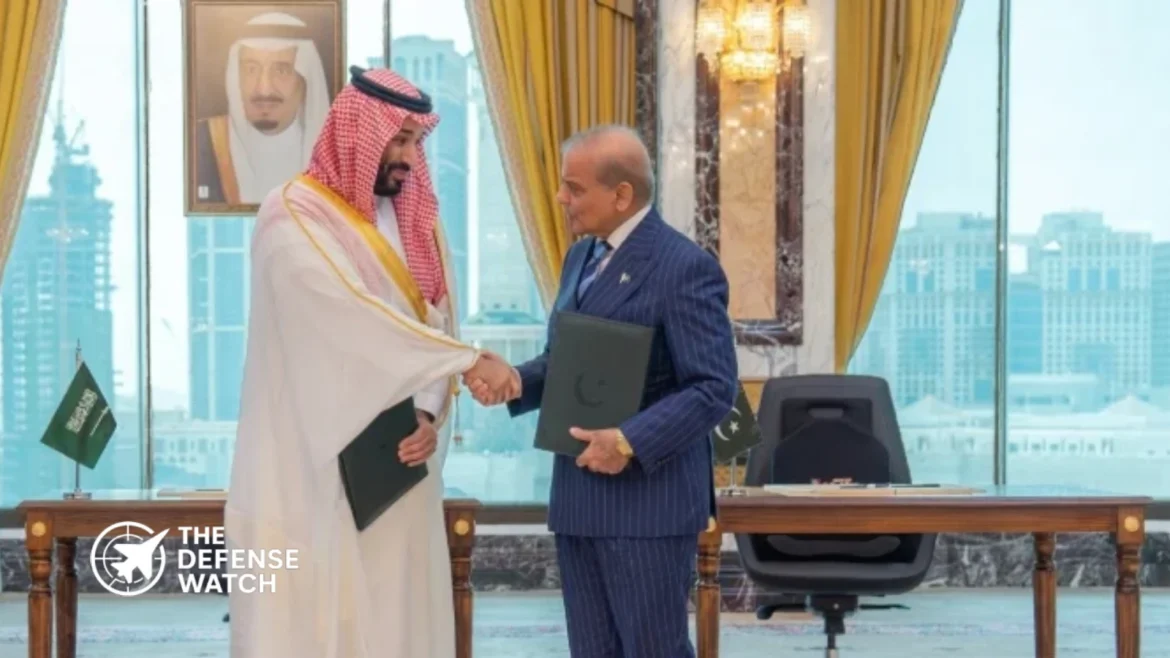
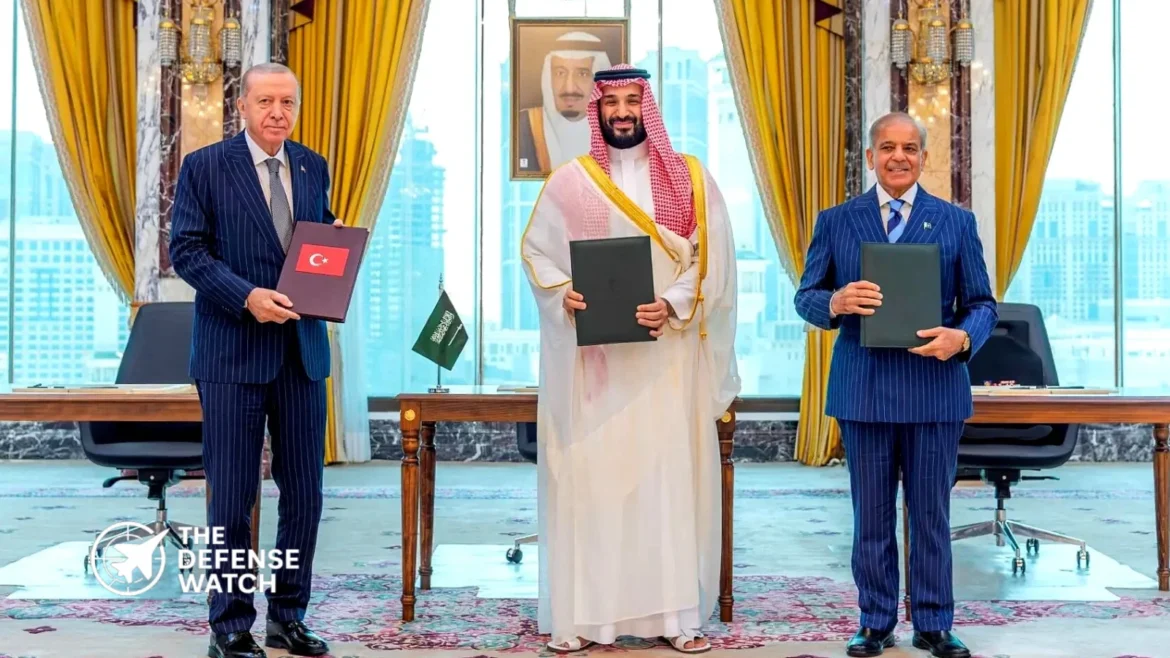
The Mecca Joint Defense Agreement brings Saudi Arabia, Pakistan and Turkey into a new collective security framework at a time of heightened instability across the Middle East. The agreement was signed in Mecca on Aug. 7 by Saudi Crown Prince Mohammed bin Salman, Turkish President Recep Tayyip Erdogan and Pakistani Prime Minister Shehbaz Sharif.
The central provision states that an armed attack against any one of the three countries will be regarded as an attack against all three. The language creates a collective-defense commitment, although the agreement does not publicly specify an automatic military response or establish detailed force commitments comparable to NATO’s integrated military structure.
The agreement is significant because it formalizes defense cooperation among three countries with different but complementary military capabilities. Turkey is a NATO member with a large conventional military and a growing domestic defense industry. Pakistan contributes extensive military experience and a nuclear deterrent, while Saudi Arabia provides substantial economic resources and a major regional security role.
From Bilateral Pact To Trilateral Security Arrangement
The new framework builds on the Strategic Mutual Defense Agreement signed by Saudi Arabia and Pakistan in September 2025. That earlier agreement also established a collective-defense principle under which aggression against either country would be treated as aggression against both.
The addition of Turkey represents a major expansion of that security relationship.
The development was not unexpected. In January 2026, Turkish officials acknowledged discussions with Pakistan and Saudi Arabia over broader defense cooperation. At the time, Turkish Foreign Minister Hakan Fidan said talks were underway but that no agreement had yet been signed.
By August, those negotiations had produced a formal trilateral agreement.
Reuters reported that the agreement had been under discussion for more than two years and that the three governments intend to establish institutional mechanisms for cooperation. Fidan said a ministerial committee would be created, alongside a permanent secretariat in Saudi Arabia.
Agreement Emphasizes Deterrence, Not A Named Adversary
The Mecca Joint Defense Agreement has attracted attention because of its collective-defense language, but officials from the three countries have been careful to describe it as defensive.
Fidan said Aug. 8 that the agreement was not directed against Iran or any other country. He said the pact is intended to provide a general security commitment and that the participating states would determine the nature and scale of assistance following an attack.
Pakistan’s Foreign Minister Ishaq Dar similarly described the agreement as purely defensive and said it was not aimed at a particular state. He also said the framework remains open to other countries that support its principles.
That distinction matters. The agreement establishes a political and strategic commitment to collective defense, but the available public information does not indicate the creation of a permanently integrated military command, standing trilateral force or automatic deployment mechanism.
In practical terms, the pact provides a framework through which the three governments can coordinate responses, share capabilities and strengthen deterrence without replacing their existing bilateral and multilateral defense arrangements.
Turkey Adds Defense Industry And Military Capacity
Turkey’s participation adds an important industrial and military dimension to the arrangement.
Ankara has developed a broad domestic defense sector spanning unmanned aircraft, air defense, precision weapons, armored vehicles, naval systems and combat aircraft programs. Turkish defense companies have also expanded their export presence across the Middle East and other markets.
Turkey’s military relationship with Saudi Arabia has grown alongside this defense-industrial expansion. The two countries have increased cooperation in areas including unmanned systems and defense technology.
For Pakistan, Turkish defense cooperation also provides another channel for military modernization and technology collaboration. Islamabad and Ankara have maintained long-standing defense ties, including cooperation involving naval platforms, aircraft and other military systems.
The trilateral framework could therefore provide a political umbrella for deeper defense-industrial cooperation, although the agreement itself does not announce specific weapons contracts.
Saudi Arabia Gains A Broader Security Partnership
For Riyadh, the agreement expands its formal defense relationships beyond the existing Saudi-Pakistani arrangement.
Saudi Arabia has invested heavily in air defense, combat aircraft, missiles, unmanned systems and other military capabilities as it seeks to protect critical infrastructure and strategic facilities. The kingdom’s security concerns have increased as regional conflicts have produced missile, drone and maritime threats.
Pakistan has already demonstrated its willingness to support Saudi security cooperation under the bilateral framework. In April, Saudi authorities confirmed the arrival of Pakistani military personnel and fighter aircraft in the kingdom to strengthen joint defense cooperation.
The new trilateral pact creates a wider political framework around those relationships.
Turkey also brings a NATO-standard military structure and experience operating alongside Western forces, while maintaining an increasingly independent defense-industrial base.
Pakistan’s Role Extends Beyond South Asia
The Mecca Joint Defense Agreement also gives Pakistan a larger formal role in a Middle Eastern security framework.
Islamabad has maintained close defense ties with Riyadh for decades and has previously deployed military personnel to Saudi Arabia. The two countries’ 2025 defense agreement already established a collective-defense relationship.
Pakistan’s position is particularly notable because it maintains relationships with Saudi Arabia, Turkey, Iran and other regional actors. Islamabad has also sought to position itself as a diplomatic channel during periods of heightened regional tension.
That balancing role could become increasingly important as the new defense framework develops.
At the same time, the agreement does not automatically mean Pakistan or Turkey would enter every conflict involving Saudi Arabia, or that Saudi Arabia would automatically participate in a future conflict involving Pakistan or Turkey. The public statements indicate that the form and scale of assistance would be determined through consultation.
Potential Expansion To Other Countries
One of the most important unanswered questions is whether the agreement will remain trilateral.
Fidan said Turkey’s leadership wants the framework to expand beyond the three founding members. He identified Egypt as a potential participant, although technical and political issues would have to be resolved before any expansion.
Expansion would significantly change the strategic weight of the arrangement.
Egypt would add another major Arab military power and give the framework a stronger geographic position linking the eastern Mediterranean, Red Sea and Gulf regions. However, there is currently no confirmed timetable for Egyptian accession.
The immediate priority appears to be establishing the institutions needed to make the existing agreement operational.
What The Pact Means For Regional Security
The significance of the Mecca Joint Defense Agreement lies less in the creation of a new military force and more in the formalization of political commitments among three major regional powers.
The agreement brings together countries with different strategic priorities and military strengths. Turkey offers defense technology and conventional military capacity. Pakistan provides military experience and strategic deterrence. Saudi Arabia contributes financial resources, regional influence and an important geographic position.
That combination could improve coordination in areas such as intelligence sharing, military planning, defense technology and counterterrorism.
However, the pact’s ultimate effectiveness will depend on how its collective-defense clause is implemented. NATO’s Article 5 operates within a much more developed institutional system, including integrated command structures, standardized procedures and decades of joint planning. The Mecca agreement is at an early stage and still needs to establish its mechanisms for consultation and implementation. Reuters reported that operational details are expected to be addressed through the planned ministerial committee.
The agreement therefore represents an important political development, but its military consequences will depend on decisions that have yet to be made.
A New Layer In Middle East Defense Cooperation
The signing of the Mecca pact marks a new stage in security cooperation between Saudi Arabia, Pakistan and Turkey.
It does not replace existing alliances or defense partnerships, and its signatories have explicitly rejected the idea that it is directed against a particular country. Instead, the agreement establishes a framework for collective deterrence and deeper defense coordination.
Its long-term importance will depend on whether the three governments translate the political commitment into regular military cooperation, shared planning and concrete defense programs.
For now, the agreement gives Saudi Arabia, Pakistan and Turkey a formal mechanism for coordinating their security interests while leaving the scope of future military cooperation open.
atOptions = { ‘key’ : ‘e7d18db8b7513fb2a224cf4c3f18bbf0’, ‘format’ : ‘iframe’, ‘height’ : 90, ‘width’ : 728, ‘params’ : {} };Executive Summary:
The U.S. Department of State has approved a possible $1.96 billion Foreign Military Sale to Saudi Arabia for up to 20,000 Advanced Precision Kill Weapon System II (APKWS-II) guidance sections and associated equipment. The proposed package is intended to strengthen Saudi Arabia’s precision engagement capabilities while enhancing interoperability with U.S. and allied forces across the Gulf region.
U.S. Approves $1.96 Billion APKWS-II Sale To Saudi Arabia
The Advanced Precision Kill Weapon System II (APKWS-II) is at the center of a newly approved U.S. Department of State Foreign Military Sale (FMS) notification that could significantly expand Saudi Arabia’s precision air combat capabilities. The proposed sale, valued at approximately $1.96 billion, was announced through the Defense Security Cooperation Agency (DSCA), which formally notified Congress of the potential transaction.
If finalized, the package will provide the Kingdom of Saudi Arabia with thousands of precision guidance kits capable of converting standard 70 mm Hydra rockets into low-cost precision-guided munitions for both air-to-air and air-to-ground missions.
- (adsbygoogle = window.adsbygoogle || []).push({});
Saudi Arabia Requests Up To 20,000 APKWS-II Guidance Kits
According to the U.S. notification, Saudi Arabia has requested:
Equipment Quantity APKWS-II Air-to-Air Guidance Sections Up to 10,000 APKWS-II Air-to-Ground Guidance Sections Up to 10,000 LAU-131 A/A Rocket Launchers Included Mk-152 High Explosive Warheads Included Mk66 Rocket Motors Included Proximity Fuzes Included Practice Warheads Included Inert Rocket Motors Included Test Equipment Included Spare Parts & Logistics Support Included Training & Technical Documentation Included The package also includes engineering support, logistics services, transportation, publications, training equipment, and long-term maintenance support.
BAE Systems Named As Principal Contractor
The proposed sale identifies BAE Systems, based in Nashua, New Hampshire, as the principal contractor responsible for supplying the APKWS-II systems.
The U.S. government stated that no offset agreements have been identified at this stage. Any industrial participation arrangements would be negotiated separately between Saudi Arabia and the contractor.
Implementation of the program is expected to require approximately:
- 15 additional U.S. Government representatives
- 15 contractor personnel
These personnel would deploy to Saudi Arabia for extended periods to provide technical assistance, maintenance support, training, and program management.
Why APKWS-II Matters
Originally developed as a cost-effective method of transforming unguided Hydra 70 rockets into precision-guided weapons, the APKWS-II uses a laser guidance section installed between the rocket motor and warhead.
Rather than replacing existing rocket inventories, the system upgrades them into precision munitions capable of engaging targets with significantly greater accuracy while reducing collateral damage.
Key characteristics include:
- Semi-active laser guidance
- Compatibility with existing Hydra 70 rockets
- Air-to-ground precision strike capability
- Increasing use in air-to-air counter-drone engagements
- Lower cost than many conventional guided missiles
Because it leverages existing rocket inventories and launch systems, APKWS-II has become an attractive solution for air forces seeking affordable precision weapons without procuring entirely new missile families.
(adsbygoogle = window.adsbygoogle || []).push({});Expanding Saudi Air Combat Options
Although APKWS-II was initially fielded for precision ground attack missions, recent operational use has demonstrated its growing role in aerial engagements.
The inclusion of both air-to-air and air-to-ground guidance sections suggests Saudi Arabia intends to expand operational flexibility across multiple mission sets.
Potential applications include:
- Counter-unmanned aircraft operations
- Close air support
- Precision strikes against lightly armored vehicles
- Border security missions
- Maritime security operations
- Infrastructure defense
The Kingdom already operates advanced combat aircraft including the F-15SA and Eurofighter Typhoon, both capable of employing precision-guided weapons.
Supporting U.S. Regional Security Objectives
The State Department said the proposed sale supports U.S. foreign policy and national security objectives by strengthening the defense capabilities of a major non-NATO ally.
According to the notification, the package will:
- Improve Saudi homeland defense
- Enhance interoperability with U.S. forces
- Increase compatibility with regional and NATO partners
- Strengthen air-to-air and air-to-ground self-defense capabilities
Officials also stated that the proposed transaction will not alter the basic military balance in the region, a standard assessment included in Foreign Military Sale notifications.
Strategic Analysis: Why The Sale Matters
Beyond the equipment itself, the proposed sale reflects several broader trends in modern air warfare.
Precision At Lower Cost
Modern air operations increasingly require commanders to balance capability with affordability. High-end air-to-air missiles can cost hundreds of thousands or even millions of dollars per round, making them inefficient against inexpensive drones or lightly protected targets.
APKWS-II fills this capability gap by providing precision effects at a fraction of the cost of larger guided missiles while allowing operators to retain existing Hydra rocket inventories.
Countering The Drone Threat
One of the most notable developments in recent years has been APKWS-II’s adaptation for air-to-air missions against unmanned aerial systems.
As drones continue to proliferate across the Middle East, affordable precision interceptors have become increasingly valuable. Using APKWS-II against lower-cost aerial threats enables air forces to conserve more expensive missile stocks for higher-priority targets.
Interoperability Across Allied Forces
Saudi Arabia maintains one of the largest U.S.-equipped air forces in the Middle East. Standardizing weapons compatible with U.S. logistics, training, and operational concepts simplifies coalition operations and improves long-term sustainment.
The inclusion of training, technical documentation, logistics support, and contractor assistance underscores that the sale extends beyond hardware to encompass operational integration.
Congressional Review Process
The Defense Security Cooperation Agency’s notification represents a proposed Foreign Military Sale rather than a finalized contract.
Congress now has the opportunity to review the proposed transaction under established U.S. arms export procedures. If no legislative action blocks the sale during the review period, negotiations between Saudi Arabia and the contractor may proceed.
The final contract value could differ from the estimated $1.96 billion depending on final requirements, procurement quantities, and negotiated terms.
Outlook
The proposed APKWS-II package represents one of the largest recent precision-guided rocket sales approved for Saudi Arabia and highlights the continued U.S. emphasis on strengthening allied air capabilities through Foreign Military Sales.
Beyond expanding Saudi Arabia’s precision strike inventory, the package supports broader U.S. objectives of enhancing regional interoperability, improving homeland defense, and providing cost-effective precision weapons suited to evolving operational environments, including the growing challenge posed by unmanned aerial systems.
Executive Summary:
Saudi Arabia reportedly carried out covert airstrikes inside Iran during the 2026 Middle East conflict, according to Reuters sources. The attacks marked the kingdom’s first known direct military action on Iranian territory and reflected a broader shift in Gulf security dynamics as regional tensions escalated.Saudi Arabia Launches Covert Strikes On Iran During Regional Conflict
Saudi Arabia covert attacks on Iran have reportedly emerged as a significant turning point in the ongoing Middle East conflict, according to a Reuters investigation published on May 12. Multiple Western and Iranian officials told Reuters that Saudi forces conducted undisclosed retaliatory strikes against Iranian territory in late March after the kingdom came under sustained missile and drone attacks.
The reported operations marked the first publicly known instance of direct Saudi military action on Iranian soil. The strikes were allegedly carried out by the Royal Saudi Air Force as part of a broader regional response to escalating attacks linked to the widening conflict involving Iran, Israel, and the United States.
Reuters stated that the exact targets inside Iran could not be independently confirmed. Saudi officials did not directly acknowledge the operations, while Iran’s foreign ministry declined to comment.
Gulf Security Landscape Shifts Rapidly
The reported Saudi operations illustrate how the regional conflict has expanded beyond its original scope. Since the February 2026 U.S. and Israeli strikes on Iran, Tehran has reportedly launched attacks against all six Gulf Cooperation Council states, targeting military facilities, airports, civilian infrastructure, and energy assets.
The conflict also disrupted maritime trade after Iran moved to restrict traffic through the Strait of Hormuz, one of the world’s most critical energy chokepoints. Reuters and other regional reporting indicate that Gulf states increasingly viewed direct retaliation as necessary after repeated Iranian strikes overwhelmed existing regional defenses.
The Saudi response reportedly differed from the more aggressive posture adopted by the United Arab Emirates. Reuters noted that Riyadh simultaneously pursued military retaliation and diplomatic de-escalation with Tehran.
Saudi Arabia Balances Retaliation And Diplomacy
According to Reuters sources, Saudi officials informed Iran through diplomatic channels after the strikes occurred. The two sides then entered intensive negotiations aimed at preventing further escalation.
Analysts cited in the Reuters report argued that both governments appeared motivated by the high economic and security risks of an uncontrolled regional war. Ali Vaez of the International Crisis Group described the situation as a pragmatic effort by both sides to impose limits on confrontation before the conflict spiraled further.
The diplomatic effort reportedly contributed to a reduction in direct Iranian attacks against Saudi Arabia in early April. Reuters data showed drone and missile strikes on the kingdom dropped significantly after the reported Saudi retaliation and subsequent warnings of further military action.
This development is particularly notable because Saudi Arabia and Iran had restored diplomatic relations only three years earlier under a China-brokered agreement reached in 2023. That détente had helped stabilize parts of the Gulf region, including Yemen.
Military Implications For The Gulf Region
The Saudi Arabia covert attacks on Iran also reveal changing defense calculations among Gulf states. For decades, Saudi Arabia relied heavily on U.S. military protection and missile defense systems to deter Iranian threats. However, the recent conflict exposed vulnerabilities in Gulf air defenses and regional infrastructure protection.
The reported Saudi air operations suggest Riyadh may now be more willing to conduct direct offensive action rather than rely solely on deterrence and diplomacy. Defense analysts view this as a major shift in Gulf security doctrine.
The conflict additionally highlighted the growing role of regional airpower and precision strike capabilities. While details of the Saudi missions remain undisclosed, the ability to carry out strikes inside Iranian territory would require advanced planning, intelligence coordination, and long-range operational capability.
Saudi Arabia has invested heavily in modernizing its air force over the past decade, operating advanced combat aircraft including the Eurofighter Typhoon and F-15SA fleets.
Regional Stability Remains Fragile
Despite reported de-escalation efforts, regional tensions remain high. Reuters noted that attacks against Saudi Arabia resumed from Iraqi territory during the ceasefire period, complicating efforts to stabilize the conflict.
The broader strategic picture also remains uncertain as Gulf states attempt to balance relations with Washington, Tehran, and emerging regional partners. The conflict has reinforced concerns about energy security, maritime trade, and the vulnerability of critical infrastructure across the Gulf.
The Reuters report further suggests that much of the regional military activity during the 2026 conflict occurred outside public view, raising questions about the true scale of Gulf involvement in the war.
Original Analysis: Why The Saudi Strikes Matter
Saudi Arabia’s reported decision to strike Iranian territory directly represents more than a tactical military response. It signals a strategic evolution in Riyadh’s threat perception and willingness to project force.
For years, Gulf security strategy centered on deterrence through alliances, particularly with the United States. The 2026 conflict appears to have accelerated a transition toward more autonomous regional defense actions.
At the same time, Saudi Arabia’s simultaneous pursuit of de-escalation demonstrates the kingdom’s continued emphasis on economic stability and energy security. Riyadh appears determined to avoid a prolonged regional war that could threaten oil exports, maritime trade, and foreign investment initiatives tied to Vision 2030.
The dual-track approach of limited retaliation combined with diplomatic outreach may become the defining model for future Gulf crisis management.
Executive Summary
Boeing has received a $37.8 million contract modification to provide logistics support for Saudi Arabia’s F-15 advanced aircrew training systems. The update increases the total contract value to $144.2 million, reinforcing pilot training and operational readiness for the Royal Saudi Air Force. The work supports long-term sustainment of high-end fighter training infrastructure through 2029.Boeing Expands F-15 Training Support for Saudi Arabia
The U.S. Air Force has awarded Boeing a $37,814,186 firm-fixed-price contract modification under the F-15 Saudi advanced aircrew training device Phase II program. The award, announced on April 29, 2026, raises the total contract value to $144,264,886, up from $106,450,700.
The contract falls under the U.S. Foreign Military Sales (FMS) framework and directly supports the Royal Saudi Air Force (RSAF). Funding for the full modification amount has been obligated at the time of award.
Training Infrastructure at Key Saudi Air Bases
Work will be carried out at two major RSAF installations:
- King Faisal Air Base
- King Khalid Air Base
The program is scheduled for completion by May 31, 2029, ensuring sustained operational capability for Saudi F-15 pilots.
The contracting authority is the Air Force Life Cycle Management Center, based at Wright-Patterson Air Force Base, Ohio.
Role of Advanced Aircrew Training Devices
The contract focuses on contractor logistics support for advanced aircrew training devices (AATDs), which simulate real-world combat conditions for F-15 pilots. These systems are critical for:
- High-fidelity mission rehearsal without aircraft deployment
- Reduced operational costs and aircraft wear
- Enhanced pilot proficiency in complex combat scenarios
- Integration of evolving threat environments and tactics
Key Technical Advantages
- Real-time mission simulation with advanced threat modeling
- Networked training environments for multi-aircraft coordination
- Data-driven performance evaluation and feedback
- Continuous software updates aligned with modern combat needs
Comparison: Advanced Training Devices vs Legacy Simulators
CapabilityAdvanced Aircrew Training DevicesLegacy Simulators Range Global mission simulation Limited scenarios Payload Multi-role mission profiles Basic flight ops Status Operational (Phase II expansion) Phasing out Key Technology Networked, high-fidelity systems Standalone analog/digital Strategic Context: Strengthening Gulf Airpower
This contract reflects ongoing U.S.-Saudi defense cooperation and highlights the importance of pilot training in maintaining air superiority in the Middle East. The RSAF operates one of the most advanced F-15 fleets, including the F-15SA variant, which requires sophisticated training ecosystems.
The investment aligns with broader regional dynamics, including:
- Persistent air defense challenges in the Gulf
- The need for rapid-response airpower against asymmetric threats
- Increasing reliance on simulation to offset operational costs
By extending logistics support for training systems, Boeing ensures that Saudi pilots remain mission-ready while reducing dependence on live-flight training.
Long-Term Sustainment and Readiness
The modification underscores a shift toward lifecycle sustainment contracts that integrate training, logistics, and operational readiness into a single framework. This approach supports:
- Predictable long-term maintenance planning
- Continuous capability upgrades
- Improved mission readiness rates
As the contract runs through 2029, it positions the RSAF to maintain a high level of operational preparedness amid evolving regional security demands.
Pakistan’s $1.5 Billion Sudan Arms Deal Collapses Under Saudi Pressure
Pakistan’s ambitious Sudan arms deal has been suspended after Saudi Arabia withdrew financial backing and urged Islamabad to terminate the agreement, dealing a significant blow to Pakistan’s expanding defense export program and revealing the degree to which Gulf financing shapes Islamabad’s arms diplomacy.
¦ KEY FACTS AT A GLANCE- Pakistan has placed a $1.5 billion weapons and aircraft deal with Sudan on hold following direct pressure from Saudi Arabia.
- The proposed package included 10 K-8 Karakoram light attack aircraft, over 200 drones, advanced air defense systems, and potentially JF-17 Thunder fighter jets.
- Saudi Arabia withdrew financing for the deal and urged Islamabad to terminate the agreement entirely, citing concerns about involvement in African proxy conflicts.
- The suspension follows Pakistan’s separate $4 billion-plus arms deal with Libya’s eastern-based Libyan National Army, finalized in December 2025.
- The halt underscores how Gulf financial leverage shapes Pakistani defense export strategy and the limits of Islamabad’s arms diplomacy independence.
The Big Picture
Pakistan has emerged as one of the most aggressive new entrants in the global defense export market over the past two years. Defense exports reportedly reached all-time highs in 2025, with officials attributing the surge to the perceived battle-tested performance of platforms like the JF-17, following Pakistan’s deployment of the aircraft in its conflict with India.
Islamabad has leveraged those combat credentials to pursue large-scale arms agreements across the Middle East and Africa—markets where Western suppliers face sanctions constraints or political complications. In December 2025, Pakistan signed a deal worth more than $4 billion with Libya’s eastern-based Libyan National Army, one of its largest-ever arms deals, covering 16 JF-17 fighter jets, 12 Super Mushshak trainer aircraft, and additional equipment for land, sea, and air operations.
The Sudan deal was intended to be the next major milestone in that trajectory. Its collapse—driven not by Pakistani hesitation but by Gulf financial pressure—exposes the structural dependency at the heart of Islamabad’s defense export model.
What’s Happening
Pakistan has put a $1.5 billion deal to supply weapons and jets to Sudan on hold after Saudi Arabia asked for the agreement to be terminated and said it would not finance the purchase, two Pakistani security sources and a diplomatic source told Reuters.
The proposed package included over 200 drones for reconnaissance and loitering attacks, 10 K-8 Karakoram light attack aircraft, advanced air defense systems, PAC MFI-395 Super Mushshak training aircraft, and potentially JF-17 Thunder fighter jets jointly developed with China.
Reuters first reported the deal was in its final stages in January 2026, noting it had been brokered by Saudi Arabia, though no Saudi financing was disclosed at that time. The April 20 report confirms that Riyadh’s role extended well beyond brokerage—it was the deal’s financial backbone.
One meeting in March between Sudanese military officials and Saudi representatives reportedly contributed to the withdrawal of financing, following a broader Saudi reassessment of its involvement in regional conflicts.
Neither Pakistan’s military nor Sudan’s armed forces responded to requests for comment. The Saudi government media office also did not immediately respond.
Why It Matters
The suspension is significant for three reasons. First, it stalls a deal that Sudan’s military badly needs. Assistance from Pakistan, especially drones and jets, could help Sudan’s army regain the air supremacy it had toward the start of its war with the RSF, which has increasingly used drones to gain territory, eroding the army’s position.
Second, it signals the outer boundary of Pakistan’s defense export autonomy. Islamabad can negotiate and structure deals, but without Gulf financing—particularly Saudi liquidity—it cannot always close them. Pakistan is currently operating under a $7 billion IMF program, following a short-term deal to avert a sovereign default in 2023, and won IMF support after Saudi Arabia and other Gulf allies provided financial and deposit rollovers. That financial dependency translates directly into leverage over Pakistan’s foreign policy decisions, including arms sales.
Third, the collapse demonstrates how Saudi Arabia uses economic relationships as instruments of foreign policy restraint—a form of soft-power veto that rarely requires public statements.
Strategic Implications
Saudi objectives in Sudan appear centered on preventing the collapse of the national army as the backbone of the state, achieved through political acceptance and regional facilitation rather than direct intervention. Riyadh’s decision to pull financing is therefore not a withdrawal of support for Sudan’s military per se—it reflects a recalibration of how Saudi Arabia wants to be seen externally.
Some Western countries had advised Riyadh to stay away from proxy wars in Africa, a factor that sources say influenced Saudi Arabia’s decision to signal that Pakistan should terminate the deal. This advisory pressure, likely from Washington or European capitals, illustrates how diplomatic signaling cascades through financial relationships: Western governments pressure Riyadh, Riyadh pressures Islamabad, and Islamabad suspends the deal.
This cascade model matters for assessing Pakistan’s future export ambitions. Every deal Pakistan structures through Gulf financing channels carries an embedded political risk—the financier can pull out if it faces external pressure. For Pakistan to truly operate as an independent defense exporter, it will need either sovereign financing mechanisms, deferred payment arrangements with buyers, or access to alternative credit structures that bypass Gulf intermediaries.
The Libya deal, by contrast, appears to have proceeded without similar complications—possibly because Libya’s eastern forces secured their own financing, or because the Gulf political environment around that transaction was cleaner. The divergence between the two deals is instructive.
Competitor View
From an Indian perspective, the suspension is a minor strategic relief. New Delhi has watched Pakistan’s defense export surge with concern, particularly JF-17 proliferation into regions where India has strategic interests. A Sudan deal falling apart reduces one potential theater of expanded Pakistani air power projection, even if temporarily.
For the UAE, the outcome is more complex. The UAE has been accused of providing logistical support to the RSF in Sudan, a charge it officially denies. A Pakistan-supplied weapons package to Sudan’s army would have directly countered UAE-aligned interests in the conflict. Riyadh’s intervention—whether coordinated with Abu Dhabi or not—effectively preserved that battlefield balance.
China will monitor the outcome closely. The JF-17 is a joint Pakistan-China platform, and expanded export sales benefit both Chinese defense industry revenues and Beijing’s influence in target markets. A stalled Sudan deal is a missed commercial and strategic opening for Beijing’s broader Africa engagement strategy.
What To Watch Next
The immediate question is whether the deal remains suspended or formally collapses. Pakistani security sources described the deal as placed “on hold” rather than terminated—suggesting Islamabad is leaving the door open if Saudi Arabia reverses course or alternative financing emerges.
Sudan’s military will continue to seek external suppliers. Analysts note the pause may also affect other potential arms agreements under discussion, including a separate multibillion-dollar deal involving Libya, which is reportedly under review amid shifting Saudi strategic priorities.
For Pakistan, the priority will be insulating future defense export pipelines from single-point financial dependency. Developing deferred payment options for cash-constrained buyers, or structuring deals through bilateral government-to-government credit rather than Gulf-brokered financing, would reduce exposure to this kind of pressure.
The JF-17’s export calendar—including active discussions with Iraq, Bangladesh, Azerbaijan, Nigeria, and Myanmar—will also bear watching. Iraq has expressed keen interest in the JF-17 and Super Mushshak trainers, with advanced talks underway. Unlike the Sudan deal, many of those potential buyers have direct procurement budgets that do not require Saudi intermediation.
Capability Gap
The suspended deal would have addressed a critical deficit in Sudan’s military toolkit. The RSF has increasingly relied on drones to capture territory, crippling the army’s formations and dominance—a capability gap the Pakistan package, with its 200-plus drone component and light attack aircraft, was specifically designed to close. The Defense Post
Without this deal, Sudan’s army remains at an aerial disadvantage against RSF drone operations. Alternative suppliers are limited: Western governments face humanitarian and legal constraints on arms transfers to Sudan; Russia and China have their own political and commercial calculations. Pakistan was, effectively, the most accessible and cost-competitive option available.
The suspension therefore has direct battlefield consequences. Sudan’s military will likely continue to press for the deal’s revival or seek alternative procurement pathways—potentially at higher cost and longer lead times.
The Bottom Line
Saudi Arabia’s financial veto over Pakistan’s Sudan arms deal confirms that Islamabad’s defense export ambitions, however commercially impressive, remain structurally constrained by the Gulf financial dependencies that underwrite Pakistan’s broader economic stability.
Newer Posts