

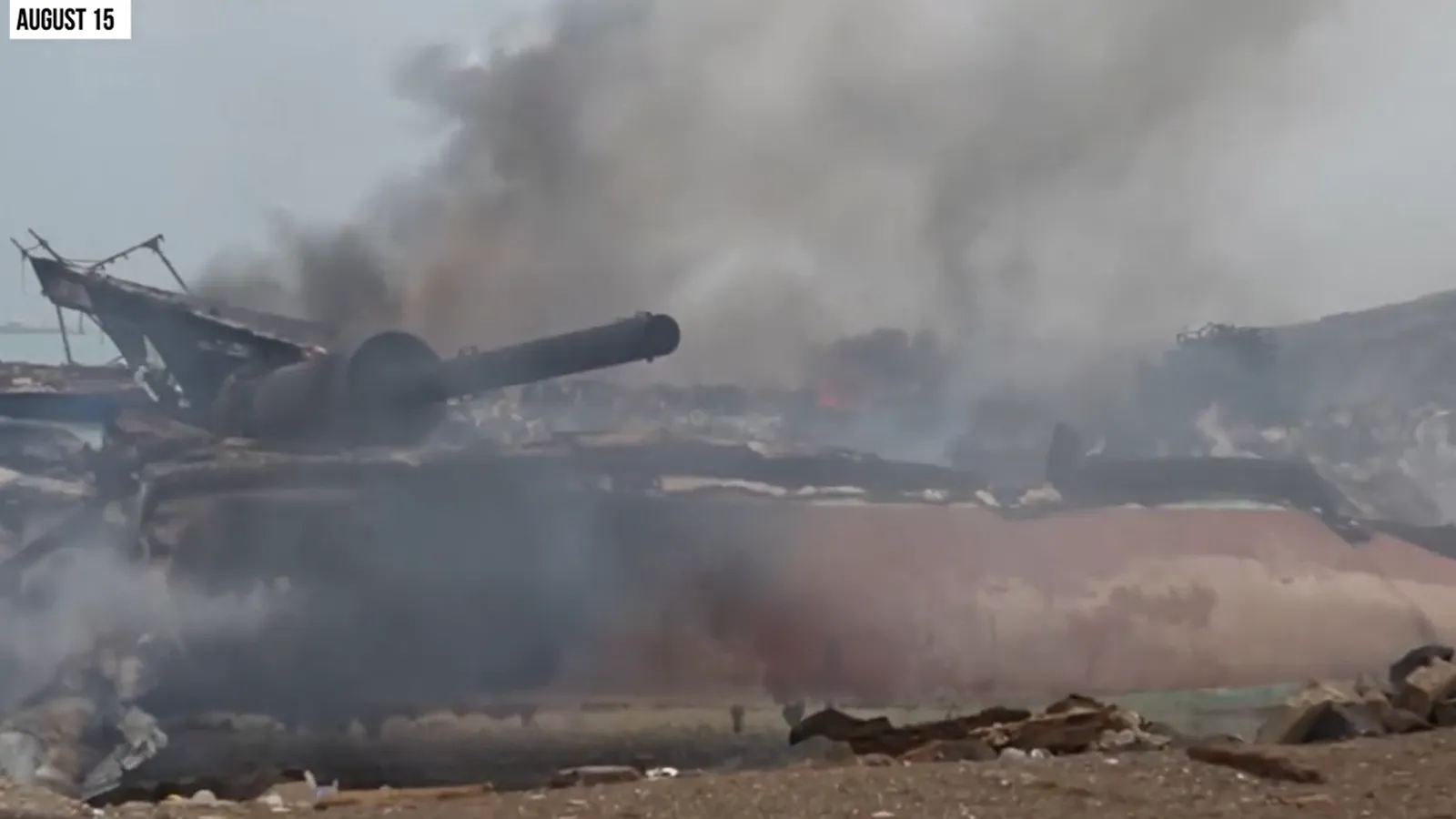
Executive Summary: Yemen’s Mocha port has suspended commercial and maritime activity after a series of Houthi missile attacks caused approximately $16 million in damage, according to the port’s administration. Reuters reported that more than 25 missiles struck the port over several days, killing seven people and damaging critical port infrastructure.
Houthi Missile Attack Disrupts Strategic Red Sea Port
The Houthi missile attack on Yemen’s Mocha port has halted commercial and maritime operations at a facility that has become strategically important to forces aligned with Yemen’s internationally recognized government. The port administration said Saturday that repeated strikes caused roughly $16 million in damage and killed seven people.
More than 25 missiles hit the port over several days. The attack damaged port infrastructure and disrupted the facility’s ability to handle maritime and commercial activity.
The Times of India reported that Yemen’s government accused the Houthis of launching six ballistic missiles against the port, while the Houthi movement said its operation was aimed at a military buildup and warships belonging to Saudi-backed government forces.
The differing descriptions underline the importance of distinguishing between confirmed physical effects and claims made by the opposing sides. The damage, fatalities and operational shutdown have been independently reported, while the precise targeting objectives remain contested.
Damage Extends Beyond the Immediate Strike Area
The reported $16 million loss is significant because Mocha is more than a local port facility. Its position on Yemen’s western coast gives it direct relevance to maritime access around the southern Red Sea and the Bab el-Mandeb Strait.
The port has been used as an alternative maritime access point for areas controlled by Yemen’s internationally recognized government and its allied forces. Damage to piers, warehouses, vessels and supporting infrastructure can therefore affect both military logistics and commercial activity.
Reuters reported that the port administration suspended all commercial and maritime operations following the attacks.
A prolonged shutdown would also increase pressure on alternative ports and transportation networks. For operators moving cargo through the region, the risk is not limited to a single missile strike. Repeated attacks can make port calls more difficult to insure, schedule and protect.
Why Mocha Matters to Red Sea Security
Mocha sits near the southern Red Sea approaches to the Bab el-Mandeb Strait, one of the world’s most important maritime chokepoints.
The security environment around the waterway has already forced commercial operators and governments to adopt additional protective measures. The U.S. Maritime Administration’s current advisory warns that vessels operating in the southern Red Sea, Bab el-Mandeb Strait and Gulf of Aden face threats that include ballistic and cruise missiles, one-way attack drones, unmanned surface vessels and other hostile activity.
The advisory remains active through September 22, 2026. It specifically identifies vessels with U.S., U.K. or Israeli connections as facing elevated risk, while warning that other commercial shipping can also face direct or collateral threats.
The renewed attacks therefore represent a broader maritime security problem rather than an isolated attack on a Yemeni port.
Missile And Drone Threats Create A Complex Defense Problem
The Houthi threat is difficult to counter because it does not depend on a single weapons category.
U.S. maritime authorities identify a mixture of ballistic missiles, cruise missiles, one-way attack UAVs, unmanned surface vessels and small-boat threats. That combination creates a layered defensive problem for ships and fixed facilities.
Ballistic missiles can compress warning and engagement timelines, while low-cost drones can force defenders to use sensors and interceptors against comparatively inexpensive targets. Surface threats can further complicate the defensive picture by requiring ships and coastal forces to monitor both the air and maritime domains simultaneously.
For a port such as Mocha, the problem is even more difficult because fixed infrastructure cannot maneuver away from incoming weapons. Protecting a port requires a combination of early warning, surveillance, air defense, physical hardening, damage control and rapid repair capacity.
The operational objective is therefore not simply to intercept every incoming weapon. Maintaining enough resilience to keep essential functions operating after successful strikes can be equally important.
Renewed Fighting Raises Wider Concerns For Yemen
The Mocha attack comes as fighting between Houthi forces and Yemen’s internationally recognized government has intensified.
Reuters reported earlier in August that a Houthi attack on Mocha killed seven people and wounded 30. Yemeni military officials said the assault involved ballistic missiles and drones, while air defenses reportedly intercepted 11 drones. The Houthis said their targets included Saudi troop concentrations and weapons depots.
The attacks raise concerns that the relative reduction in large-scale fighting following the 2022 truce could be giving way to another period of sustained conflict.
The latest violence also intersects with a wider confrontation involving Saudi Arabia and Houthi forces. The Houthis have announced a maritime blockade targeting Saudi-linked shipping, while Saudi Arabia has said it will protect commercial vessels transiting the Bab el-Mandeb Strait.
That dynamic creates a direct connection between Yemen’s internal conflict and international maritime security.
Implications For U.S. Maritime Security
For the United States, the significance of the Mocha strikes extends beyond Yemen.
The Red Sea remains a major operating environment for U.S. naval forces and an important route for global commerce. The U.S. Maritime Administration advises U.S.-flagged vessels to coordinate voyage planning with Naval Forces Central Command’s Naval Cooperation and Guidance for Shipping organization and to maintain heightened awareness while operating in the region.
The current advisory also notes that Houthi forces can use AIS information, small boats and UAVs to locate commercial vessels. U.S.-flagged ships are advised to take precautions regarding electronic emissions and vessel tracking when operating in areas where the threat is elevated.
This illustrates a broader change in maritime warfare. Commercial ships increasingly have to account for sensors, missiles and drones operating as part of a networked threat environment rather than treating the risk as traditional piracy alone.
The Economic Impact Could Outlast The Physical Damage
The estimated $16 million in physical damage provides only a partial measure of the consequences.
A port can lose economic value even when individual structures remain repairable. Insurance costs, vessel diversions, delays, security requirements and reduced confidence among shipping companies can continue after the visible damage has been cleared.
The International Maritime Organization has warned that renewed attacks on international shipping in the Red Sea threaten seafarers, commercial routes, marine safety and global supply chains. The organization has also urged operators to conduct detailed risk assessments before transiting the region.
The strategic problem is therefore one of cumulative disruption. Repeated attacks can impose costs across the maritime network even when individual strikes do not permanently close a major shipping lane.
Port Resilience Becomes A Military And Commercial Requirement
The Mocha attack demonstrates why port resilience is becoming an increasingly important element of maritime defense planning.
A modern port supporting military or commercial operations needs more than physical infrastructure. It requires surveillance, air and missile warning, communications, emergency response, repair teams and alternative logistics routes.
Yemen itself has been working to improve maritime information sharing. In June 2026, the International Maritime Organization supported a workshop focused on developing a roadmap for a National Maritime Information Sharing Centre and strengthening regional maritime information-sharing capabilities from Aden.
Such systems cannot prevent a missile attack by themselves, but they can improve the speed with which authorities identify threats, distribute warnings and coordinate responses.
For the U.S. and its partners, the lesson is broader. Protecting freedom of navigation in the Red Sea requires not only warships and missile defenses, but also resilient ports, shared maritime intelligence and commercial operators capable of adapting to rapidly changing threats.
What Happens Next
The immediate priority for Mocha will be assessing structural damage and determining when essential maritime operations can safely resume.
The more important strategic question is whether the attacks remain concentrated around Yemen’s west coast or become part of a wider campaign against Saudi-linked military and commercial infrastructure.
Recent developments suggest the latter risk cannot be dismissed. The Houthis have also claimed attacks against Saudi targets, including an August 9 drone strike on the Jazan oil refinery, while Saudi authorities have continued to emphasize protection of maritime traffic. Reuters reported that the Jazan refinery fire was extinguished without casualties.
If attacks continue, the Red Sea security environment could place additional demands on regional air defenses, naval forces and commercial shipping operators.
For now, the shutdown of Mocha port provides a clear measure of the immediate operational effect. A missile campaign has damaged infrastructure, caused fatalities and interrupted maritime activity at a strategically positioned Red Sea facility.
The larger significance lies in what the attack demonstrates about modern maritime conflict: relatively limited missile and drone forces can impose disproportionate costs when they repeatedly target critical infrastructure located along a major international maritime corridor.
Key Facts
| Item | Reported Detail |
|---|---|
| Location | Mocha, Yemen |
| Region | Southern Red Sea |
| Weapon threat | Ballistic missiles and drones |
| Reported missiles | More than 25 over several days, according to Reuters |
| Fatalities | Seven |
| Estimated damage | About $16 million |
| Operational impact | Commercial and maritime activities suspended |
| Strategic importance | Access to the southern Red Sea and approaches to Bab el-Mandeb |
| U.S. relevance | Region covered by an active U.S. maritime security advisory |
