

Expansion of Militarized Border Operations
The Trump administration has expanded its militarized zone strategy to California, transferring control of public lands along most of the state’s border with Mexico to the Navy to bolster national defense. Announced on December 10, 2025, this move extends nearly from the Arizona state line to Otay Mountain Wilderness, covering the Imperial Valley and key border communities including Tecate. The designation allows troops to support border enforcement, including apprehending unauthorized entrants and enforcing additional criminal charges.
Background: Militarized Zones and Border Security
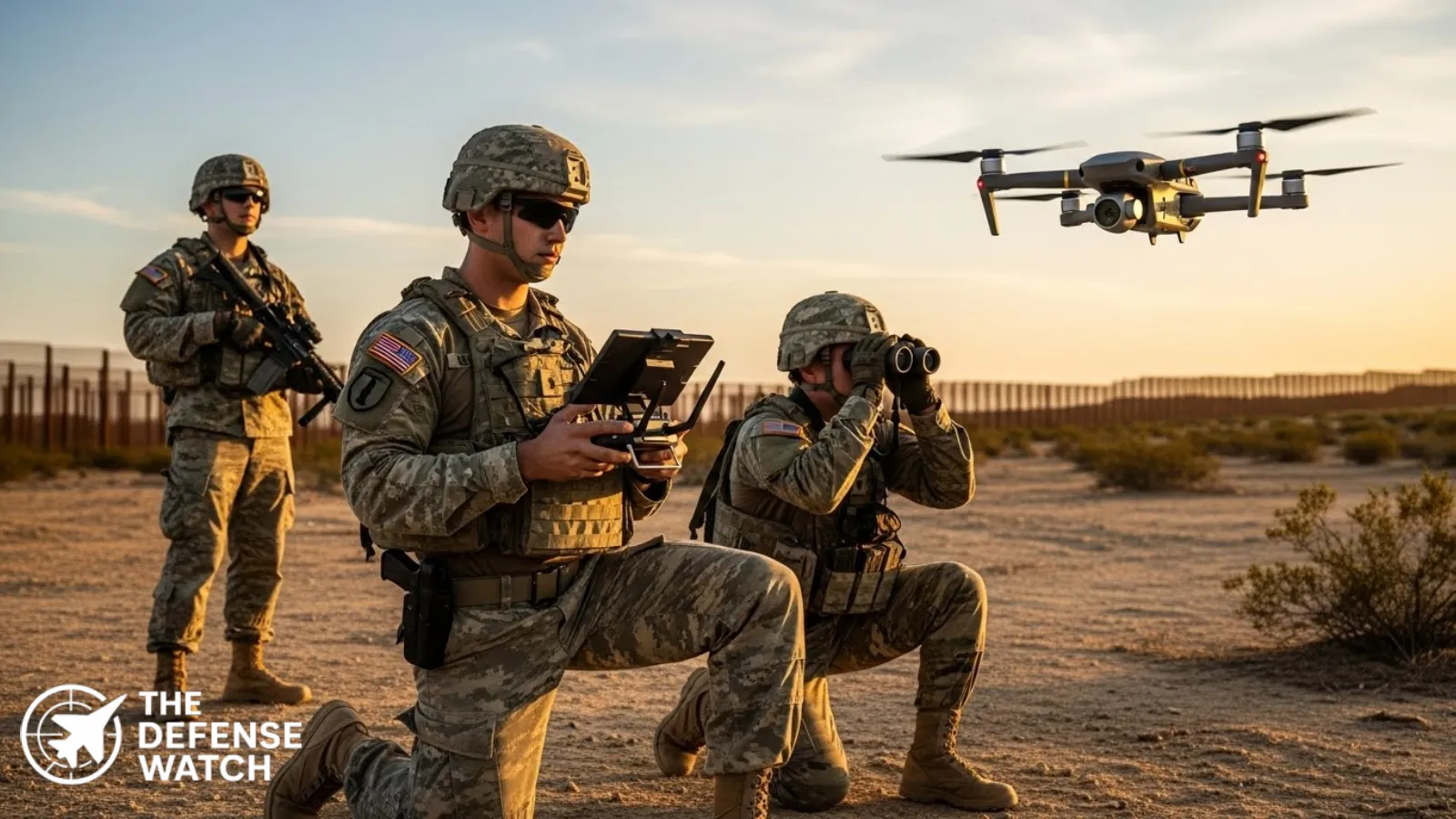
Since April 2025, the administration has designated large sections of the U.S.-Mexico border as militarized zones. Initially implemented in New Mexico along a 170-mile stretch, the strategy has expanded to Texas and Arizona. Over 7,000 troops, along with helicopters, drones, and advanced surveillance systems, have been deployed to these zones to counter unlawful crossings.
Interior Secretary Doug Burgum emphasized that public lands have historically played a role in national security. The new California zone is considered a high-traffic area for illegal crossings. Border Patrol data indicate that arrests along the southern border have declined to their lowest level since the 1960s, despite the administration’s push for stricter deportation policies.
Details: Legal and Operational Framework
The California militarized zone empowers the Navy to oversee and secure designated lands, integrating military resources into immigration enforcement. Emergency declarations issued by the Trump administration have expanded the military’s role in deterring crossings between ports of entry, a move some legal experts argue may violate federal restrictions against military law enforcement on domestic soil.
The announcement follows a federal court order requiring the Trump administration to withdraw California National Guard troops from Los Angeles and return command to state authorities. Earlier in 2025, more than 4,000 National Guard personnel were activated without state approval to enforce immigration measures.
Troops in the new zone are supported by aerial surveillance, drones, and rapid response units, similar to operations in other states. The strategy also authorizes additional criminal charges for trespassing on military-controlled lands, potentially leading to prison sentences.
Expert Perspective: Implications for Policy and Security
Experts caution that militarized zones blur lines between defense and law enforcement, potentially politicizing military operations. Analysts note that while troop deployments may deter illegal crossings, long-term effects on local communities and federal-state relations remain uncertain.
From a policy perspective, the expansion of military authority in border management signals the administration’s prioritization of physical security measures over conventional immigration enforcement approaches. Legal scholars have raised questions about the constitutional limits of domestic troop deployment for law enforcement purposes.
Conclusion: Next Steps and Strategic Outlook
The California militarized zone represents a significant escalation of the Trump administration’s border security approach. Moving forward, authorities will monitor operational effectiveness, legal challenges, and the impact on border communities. Nationally, the decision may influence broader debates on military involvement in domestic security operations and intergovernmental coordination between federal and state forces.

14 comments
[…] “scammers” were observed fleeing the area and abandoning equipment. Thai authorities state the operation aimed to secure border regions and prevent further hostile fire toward Thai […]
[…] The AV L platform is engineered to operate seamlessly across land, surf zones, and open water, combining deep sea vessel performance with on road mobility. Birdon states the design complies with Australian safety and regulatory standards while remaining suitable for military operations. […]
[…] assurances included statements that U.S. forces would not be engaged in major ground operations and that future military operations would involve consultation with Congress, though critics said these pledges lack […]
[…] UK and US have longstanding defence and security ties, with deep collaboration across intelligence, military operations and technology development. However, the UK’s restraint in assessing Grok underscores differing […]
[…] These warnings were intended to reduce civilian harm, highlighting the challenges of military operations near populated […]
[…] challenges for coordinating Arctic security arrangements that involve resource access. Neither the Trump administration nor NATO headquarters has issued detailed responses to Nathanielsen’s statements as of […]
[…] program supports environmental monitoring and forecasting capabilities critical to U.S. and allied military operations. Under the modified contract, Lockheed Martin will perform work across a wide network of […]
[…] ensuring uninterrupted global positioning, navigation, and timing services that underpin numerous military operations, including precision-guided munitions, troop movements, logistics coordination, and strategic […]
[…] Trump administration has characterized the Venezuela operation as demonstrating U.S. resolve, though details have drawn scrutiny. Administration officials […]
[…] participating naval units are expected to link with other elements of the exercise in designated operational zones. Follow-on training will examine joint logistics, littoral operations, and interoperability with […]
[…] The department is investing substantial resources in expanding AI compute infrastructure from data centers to edge deployments. These investments aim to provide the computational power necessary to run advanced AI models across global military operations. […]
[…] terminals have been widely used across Ukraine since 2022 to support both civilian resilience and military operations. While SpaceX has stated that its service is not intended for offensive use, satellite internet has […]
[…] Israel’s targeted killings strategy took a sharp turn this week after Prime Minister Benjamin Netanyahu claimed the elimination of senior Iranian figures, including Ali Larijani, in a public statement outlining ongoing military operations. […]
[…] reported skirmish coincides with the launch of Project Freedom, a directive from the Trump Administration to restore the flow of global energy. Since April 13, 2026, a US naval blockade has targeted […]