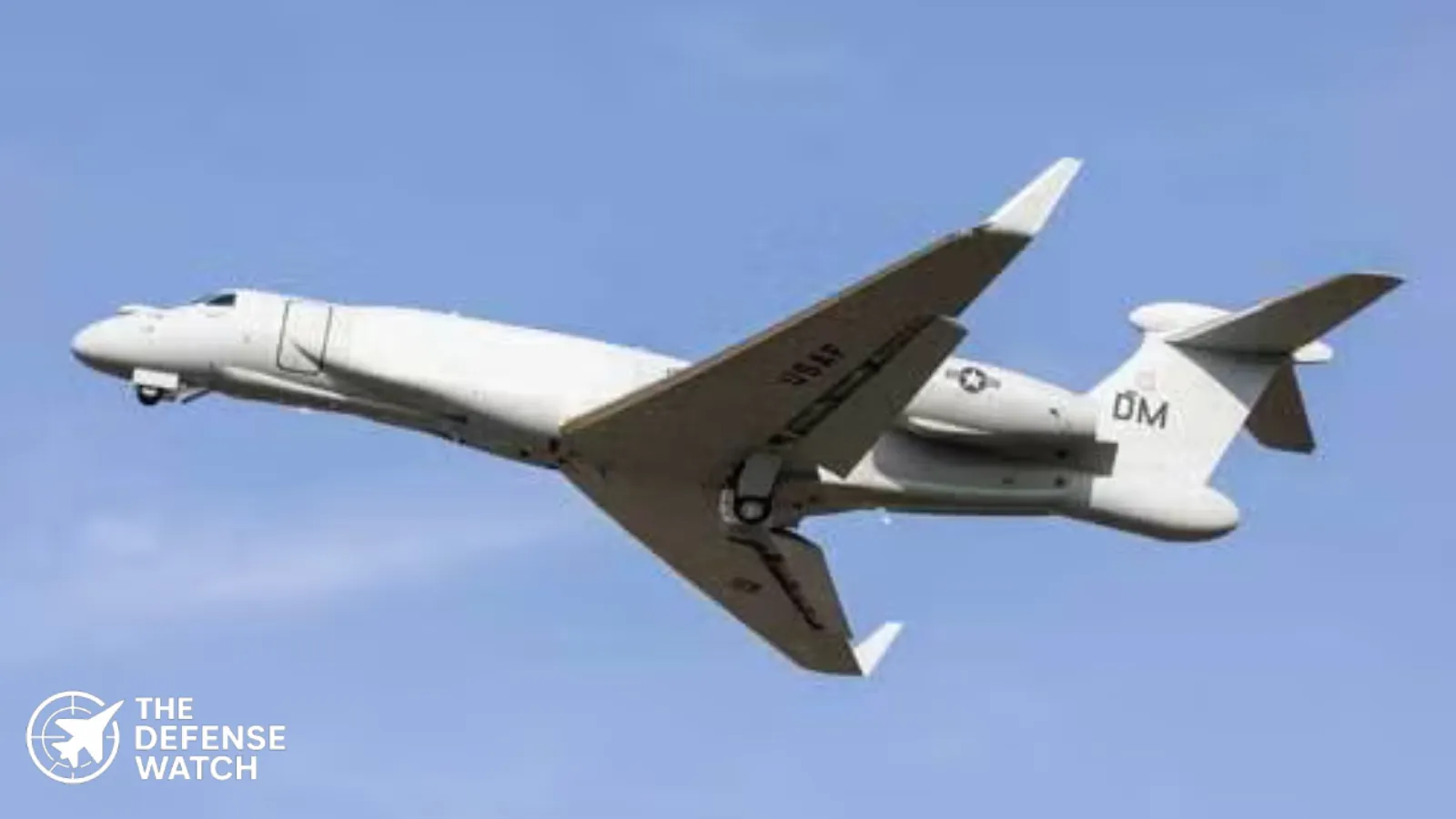
EA-37B Electronic Warfare Aircraft Relocation Signals Expanded U.S. Operational Reach
The EA-37B electronic warfare aircraft has been quietly relocated from Bermuda to Ramstein Air Base, Germany, according to defense observers tracking U.S. Air Force movements. The aircraft, which only entered operational service in 2024, represents the most advanced electronic attack platform currently fielded by the United States.
The relocation places the EA-37B at one of the U.S. military’s most critical logistics and airpower hubs in Europe, providing rapid access to multiple theaters without committing the aircraft to a forward combat zone.
A Strategic Move Without Public Announcement
The U.S. Air Force has not issued a formal statement explaining the relocation. However, Ramstein Air Base routinely supports high value intelligence, surveillance, reconnaissance, and electronic warfare operations across Europe, Africa, and the Middle East.
Defense analysts note that positioning the EA-37B in Germany provides operational flexibility while maintaining distance from contested airspace. The aircraft’s mission does not rely on proximity to targets, as its systems are designed to operate from high altitude and long standoff ranges.
What Makes the EA-37B Different
Unlike traditional strike aircraft, the EA-37B electronic warfare aircraft is not built to deliver kinetic weapons. Instead, it is designed to control and degrade the electromagnetic environment across large areas.
Built on the Gulfstream G550 business jet airframe, the EA-37B replaces the aging EC-130H Compass Call fleet. Its modern design allows for higher altitude operations, greater range, and significantly improved survivability.
According to U.S. Air Force program descriptions, the EA-37B is capable of:
- Disrupting and suppressing enemy air defense radars
- Jamming military communications and satellite navigation signals
- Degrading GPS dependent weapons and sensors
- Interfering with data links connecting sensors, command nodes, and missile launchers
Rather than destroying systems physically, the EA-37B aims to deny adversaries the ability to see, communicate, and coordinate.
Electronic Warfare as a First Line Capability
Modern conflicts increasingly rely on integrated air defense networks, digital command systems, and networked sensors. The EA-37B electronic warfare aircraft is designed to exploit these dependencies.
By targeting radar emissions, communications networks, and data links, the aircraft can effectively erase the operational picture an adversary relies on. Air defense operators may see false tracks, lose contact with friendly units, or fail to receive firing authorization altogether.
This approach reduces the need for early kinetic strikes and lowers risk to manned aircraft entering contested airspace.
Operational Service and Combat Readiness
The EA-37B reached initial operational capability in 2024, marking a major milestone in U.S. Air Force electronic warfare modernization. While the aircraft has participated in training and evaluation exercises, it has not yet been publicly confirmed in combat operations.
The move to Ramstein places the platform closer to real world contingencies, though U.S. officials have not indicated any imminent deployment to an active conflict zone.
(adsbygoogle = window.adsbygoogle || []).push({});The Air Force has emphasized that the EA-37B is intended to operate alongside fighters, bombers, naval forces, and space based assets, shaping the battlespace before and during joint operations.
Why Ramstein Matters
Ramstein Air Base serves as the backbone of U.S. air operations in Europe and beyond. It supports command and control, airlift, medical evacuation, and intelligence missions for U.S. European Command and U.S. Africa Command.
Stationing the EA-37B at Ramstein allows for:
- Rapid redeployment to multiple regions
- Integration with NATO planning and exercises
- Secure basing with robust logistics support
- Strategic signaling without direct escalation
The move reflects a broader trend of positioning advanced capabilities where they can be employed quickly, without public force buildups.
Electronic Warfare and Modern Deterrence
The EA-37B electronic warfare aircraft fits into a growing emphasis on non kinetic deterrence. By demonstrating the ability to disrupt sophisticated military systems, the U.S. can impose costs on adversaries without crossing traditional thresholds.
Electronic attack capabilities are increasingly viewed as essential in countering modern air defense systems, particularly those built around networked sensors and digital fire control.
U.S. defense planners have repeatedly highlighted the importance of electronic warfare in future conflicts, especially against near peer competitors with advanced integrated defenses.
What Comes Next
The U.S. Air Force plans to field a full fleet of EA-37B aircraft over the coming years, gradually replacing the EC-130H and expanding electronic attack capacity.
While the Air Force remains cautious about discussing operational details, the relocation to Germany underscores that the EA-37B is no longer just a developmental platform. It is now an active part of the U.S. military’s global force posture.