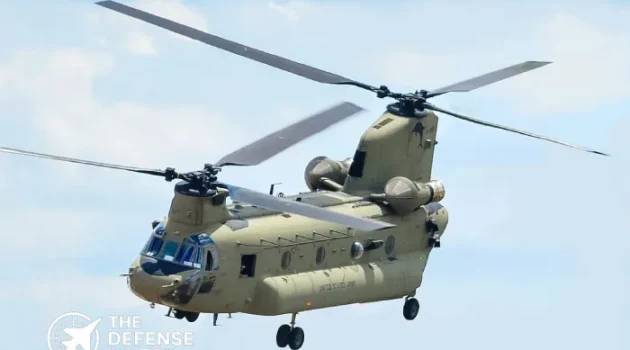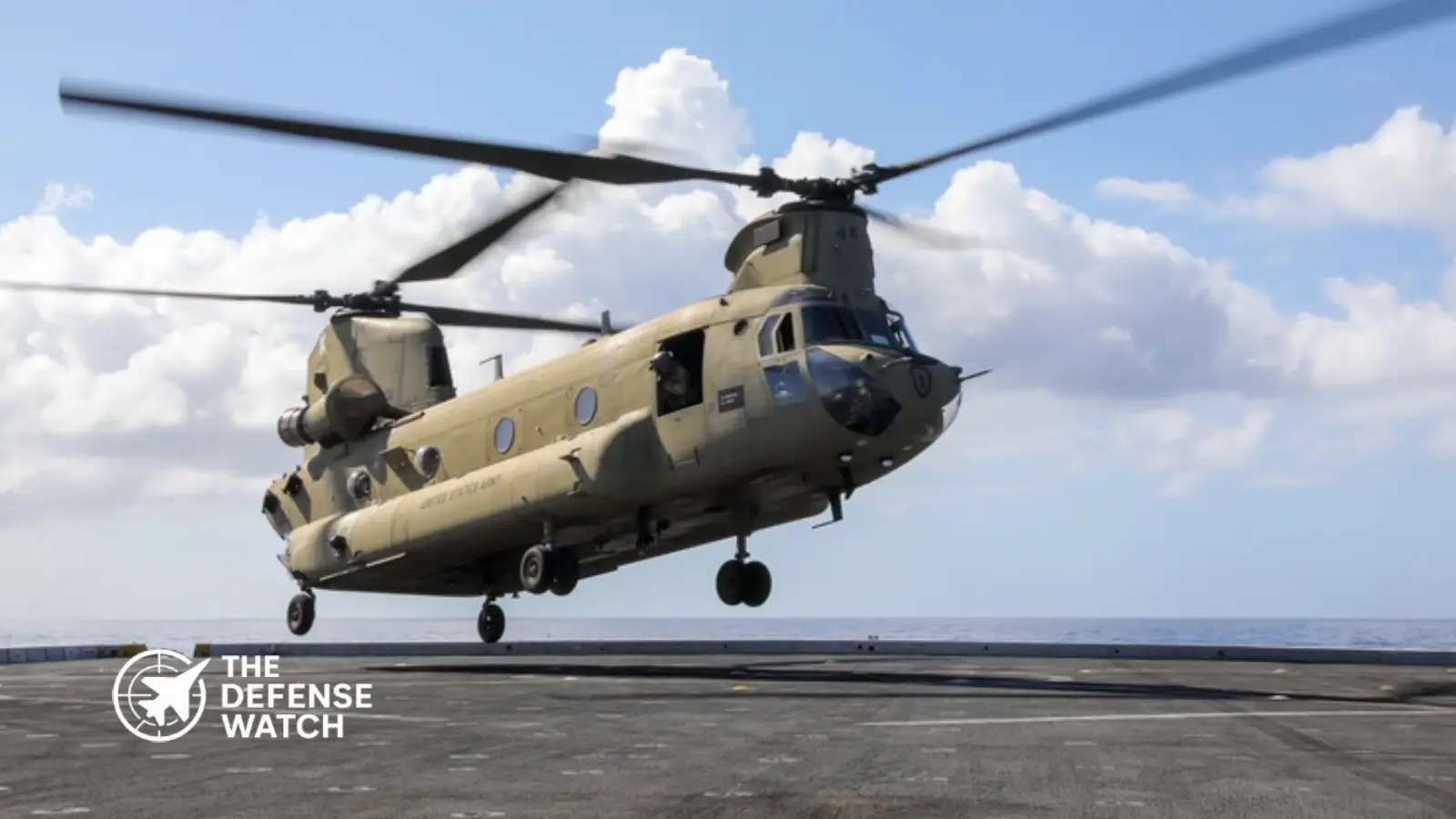
Executive Summary: The U.S. Army has awarded Boeing a $396.7 million contract modification for CH-47F Block I Chinook helicopters destined for South Korea and Spain under the Foreign Military Sales program. The award expands ongoing allied rotary-wing modernization efforts as NATO and Indo-Pacific partners continue investing in heavy-lift aviation capacity and logistics resilience.
The U.S. Army Contracting Command at Redstone Arsenal, Alabama, announced the award to Boeing for the procurement of CH-47F Block I aircraft under Foreign Military Sales (FMS) cases supporting South Korea and Spain. The modification, identified as PZ0001 to contract W58RGZ-23-F-0395, carries a value of $396.8 million and increases the cumulative contract total to approximately $793.5 million.
According to the Department of Defense announcement, work locations and funding allocations will be assigned with each individual order, with overall completion projected for April 30, 2027.
Deep Technical & Strategic Context Analysis
The CH-47F Chinook remains one of the most heavily utilized heavy-lift rotorcraft in Western military service, particularly as NATO and Indo-Pacific operators place renewed emphasis on distributed logistics, rapid troop movement, and survivable battlefield sustainment. Originally developed during the Cold War, the tandem-rotor platform has evolved into a digitally integrated transport helicopter capable of carrying artillery systems, armored vehicles, ammunition pallets, engineering equipment, and large troop contingents across austere operating environments.
The Block I CH-47F configuration incorporates upgraded avionics, a digital automatic flight control system, improved airframe survivability measures, and enhanced cargo handling capabilities compared with legacy Chinook variants. Although Boeing is concurrently advancing the more capable Block II modernization effort for the U.S. Army and select export customers, Block I aircraft continue to represent a major capability enhancement for international operators transitioning from older CH-47D fleets.
For South Korea, the procurement aligns with broader efforts to strengthen rapid mobility and island defense logistics capabilities amid heightened regional security tensions in Northeast Asia. Heavy-lift helicopters play a critical role in reinforcing dispersed forces, transporting missile units, and sustaining operations in mountainous terrain across the Korean Peninsula.
Spain’s acquisition supports NATO interoperability objectives and broader European military readiness initiatives. European operators increasingly view heavy-lift aviation as essential for expeditionary deployments, humanitarian response, and high-tempo alliance logistics operations. The Chinook’s established NATO support infrastructure and operational maturity remain major advantages over introducing entirely new heavy-lift platforms.
From a procurement perspective, the award represents a “definitization” modification, meaning the Pentagon finalized pricing and contractual terms for work that had previously been authorized under undefinitized conditions. Such mechanisms are commonly used to accelerate production timelines for urgent or strategically important defense acquisitions before final negotiations conclude. This approach helps reduce schedule risk in complex aerospace manufacturing programs, particularly when supporting allied deliveries through the FMS framework.
Contract Breakdown & Details
Contract Overview
- Contractor: Boeing
- Business Unit Location: Ridley Park, Pennsylvania
- Contract Value: $396,755,001
- Contract Modification: PZ0001
- Contract Number: W58RGZ-23-F-0395
- Total Contract Value After Modification: Approximately $793.5 million
- Contracting Authority: U.S. Army Contracting Command at Redstone Arsenal
- Program Type: Foreign Military Sales (FMS)
Aircraft and Mission Profile
The CH-47F Chinook is designed for:
- Heavy-lift troop transport
- Artillery and vehicle movement
- Combat resupply missions
- Medical evacuation
- Disaster relief and humanitarian operations
- Special operations support
The aircraft’s tandem-rotor design eliminates the need for a tail rotor, enabling greater lift efficiency and improved stability during external cargo operations.
Participating Foreign Customers
South Korea
- Expanding heavy-lift and rapid reinforcement capabilities
- Supporting distributed operations and mountainous terrain logistics
- Enhancing interoperability with U.S. forces in the Indo-Pacific
Spain
- Modernizing rotary-wing transport aviation
- Supporting NATO readiness and expeditionary logistics
- Replacing or supplementing older transport helicopter inventories
Production and Schedule
- Completion Date: April 30, 2027
- Work Locations: To be assigned per delivery order
- Funding Structure: Allocated incrementally through individual FMS orders
Industrial and Strategic Implications
The contract further stabilizes Boeing’s Chinook production line at a time when several international customers are extending or modernizing heavy-lift helicopter fleets rather than pursuing entirely new development programs. Continued export demand has become increasingly important for sustaining the Chinook industrial base as the U.S. Army gradually transitions toward selective Block II upgrades instead of large-scale new-build procurement.
The award also reflects the continued strategic relevance of heavy-lift helicopters in modern warfare. Conflicts in Europe and evolving operational concepts in the Indo-Pacific have reinforced the importance of resilient tactical air mobility, particularly for moving supplies and personnel when fixed infrastructure is degraded or under threat.