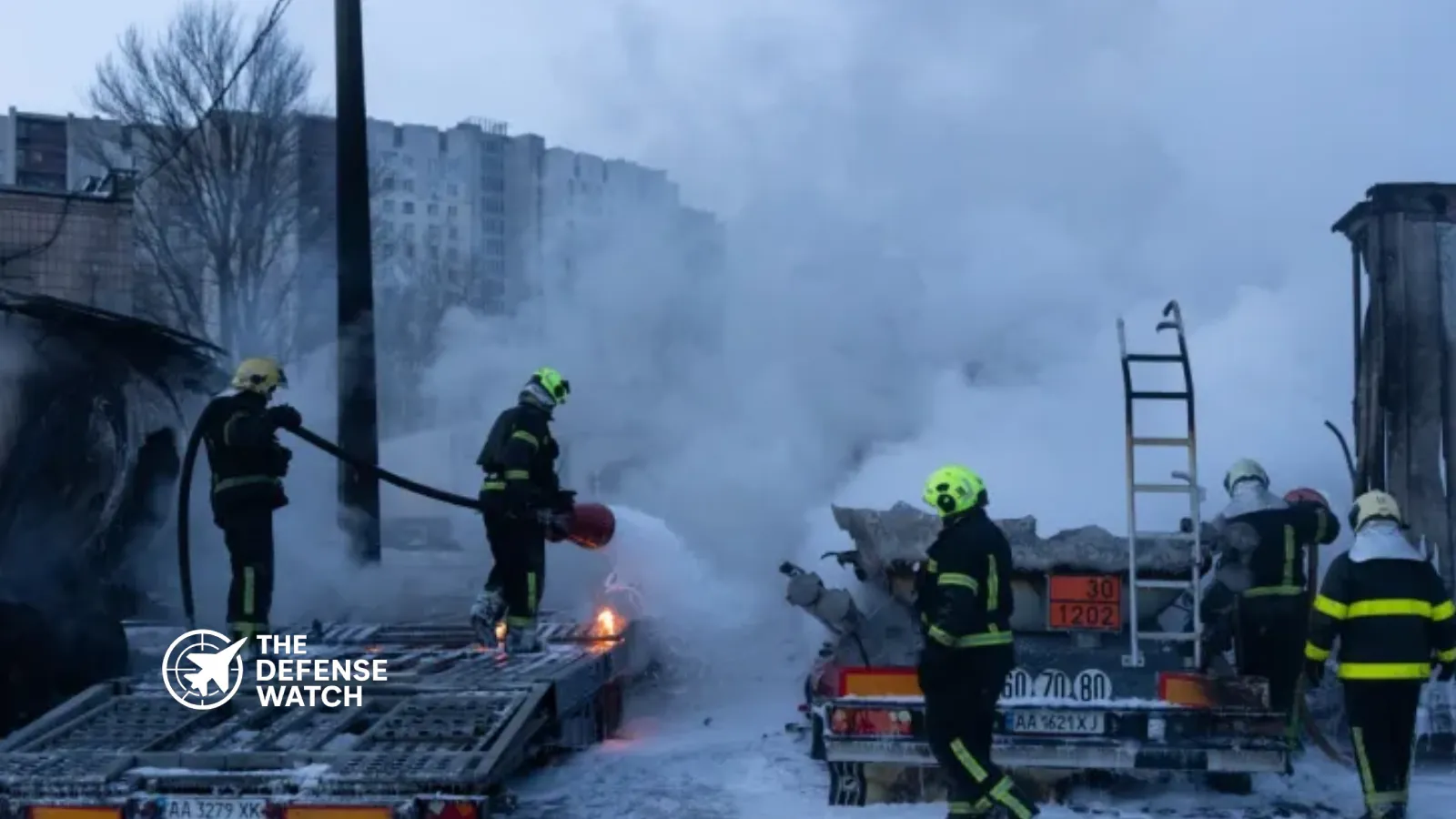
Russia Executes Massive Aerial Assault While Diplomats Negotiate
Russia air attack Ukraine operations intensified dramatically early Saturday morning when Moscow launched its most extensive aerial bombardment of the year against Ukrainian targets, according to Ukrainian military officials. The large-scale assault left at least one person dead and more than 1.2 million households without electrical power during sub-freezing winter temperatures, even as diplomatic delegations from both nations engaged in unprecedented peace discussions facilitated by United States mediators in Abu Dhabi.
Ukrainian air defense forces reported intercepting numerous incoming threats across multiple regions. The timing of the Russia aerial assault energy infrastructure strikes coincided with what many defense analysts consider the most significant diplomatic engagement between the two nations since the conflict’s escalation.
Coordinated Strike Pattern Targets Critical Infrastructure
The Saturday morning offensive involved a coordinated deployment of cruise missiles, ballistic missiles, and unmanned aerial vehicles launched from multiple directions, according to statements from Ukraine’s Air Force Command. The attack pattern demonstrated sophisticated mission planning designed to overwhelm air defense systems through saturation tactics.
Ukraine peace talks Abu Dhabi proceedings continued despite the escalation, with U.S. officials confirming that both delegations remained at the negotiating table. The State Department has not issued detailed comments on the attack’s impact on diplomatic progress.
Energy infrastructure across several Ukrainian oblasts sustained damage, with electrical substations and transmission facilities among the primary targets. Ukrainian energy company DTEK reported emergency repair crews deploying to affected areas despite ongoing security concerns.
“This represents the largest single aerial operation we’ve observed from Russian forces,” said a senior Ukrainian military spokesman in a televised briefing Saturday. Our air defense units performed effectively under extremely challenging circumstances.
Air Defense Systems Engage Incoming Threats
Ukrainian air defense batteries, including Western-supplied Patriot systems and domestically-operated S-300 variants, engaged incoming threats throughout the early morning hours. The Ukrainian military has not released comprehensive intercept statistics, though preliminary reports suggest significant defensive success against cruise missile threats.
The Ukraine Russia negotiations United States framework has been under development for several weeks, with Abu Dhabi selected as a neutral venue for initial exploratory discussions. Defense and diplomatic sources indicate that delegations include senior military advisors alongside diplomatic personnel.
The Russian Ministry of Defense has not issued official statements regarding Saturday’s operations at the time of publication. Moscow has historically characterized such strikes as targeting military-relevant infrastructure supporting Ukrainian defense operations.
Energy Grid Impact and Humanitarian Concerns
More than 1.2 million households across central and eastern Ukraine experienced power outages following the strikes, according to national grid operator Ukrenergo. Temperatures in affected regions ranged from -5°C to -10°C (23°F to 14°F), raising immediate concerns about heating availability for civilian populations.
Emergency services prioritized hospitals, water treatment facilities, and other critical infrastructure for backup power generation. Ukrainian authorities have not announced formal electricity rationing schedules, though officials indicated that rotating outages may be necessary while repairs proceed.
The Ukrainian power grid military strikes follow an established pattern observed throughout the conflict, with Russian forces repeatedly targeting energy infrastructure during winter months. International humanitarian organizations have previously characterized such attacks as potentially violating laws of armed conflict when civilian impact is disproportionate to military objectives.
Diplomatic Implications and International Response
The Russia air attack Ukraine escalation occurred as international observers expressed cautious optimism about the Abu Dhabi negotiations. The United States has invested significant diplomatic capital in facilitating the talks, with senior State Department officials directly involved in mediation efforts.
European Union foreign policy chief representatives have called for restraint from all parties while diplomatic channels remain active. NATO officials have not issued formal statements specifically addressing Saturday’s attack, though alliance spokespeople regularly affirm support for Ukraine’s territorial integrity and defensive operations.
Defense analysts note that battlefield dynamics and negotiating positions frequently interact in complex ways during active conflicts. Some observers suggest that military operations may be timed to influence diplomatic leverage, though establishing such causation requires access to classified strategic planning information not available to independent analysts.
Military Assessment and Operational Analysis
The scale and coordination of Saturday’s assault demonstrates Russia’s sustained capability to conduct complex, multi-axis aerial operations despite two years of intensive combat operations and Western-imposed sanctions affecting military-industrial production.
Russian forces likely employed a combination of Tu-95MS strategic bombers launching cruise missiles from beyond Ukrainian air defense range, Kalibr cruise missiles launched from Black Sea and Caspian Sea naval platforms, and Iskander ballistic missile systems deployed from occupied territories, according to open-source intelligence analysis of attack patterns.
Ukraine’s integrated air defense network, significantly enhanced through Western military assistance programs, continues to demonstrate effectiveness against various threat types. However, the saturation approach employed in large-scale attacks inevitably allows some penetration of defensive barriers.
Peace Negotiation Framework and Prospects
The Ukraine peace talks Abu Dhabi represent the highest-level formal negotiations between Russian and Ukrainian representatives in months. U.S. mediators have worked to establish procedural frameworks addressing core disputed issues including territorial boundaries, security guarantees, and post-conflict reconstruction arrangements.
Neither delegation has publicly disclosed specific negotiating positions or progress metrics. Diplomatic sources indicate that initial sessions focus on establishing communication protocols and identifying potential areas of common ground rather than resolving substantive disputes.
Previous negotiation attempts have failed to produce lasting agreements, with both sides maintaining fundamentally incompatible positions on territorial sovereignty and security architecture. Defense policy experts caution that successful conflict resolution typically requires extended diplomatic processes even after parties commit to good-faith negotiations.
Regional Security Implications
The continued intensity of combat operations alongside diplomatic engagement highlights the complex dynamics shaping Eastern European security. NATO member states bordering Ukraine maintain heightened defensive postures, with alliance forces conducting regular training exercises and maintaining enhanced forward presence deployments.
Poland, Romania, and Baltic states have accelerated defense modernization programs, prioritizing air defense capabilities and cross-border infrastructure supporting rapid reinforcement. These developments reflect broader strategic calculations about long-term security requirements regardless of specific conflict outcomes.
U.S. defense officials continue to emphasize the importance of maintaining robust deterrence postures while supporting diplomatic solutions. The Pentagon’s recent budget submissions include substantial allocations for European theater capabilities and allied partnership programs.
Looking Ahead: Military and Diplomatic Trajectories
The intersection of major military operations with active peace negotiations creates uncertainty about near-term developments. Historical precedent suggests that conflicts frequently experience violence escalation as parties position for diplomatic leverage or seek to establish facts on the ground before potential agreements.
Ukraine’s military leadership has indicated that defensive operations will continue irrespective of diplomatic track progress. Russian strategic communications similarly emphasize that military objectives remain unchanged while political discussions proceed.
International observers will closely monitor both negotiation developments and battlefield dynamics for indicators of substantive progress or deterioration. The coming weeks may prove decisive in determining whether current diplomatic engagement represents genuine conflict resolution prospects or tactical maneuvering within an ongoing strategic competition.