Executive Summary:
The U.S. Navy has awarded Northrop Grumman a $196 million contract modification to sustain the MQ-4C Triton unmanned maritime surveillance fleet through May 2027. Issued by Naval Air Systems Command, the award supports operational readiness for both the U.S. Navy and the Royal Australian Air Force as Indo-Pacific ISR demands continue to expand.
The Pentagon announced that Northrop Grumman has secured a $196,066,981 modification to an existing cost-plus-fixed-fee contract supporting the MQ-4C Triton unmanned aircraft system. The award extends logistics, testing, engineering, and field support services critical to keeping the Navy’s high-altitude maritime ISR fleet operational.
According to Naval Air Systems Command in Patuxent River, Maryland, the modification exercises additional contract options under agreement N0001924C0005 and includes support for the Royal Australian Air Force (RAAF), one of the platform’s primary international operators.
MQ-4C Triton’s Strategic Role In Indo-Pacific Surveillance
The MQ-4C Triton has become one of the U.S. Navy’s most important long-endurance intelligence, surveillance, and reconnaissance platforms for monitoring contested maritime regions. Derived from the RQ-4 Global Hawk airframe but extensively modified for naval operations, Triton is optimized for persistent oceanic surveillance, wide-area maritime tracking, and real-time intelligence collection.
Operating at altitudes exceeding 50,000 feet with endurance approaching 24 hours, the aircraft provides continuous ISR coverage across vast maritime areas that would otherwise require multiple crewed aircraft sorties. Its sensor suite integrates active electronically scanned array radar, electro-optical and infrared systems, electronic support measures, and automatic identification system receivers for tracking both military and civilian vessels.
The contract’s emphasis on logistics and reach-back engineering support reflects the growing operational tempo of the Triton fleet, particularly across the Indo-Pacific theater. U.S. Navy Tritons have increasingly supported maritime domain awareness missions near critical sea lanes and contested waters, including areas surrounding the South China Sea and Western Pacific approaches.
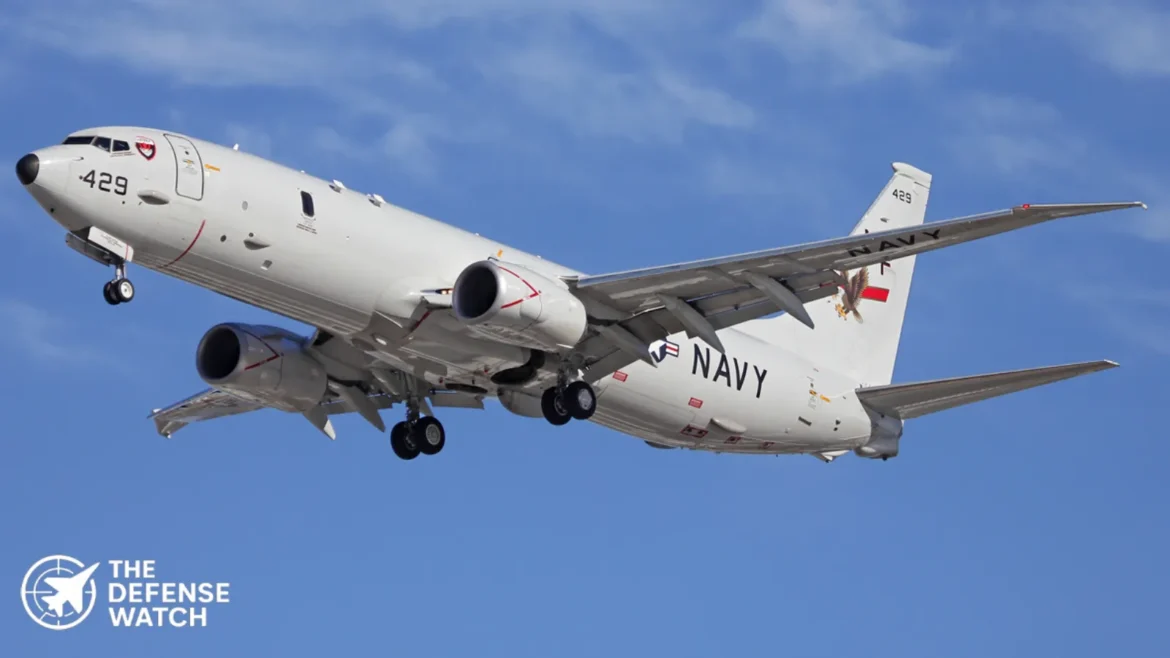
Australia’s participation is strategically significant because the RAAF is integrating Triton into its broader maritime surveillance architecture alongside the P-8A Poseidon fleet. The combined U.S.-Australian ISR framework is intended to strengthen allied monitoring capabilities across the Indo-Pacific, where long-range maritime reconnaissance has become central to deterrence operations.
Why Sustainment Contracts Matter For Modern ISR Fleets
While procurement contracts often receive greater attention, sustainment agreements like this one are critical for maintaining operational availability in high-demand ISR fleets.
The Pentagon identified several support categories under the modification, including:
- Logistics support for deployed aircraft and mission systems
- Test support services for fleet readiness and upgrades
- Field service representative support for operational locations
- Reach-back engineering support, allowing deployed operators to access stateside technical expertise for troubleshooting and rapid maintenance analysis
In operational terms, reach-back engineering enables frontline units operating in remote locations such as Guam or Okinawa to connect directly with engineering teams in the United States. This reduces aircraft downtime and improves mission availability during sustained operations.
The contract structure itself is also notable. A cost-plus-fixed-fee arrangement is commonly used in technically demanding defense sustainment programs where operational variables and maintenance requirements can fluctuate significantly. Under this model, the government reimburses allowable contractor costs while providing a fixed profit fee, reducing financial risk for complex support efforts that may involve unpredictable engineering demands.
Funding Breakdown And Operational Locations
The Pentagon stated that funding obligated at the time of award includes:
- $51.1 million in Fiscal Year 2026 Navy operations and maintenance funding
- $21.1 million in Fiscal Year 2026 Navy aircraft procurement funding
- $1 million in Navy research, development, test, and evaluation funding
- $7.5 million in RAAF cooperative partner funding
Workshare Distribution
Work will be conducted across multiple U.S. and overseas operating locations:
- San Diego, California: 37.1%
- Patuxent River, Maryland: 14.8%
- Jacksonville, Florida: 10.7%
- Okinawa, Japan: 7.2%
- Mayport, Florida: 6.9%
- Whidbey Island, Washington: 4.4%
- Baltimore, Maryland: 3.5%
- Chantilly, Virginia: 3.1%
- Yigo, Guam: 1.3%
- Various CONUS locations: 2.4%
- Various OCONUS locations: 8.6%
The contract is expected to continue through May 2027.
Broader Maritime ISR Expansion
The latest award comes as the U.S. Navy continues expanding distributed maritime ISR capabilities to support carrier strike groups, submarine operations, and long-range maritime targeting networks.
The Triton platform is increasingly viewed as a core component of the Navy’s future sensor architecture, particularly as the service shifts toward more networked and distributed operations across the Pacific. Persistent unmanned ISR coverage allows commanders to maintain situational awareness over large maritime areas while reducing reliance on crewed surveillance aircraft for routine monitoring missions.
For Australia, continued Triton integration also reinforces Canberra’s growing role in allied Indo-Pacific surveillance and maritime security operations.
Executive Summary:
Lockheed Martin is expanding its munitions production strategy through a new supplier initiative and a planned $9 billion investment effort. The move is designed to increase manufacturing capacity, improve supply chain resilience, and support growing U.S. and allied demand for precision-guided weapons and missile systems.
Lockheed Martin Expands Munitions Production Strategy
Lockheed Martin is accelerating efforts to strengthen U.S. missile manufacturing capacity through a broad industrial expansion strategy focused on supplier growth, production resilience, and long-term munitions output.
The company plans to invest up to $9 billion across its supply chain and production ecosystem over the coming years. The initiative comes as the United States and allied nations continue increasing demand for advanced missile systems following ongoing global security tensions and sustained weapons transfers to partner countries.
The investment strategy centers on expanding supplier participation and reducing manufacturing bottlenecks that have affected defense production across the industry since the COVID-19 pandemic and subsequent geopolitical crises.
Supplier Initiative Targets Production Bottlenecks
Lockheed Martin said the new supplier initiative is intended to help smaller and mid-sized manufacturers enter the defense industrial base more efficiently. The company aims to accelerate qualification timelines, improve production coordination, and create a more distributed manufacturing network for critical missile components.
The effort reflects a broader challenge facing the U.S. defense sector. Demand for precision-guided munitions has increased sharply due to replenishment requirements, military modernization programs, and support packages provided to allies in Europe and the Indo-Pacific.
Key missile programs linked to Lockheed Martin production capacity include the JASSM, HIMARS launch systems, PAC-3 interceptors, and long-range strike weapons under development for the U.S. military.
The company stated that expanding supplier participation could help stabilize delivery schedules while increasing surge production capability during future crises.
U.S. Defense Industry Faces Sustained Demand Pressure
The Lockheed Martin munitions production expansion reflects wider Pentagon concerns regarding the readiness of the U.S. defense industrial base. Senior U.S. defense officials have repeatedly warned that existing production rates for missiles and artillery systems may be insufficient for prolonged high-intensity conflict scenarios.
Over the last several years, the U.S. Department of Defense has encouraged major defense contractors to increase manufacturing capacity for missile systems, rocket motors, and precision-guided munitions. Congress has also approved supplemental funding packages intended to accelerate industrial expansion.
The Lockheed Martin initiative aligns with those national priorities. By increasing supplier diversity and investing in production infrastructure, the company appears focused on reducing reliance on limited-source manufacturers and improving scalability across critical weapons programs.
This strategy may also help mitigate risks associated with labor shortages, material sourcing challenges, and production delays that have affected several sectors of the aerospace and defense industry.
Strategic Importance Of Missile Manufacturing Capacity
The expansion of Lockheed Martin munitions production carries strategic significance beyond simple manufacturing growth. Modern conflicts have demonstrated that stockpile sustainability and production endurance are now central components of military readiness.
The war in Ukraine, rising tensions in the Indo-Pacific, and increased NATO defense spending have collectively pushed Western defense industries toward higher production targets. Missile defense interceptors, long-range precision weapons, and guided rocket systems are among the most heavily requested capabilities.
Lockheed Martin’s investment plan suggests the company expects elevated demand levels to continue for years rather than months. That outlook is consistent with recent Pentagon procurement trends and allied modernization programs.
The company’s supplier-focused model may also serve as a template for other U.S. defense firms attempting to scale production while maintaining cost control and delivery reliability.
Industrial Expansion May Influence Future Defense Contracts
Analysts increasingly view manufacturing scalability as a competitive advantage in future defense contracting decisions. Companies capable of delivering weapons systems quickly and consistently are likely to gain stronger positioning in both U.S. and allied procurement competitions.
Lockheed Martin’s investment strategy therefore represents not only an industrial expansion effort but also a long-term positioning move within the global defense market.
As defense budgets rise across NATO and Indo-Pacific partner nations, production readiness is becoming nearly as important as weapons performance itself. The ability to rapidly replenish stockpiles and sustain operational tempo is now shaping procurement policy discussions in Washington and allied capitals.
Executive Summary
UAE defense conglomerate EDGE Group has agreed to acquire an 80% stake in Italian defense company CMD, marking a major step in its European expansion strategy. The deal strengthens EDGE’s access to advanced aerial countermeasure technologies and expands its industrial footprint inside Europe amid rising regional defense spending.
EDGE CMD Acquisition Signals Broader European Defense Push
The EDGE CMD acquisition marks another significant move by the UAE defense industry into Europe’s growing defense industrial base. Abu Dhabi based EDGE Group announced plans to acquire an 80% stake in Italian defense firm CMD, a company known for airborne countermeasure systems and defense technologies used across NATO aligned platforms.
The transaction reflects EDGE’s broader effort to increase its international manufacturing reach and gain access to advanced European defense technologies as global defense spending continues to rise. CMD’s existing role in electronic warfare support systems and aerial survivability products gives EDGE a stronger foothold in a market increasingly focused on integrated air defense and survivability solutions.
The acquisition also aligns with a wider trend of Middle Eastern defense firms investing in European defense companies to secure technology access, supply chain integration, and export opportunities.
CMD’s Role In European Defense Manufacturing
Founded in Italy, CMD specializes in airborne countermeasure systems, including chaff and flare dispensing technologies designed to protect military aircraft from missile threats. Its systems are integrated on multiple rotary and fixed wing aircraft platforms operated by European and allied armed forces.
The company has established relationships across NATO defense programs and European aerospace supply chains. That industrial access likely played a central role in EDGE’s interest.
By taking a majority stake, EDGE gains not only production capability but also direct access to European certification standards, engineering expertise, and defense procurement channels. In practical terms, this could help the UAE group compete more aggressively in export markets where European industrial partnerships carry significant strategic value.
The deal may also support future collaboration in electronic warfare, aircraft survivability systems, and smart munitions integration.
Why The Acquisition Matters Now
The timing of the EDGE CMD acquisition is notable. European governments have sharply increased defense budgets following continued instability in Eastern Europe, Middle East security concerns, and renewed focus on military readiness.
Defense manufacturers across Europe are facing growing demand for missile defense systems, airborne survivability equipment, and electronic warfare capabilities. Aircraft operating in contested airspace increasingly require advanced countermeasure systems capable of defeating modern infrared and radar guided threats.
EDGE appears to be positioning itself to benefit from that long term demand cycle.
The UAE defense sector has expanded rapidly over the last several years through consolidation, technology investment, and international partnerships. EDGE has pursued a strategy centered on acquiring advanced manufacturing capabilities while building domestic expertise in missiles, unmanned systems, cyber technologies, naval systems, and precision weapons.
This acquisition extends that strategy into Europe more directly.
Strategic Implications For The UAE Defense Industry
The transaction highlights how Gulf defense companies are becoming increasingly active participants in the global defense industrial market rather than remaining primarily importers of military equipment.
For the UAE, expanding industrial partnerships in Europe serves several objectives:
- Greater access to advanced technologies
- Expanded export pathways
- Improved industrial resilience
- Closer integration with Western defense supply chains
- Enhanced research and development opportunities
EDGE’s growing international profile also reflects intensifying competition among emerging defense manufacturers seeking influence in global procurement markets traditionally dominated by U.S. and European primes.
At the same time, the acquisition underscores how smaller specialized firms such as CMD remain strategically important because of their niche expertise in survivability technologies and electronic warfare support systems.
Countermeasure Technologies Becoming Increasingly Critical
Modern air combat environments have increased the importance of aircraft survivability technologies. Rotary wing aircraft, transport fleets, and combat aircraft face evolving threats from portable air defense systems, radar guided missiles, and integrated air defense networks.
Countermeasure systems such as those produced by CMD play a critical role in reducing aircraft vulnerability during combat and support operations.
As drone warfare and precision guided missile proliferation continue expanding globally, demand for defensive airborne technologies is expected to remain strong. That market environment makes companies specializing in defensive electronic systems increasingly valuable acquisition targets.
EDGE’s investment suggests the company sees long term growth opportunities in this segment, particularly as allied militaries prioritize survivability upgrades across existing fleets.
Broader Defense Industry Consolidation Trend
The acquisition also reflects a larger consolidation trend underway across the global defense sector. Governments are increasingly encouraging industrial partnerships capable of accelerating production capacity, reducing supply chain risks, and supporting sovereign manufacturing goals.
European defense firms have become attractive targets for international investors because of their established engineering expertise, export credibility, and integration into NATO aligned defense ecosystems.
For EDGE, acquiring CMD offers a relatively fast pathway into these networks without having to build entirely new infrastructure from scratch.
The deal could potentially lead to expanded joint development programs, broader export cooperation, and additional investments in European defense manufacturing in the coming years.
Executive Summary:
BAE Systems has received a $535.6 million U.S. Army contract for the production of self-propelled howitzer systems, support vehicles, and total package fielding kits. The award reinforces the Army’s ongoing artillery modernization efforts and ensures continued production activity through the end of 2029.
BAE Systems Howitzer Contract Supports Long-Term Army Modernization
The BAE Systems howitzer contract marks another major investment in U.S. Army artillery modernization as the service continues expanding its long-range precision fire capabilities.
According to the Department of Defense contract announcement, BAE Systems Land and Armaments L.P., based in York, Pennsylvania, was awarded a $535,623,041 fixed-price-incentive contract for the production of self-propelled howitzer systems, related vehicles, and total package fielding kits.
The contract was awarded by Army Contracting Command at Detroit Arsenal, Michigan. Officials stated that bids were solicited online and one proposal was received.
Work locations and funding allocations will be determined on an order-by-order basis under the contract structure. The estimated completion date is Dec. 31, 2029.
Expanding U.S. Army Artillery Readiness
The award reflects the Army’s sustained focus on artillery readiness and armored combat capability modernization amid increasing global security competition.
Self-propelled howitzer systems remain central to modern ground warfare because they combine mobility, survivability, and long-range indirect fire support. These systems allow mechanized formations to conduct rapid maneuver operations while maintaining artillery coverage across contested environments.
Although the Pentagon announcement did not specify the exact howitzer variant covered under the contract, BAE Systems is widely associated with production and sustainment work tied to the M109 Paladin family of tracked artillery systems.
The M109 platform continues to serve as the backbone of U.S. Army armored artillery brigades. Modernized variants such as the M109A7 integrate upgraded power systems, improved survivability features, and enhanced networking capabilities designed to support multi-domain operations.
Production Stability Through 2029
The multi-year nature of the award provides production continuity for both the Army and the U.S. defense industrial base.
Long-duration contracts are increasingly important as the Pentagon seeks to maintain manufacturing capacity for critical combat systems while reducing procurement disruptions. Defense officials and industry leaders have repeatedly highlighted the importance of stable production lines following lessons learned from recent conflicts involving high rates of ammunition and artillery consumption.
The contract also supports industrial activity in Pennsylvania and across the broader supplier network connected to armored vehicle and artillery manufacturing programs.
Artillery Remains A Core Battlefield Capability
The war in Ukraine and rising tensions across multiple regions have reinforced the strategic importance of conventional artillery systems. Militaries worldwide are investing in longer-range fires, improved targeting networks, and more survivable mobile artillery platforms.
For the U.S. Army, self-propelled artillery remains essential for supporting armored brigade combat teams and delivering sustained firepower during large-scale operations.
Programs tied to artillery modernization are also linked to broader Pentagon priorities that include precision strike capability, logistics resilience, and interoperability with allied forces.
The BAE Systems howitzer contract aligns with these efforts by sustaining production capacity for one of the Army’s key indirect fire platforms while supporting future operational readiness requirements.
Industrial Base And Strategic Implications
The award underscores the Pentagon’s continued reliance on established defense manufacturers to maintain operational capability during a period of rising global demand for artillery systems and munitions.
BAE Systems remains one of the largest suppliers of combat vehicles and artillery systems for the U.S. military. Its land systems portfolio includes armored combat vehicles, amphibious platforms, artillery systems, and survivability technologies.
The contract also reflects a wider trend within the defense sector toward sustained procurement cycles rather than short-term acquisition spikes. Analysts increasingly view long-term production agreements as critical to preserving skilled labor, supplier networks, and surge manufacturing capacity.
Executive Summary:
Anduril Industries has announced a $5 billion Series H funding round aimed at expanding production of autonomous military systems and AI-enabled defense technologies. The investment underscores growing Pentagon and investor interest in scalable defense manufacturing and software-defined warfare capabilities.
Anduril Series H Funding Signals Major Expansion In Defense Manufacturing
Anduril Industries announced a $5 billion Series H funding round, marking one of the largest capital raises by a U.S. defense technology company in recent years. The company said the investment will support expansion of manufacturing infrastructure, development of autonomous military systems, and scaling of AI-driven defense capabilities.
According to the company, the funding round values Anduril at approximately $30.5 billion and reflects increasing demand for rapidly deployable defense technologies amid evolving global security challenges.
The latest raise comes as the U.S. Department of Defense continues prioritizing autonomous systems, artificial intelligence, and resilient industrial capacity under broader modernization initiatives.
Autonomous Defense Systems Drive Investor Interest
Anduril has positioned itself as a major player in autonomous defense systems, particularly in areas including unmanned aerial systems, counter-drone technologies, autonomous underwater vehicles, and AI-enabled command-and-control software.
The company stated that proceeds from the Series H raise will be used to scale production and accelerate delivery timelines for defense customers. A key focus includes expansion of manufacturing capabilities tied to autonomous platforms and software-defined military systems.
The funding announcement also highlights broader shifts within the U.S. defense sector. Traditional procurement timelines are increasingly being challenged by demand for faster innovation cycles, modular systems, and commercially derived technologies.
Unlike legacy defense primes that often rely on lengthy acquisition programs, Anduril has built its business model around rapid development and vertically integrated production. That strategy has attracted growing attention from both defense agencies and private investors seeking exposure to defense technology modernization.
Growing Pentagon Focus On AI And Autonomous Warfare
The Anduril Series H funding round aligns with wider Pentagon efforts to integrate artificial intelligence and autonomous capabilities across military operations.
Recent U.S. defense strategies have emphasized unmanned systems for surveillance, strike missions, logistics support, maritime operations, and air defense. Programs linked to attritable drones, autonomous sensors, and AI-enabled targeting continue receiving significant investment from the Department of Defense.
Anduril has already secured multiple U.S. military contracts tied to border security systems, counter-UAS technologies, loitering munitions, and autonomous surveillance platforms.
Its flagship software platform, Lattice, is designed to integrate sensor networks and autonomous systems into a unified operational picture. The company argues that software-centric architectures will play a central role in future battlefield operations.
The funding announcement also arrives amid increasing geopolitical competition involving the United States, China, and Russia, where defense planners are accelerating investments in autonomous warfare and advanced military technologies.
Manufacturing Capacity Becomes Strategic Priority
One of the most significant aspects of the funding round is its emphasis on industrial scale.
Defense analysts have increasingly warned that Western defense industrial capacity remains constrained for sustained high-volume production during prolonged conflicts. The war in Ukraine has amplified concerns surrounding munitions production, supply chain resilience, and manufacturing throughput.
Anduril’s expansion plans appear designed to address those concerns through highly automated production facilities capable of rapidly manufacturing autonomous systems at scale.
The company has previously announced investments in advanced production facilities intended to accelerate manufacturing for drones, underwater systems, and autonomous weapons.
This reflects a broader trend across the defense sector, where manufacturing speed is becoming nearly as important as technological sophistication.
Strategic Implications For The U.S. Defense Sector
The size of the Anduril Series H funding round demonstrates how venture-backed defense firms are becoming increasingly influential within the U.S. military technology ecosystem.
Historically, defense procurement has been dominated by large prime contractors. However, companies focused on software, autonomy, and rapid iteration are gaining larger roles as defense agencies seek adaptable and lower-cost systems.
The funding could also intensify competition within the autonomous defense market, particularly in areas involving AI-enabled drones, collaborative combat aircraft, maritime autonomy, and counter-UAS networks.
From a strategic perspective, the investment signals continued confidence in defense technology startups despite broader economic uncertainty affecting parts of the venture capital sector.
For the Pentagon, partnerships with firms capable of rapidly scaling autonomous defense production may become increasingly important as military planners prepare for high-intensity conflict scenarios requiring large quantities of affordable autonomous systems.
Executive Summary:
Leidos will manufacture 3,000 low-cost containerized cruise missiles under an agreement with the U.S. Department of Defense. The program aims to expand affordable long-range strike capacity while supporting distributed and rapidly deployable missile operations.
Leidos Containerized Cruise Missiles Expand U.S. Strike Capacity
The new Leidos containerized cruise missiles program marks another step in the Pentagon’s push to field larger numbers of affordable precision weapons for future high-intensity conflicts. The agreement calls for the production of approximately 3,000 low-cost cruise missiles designed for containerized launch operations.
The effort reflects a broader U.S. military modernization strategy focused on survivability, scalability, and distributed strike operations. Containerized missile systems can be transported using standard shipping infrastructure, enabling more flexible deployment options across land and maritime environments.
The U.S. Department of Defense has increasingly emphasized the need for mass-produced precision munitions capable of supporting prolonged operations in contested regions, particularly in the Indo-Pacific theater. Defense planners have warned that current missile inventories may be insufficient during a large-scale peer conflict.
Focus On Affordable Mass Production
Unlike traditional high-cost cruise missile programs, the Leidos containerized cruise missiles initiative appears designed around affordability and production scale. That approach aligns with current Pentagon priorities aimed at increasing munition stockpiles without relying exclusively on expensive legacy systems.
The low-cost missile concept also supports the U.S. military’s growing emphasis on attritable weapons. These systems are intended to be affordable enough for large-scale operational use while still delivering precision strike capability.
Containerized launchers provide additional operational advantages. By using commercial-style containers, missile systems can be rapidly repositioned, concealed, or dispersed across wider operational areas. Military analysts have increasingly linked such concepts to distributed maritime operations and expeditionary warfare strategies.
The agreement also highlights continuing industry demand for scalable manufacturing capacity. The U.S. defense industrial base has faced pressure to accelerate missile production following rising global tensions and continued military aid commitments overseas.
Strategic Relevance In The Indo-Pacific
The Leidos containerized cruise missiles program comes amid heightened U.S. concern over long-range strike competition in the Indo-Pacific region. The Pentagon has repeatedly identified the need for survivable and dispersed missile systems capable of operating inside contested environments.
Containerized systems may complicate enemy targeting by reducing reliance on fixed launch infrastructure. This concept aligns with evolving U.S. operational doctrines focused on mobility and distributed force structures.
Military planners are increasingly prioritizing systems that can be deployed across islands, forward operating bases, or support vessels with limited infrastructure requirements. The ability to rapidly field missile launch capability using containerized systems could provide operational flexibility during regional contingencies.
The production scale of 3,000 missiles also suggests the Pentagon is placing greater emphasis on sustained combat capacity rather than smaller inventories of highly specialized weapons. Analysts have noted that future conflicts may require significantly larger munition stockpiles than previously anticipated.
Defense Industry Implications
For Leidos, the agreement strengthens the company’s role in emerging precision strike and advanced weapons programs. Traditionally known for defense electronics, integration, and technology services, the company has continued expanding into advanced military systems and next-generation defense solutions.
The agreement may also reinforce broader Pentagon efforts to diversify missile suppliers and reduce dependence on a limited number of major prime contractors. Expanding industrial participation is viewed as a critical step toward increasing resilience across the U.S. defense manufacturing sector.
The missile production effort follows a wider trend across the defense industry involving low-cost strike systems, autonomous weapons, and distributed launch concepts. Multiple U.S. and allied defense programs are currently exploring similar approaches to improve operational flexibility while lowering procurement costs.
Growing Demand For Distributed Strike Systems
The Leidos containerized cruise missiles initiative reflects changing assumptions about future warfare. Defense planners increasingly expect future conflicts to involve dispersed operations, contested logistics, and heavy demand for precision munitions.
As a result, military modernization programs are shifting toward systems that can be produced rapidly, deployed flexibly, and sustained at scale. Containerized missile systems fit within that evolving framework by combining mobility, concealment, and lower operational complexity.
The Pentagon has not publicly disclosed full technical specifications for the missiles covered under the agreement. However, the scale of the production plan underscores the growing strategic importance of affordable long-range precision strike systems in U.S. defense planning.
Executive Summary:
The U.S. Department of Defense and Anduril Industries have signed an agreement focused on scaling production of the Barracuda-500M cruise missile. The initiative supports Washington’s push for affordable, rapidly manufacturable precision weapons suited for high-intensity conflicts and Indo-Pacific deterrence operations.
U.S. Anduril Barracuda-500M Cruise Missile Program Expands
The Barracuda-500M cruise missile program is moving into a new phase after the U.S. government and Anduril Industries reached an agreement focused on mass production and industrial scaling.
The agreement is intended to accelerate production capacity for the Barracuda family of autonomous air vehicles and cruise missiles. The effort reflects broader Pentagon priorities aimed at building larger inventories of affordable precision-guided weapons that can be produced rapidly during wartime.
The Barracuda-500M cruise missile is part of Anduril’s growing portfolio of autonomous and AI-enabled military systems. The platform was designed around modular manufacturing concepts and lower-cost production methods compared with traditional cruise missile programs.
The latest agreement comes as the United States continues to reassess munitions stockpiles and industrial readiness following sustained global demand for precision weapons, particularly after conflicts in Ukraine and the Middle East exposed limitations in existing defense production capacity.
Focus On Affordable Mass Production
A major theme behind the Barracuda-500M cruise missile initiative is scalability.
U.S. defense planners increasingly argue that future conflicts, especially in the Indo-Pacific, may require large quantities of long-range precision weapons rather than limited inventories of expensive systems. That has placed new attention on cost-effective cruise missiles that can be manufactured quickly and in high numbers.
Anduril has positioned the Barracuda system as a response to that requirement. The company says the missile uses simplified manufacturing techniques, commercially derived components where possible, and software-driven architecture intended to reduce both cost and production timelines.
The Barracuda-500M cruise missile reportedly supports autonomous mission capabilities and can integrate with distributed operational concepts now emphasized by the U.S. military. These concepts include dispersed strike operations, networked targeting, and survivable long-range fires in contested environments.
While detailed specifications remain limited, the missile is understood to be designed for flexible deployment options and compatibility with multiple launch platforms.
Pentagon Pushes Defense Industrial Modernization
The agreement also highlights a wider Pentagon effort to modernize the U.S. defense industrial base.
Defense officials have repeatedly warned that current production models for advanced munitions may not sustain the pace required during a prolonged peer-level conflict. The Department of Defense has increasingly partnered with non-traditional defense technology firms to accelerate manufacturing innovation and software integration.
Anduril Industries has become one of the most visible examples of that strategy. Founded in 2017, the company has expanded rapidly across autonomous systems, surveillance technologies, air defense, unmanned platforms, and AI-enabled command systems.
The Barracuda-500M cruise missile program aligns with a broader shift toward attritable and lower-cost precision weapons. Rather than relying entirely on a smaller number of highly expensive cruise missiles, U.S. planners are exploring mixed-force structures that combine advanced premium systems with larger inventories of affordable weapons.
That approach is increasingly viewed as critical for maintaining operational endurance during large-scale conflicts where munitions consumption rates could exceed current stockpile assumptions.
Strategic Importance In The Indo-Pacific
The Barracuda-500M cruise missile could eventually support U.S. operational planning in the Indo-Pacific region, where long-range strike capability remains a core deterrence requirement.
The U.S. military has emphasized the need for survivable, distributed, and rapidly deployable strike systems capable of operating across wide maritime and island environments. Low-cost cruise missiles produced at scale could help address concerns over inventory depletion during sustained operations.
Analysts also note that production speed is becoming as strategically important as missile performance itself. Countries are increasingly measuring military readiness not only by technological sophistication but also by industrial resilience and replenishment capability.
The agreement with Anduril signals continued Pentagon interest in expanding partnerships with defense technology firms capable of shortening development cycles and increasing manufacturing flexibility.
Broader Implications For U.S. Defense Procurement
The Barracuda-500M cruise missile initiative reflects a broader procurement trend inside the U.S. defense sector.
Traditional acquisition timelines for advanced missile systems have often stretched across many years and involved high unit costs. Newer defense firms are attempting to compress those timelines through software-centric development, digital engineering, and commercially influenced manufacturing models.
If successful, the Barracuda program could influence future U.S. procurement strategies for cruise missiles, autonomous weapons, and precision strike systems.
The agreement may also strengthen Anduril’s position within the rapidly expanding market for autonomous defense technologies, an area receiving growing investment from the Pentagon and allied militaries.
Executive Summary:
The UK Ministry of Defence plans to award BAE Systems a four-year contract worth up to £4 million for artillery and armored vehicle weapon system components.
The agreement supports sustainment of systems including the 105mm Light Gun and reflects the British Army’s wider artillery modernization effort amid growing European defense demands.
BAE Systems Artillery Contract Supports UK Army Sustainment Effort
The planned BAE Systems artillery contract marks another step in the United Kingdom’s broader push to strengthen military readiness and sustain critical land warfare capabilities.
According to a procurement notice published by Babcock Land Defence Limited on behalf of the UK Ministry of Defence (MOD), the government intends to negotiate a single-source agreement with BAE Systems GCS International Ltd for artillery, howitzer, and armored vehicle weapons system components.
The proposed framework agreement is valued at up to £4 million and would run for four years without extension options. The deal includes support for approximately 499 NATO Stock Numbers linked to artillery and armored vehicle systems, including components for the British Army’s 105mm Light Gun.
The MOD stated that BAE Systems possesses the specialist expertise and technical experience required to manufacture, test, and supply the components covered under the contract. Officials justified the single-source approach under Section 41 of the UK Procurement Act 2023.
Why The Contract Matters
Although relatively small in financial value compared to major procurement programs, the BAE Systems artillery contract highlights an increasingly important issue across NATO defense industries: sustainment capacity.
Western militaries are placing renewed emphasis on ammunition stockpiles, artillery readiness, and industrial resilience following lessons learned from the war in Ukraine. The British Army, like several European forces, has faced pressure to modernize aging artillery fleets while maintaining operational readiness during equipment transfers to Kyiv.
The UK recently confirmed a nearly £1 billion procurement of 72 RCH 155 self-propelled howitzers to replace AS90 systems donated to Ukraine.
That modernization effort has increased attention on domestic artillery manufacturing and support infrastructure. The latest components agreement with BAE Systems fits into that broader trend by ensuring continued support for legacy and active artillery systems already in British service.
The contract also reinforces the UK government’s preference for maintaining sovereign industrial capabilities in sensitive defense sectors. Recent British procurement activity has increasingly favored domestic suppliers or UK-based production partnerships.
Focus On The 105mm Light Gun
One of the most notable systems covered under the contract is the 105mm Light Gun, a long-serving artillery platform widely used by the British Army and allied forces.
Originally developed by Royal Ordnance, now part of BAE Systems, the lightweight towed howitzer remains valued for rapid deployment and expeditionary operations. Its relatively low weight allows transport by helicopter, aircraft, or tactical vehicles, making it suitable for airborne and light infantry forces.
Despite the British Army’s shift toward longer-range 155mm artillery systems, the 105mm Light Gun continues to fill operational roles requiring mobility and rapid fire support.
Sustainment contracts like this are essential because many military platforms remain in service decades longer than originally planned. Maintaining access to certified spare parts, technical data, and manufacturing expertise becomes increasingly important as supply chains narrow and older systems become more specialized.
Wider UK Artillery Modernization Push
The BAE Systems artillery contract arrives during a period of accelerated UK artillery modernization.
In recent months, the UK has expanded support arrangements for Archer artillery systems while also investing in the Boxer-mounted RCH 155 program.
The British Army’s future artillery strategy emphasizes greater mobility, faster firing rates, and improved survivability against counter-battery threats. Systems such as the RCH 155 can reportedly fire multiple rounds before relocating rapidly to avoid detection.
At the same time, the UK defense sector continues investing in ammunition production and large-caliber artillery manufacturing infrastructure. Rheinmetall’s gun barrel production expansion in Telford and BAE Systems’ munitions investments are part of this broader industrial buildup.
Analysts increasingly view sustainment and industrial readiness as equally important as frontline procurement programs. Without reliable supply chains and component manufacturing, operational availability of artillery systems can quickly decline during prolonged conflict.
Industrial And Strategic Implications
The latest procurement notice suggests the MOD intends to preserve continuity in specialist artillery manufacturing expertise within the UK defense industry.
The notice also allows additional items of a similar nature to be added after contract award, indicating potential flexibility as British Army requirements evolve.
Performance under the agreement will reportedly be measured through delivery timelines, rejected components, and quality compliance standards.
While modest compared to larger modernization programs, the BAE Systems artillery contract reflects how European defense ministries are increasingly prioritizing long-term sustainment, supply chain resilience, and domestic production capacity as security conditions continue to deteriorate across the continent.
Executive Summary:
Huntington Ingalls Industries Fleet Support Group has received a $220.6 million U.S. Navy contract modification to provide engineering maintenance support for aircraft carriers and west coast surface ships. The award strengthens fleet readiness efforts as the Navy continues to sustain high operational demands across global deployments.
Huntington Ingalls Secures Major Navy Maintenance Contract
Huntington Ingalls Industries subsidiary Huntington Ingalls Industries Fleet Support Group (HII-FSG) has been awarded a $220,654,563 cost-plus-fixed-fee contract modification by the Naval Sea Systems Command to support maintenance operations for U.S. Navy aircraft carriers and surface combatants.
The modification expands work under a previously awarded indefinite-delivery/indefinite-quantity contract, identified as N00024-21-D-4114. The agreement covers engineering maintenance assist teams supporting overhaul, repair, and maintenance planning activities tied to critical Navy systems and equipment.
According to the Department of Defense contract announcement, the work will support Navy aircraft carriers operating both within and outside the continental United States, including forward-deployed operational areas.
The contract is expected to run through February 2027.
Focus On Aircraft Carrier And Surface Fleet Readiness
The Huntington Ingalls Navy contract highlights the growing importance of sustainment and readiness across the U.S. carrier fleet. While public attention often centers on new shipbuilding programs and next-generation naval weapons, maintenance availability remains one of the most decisive factors affecting operational readiness.
The contract specifically supports engineering maintenance assist teams for both aircraft carriers and west coast Navy surface ships. These teams provide technical expertise during overhaul periods, troubleshoot complex shipboard systems, and assist in long-term maintenance planning.
Aircraft carriers remain among the most maintenance-intensive assets in the U.S. military inventory. Nuclear propulsion systems, catapults, arresting gear, radar suites, combat systems, and aviation support infrastructure require continuous inspection and modernization cycles to maintain deployment readiness.
The Navy has faced persistent challenges in recent years related to delayed maintenance availabilities at public shipyards, workforce shortages, and increasing operational demand in both the Indo-Pacific and Middle East regions. Expanding contractor-based maintenance support helps alleviate pressure on Navy infrastructure while accelerating repair timelines.
Strategic Importance Of Fleet Sustainment
The Huntington Ingalls Navy contract also reflects a broader Pentagon focus on sustainment as a core element of naval strategy.
The U.S. Navy is attempting to balance force expansion goals with the realities of maintaining an aging fleet under elevated deployment tempos. Carrier strike groups continue to operate at high frequency across multiple theaters, including deterrence missions in the Indo-Pacific and maritime security operations in the Red Sea and Persian Gulf.
Engineering support contracts such as this one are increasingly critical because maintenance delays can directly affect force availability. Several Navy vessels in recent years have experienced extended shipyard periods that reduced operational capacity and strained deployment schedules.
By supporting maintenance planning and technical execution, HII-FSG will help the Navy sustain operational tempo while improving long-term fleet readiness.
Huntington Ingalls’ Expanding Role In Naval Sustainment
Huntington Ingalls Industries is already one of the central industrial players supporting the U.S. Navy’s carrier and surface warfare fleet.
The company is best known as the builder of America’s nuclear-powered aircraft carriers through its Newport News Shipbuilding division, the only U.S. shipyard capable of constructing and refueling nuclear aircraft carriers. Beyond shipbuilding, Huntington Ingalls has steadily expanded its sustainment and lifecycle support operations across multiple Navy platforms.
Its Fleet Support Group provides technical services ranging from engineering assistance and maintenance planning to logistics and modernization support.
This latest award reinforces the company’s position within the Navy’s long-term sustainment ecosystem, particularly as the service prioritizes fleet availability amid growing strategic competition with China and continued global maritime commitments.
Contract Structure And Funding Details
The Navy structured the award as a cost-plus-fixed-fee indefinite-delivery/indefinite-quantity modification. Under this model, specific work assignments and funding obligations are issued incrementally through individual task orders.
No funds were obligated at the time of the award announcement, according to the Department of Defense.
This contracting approach gives the Navy flexibility to allocate maintenance support resources based on operational priorities, deployment schedules, and evolving fleet requirements.
Work under the contract will take place aboard Navy aircraft carriers across domestic bases, overseas locations, and forward-deployed operating areas.
Why The Contract Matters
The Huntington Ingalls Navy contract underscores a growing reality for modern naval forces: fleet sustainment is becoming as strategically important as new platform procurement.
As the Navy pushes to maintain a credible global presence against increasingly capable rivals, maintaining carrier strike groups and surface fleets at high readiness levels has become essential to deterrence operations.
Maintenance contracts may receive less public attention than ship launches or weapons acquisitions, but they directly determine how many vessels are available for combat operations at any given time.
For the Navy, improving readiness rates through sustained engineering support could prove just as important as expanding fleet size over the coming decade.
Executive Summary:
German energy company SFC Energy has secured a record €42.7 million contract to supply hybrid fuel cell systems to Ukraine in 2026. The agreement reflects growing demand for resilient mobile power solutions supporting military, security, and critical infrastructure operations during ongoing regional conflict.
SFC Energy Wins Record Ukraine Hybrid Fuel Cell Contract
German firm SFC Energy has secured a record €42.7 million ($48 million) contract to deliver hybrid fuel cell and power management systems to Ukraine in 2026, marking the largest order in the company’s history.
The agreement was announced by SFC Energy. The systems are expected to support critical energy resilience requirements amid continued military operations and infrastructure pressure across Ukraine.
According to the company, the contract covers delivery of hybrid fuel cell systems combined with intelligent power management and energy storage technologies. The systems are designed to provide off-grid and backup electrical power for defense, security, and critical infrastructure applications.
SFC Energy did not disclose the specific end users or deployment locations inside Ukraine.
Growing Demand For Resilient Battlefield Power
The deal underscores a broader shift toward distributed and survivable energy systems in modern conflict zones. Military forces increasingly require low-signature, fuel-efficient power solutions capable of sustaining communications, sensors, surveillance equipment, and mobile command infrastructure without reliance on vulnerable centralized grids.
Hybrid fuel cell systems offer several operational advantages compared to traditional diesel generators. These include reduced acoustic and thermal signatures, lower maintenance demands, and longer autonomous operating periods. Such characteristics are increasingly valuable in contested environments where electronic surveillance and drone reconnaissance remain persistent threats.
Ukraine’s operational environment has accelerated interest in expeditionary energy systems across Europe and NATO-aligned defense industries. Since 2022, attacks on power infrastructure and logistics networks have forced both civilian agencies and military operators to prioritize decentralized energy resilience.
SFC Energy specializes in hydrogen and methanol fuel cell technologies, with products already used in defense, border security, remote surveillance, and industrial applications. The company has expanded its presence in European defense markets as armed forces seek alternative power solutions for mobile and unattended systems.
Hybrid Systems Support Broader Defense Modernization
While the contract announcement focused primarily on energy systems, the broader strategic relevance lies in how power generation has become a critical enabler for modern battlefield operations.
Advanced ISR systems, drone operations, electronic warfare platforms, and secure communications networks all require stable, deployable electrical power. As armed forces adopt more sensor-heavy and networked capabilities, energy reliability becomes increasingly tied to operational effectiveness.
The Ukraine conflict has highlighted this challenge across multiple domains. Frontline units often operate in dispersed formations while relying on portable electronics, counter-UAS systems, and tactical networking equipment. Conventional generators remain common, but their noise, fuel requirements, and maintenance burdens create vulnerabilities.
Hybrid fuel cell technology addresses some of these limitations by reducing fuel consumption and improving operational endurance. In practical terms, this can decrease resupply frequency while also lowering detectability in forward operating environments.
European defense firms are now investing more heavily in energy resilience technologies, including battery storage, hydrogen systems, portable microgrids, and renewable-integrated military power solutions. Analysts increasingly view battlefield energy as a strategic capability rather than a purely logistical requirement.
SFC Energy Expands European Defense Presence
The Ukraine agreement continues SFC Energy’s expansion within the defense and public security sectors. The company has previously supplied fuel cell systems to NATO member states and European security organizations for surveillance towers, remote sensors, and mobile communications support.
The latest contract may also reflect wider European industrial efforts to strengthen Ukraine’s long-term infrastructure resilience while supporting defense sustainment needs.
Although financial details beyond the contract value were not disclosed, the scale of the order indicates growing institutional demand for alternative military power technologies. The €42.7 million agreement substantially exceeds previous publicly announced contracts by the company.
The systems are scheduled for delivery throughout 2026.
Strategic Implications For European Defense Industry
The contract illustrates how non-kinetic technologies are becoming increasingly important within the European defense market. While much attention remains focused on missiles, armored vehicles, and air defense systems, supporting technologies such as energy infrastructure, logistics software, and autonomous power generation are also emerging as priority investment areas.
For Ukraine, resilient energy capabilities remain essential not only for military operations but also for maintaining continuity across communications, transportation, emergency response, and public services.
For European industry, the agreement demonstrates how defense demand is reshaping industrial production priorities well beyond conventional weapons manufacturing.