(adsbygoogle = window.adsbygoogle || []).push({});Executive Summary:
France has signed a contract with Saab for the procurement of NLAW anti tank weapon systems, along with training equipment and future purchase options. The agreement strengthens the French Army’s infantry anti armor capabilities and reflects Europe’s continued focus on countering modern armored threats with lightweight, highly mobile weapons.
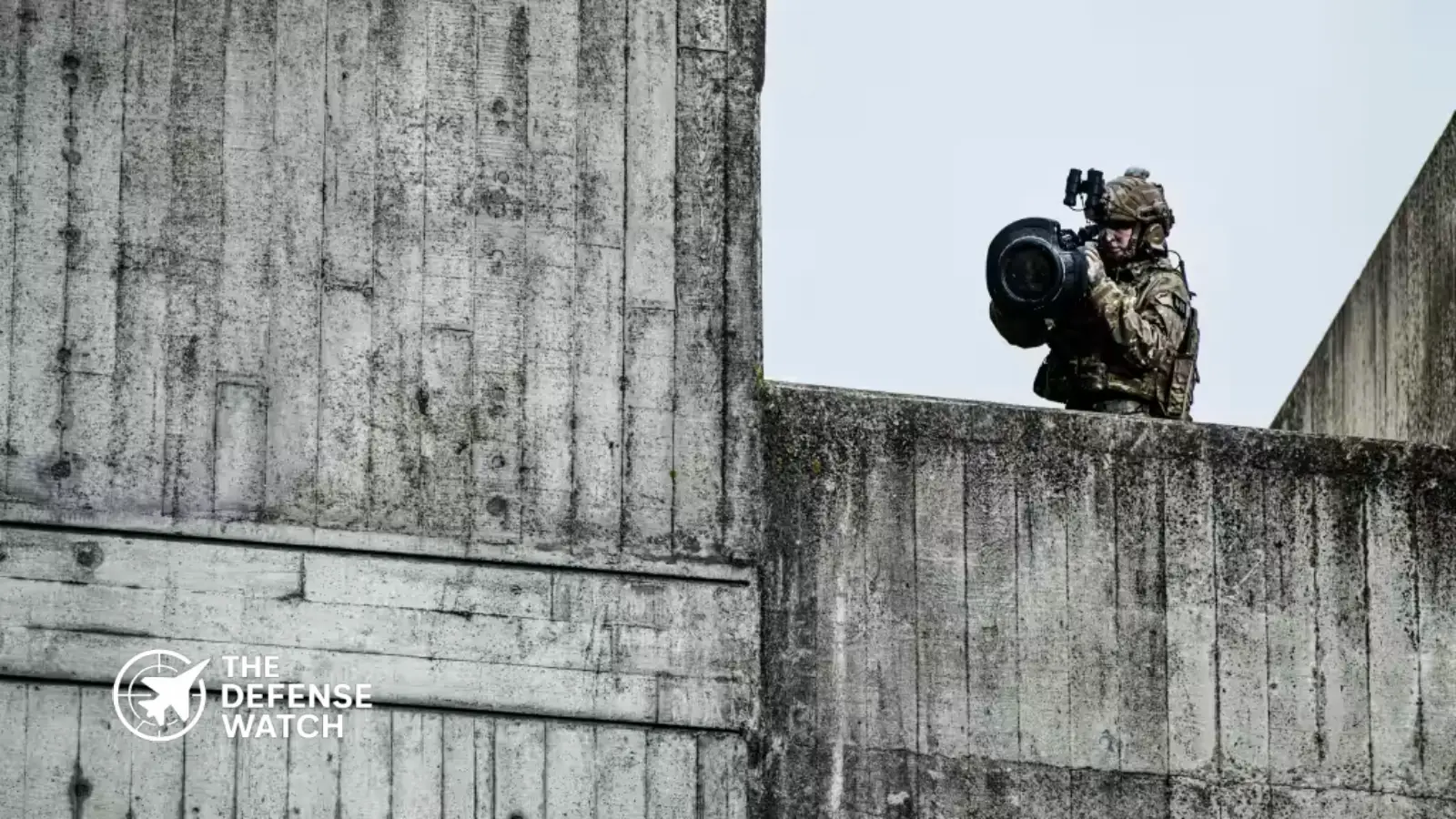
The Saab NLAW anti tank weapon has officially entered the French Army’s modernization roadmap following a newly announced contract between Swedish defense company Saab and France’s procurement authority, the Direction générale de l’Armement (DGA).
Under the agreement, Saab will supply NLAW systems, indoor and outdoor training equipment, and related support capabilities. Deliveries are scheduled to take place between 2026 and 2030. The contract also includes options that could allow France to procure additional NLAW weapons in the future.
The deal marks another expansion of Saab’s relationship with the French Armed Forces, which already operate the AT4 anti armor weapon and the Carl Gustaf M4 recoilless rifle.
What Is The NLAW System?
The Next Generation Light Anti tank Weapon (NLAW) is a short range, shoulder launched anti tank missile system designed to defeat modern armored vehicles, including main battle tanks.
Developed through cooperation between Sweden and the United Kingdom, NLAW was specifically created to provide infantry soldiers with a highly effective anti armor capability without requiring extensive training or complex target engagement procedures.
Unlike many traditional anti tank guided weapons, NLAW uses a predicted line of sight guidance method. The operator tracks the target briefly before launch, and the system calculates the expected flight path automatically.
This approach allows infantry forces to engage armored threats rapidly while minimizing exposure to enemy fire.
According to Saab, the weapon can be employed from enclosed spaces and urban environments, an increasingly important capability in modern warfare where combat frequently occurs in cities and built up areas.
Why France Is Investing In NLAW
France’s acquisition comes as European militaries continue reassessing battlefield requirements following lessons learned from recent high intensity conflicts.
Modern armored vehicles remain critical components of land warfare, but their survivability increasingly depends on countering advanced anti tank weapons deployed by infantry units.
The France NLAW contract provides the French Army with an additional layer of anti armor capability between disposable launchers and more sophisticated long range missile systems.
From an operational perspective, NLAW offers several advantages:
- Rapid target engagement
- Single soldier operation
- Urban combat suitability
- Reduced logistical burden
- High effectiveness against modern tanks
These characteristics align with current NATO trends emphasizing distributed, mobile infantry formations capable of independently engaging armored threats.
Saab Expands Its Position In The European Defense Market
For Saab, the French order represents another important export success for its land warfare portfolio.
The company has steadily expanded its presence across Europe as governments increase defense spending and prioritize ammunition, missile systems, and anti armor capabilities.
Saab’s Dynamics business area oversees several of the company’s most successful land combat products, including:
- AT4 anti armor weapon
- Carl Gustaf M4 recoilless rifle
- NLAW anti tank weapon
- Ground combat ammunition systems
Görgen Johansson, Head of Saab’s Dynamics business area, said the NLAW would provide the French Army with a new level of anti tank capability capable of changing battlefield dynamics by enabling individual soldiers to defeat heavily armored targets within seconds.
The statement underscores the growing emphasis placed on empowering dismounted infantry with advanced precision weapons traditionally associated with larger formations.
Combat Experience Adds Credibility
One factor contributing to NLAW’s appeal is its operational record.
The weapon is already used by several European armed forces, including Sweden, the United Kingdom, and Finland. It has also gained significant international attention due to its battlefield performance in recent conflicts where portable anti armor systems demonstrated their ability to threaten advanced tanks and armored vehicles.
Combat experience has become an increasingly important factor in procurement decisions as defense ministries seek systems with demonstrated operational effectiveness rather than purely theoretical performance.
For France, adopting a combat proven system reduces technical risk while accelerating capability delivery timelines.
Strategic Implications For European Defense
The French decision reflects a broader European trend toward strengthening land warfare capabilities amid a changing security environment.
Across NATO, armies are investing in:
- Anti tank guided weapons
- Loitering munitions
- Precision artillery
- Air defense systems
- Mobile infantry equipment
The addition of the Saab NLAW anti tank weapon supports this modernization effort by enhancing the ability of frontline infantry units to engage armored threats independently.
While France continues major investments in armored vehicles, artillery, and future combat systems, the NLAW procurement demonstrates recognition that relatively inexpensive infantry weapons can generate significant battlefield effects when employed effectively.
The contract also highlights the growing role of intra European defense cooperation, with France sourcing a key infantry capability from Sweden at a time when European governments are seeking to strengthen regional industrial partnerships and improve defense readiness.
Outlook
Deliveries beginning in 2026 will gradually introduce the NLAW capability into French service over the next several years.
Combined with existing French anti armor systems, the weapon is expected to enhance infantry flexibility and provide additional options for countering modern armored threats across a range of operational environments.
As European defense spending continues to rise and armies adapt to lessons from contemporary conflicts, lightweight and combat proven systems such as NLAW are likely to remain a priority area for procurement planners seeking rapid and cost effective capability improvements.