(adsbygoogle = window.adsbygoogle || []).push({});Executive Summary:
The U.S. Navy has awarded General Dynamics Mission Systems a $116.6 million contract modification to continue production of critical MK 54 Mod 1 lightweight torpedo components and support systems. The award strengthens the Navy’s anti-submarine warfare inventory and ensures sustained readiness against increasingly capable undersea threats through the end of the decade.
According to the Naval Sea Systems Command (NAVSEA), General Dynamics Mission Systems Inc. of Manassas, Virginia, received a contract modification valued at $116,636,577 to exercise options supporting production and sustainment of the MK 54 Lightweight Torpedo program.
The award modifies previously awarded contract N00024-25-C-6401 and includes procurement of MK 54 Mod 1 lightweight torpedo sonar assembly kits, Fleet Exercise Section Instrumentation Subsystems (FESIS), test equipment, spare parts, engineering services, and associated hardware support.
Deep Technical & Strategic Context Analysis
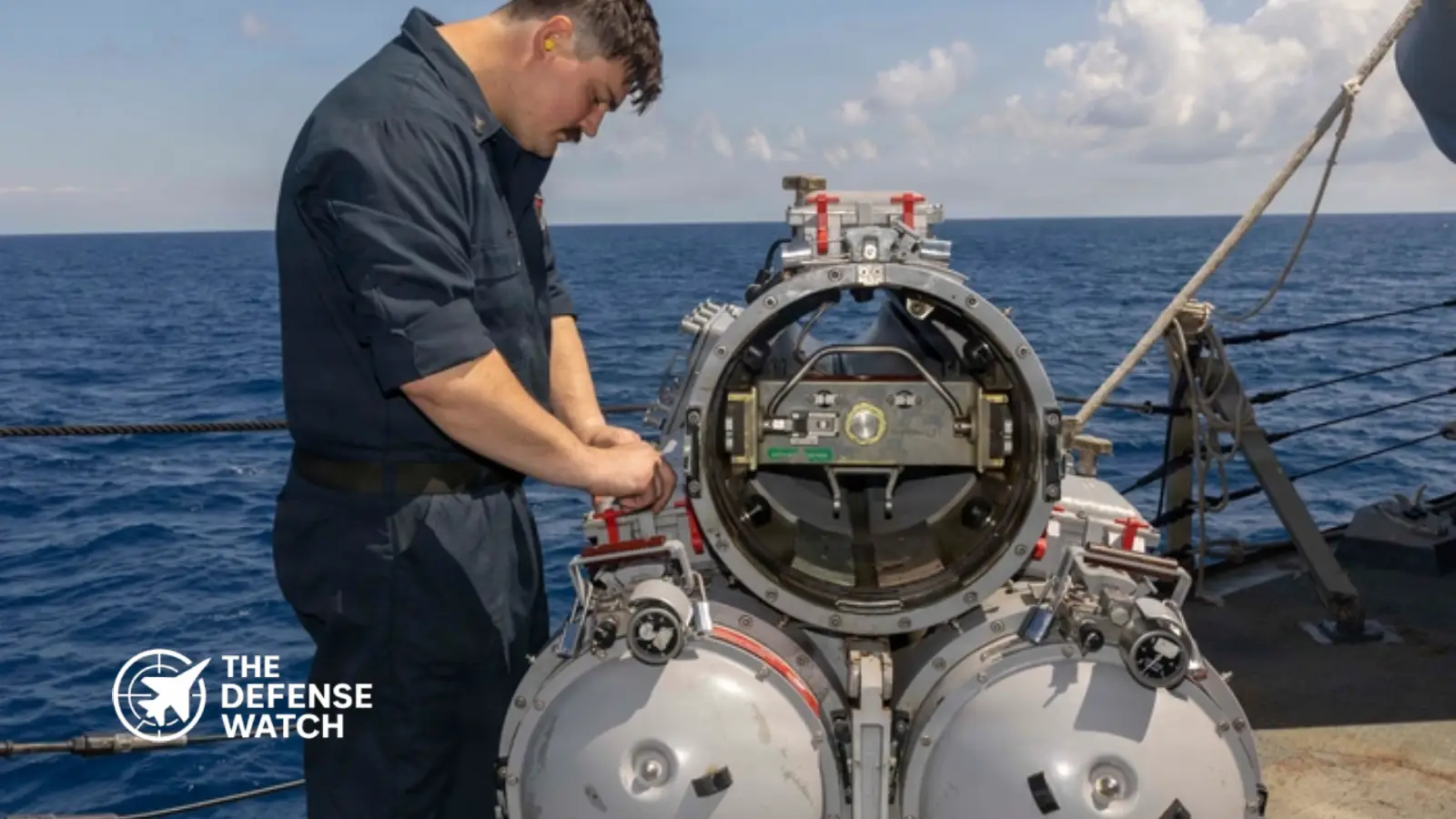
The MK 54 Lightweight Torpedo remains the U.S. Navy’s primary airborne and ship-launched anti-submarine weapon, designed to engage both conventional and nuclear-powered submarines operating in shallow coastal waters and deep-ocean environments. The weapon combines guidance and processing technologies derived from the earlier MK 50 and MK 46 torpedoes, creating a system optimized to counter increasingly quiet and sophisticated submarine threats.
The MK 54 is deployed across a wide range of U.S. and allied platforms, including the Boeing P-8A Poseidon maritime patrol aircraft, MH-60R Seahawk helicopters, and surface combatants equipped with torpedo launch systems. Its operational importance has increased significantly amid growing undersea competition in the Indo-Pacific, North Atlantic, and Arctic regions, where submarine activity by peer competitors continues to expand.
A particularly important element of this contract is the procurement of MK 54 Mod 1 sonar assembly kits. The Mod 1 upgrade incorporates improved signal processing and enhanced target discrimination capabilities designed to operate effectively in acoustically challenging environments. These improvements help operators distinguish hostile submarines from environmental noise, decoys, and civilian maritime traffic.
From a procurement perspective, the award combines several contract structures, including fixed-price-incentive, firm-fixed-price, cost-plus-fixed-fee, and cost-only elements. This mixed approach is common for mature weapon systems. Production hardware is typically purchased under fixed-price arrangements to control costs, while engineering and technical support activities use cost-reimbursement mechanisms where technical risks and requirements may evolve during execution.
Contract Breakdown & Details
Contract Value
- Total contract modification: $116,636,577
- Contract number: N00024-25-C-6401
- Award recipient: General Dynamics Mission Systems Inc.
- Contracting authority: Naval Sea Systems Command (NAVSEA), Washington, D.C.
Scope of Work
The modification funds:
- MK 54 Mod 1 lightweight torpedo sonar assembly kits
- Fleet Exercise Section Instrumentation Subsystems (FESIS)
- Test and diagnostic equipment
- Spare parts and sustainment hardware
- Engineering support services
- Program hardware support activities
Why FESIS Matters
Fleet Exercise Section Instrumentation Subsystems are non-warhead training configurations used during fleet exercises. These systems allow operators to collect performance data, validate engagement tactics, and assess torpedo effectiveness without employing live explosive warheads. The resulting data supports doctrine development, training, and future capability upgrades.
Geographic Distribution of Work
Work will be performed across multiple U.S. defense-industrial locations:
| Location | Share of Work |
|---|---|
| Canonsburg, Pennsylvania | 62% |
| Salt Lake City, Utah | 20% |
| Andover, Massachusetts | 14% |
| Bloomington, Indiana | 2% |
| Manassas, Virginia | 1% |
| Port Orchard, Washington | 1% |
Program Timeline
- Performance completion: April 2029
Funding Breakdown
The contract is funded through Navy weapons procurement appropriations spanning three fiscal years:
| Funding Source | Amount | Percentage |
|---|---|---|
| Fiscal Year 2025 Weapons Procurement (Navy) | $94,024,718 | 93% |
| Fiscal Year 2024 Weapons Procurement (Navy) | $4,654,328 | 5% |
| Fiscal Year 2026 Weapons Procurement (Navy) | $2,098,385 | 2% |
Fiscal Considerations
- Funds obligated at award: Approximately $100.8 million
- FY2024 funding expiring this fiscal year: $4.65 million
Strategic Implications
The award reflects continued Navy investment in undersea warfare capabilities at a time when submarine operations are regaining prominence in global military planning. While much public attention remains focused on surface combatants and long-range strike systems, anti-submarine warfare continues to be a foundational mission for the U.S. Navy.
By sustaining production of advanced MK 54 Mod 1 components and associated support infrastructure, the Navy is ensuring that frontline aircraft, helicopters, and surface combatants retain a reliable and modernized torpedo inventory capable of countering evolving submarine threats well into the next decade.