Executive Summary:
The United Kingdom has unveiled its long-awaited Defence Investment Plan, committing more than £5 billion over four years to drones and autonomous military systems. The strategy reflects lessons from recent conflicts and seeks to modernize Britain’s armed forces while strengthening NATO readiness and long-term deterrence.
UK Defence Investment Plan Prioritizes Drones And Autonomous Warfare
The UK Defence Investment Plan marks one of Britain’s most significant shifts in defense procurement in decades, placing drones, autonomous systems, artificial intelligence, and digital warfare at the center of future military capability.
Announced by Prime Minister Keir Starmer, the plan increases UK defense investment by approximately £15 billion over the next four years, bringing annual defense spending to roughly £79 billion by 2029. The investment package is intended to modernize armed forces facing increasingly complex security challenges while supporting the government’s longer term commitment to higher NATO defense spending.
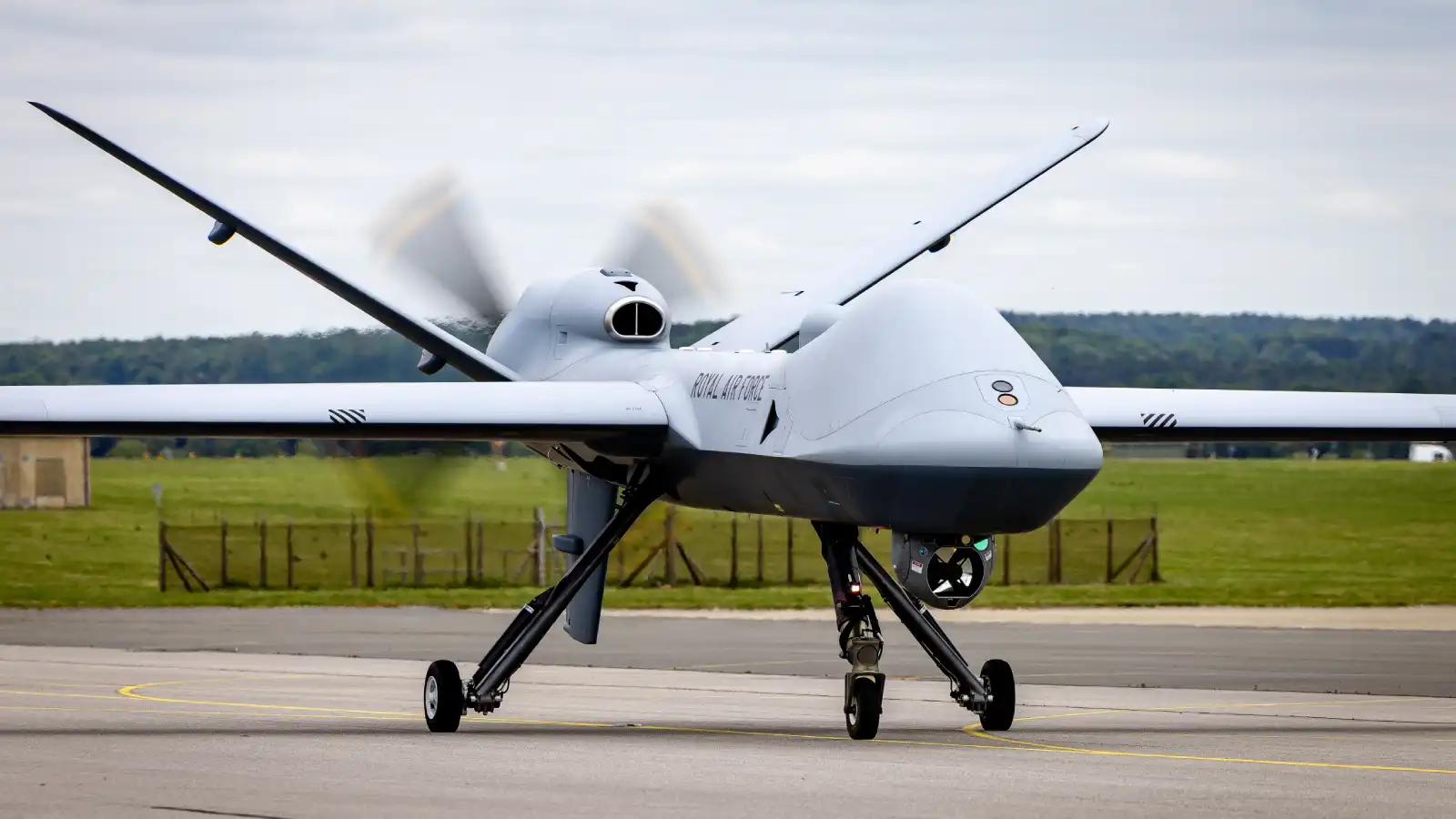
The headline announcement is more than £5 billion dedicated to drones and autonomous systems, representing the largest investment of its kind in British military history.
Drone Investment Reflects Changing Battlefield
The emphasis on unmanned systems reflects the rapid evolution of modern warfare.
British officials cited recent conflicts, particularly in Ukraine and the Middle East, as evidence that relatively inexpensive drones can destroy high value military targets while dramatically changing operational planning. The Ministry of Defence said innovation cycles for drone technologies are measured in weeks rather than years, requiring faster procurement and development processes.
The funding will support capabilities across all three military services, including:
- Autonomous attack drones operating alongside Army Apache helicopters under Project NYX.
- New surveillance drones replacing the Watchkeeper fleet through Project Corvus.
- Collaborative Combat Aircraft designed to operate with crewed Royal Air Force fighters.
- Expansion of electronic warfare drones, including the Storm Shroud capability.
- Hybrid Royal Navy operations combining crewed vessels with autonomous surface and underwater platforms.
Broader Modernization Program
While drones receive the most attention, the Defence Investment Plan spans nearly every major defense domain.
The government will invest approximately:
- £!– /wp:list-item –>
- £63 billion in Britain’s nuclear deterrent, including Dreadnought submarines, SSN-AUKUS, and modernization of the nuclear warhead enterprise.
- £11 billion for munitions and long range strike weapons.
- £!– /wp:list-item –>
- £!– /wp:list-item –>
- £790 million to strengthen air and missile defense capabilities.
Together, these investments are intended to implement recommendations from the UK’s Strategic Defence Review while improving readiness across the armed forces.
Analysis: A Shift From Platforms To Networks
The UK Defence Investment Plan illustrates a broader transformation occurring across NATO militaries.
Rather than relying exclusively on increasingly expensive traditional platforms, Britain is investing heavily in networked autonomous capabilities that can complement aircraft, ships, and ground forces.
This approach mirrors operational lessons emerging from Ukraine, where low cost drones have become central to reconnaissance, targeting, electronic warfare, and precision strike missions. Instead of replacing conventional equipment, unmanned systems are increasingly viewed as force multipliers that expand operational reach while reducing risk to personnel.
The Royal Navy’s planned hybrid fleet concept and the RAF’s investment in collaborative combat aircraft also align with similar programs underway in the United States and other NATO allies, highlighting growing consensus that future military operations will integrate crewed and uncrewed systems across every domain.
Budget Challenges Remain
Despite the increased investment, the Defence Investment Plan has attracted criticism from some defense officials and former military leaders.
Reuters reported that the Ministry of Defence originally identified a funding gap of approximately £28 billion, while critics argue the final settlement may still require difficult procurement choices and could delay certain programs. Some analysts have questioned whether the additional funding fully matches Britain’s long term defense ambitions and NATO capability targets.
Nevertheless, defense industry leaders have broadly welcomed the publication of the plan after months of uncertainty, arguing that greater budget clarity should provide stronger planning certainty for suppliers and defense manufacturers.
Strategic Outlook
The Defence Investment Plan demonstrates Britain’s intention to modernize for an era increasingly defined by autonomous warfare, artificial intelligence, and integrated multi domain operations.
While major programs such as GCAP, SSN-AUKUS, and the nuclear deterrent remain central pillars of national defense, the government’s decision to dedicate more than £5 billion to drones signals that unmanned systems are becoming a core capability rather than a supporting technology.
As NATO members continue increasing defense investment in response to evolving security challenges, Britain’s modernization strategy reflects a broader alliance trend toward combining advanced autonomous technologies with traditional military power.
- £!– /wp:list-item –>
- £63 billion in Britain’s nuclear deterrent, including Dreadnought submarines, SSN-AUKUS, and modernization of the nuclear warhead enterprise.
- £11 billion for munitions and long range strike weapons.
- £!– /wp:list-item –>
- £!– /wp:list-item –>
- £790 million to strengthen air and missile defense capabilities.
Together, these investments are intended to implement recommendations from the UK’s Strategic Defence Review while improving readiness across the armed forces.
Analysis: A Shift From Platforms To Networks
The UK Defence Investment Plan illustrates a broader transformation occurring across NATO militaries.
Rather than relying exclusively on increasingly expensive traditional platforms, Britain is investing heavily in networked autonomous capabilities that can complement aircraft, ships, and ground forces.
This approach mirrors operational lessons emerging from Ukraine, where low cost drones have become central to reconnaissance, targeting, electronic warfare, and precision strike missions. Instead of replacing conventional equipment, unmanned systems are increasingly viewed as force multipliers that expand operational reach while reducing risk to personnel.
The Royal Navy’s planned hybrid fleet concept and the RAF’s investment in collaborative combat aircraft also align with similar programs underway in the United States and other NATO allies, highlighting growing consensus that future military operations will integrate crewed and uncrewed systems across every domain.
Budget Challenges Remain
Despite the increased investment, the Defence Investment Plan has attracted criticism from some defense officials and former military leaders.
Reuters reported that the Ministry of Defence originally identified a funding gap of approximately £28 billion, while critics argue the final settlement may still require difficult procurement choices and could delay certain programs. Some analysts have questioned whether the additional funding fully matches Britain’s long term defense ambitions and NATO capability targets.
Nevertheless, defense industry leaders have broadly welcomed the publication of the plan after months of uncertainty, arguing that greater budget clarity should provide stronger planning certainty for suppliers and defense manufacturers.
Strategic Outlook
The Defence Investment Plan demonstrates Britain’s intention to modernize for an era increasingly defined by autonomous warfare, artificial intelligence, and integrated multi domain operations.
While major programs such as GCAP, SSN-AUKUS, and the nuclear deterrent remain central pillars of national defense, the government’s decision to dedicate more than £5 billion to drones signals that unmanned systems are becoming a core capability rather than a supporting technology.
As NATO members continue increasing defense investment in response to evolving security challenges, Britain’s modernization strategy reflects a broader alliance trend toward combining advanced autonomous technologies with traditional military power.