Lockheed Martin Outlines Maritime Electronic Warfare Vision As Navy Faces Accelerating Electromagnetic Threats
Maritime electronic warfare has moved from a supporting capability to a central pillar of US Navy fleet defense strategy, and Lockheed Martin is positioning itself at the forefront of that transformation. In a detailed technical feature published April 21, 2026, the defense contractor laid out its integrated approach to electromagnetic spectrum dominance aboard naval surface combatants — covering current fielded systems, next-generation development programs, and the doctrinal case for EW as the fleet’s primary non-kinetic shield.
- Lockheed Martin Outlines Maritime Electronic Warfare Vision As Navy Faces Accelerating Electromagnetic Threats
- The Big Picture: A More Contested Electromagnetic Environment
- What’s Happening: Systems, Programs, and Active Development
- Why It Matters: EW as Munitions Conservation
- Open Architecture: The Strategic Differentiator
- Strategic Implications: AI Integration and the Multi-Domain Fight
- Competitor View: How Adversaries Will Read This Signal
- What To Watch Next: SEWIP and SOEA Procurement Timelines
- Capability Gap: What This Addresses
- The Bottom Line
- Lockheed Martin’s AN/SLQ-32(V)6 is described as the world’s most advanced naval electronic support system, forming a core layer of the Aegis Combat System’s real-time threat picture.
- The company is actively developing the Scaled Onboard Electronic Attack (SOEA) system — a next-generation, low-SWaP soft-kill terminal defense solution built on open architecture.
- Lockheed Martin argues EW enables surface combatants to conserve kinetic munitions, a lesson validated by real-world consumption rates observed in the Ukraine conflict.
- Lockheed Martin brings over 60 years of EW development history, integrating AI-enabled, software-defined EW into its open-architecture Surface Electronic Warfare Improvement Program (SEWIP) framework.
- The company positions maritime EW not as a last resort, but as the fleet’s first and most cost-effective defensive layer in future contested operations.
The Big Picture: A More Contested Electromagnetic Environment
Adversary investment in long-range sensors, anti-ship missiles, and multi-domain coordination has fundamentally altered the threat calculus for US surface forces. Peer competitors including China and Russia have developed sophisticated radio frequency (RF)-guided weapons and targeting systems specifically designed to compress the engagement timelines that traditional shipboard defenses rely on.
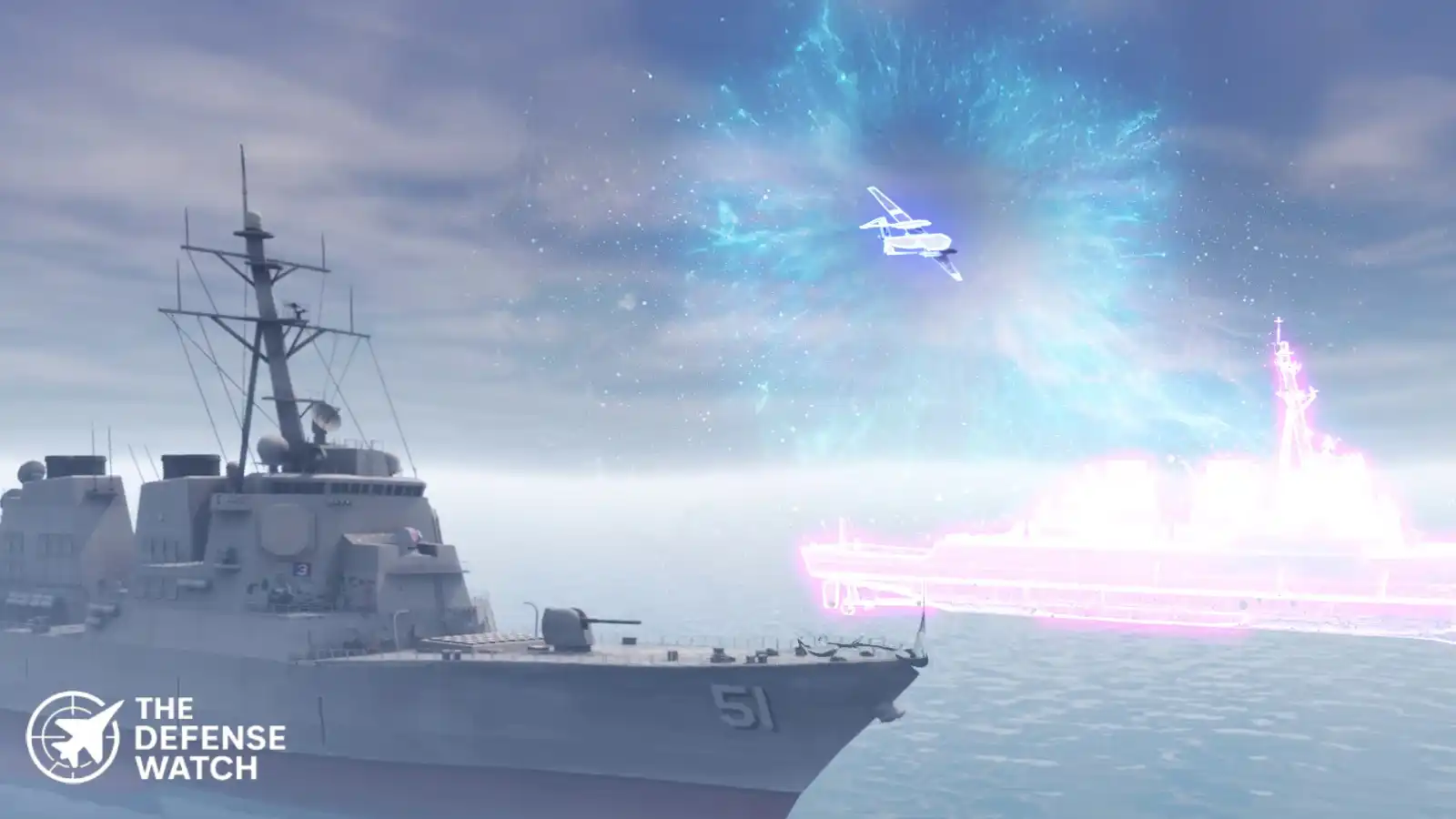
The US Navy’s response has centered on layered defense — combining kinetic interceptors, directed energy, and electronic warfare into a coherent, integrated system. Within that construct, EW carries a weight it has not historically held: the ability to deny an adversary’s entire kill chain without expending a single missile.
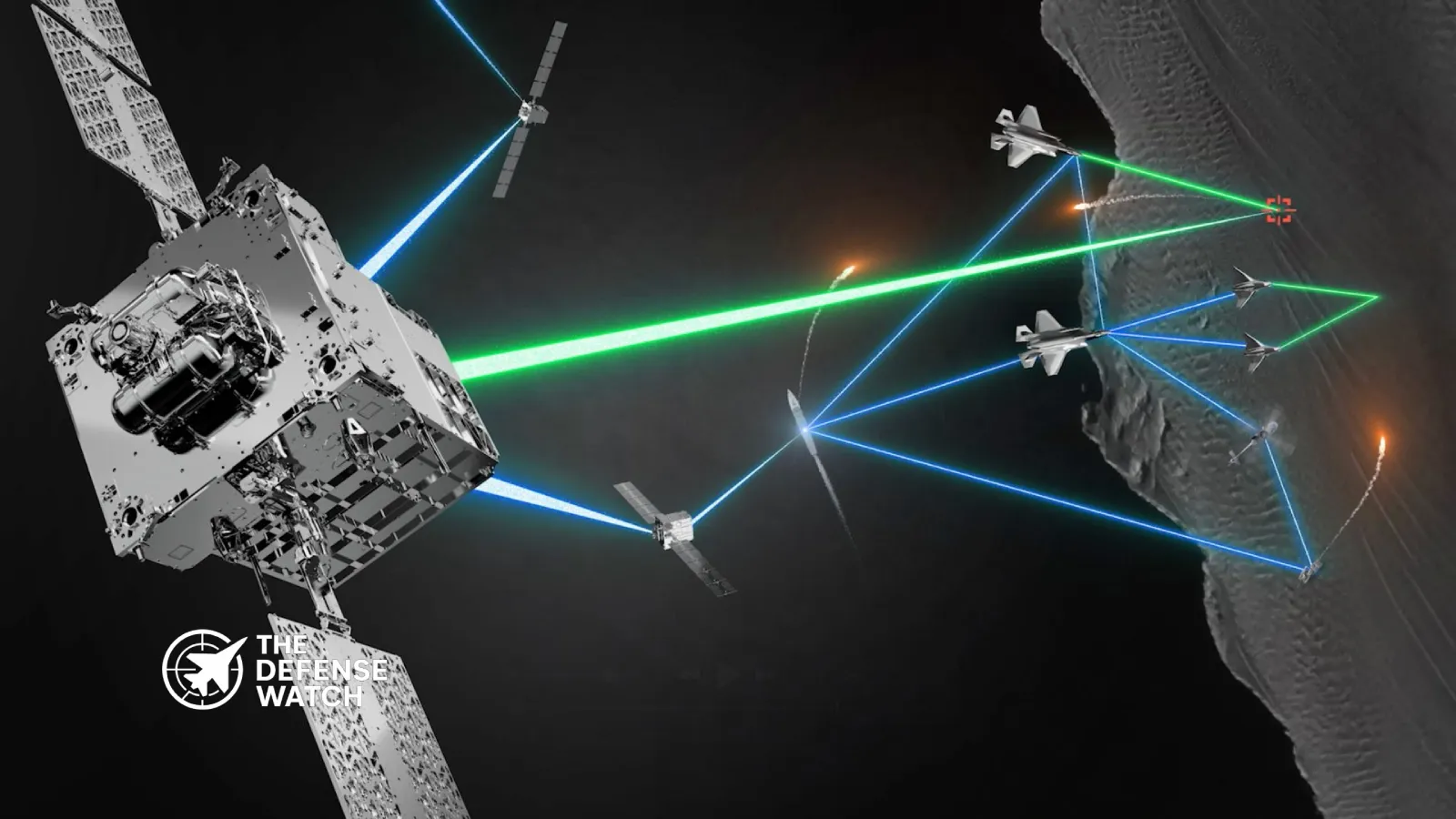
Lockheed Martin frames EW as the “connective tissue across the kill chain, from deciphering the environment to denying an adversary’s engagement and defeating threats.” That framing reflects a doctrine that has quietly gained momentum inside the Pentagon — one that treats spectrum control as a force multiplier, not merely a defensive reflex.
What’s Happening: Systems, Programs, and Active Development
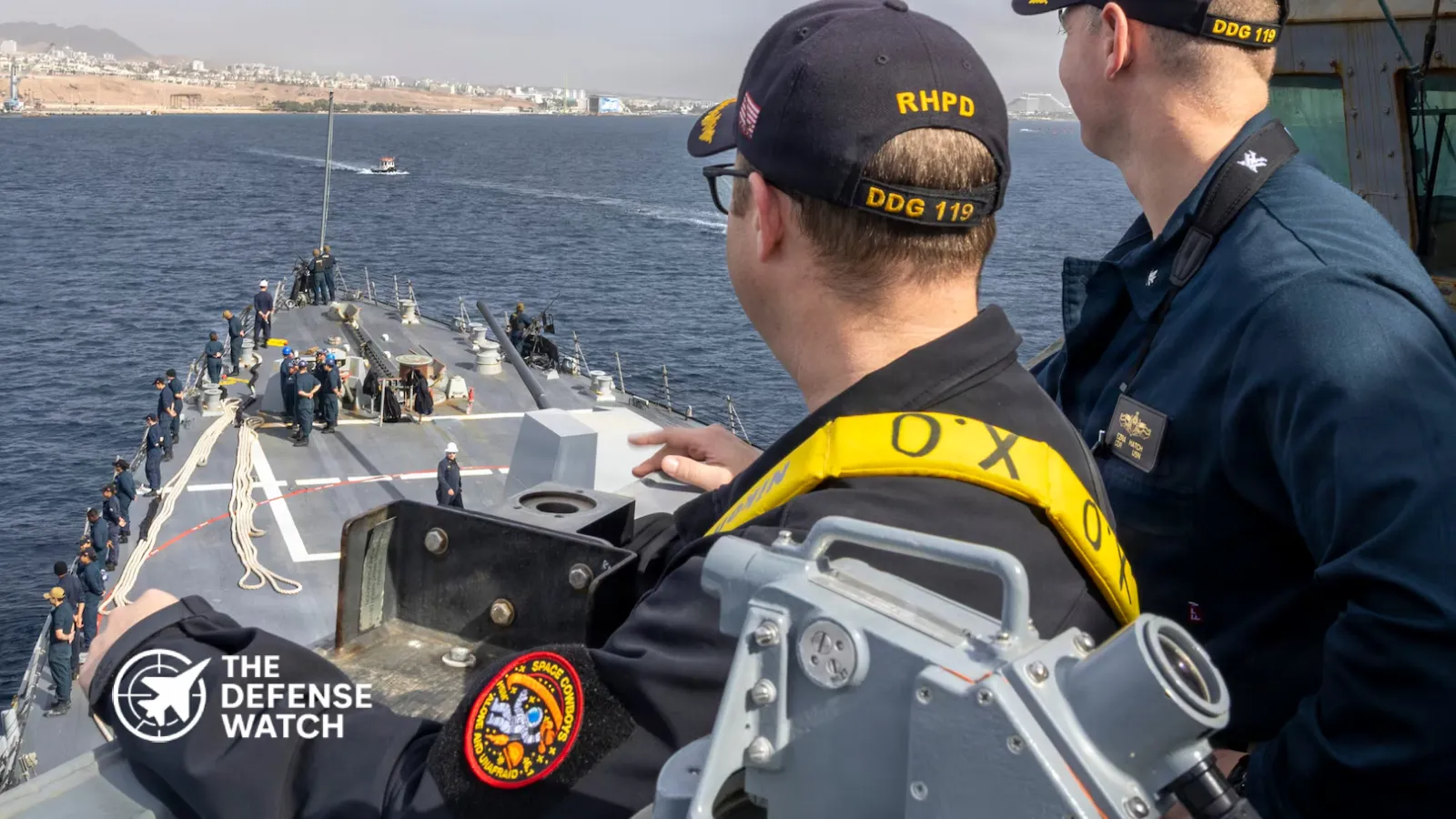
Lockheed Martin’s current flagship naval EW system is the AN/SLQ-32(V)6 and its scaled derivative, the AN/SLQ-32C(V)6, which the company characterizes as the world’s most advanced electronic support systems for naval applications. The AN/SLQ-32(V)6 provides early threat indication and contributes to Aegis Combat System’s real-time battlespace picture. lockheedmartin
Beyond the fielded AN/SLQ-32 family, Lockheed is actively developing the Scaled Onboard Electronic Attack (SOEA) system. SOEA is described as an affordable, rapidly fieldable next-generation electronic attack system that leverages open-architecture engineering and low size, weight, and power (SWaP) design to support onboard soft-kill terminal defense.
SOEA is intended to advance the Surface Electronic Warfare Improvement Program (SEWIP) by integrating the advanced electronic support capability of the SLQ-32(V)6 with other shipboard systems to deliver onboard electronic attack capabilities.
The company frames the program as a direct bridge between legacy electronic support systems and a new generation of integrated attack-and-defense functions — a significant doctrinal and technical step for surface combatants.
Why It Matters: EW as Munitions Conservation
One of the more operationally significant arguments Lockheed Martin advances is the link between effective EW and kinetic munitions management. The company argues that by controlling the electromagnetic spectrum, naval forces deny adversaries the ability to employ systems across the entire kill chain — and that this is particularly important in conflicts where munition availability is limited, citing Ukraine as a recent example.
This is not a theoretical concern. The conflict in Ukraine has demonstrated at scale that even well-supplied militaries can face critical shortages in high-intensity combat environments. Surface combatants carry finite missile loads, and the logistics of replenishment at sea in contested waters are formidable. An EW capability that forces a threat into a soft-kill defeat before a ship must expend a Standard Missile or ESSM round represents a measurable tactical and logistical advantage.
The cost asymmetry also matters strategically. A reactive RF countermeasure that defeats an inbound missile costs far less than the interceptor it replaces. At fleet scale, across multiple simultaneous engagements, that arithmetic carries significant weight in long-duration conflict scenarios.
Open Architecture: The Strategic Differentiator
The most forward-looking element of Lockheed Martin’s maritime EW strategy is its emphasis on open architecture. Open-architecture EW systems enable navies to integrate new sensors, deploy updated countermeasure techniques, and adapt to shifting missions — effectively allowing the capability to evolve at the pace of software rather than shipbuilding.
This matters enormously in the current threat environment. Traditional closed-system EW platforms required lengthy and expensive upgrade cycles to address new emitter characteristics or weapons guidance modes. An open-architecture framework allows operators to push software-defined updates — new jamming techniques, updated threat libraries, revised countermeasure logic — in timelines measured in weeks rather than years.
Lockheed Martin describes open architecture as creating an ecosystem that encourages third-party developers to contribute and innovate, enabling standardization of interfaces and data formats across system components.
For the US Navy, this has tangible acquisition implications. Open-architecture EW platforms reduce vendor lock, lower lifecycle costs, and create space for rapid technology insertion from the commercial and academic sectors — an approach that aligns with the Pentagon’s broader defense modernization priorities under the National Defense Industrial Strategy.
Strategic Implications: AI Integration and the Multi-Domain Fight
Lockheed Martin is integrating artificial intelligence into its EW systems, with AI-enabled advanced, distributed, and cooperative EW platforms designed to support a range of missions and operations across all domains and platforms.
AI-driven EW represents a qualitative shift in how electronic warfare is conducted. Traditional EW systems rely on pre-programmed threat libraries and human operator decisions. AI-enabled systems can autonomously identify novel emitter signatures, correlate them against multi-source intelligence, and generate countermeasure responses in milliseconds — well within the engagement timelines that advanced anti-ship missiles impose.
The integration of AI also enables cooperative EW — where multiple shipboard or airborne platforms share threat data and coordinate spectrum management in real time. In a distributed maritime operations concept, which the Navy has been developing under its Distributed Maritime Operations (DMO) doctrine, this kind of machine-speed coordination is essential.
Competitor View: How Adversaries Will Read This Signal
China’s People’s Liberation Army Navy (PLAN) has invested substantially in anti-ship missile systems, over-the-horizon radar, and electromagnetic warfare capabilities. The PLAN’s DF-21D and DF-26 carrier-killer missiles depend on a functioning electromagnetic kill chain — from detection satellite or OTH radar through to terminal guidance. A US fleet with robust, layered EW capable of disrupting that chain at multiple nodes fundamentally challenges China’s anti-access/area-denial (A2/AD) strategy.
Russia’s naval doctrine similarly relies on coordinated missile salvos guided by radar and datalink. Advances in US shipborne electronic attack that can deny or degrade those guidance links would reduce the effectiveness of massed anti-ship strike packages — a core element of Russian maritime warfare doctrine.
Both adversaries will interpret accelerated US investment in maritime EW as a direct counter to their most valued naval strike capabilities, likely accelerating their own investment in guidance redundancy, frequency agility, and electronic counter-countermeasures.
What To Watch Next: SEWIP and SOEA Procurement Timelines
The SEWIP program has been the Navy’s primary vehicle for modernizing shipboard EW since the mid-2000s. SEWIP Block 2 delivered electronic support upgrades; SEWIP Block 3 has focused on expanding electronic attack capabilities. SOEA represents what Lockheed Martin positions as the next logical evolution of that roadmap.
Acquisition watchers should track whether SOEA receives a formal Navy program of record designation, which would signal transition from development to procurement. Given the Navy’s stated emphasis on non-kinetic fleet defense and the munitions conservation arguments Lockheed has publicly advanced, a formal SOEA contract award in the near term would be consistent with current service priorities.
EW training and simulation investment is also worth monitoring. Lockheed Martin is investing in more effective and efficient EW training and simulation tools to provide naval operators with realistic and immersive training environments, enhancing readiness to respond to emerging threats. Simulation-driven readiness investments often precede large-scale fielding programs, suggesting operational deployment planning may be further advanced than publicly disclosed.
Capability Gap: What This Addresses
The existing gap in US Navy surface EW is the integration seam between electronic support — knowing a threat exists — and electronic attack — actively denying or defeating it. The AN/SLQ-32 family excels at the former. SOEA is explicitly designed to close the latter.
A secondary gap is SWaP-constrained platforms: smaller surface combatants, littoral combat ships, and future unmanned surface vessels that cannot host legacy EW systems. SOEA’s low-SWaP architecture directly addresses that constraint, suggesting the system has applicability well beyond large-deck surface combatants.
Realistic limitations remain. Software-defined EW systems are only as effective as their threat libraries and update cycles. In a conflict where adversaries deploy previously unseen emitter characteristics, even advanced AI-enabled systems face detection and response latency. Redundancy, cross-domain cueing, and human oversight of autonomous EW decisions remain necessary safeguards.
The Bottom Line
As adversary missiles grow faster and smarter, the US Navy’s best and most cost-effective answer may not be another interceptor — it may be mastery of the electromagnetic spectrum, and Lockheed Martin is making a direct, technically credible case that it can deliver that edge.