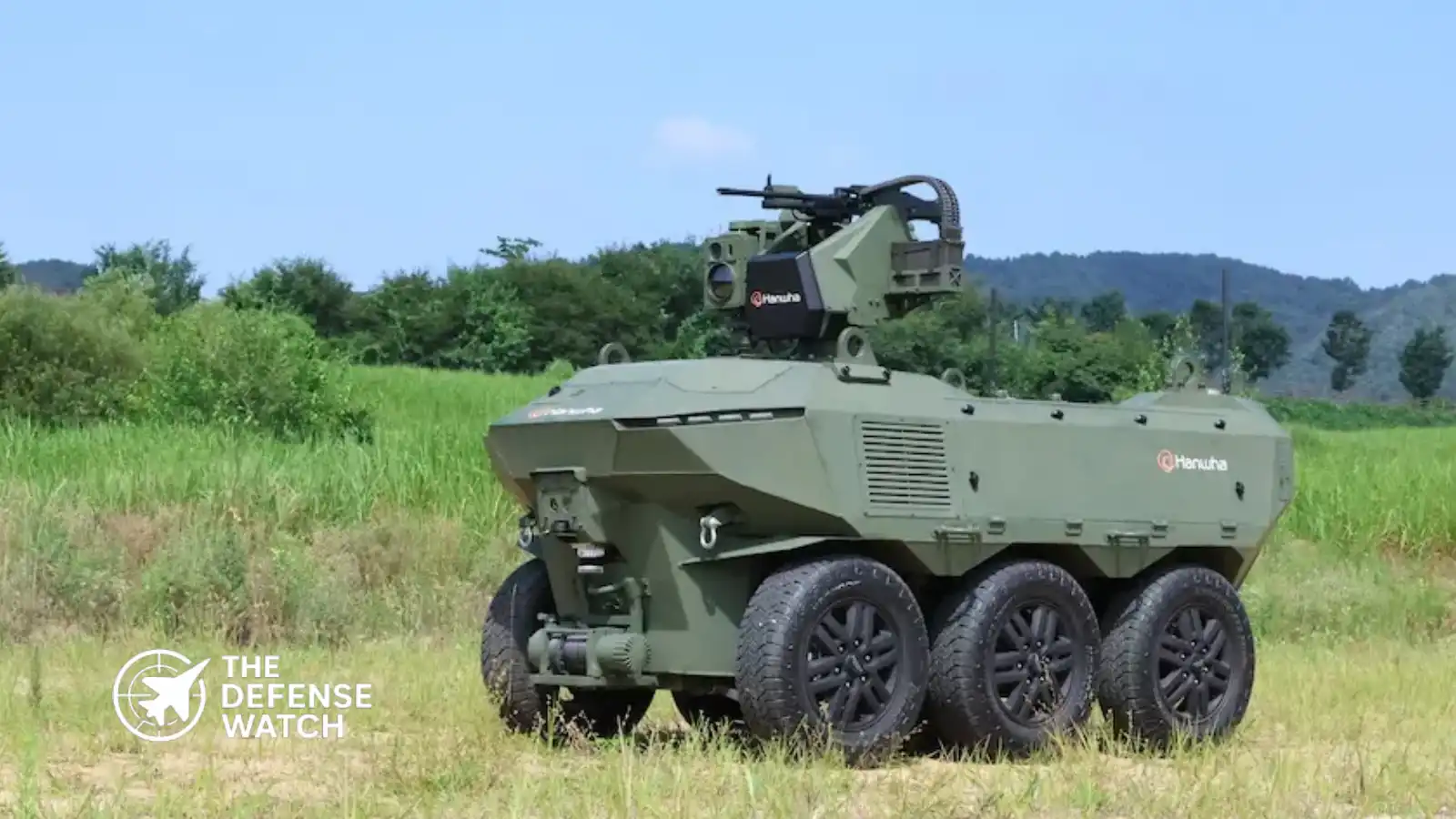
Executive Summary: South Korean defense giant Hanwha used BSDA 2026 in Romania to highlight its growing portfolio of AI-enabled military systems and autonomous platforms. The company’s presence reflects increasing European demand for unmanned technologies, air defense solutions, and industrial defense partnerships amid rising regional security pressures.
Hanwha Highlights AI Defense Technologies At BSDA 2026
South Korean defense manufacturer Hanwha Aerospace used BSDA 2026 in Bucharest to showcase a broad portfolio of AI defense technologies and unmanned systems as the company accelerates its expansion into the European defense market.
The exhibition comes as NATO members across Eastern Europe continue increasing defense spending and prioritizing modernization programs focused on autonomous systems, integrated air defense, and battlefield networking. Hanwha’s display reflected these priorities, combining unmanned ground systems, artillery capabilities, and AI-enabled battlefield technologies designed for modern high-intensity operations.
BSDA 2026, one of Eastern Europe’s largest defense exhibitions, has become an increasingly important venue for global defense firms seeking industrial partnerships and procurement opportunities within NATO-aligned states.
Focus On Autonomous And Unmanned Warfare Systems
A major element of Hanwha’s presentation centered on unmanned and autonomous military platforms intended to support reconnaissance, logistics, and combat operations.
The company highlighted unmanned ground vehicles designed to reduce soldier exposure in contested environments while supporting intelligence gathering and resupply missions. These systems are part of a broader global trend toward human-machine teaming, where autonomous platforms operate alongside conventional forces.
Hanwha also emphasized AI-enabled command and control technologies intended to improve battlefield awareness and accelerate operational decision-making. Defense companies across the United States, Europe, and Asia are increasingly investing in similar capabilities as militaries seek faster sensor-to-shooter integration.
The focus on autonomous military technologies reflects lessons observed in recent conflicts, particularly in Ukraine, where drones, loitering munitions, and AI-assisted targeting systems have reshaped battlefield operations. European governments are now accelerating procurement programs tied to unmanned warfare and layered defense architectures.
European Expansion Strategy Gains Momentum
Hanwha’s appearance at BSDA 2026 also underscored its long-term strategy to deepen industrial cooperation across Europe.
The company has steadily expanded its footprint within NATO member states through defense partnerships, localized production initiatives, and technology transfer agreements. Eastern Europe has become a particularly important market due to growing security concerns linked to Russia’s military posture and the need to replenish defense inventories.
Romania, Poland, and other regional states are investing heavily in artillery systems, armored vehicles, missile defense, and autonomous capabilities. Hanwha has positioned itself as a competitive supplier by offering rapid production timelines and industrial cooperation packages.
The company’s growing visibility in Europe mirrors broader competition among global defense manufacturers seeking contracts tied to NATO modernization requirements. South Korean defense firms, including Hanwha, have increasingly emerged as major suppliers due to their ability to scale production and deliver systems quickly.
AI Defense Technologies Become Central To Modernization
The AI defense technologies presented by Hanwha align with a wider shift toward digitally connected military operations.
Modern armed forces are prioritizing artificial intelligence for battlefield analysis, threat detection, predictive maintenance, and autonomous operations. AI-driven systems are increasingly viewed as critical force multipliers capable of improving operational tempo and reducing manpower burdens.
Hanwha’s portfolio demonstrated how AI is becoming integrated across multiple defense sectors rather than remaining limited to experimental programs. This includes applications in surveillance systems, autonomous navigation, targeting support, and networked command systems.
Defense analysts increasingly view AI integration as one of the defining factors shaping future military competition. NATO countries are now accelerating investments in secure military AI frameworks while balancing operational effectiveness with cybersecurity and ethical concerns.
BSDA 2026 Reflects Eastern Europe’s Defense Priorities
BSDA 2026 highlighted how Eastern Europe has become a central region for defense procurement and industrial expansion.
The exhibition featured companies focused on missile defense, artillery modernization, drones, armored systems, and electronic warfare. Many participating firms emphasized interoperability with NATO standards and rapid battlefield deployment capabilities.
Hanwha’s participation demonstrated the company’s intent to compete directly within this evolving security environment. Its emphasis on unmanned systems and AI-enabled defense technologies aligns closely with the operational lessons emerging from ongoing regional conflicts and NATO modernization plans.
The company’s strategy also reflects growing global demand for scalable defense manufacturing and resilient supply chains. European states increasingly seek suppliers capable of delivering systems quickly while supporting local industrial participation.
Strategic Implications For NATO Defense Modernization
Hanwha’s expanding European presence illustrates how defense procurement is becoming more globally competitive as NATO members accelerate military modernization efforts.
South Korean defense manufacturers are increasingly challenging established U.S. and European suppliers across artillery, armored vehicle, and advanced technology sectors. Their rise is supported by strong domestic industrial capacity and proven export performance.
The emphasis on AI defense technologies and autonomous systems at BSDA 2026 also signals where future procurement priorities are heading. European militaries are expected to continue investing heavily in networked warfare systems, autonomous platforms, and integrated battlefield management technologies over the coming decade.
For NATO allies facing evolving security threats, these capabilities are becoming essential components of future force structures rather than optional enhancements.