













@2026 – All Right Reserved. TheDefenseWatch.com
- Home
- Defense Systems
- Missiles & Precision Weapons
- MK 54 Lightweight Torpedo Missile
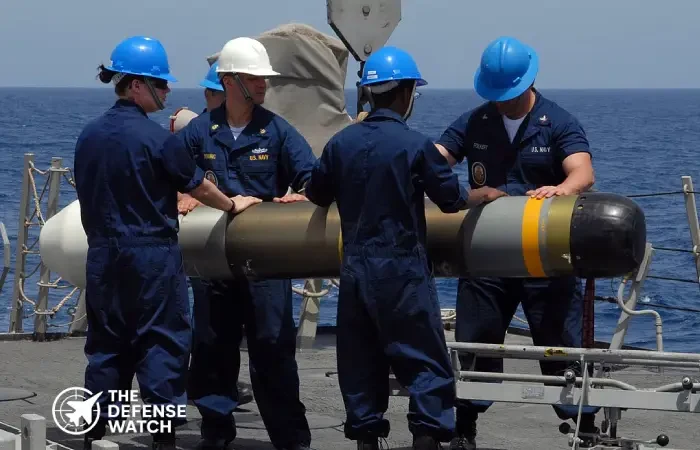
MK 54 Lightweight Torpedo Missile
Defense Systems Full Specifications
1. General Information
| Name / Designation | MK 54 Lightweight Torpedo |
| Type / Role | Lightweight Anti-Submarine Warfare Torpedo |
| Country of Origin | United States |
| Manufacturer | RTX Corporation (Raytheon) |
| Service Entry / Year Introduced | 2004 |
| Operational Status | Active |
2. Performance & Range
| Range | Approximately 10 km |
| Speed | Around 40 knots |
| Ceiling / Altitude Limit | Not Applicable |
| Accuracy (CEP) | High precision acoustic targeting |
| Warhead Type | High Explosive (HE) |
3. Guidance & Targeting
| Guidance System | Active / Passive Acoustic Homing |
| Targeting Mode | Fire-and-Forget |
| Launch Platform Compatibility | P-8A Poseidon, MH-60R Seahawk, Surface Ships |
| Seeker Type | Advanced Acoustic Sonar Seeker |
4. Physical Characteristics
| Length | 2.72 m |
| Diameter | 324 mm |
| Wingspan | Not Applicable |
| Launch Weight | Approximately 276 kg |
| Propulsion | Stored Chemical Energy Propulsion System |
5. Warhead & Payload
| Warhead Weight | Approximately 43.9 kg |
| Explosive Type | High Explosive Blast Fragmentation |
| Detonation Mechanism | Proximity and Impact Fuse |
| Payload Options | Conventional Anti-Submarine Payload |
6. Operational Use & Capabilities
| Operational Range Type | Short Range |
| Deployment Platform | Air and Sea |
| Target Types | Submarines and Underwater Threats |
| Combat Proven | Yes |
| Users / Operators | United States, Australia, India, Japan, South Korea |
PROS
- Effective against modern diesel-electric submarines
- Designed for shallow and deep water operations
- Compatible with multiple naval aircraft and ships
- Advanced sonar and countermeasure resistance
- Proven operational reliability with U.S. Navy forces
CONS
- High procurement and sustainment cost
- Limited operational range compared to heavyweight torpedoes
- Requires advanced launch integration systems
- Dependent on external targeting and ASW networks
- Export availability subject to U.S. approval
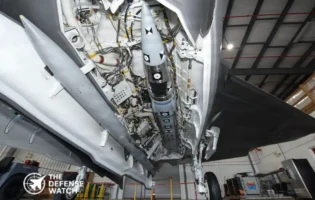
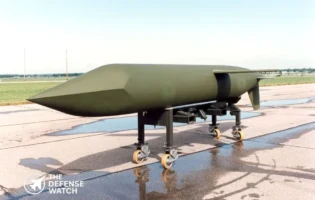
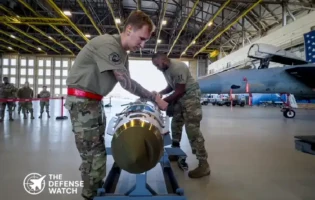
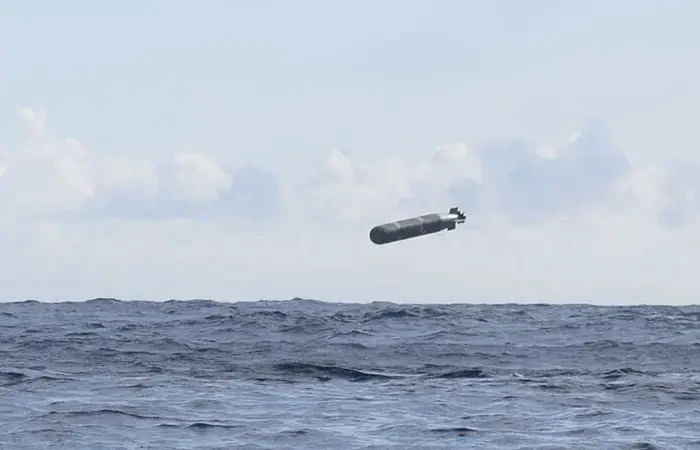
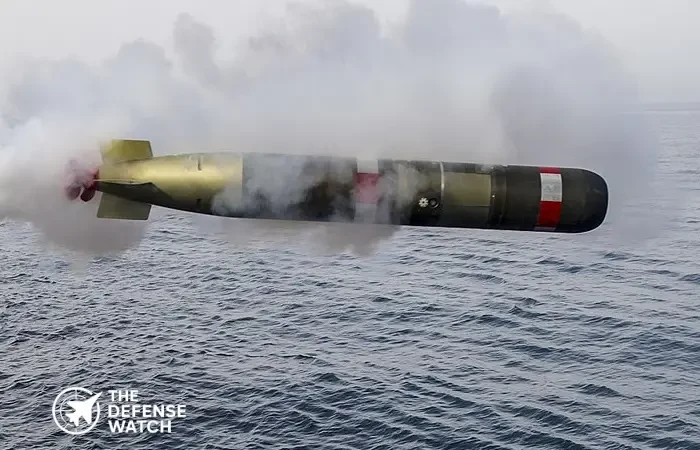
The MK 54 Lightweight Torpedo is a next generation anti-submarine warfare weapon designed for modern naval operations in contested maritime environments. Developed for the U.S. Navy, the MK 54 combines advanced guidance technology with compact dimensions to engage hostile submarines operating in shallow coastal waters and deep ocean environments.
The torpedo was created by integrating proven components from earlier U.S. Navy torpedoes, including the MK 46, MK 48, and MK 50 systems. It is optimized to defeat diesel-electric submarines, fast attack submarines, and underwater threats that use countermeasures or operate in cluttered littoral regions.
Widely deployed by U.S. Navy aircraft and allied naval forces, the MK 54 is launched from maritime patrol aircraft, helicopters, and surface ships. It is commonly integrated with the P-8A Poseidon maritime patrol aircraft and MH-60R Seahawk helicopter for rapid anti-submarine response missions.
Manufacturer
The MK 54 Lightweight Torpedo is manufactured by RTX Corporation, formerly Raytheon Technologies, in partnership with the U.S. Navy. The weapon entered operational service in the early 2000s and remains one of the primary lightweight torpedoes used by NATO and allied naval forces.
The system uses digital signal processing, advanced sonar tracking, and sophisticated target recognition software to improve kill probability against modern submarine threats.
Speed and Range
The MK 54 lightweight torpedo has an estimated speed of approximately 40 knots and an operational range of around 10 kilometers. It uses a stored chemical energy propulsion system designed for high reliability and low acoustic signature during underwater operations.
The torpedo can rapidly acquire submerged targets after water entry and conduct autonomous attack patterns using active and passive sonar guidance systems.
Cost / Price
The estimated unit cost of the MK 54 Lightweight Torpedo is approximately USD 3 million to USD 3.5 million depending on configuration, support equipment, and export package agreements. Costs may vary for international customers under Foreign Military Sales programs.
Disclaimer Note
The information provided on TheDefenseWatch.com is for general informational purposes only. While we strive to ensure the accuracy, completeness, and timeliness of our content regarding defense and aerospace products, technologies, and specifications, we cannot guarantee that all information is 100% accurate or up-to-date due to the evolving nature of military technology and classified data.TheDefenseWatch.com does not warrant the reliability, suitability, or availability of the information for any specific purpose. Users are advised to consult official sources, such as manufacturers, government publications, or defense agencies, for precise and verified data before making decisions based on our content.We are not affiliated with any defense manufacturers, governments, or military organizations mentioned. Opinions, reviews, and ratings reflect expert analysis but are subjective and should not be considered endorsements. TheDefenseWatch.com is not responsible for any errors, omissions, or consequences arising from the use of this website’s content.External links are provided for convenience and do not imply endorsement. TheDefenseWatch.com reserves the right to update or modify content without prior notice. By using this website, you agree to our Privacy & Cookies Policy.
New Arrivals
Popular Comparisons
-
 Tejas Fighter Jet vs F-16 Fighting Falcon: Capability Compared
View Comparison →
Tejas Fighter Jet vs F-16 Fighting Falcon: Capability Compared
View Comparison → -
Rafale Fighter Jet vs F-16 Fighting Falcon : Which Fighter Has the Edge?
View Comparison →
-
Su-57 Fighter Jet vs J-20 Fighter Jet: Stealth and Air Combat Compared
View Comparison →
-
Mirage 2000 vs Tejas Mk1A: Legacy Combat Power vs Indigenous Modernization
View Comparison →
-
Rafale Fighter Jet vs F-22 Raptor: Which Air Dominance Fighter Has the Edge?
View Comparison →
-
Tejas Fighter Jet vs. Rafale Fighter Jet: India’s Indigenous Fighter Meets France’s Proven Multirole Combat Aircraft
View Comparison →
-
F-22 Raptor vs. F-35 Joint Strike Fighter: Which Fifth Generation Fighter Has the Edge?
View Comparison →
-
F-35A vs. F-22 Raptor: Which U.S. Stealth Fighter Dominates Modern Air Combat?
View Comparison →
-
AGM-114 Hellfire vs. AGM-179 JAGM: Which U.S. Precision Missile Is Better?
View Comparison →
-
Patriot (PAC-3) vs. THAAD: Complete Missile Defense System Comparison, Capabilities, Range, and Strategic Roles
View Comparison →
- MV-22B Osprey Completes First Navy Sonobuoy Acceptance Test

- Saab expands Swedish space role through new partnerships with SSC Space, OHB Sweden and Ericsson
- Russian Mi-8 Briefly Enters Polish Airspace, Prompting Fighter Scramble
- Last A-10 Warthog Departs Nellis, Closing a 49-Year Close Air Support Era
- British Arms Broker Jailed 16 Years Over Illegal Missile and Fighter Jet Deals
- RAF Hawk T2 Crashes Near RAF Valley After Two Pilots Eject
- DeltaQuad Launches Evo-LE With Eight-Hour Endurance for Long-Range ISR
- USS Farragut Completes Task Force Exercise Ahead of Global Deployment
- Army Begins Replacing Legacy WIN-T Network With Modern C2 Baseline at III Armored Corps
- Coyote Storm 26.2 Tests Air Force Expeditionary Wing 2.0 Readiness at Davis-Monthan