Executive Summary: The U.S. Navy has awarded Boeing a $251 million contract to deliver a comprehensive P-8A Poseidon training ecosystem for Germany, including operational simulators, maintenance trainers, mission systems instruction, and logistics support through 2031.
The effort supports Berlin’s rapidly expanding maritime surveillance and anti-submarine warfare capability while also incorporating shared software development with Canada’s future P-8A fleet program.
According to the U.S. Department of Defense, the contract was awarded by the Naval Air Warfare Center Training Systems Division on behalf of Germany under the Foreign Military Sales (FMS) framework. The award covers procurement, software integration, installation, testing, and long-term support for a broad suite of P-8A Poseidon training systems.
The contract, valued at $251.06 million, was issued to The Boeing Company on a combination firm-fixed-price and cost-plus-fixed-fee basis. Work will primarily occur in St. Louis, Missouri, with additional activity in Nordholz, Germany, and is scheduled for completion by August 2031.
Deep Technical & Strategic Context Analysis
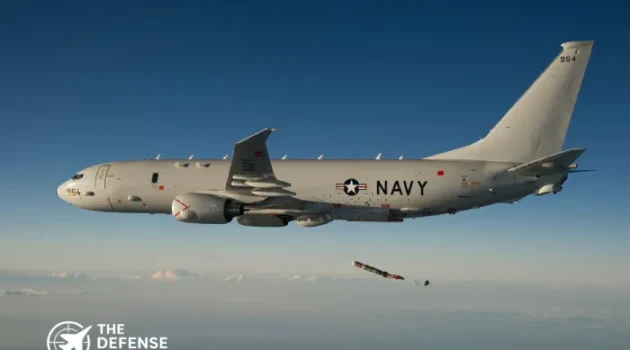
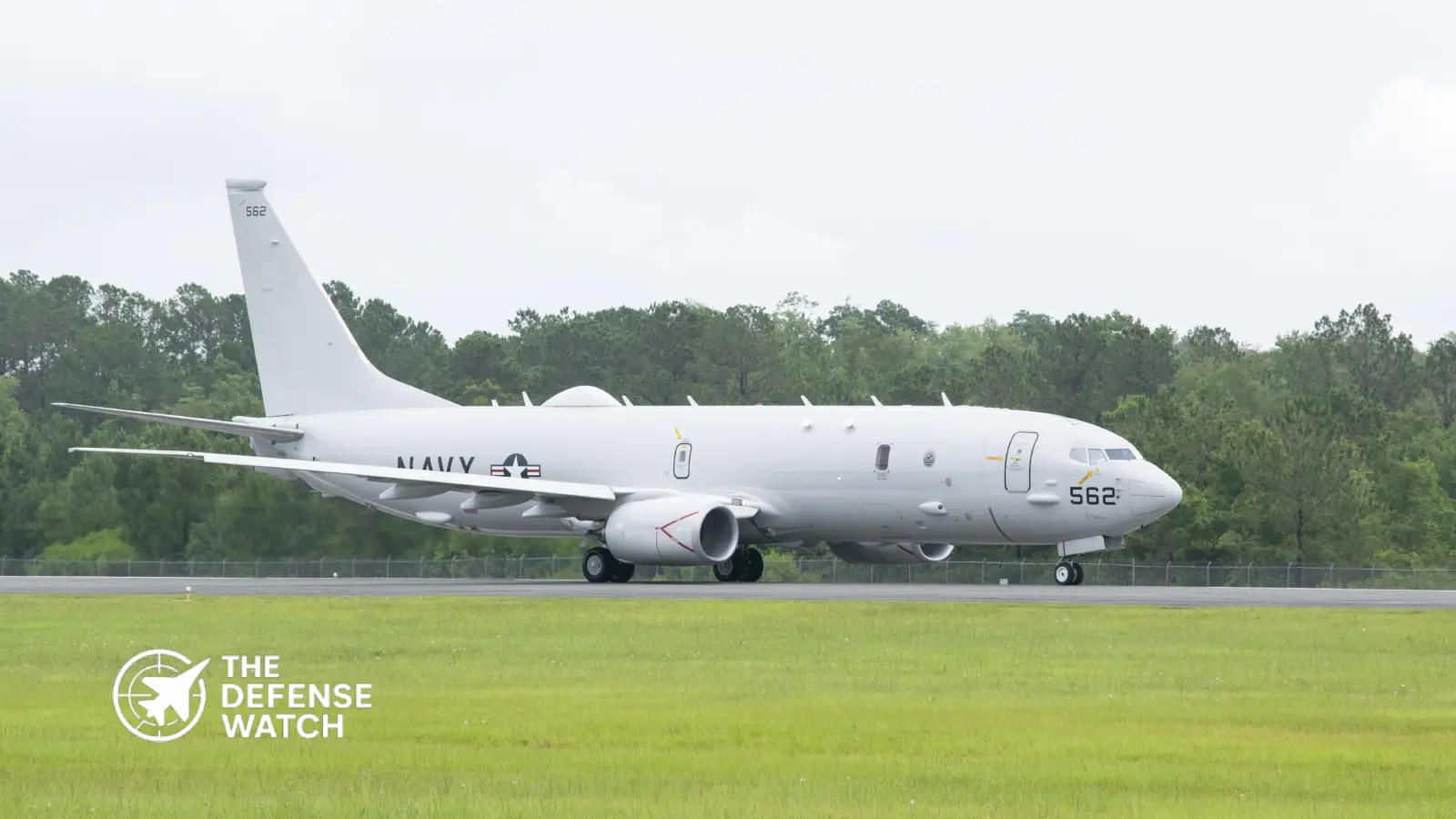
Germany’s acquisition of the Boeing P-8A Poseidon represents one of the most consequential maritime patrol modernization efforts currently underway within NATO. Berlin selected the P-8A to replace its aging P-3C Orion fleet, seeking a platform capable of persistent anti-submarine warfare (ASW), anti-surface warfare, intelligence collection, and long-range maritime surveillance missions across the North Atlantic and Baltic regions.
The P-8A, derived from the Boeing 737-800ERX commercial airframe, integrates advanced sensors including the AN/APY-10 maritime surveillance radar, acoustic processing systems for sonobuoy operations, electro-optical targeting systems, and secure networked communications architecture. The aircraft has become the de facto NATO maritime patrol standard, already operated or ordered by the United States, United Kingdom, Norway, New Zealand, South Korea, India, Canada, and Germany. Its growing adoption significantly improves interoperability among allied naval aviation forces, particularly in tracking increasingly active Russian submarine deployments in the North Atlantic and Arctic approaches.
The training architecture covered by this contract is strategically important because modern ASW operations are software-intensive and highly dependent on mission crew proficiency. Unlike legacy maritime patrol aircraft, the P-8A relies on integrated mission computing, sensor fusion, tactical data links, and coordinated multi-domain targeting workflows. As a result, operational conversion training requires sophisticated synthetic environments capable of replicating acoustic tracking, electronic warfare conditions, and multi-ship coordination scenarios.
The contract structure itself is also notable. The firm-fixed-price element places cost responsibility on Boeing for clearly defined deliverables, while the cost-plus-fixed-fee portion allows more flexible reimbursement for complex software development and integration tasks where technical requirements may evolve during execution. This hybrid approach is common in advanced defense training programs involving evolving mission software baselines and multinational interoperability requirements.
An additional strategic dimension is the inclusion of shared software development costs tied to Canada’s future P-8A training ecosystem. By aligning portions of the software architecture across allied operators, the U.S. Navy and Boeing can reduce duplicate development expenditures while improving long-term compatibility between NATO and Five Eyes maritime patrol communities.
Contract Breakdown & Details
Training Systems Included
The contract covers delivery and integration of multiple P-8A training and mission support systems, including:
- Operational and weapons tactics trainers
- Mission systems trainers
- Maintenance training devices
- Electronic classroom infrastructure
- Briefing and debriefing stations
- Integrated support systems for mission rehearsal
- Software development and systems integration
- Engineering, logistics, and technical support services
Contract Structure
- Total Contract Value: $251,063,227
- Contract Type: Firm-fixed-price and cost-plus-fixed-fee
- Awarding Authority: Naval Air Warfare Center Training Systems Division
- Contracting Activity Location: Orlando, Florida
- Prime Contractor: The Boeing Company
- Competition Status: Not competitively awarded
Funding Breakdown
- Foreign Military Sales funding obligated at award: $228,783,604
- Customer Nation: Germany
- Funds expiring at fiscal year end: None
Workshare Distribution
- St. Louis, Missouri: 90%
- Nordholz, Germany: 10%
Program Timeline
- Contract Completion Target: August 2031
Germany’s Expanding Maritime Patrol Strategy
Germany initially ordered five P-8A aircraft before later expanding the procurement to strengthen NATO maritime surveillance capacity. The fleet is expected to operate from Naval Air Wing 3 at Nordholz, replacing capabilities lost through the retirement of the P-3C Orion.
The timing of the training contract aligns with a broader resurgence in European ASW modernization efforts. NATO naval planners have increasingly prioritized undersea domain awareness following sustained Russian submarine activity near critical Atlantic sea lanes and subsea infrastructure corridors. Maritime patrol aircraft such as the P-8A now serve as central nodes in alliance-wide ISR and undersea warfare networks, often operating alongside surface combatants, submarines, and unmanned systems.
By establishing a dedicated sovereign training capability within Germany, the program reduces long-term dependence on external training pipelines while accelerating operational readiness for German naval aircrews and maintenance personnel.