Executive Summary:
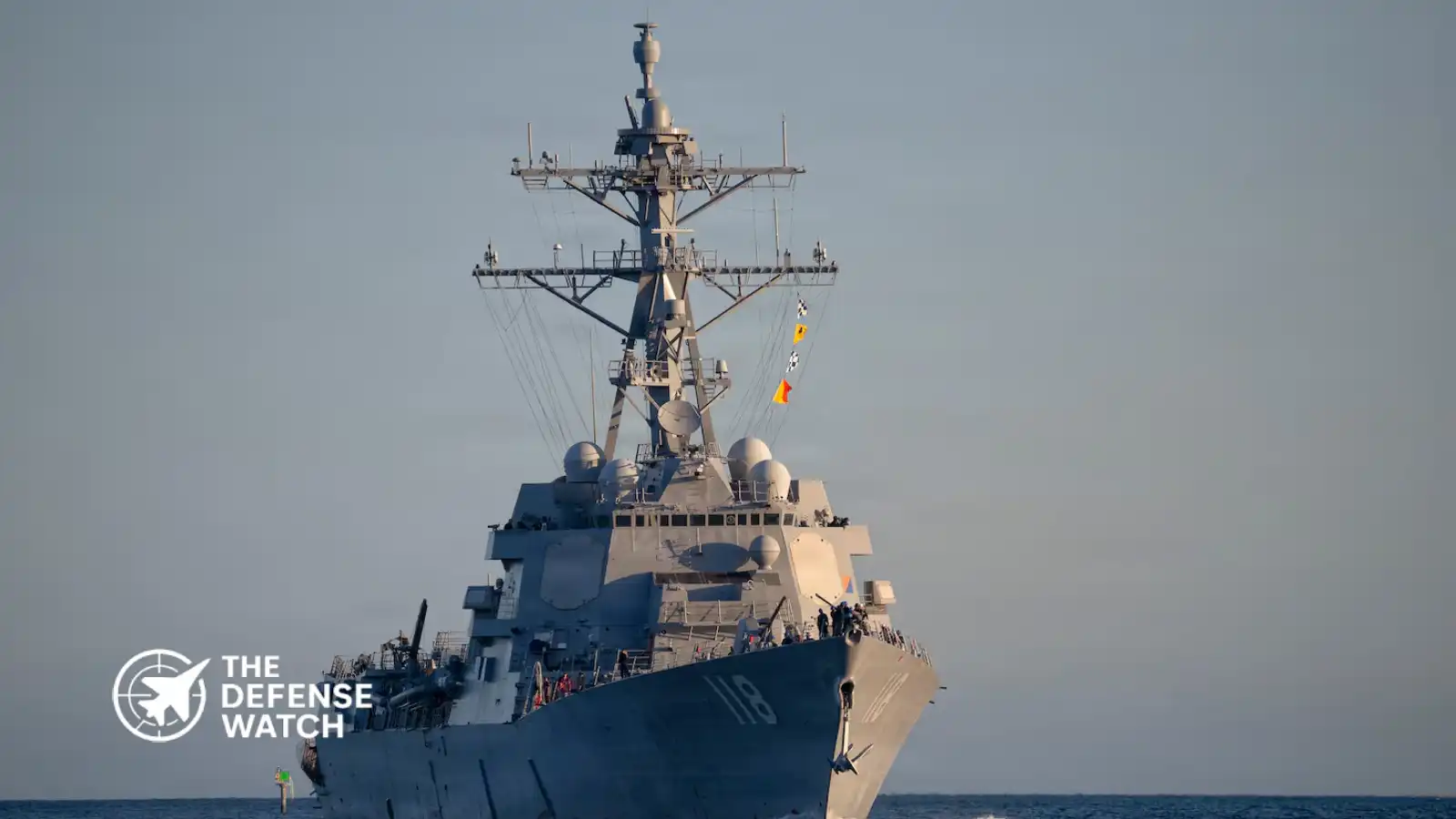
The US Navy has announced the early return of USS Daniel Inouye (DDG 118) following a successful maintenance period completed ahead of schedule. The Arleigh Burke class destroyer’s early delivery back to the fleet underscores improved shipyard efficiency and supports ongoing efforts to maintain high operational readiness across the surface force.
USS Daniel Inouye returns early from maintenance
The early return of USS Daniel Inouye (DDG 118) marks a notable milestone in US Navy fleet readiness planning. According to a US Navy news release, the Arleigh Burke class destroyer completed its maintenance availability ahead of schedule and has now rejoined the operational fleet.
The development reflects broader efforts within the US Navy to streamline maintenance cycles, reduce downtime, and ensure high-end surface combatants remain available for tasking across global theaters.
Fleet Readiness and Maintenance Efficiency Gains
The early completion of maintenance for USS Daniel Inouye (DDG 118) highlights a key priority for US naval forces, maximizing ship availability while sustaining long term platform performance.
Arleigh Burke class destroyers are central to US surface warfare capability, providing multi mission flexibility across air defense, anti submarine warfare, and surface strike roles. Keeping these vessels at peak readiness is essential given current global maritime demands.
The US Navy has increasingly focused on improving shipyard throughput, modernizing maintenance workflows, and reducing delays that have historically affected fleet availability. Early returns like this one indicate progress in that direction, although systemic pressures across the maintenance enterprise remain a challenge.
Operational Significance of Early Return
The return of this destroyer to active duty improves near term deployment flexibility for the US Navy surface fleet. Each Arleigh Burke class ship contributes to carrier strike group operations, independent patrol missions, and maritime security tasks.
By reducing time in maintenance, the Navy increases the number of ready ships available for global tasking. This is particularly important in an operational environment characterized by increased activity in both the Indo Pacific and European theaters.
The early completion also signals improved coordination between naval maintenance planners, shipyard personnel, and fleet scheduling commands. While individual milestones do not resolve broader capacity constraints, they contribute to incremental improvements in force readiness.
Platform Background: Arleigh Burke Class Capability
The USS Daniel Inouye (DDG 118) is part of the Arleigh Burke class destroyer family, one of the most capable and widely deployed surface combatant classes in the world.
These ships are equipped with the Aegis Combat System, advanced radar suites, and vertical launch systems capable of firing a wide range of missiles for air defense, land attack, and anti ship roles. The class is designed for sustained multi domain operations, often serving as the backbone of US Navy surface action groups and carrier strike formations.
Modern variants of the class continue to evolve with incremental upgrades in sensors, combat systems, and integration with networked warfare architectures.
Strategic Context and Fleet Pressure
The US Navy continues to operate under increasing demand for presence missions, deterrence operations, and joint exercises with allied navies. As a result, ship availability has become a central concern for force planners.
Maintenance optimization efforts, including early completion milestones such as this one, are part of a broader strategy to improve operational readiness without significantly expanding fleet size in the short term.
While the early return of USS Daniel Inouye (DDG 118) is a positive indicator, long term readiness will still depend on shipyard modernization, workforce stability, and supply chain performance.
Broader Implications for Naval Operations
Incremental improvements in maintenance timelines directly impact deployment cycles for surface combatants. Faster turnaround enables commanders to better manage rotational deployments and sustain presence in high priority regions.
For the US Navy, these gains contribute to maintaining deterrence posture, particularly in contested maritime environments where presence operations are a key element of strategy.
The ability to return high value assets to the fleet ahead of schedule also supports training cycles, joint exercises, and coalition operations with allied navies.
Analysis
This report is based on official US Navy communications and reflects verified maintenance outcomes for USS Daniel Inouye (DDG 118). The analysis focuses on operational readiness, fleet sustainment trends, and naval force structure implications.
No speculative assessments have been included. All conclusions are grounded in publicly released Navy information and established understanding of Arleigh Burke class destroyer operations.