Executive Summary:
The U.S. Army and defense industry partners have successfully tested a TRV-150 logistics drone armed with a three-shot APKWS rocket launcher during live-fire demonstrations at Fort Rucker, Alabama. The effort is designed to move precision-strike capabilities closer to frontline battalion-level units while also supporting future counter-drone and expeditionary warfare missions.
The demonstration reflects a broader Pentagon push to increase the lethality and flexibility of unmanned systems using existing weapons inventories and lower-cost precision engagement options.
U.S. Army Tests Armed TRV-150 Drone With APKWS Precision Rockets
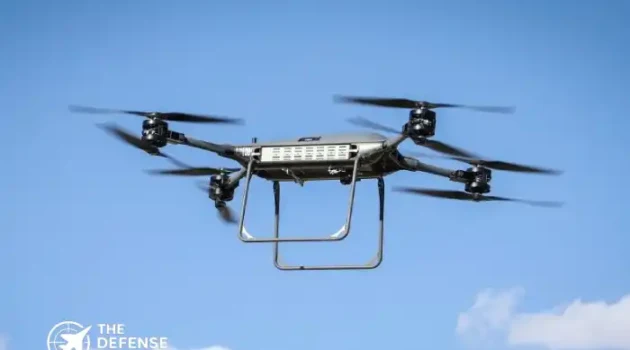
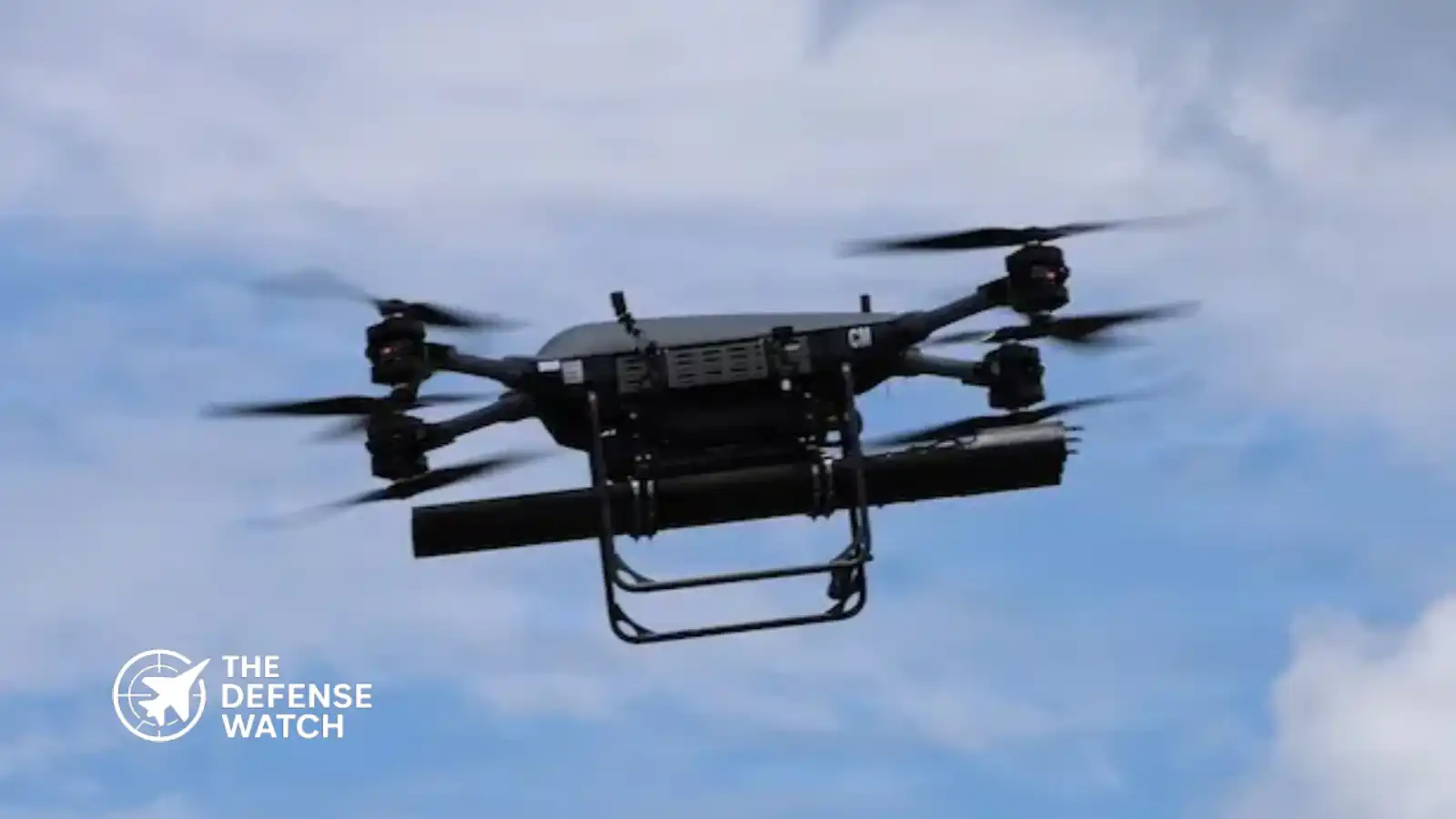
The U.S. Army has conducted a live-fire demonstration of an armed TRV-150 tactical resupply drone equipped with a three-shot Advanced Precision Kill Weapon System (APKWS) launcher, marking a significant step toward expanding precision-strike capabilities at the battalion level.
The May 20 test at Fort Rucker, Alabama, brought together multiple Army aviation and modernization organizations alongside industry partners Survice Engineering and BAE Systems FalconWorks. The demonstration evaluated the performance of the TRV-150 while carrying and firing laser-guided 70 mm rockets from an externally mounted launcher.
According to Army officials, the initiative is intended to provide smaller tactical formations with access to precision-guided fires traditionally delivered by attack helicopters or fixed-wing aircraft.
Logistics Drone Gains Offensive Capability
The TRV-150 was originally developed as a tactical resupply platform for the U.S. Army and U.S. Marine Corps. Designed to transport up to 150 pounds of cargo, the unmanned aircraft has been used to support distributed logistics operations in contested environments.
Survice Engineering integrated the drone with BAE Systems’ APKWS launcher, transforming the aircraft from a logistics asset into a multi-role platform capable of conducting precision engagements against ground and potentially aerial targets.
The APKWS system converts standard Hydra 70 rockets into laser-guided precision munitions through the addition of a guidance kit. The weapon is already operational across several U.S. military platforms, including the AH-64 Apache and various rotary-wing and fixed-wing aircraft.
During testing, engineers evaluated flight stability, launcher integration, software performance, and aircraft response during rocket launches.
Key System Components
Component Description Platform TRV-150 Tactical Resupply Vehicle Manufacturer Survice Engineering Payload Capacity Up to 150 pounds Weapon System APKWS three-shot launcher Rocket Type Laser-guided 70 mm Hydra rockets Test Location Fort Rucker, Alabama Mission Roles Precision strike, logistics, counter-UAS Army Focuses On Battalion-Level Precision Fires
One of the most significant aspects of the demonstration is the Army’s effort to push advanced strike capabilities to lower tactical echelons.
Traditionally, precision-guided rocket attacks require support from attack aviation units, artillery formations, or higher-level command structures. By mounting APKWS rockets on a tactical drone, Army planners are exploring ways to provide battalion commanders with an organic precision-strike capability that can be rapidly deployed without waiting for external support.
Industry officials involved in the program said the project was self-funded beginning in early 2025 rather than developed under a formal government requirement. The goal was to demonstrate a capability that could address emerging battlefield demands before official procurement programs are established.
The Fort Rucker event followed previous APKWS firing tests conducted at Dugway Proving Ground, where the drone reportedly engaged both aerial and ground targets.
Why APKWS Matters In Modern Combat
The growing interest in APKWS reflects a broader shift across Western militaries toward lower-cost precision engagement options.
Unlike larger guided missiles that can cost hundreds of thousands or even millions of dollars per shot, APKWS provides a comparatively affordable precision weapon while maintaining accuracy against a wide range of targets.
The system has increasingly attracted attention for counter-drone operations, where commanders seek ways to defeat low-cost unmanned threats without expending expensive air-defense missiles.
Recent U.S. and allied testing efforts have expanded APKWS employment beyond helicopters. Variants have been demonstrated on MQ-9 Reaper drones, fighter aircraft, and now tactical logistics drones.
This trend reflects lessons learned from conflicts in Ukraine and the Middle East, where large numbers of one-way attack drones and loitering munitions have challenged traditional air-defense architectures.
Technical Challenges Of Armed Tactical Drones
While the concept appears straightforward, integrating guided rockets onto a relatively small unmanned aircraft presents several engineering challenges.
Rocket launches generate sudden impulse forces that can disrupt flight stability, especially on lightweight rotary-wing drones. During the Fort Rucker testing, engineers focused heavily on yaw control, launcher effects, and impulse compensation to ensure the aircraft remained stable after firing.
The TRV-150’s autonomous flight management system played a critical role during testing. The drone uses automated route planning, range calculations, and mission management tools designed to reduce operator workload and simplify deployment in combat environments.
Successfully managing these launch dynamics is essential if armed logistics drones are to become operationally viable.
Operational Implications For Future Battlefields
The demonstration highlights a broader transformation underway across the U.S. military’s unmanned systems strategy.
Rather than fielding drones dedicated solely to logistics, surveillance, or strike missions, military planners increasingly favor modular platforms capable of rapidly changing roles based on operational needs.
The TRV-150 exemplifies that approach. A platform delivering ammunition or medical supplies during one mission could potentially conduct precision strike operations during another simply by changing payload configurations.
Such flexibility could prove valuable in contested environments where traditional aviation assets face elevated risks from enemy air defenses.
The concept also aligns with Pentagon guidance encouraging lethal payload options across unmanned aerial systems portfolios. By leveraging existing Hydra rocket inventories and proven APKWS technology, the Army may be able to field new combat capabilities without waiting for entirely new weapons programs.
Counter-Drone Potential Emerging As Key Mission Area
Beyond ground attack operations, the armed TRV-150 could eventually support counter-unmanned aircraft missions.
Previous testing reportedly included engagements against Group 2 aerial targets, suggesting the platform may have potential as a low-cost interceptor against hostile drones.
This capability is becoming increasingly important as military forces worldwide confront growing threats from mass-produced one-way attack drones. Current air-defense systems often rely on expensive interceptors that create unfavorable cost-exchange ratios.
An autonomous drone carrying multiple APKWS rockets could provide a more affordable engagement option while expanding defensive coverage around forward operating bases and maneuver formations.
Upcoming experimentation at White Sands Missile Range and Eglin Air Force Base is expected to further evaluate these concepts, including base defense and counter-UAS missions.
Strategic Significance
The Fort Rucker demonstration represents more than a simple weapons integration test. It reflects how the Army is adapting to battlefield trends that increasingly favor distributed operations, autonomous systems, and affordable precision effects.
If future testing proves successful, armed logistics drones could help bridge the gap between traditional resupply platforms and dedicated strike aircraft. They could provide commanders with an additional layer of responsive firepower while reducing reliance on scarce aviation assets.
The initiative also illustrates how commercial and defense industry innovation is increasingly driving military experimentation. Rather than waiting for formal acquisition requirements, companies are demonstrating capabilities first and allowing military operators to assess their operational value afterward.
As the Army prepares for future large-scale combat operations, systems like the armed TRV-150 may become part of a broader ecosystem of unmanned platforms delivering logistics, reconnaissance, strike, and counter-drone effects from a single modular architecture.