













@2026 – All Right Reserved. TheDefenseWatch.com
- Home
- Defense Systems
- Bombers & Strategic Aircraft
- Tu-22M3 Bomber
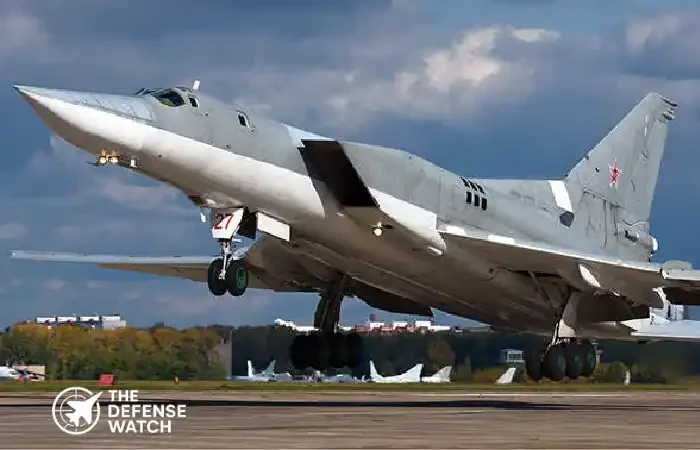
Tu-22M3 Bomber
Defense Systems Full Specifications
1. General Information
| Name | Tu-22M3 Backfire-C |
| Manufacturer | Tupolev |
| Country of Origin | Russia (Soviet Union) |
| Introduction / In Service Since | 1983 (M3 variant) |
| Status | In Service (modernized variants) |
| Category | Long-range supersonic strategic/maritime bomber |
| Crew | 4 |
| Unit Cost | ~$40–65 million (estimated, varies with upgrade |
2. Dimensions & Structure
| Length | 42.4 m |
| Wingspan | 34.3 m (spread) to ~23 m (swept) |
| Height | 11.05 m |
| Wing Area | ~183.6 m² |
| Empty Weight | ~58,000 kg |
| Maximum Takeoff Weight (MTOW) | 126,000–126,400 kg |
3. Performance
| Maximum Speed | Mach 1.88 (1,997 km/h) |
| Range | 6,800 km |
| Combat Radius | ~2,400–2,500 km |
| Service Ceiling | 13,300 m |
| Rate of Climb | 15 m/s |
4. Powerplant
| Engine Type | 2 × Kuznetsov NK-25 turbofans |
| Thrust (per engine) | ~245 kN (with afterburner) |
| Total Thrust | ~490 kN |
5. Payload & Armament
| Internal Payload Capacity | 24,000 kg |
| Weapons Bay | Internal bay + external hardpoints |
| Compatible Weapons | Kh-22/Kh-32, Kh-15, cruise missiles, free-fall bombs (conventional/nuclear) |
| Hardpoints | Multiple (wing + fuselage) |
6. Avionics & Systems
| Radar System | PNA (Down Beat) navigation/attack radar |
| Navigation | Upgraded inertial/satellite (in modernized variants) |
| Electronic Warfare (EW) | BKO L-229 Ural and other jammers |
| Stealth Features | None (conventional airframe) |
7. Operational History
| Primary Operator | Russian Aerospace Forces |
| Conflict Usage | Chechnya, Syria, Ukraine |
| Notable Missions | Maritime strike exercises, long-range bombing operations |
8. Additional Information
| Variants | Tu-22M3, Tu-22M3M, Tu-22MR (recon) |
| Successor / Future Replacement | PAK DA (under development) |
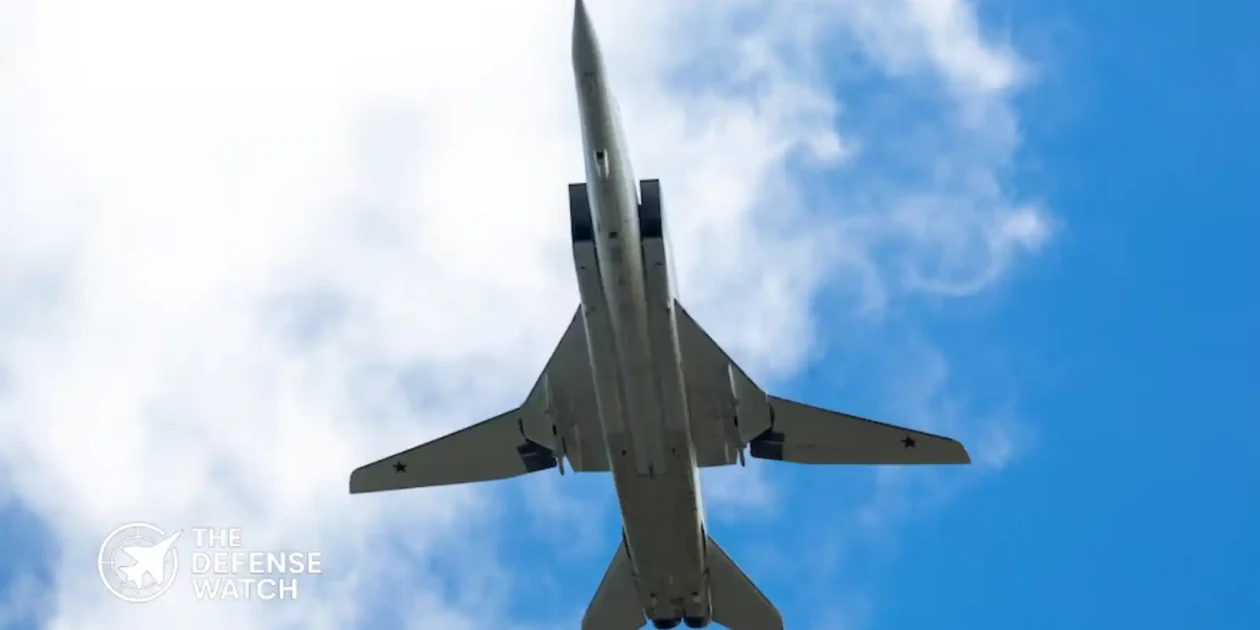
| Notable Features | Variable geometry wings, heavy anti-ship capability |
| Estimated Operational Life | Ongoing with upgrades; airframes decades old |
PROS
- Exceptional supersonic dash speed for rapid strikes and evasion.
- Long operational range suitable for maritime and strategic missions.
- High payload capacity supporting diverse heavy weapons, including anti-ship missiles.
- Variable-sweep wings optimize performance across low-speed takeoff/landing and high-speed flight.
- Proven combat experience with ongoing modernization programs enhancing avionics and weapons.
CONS
- Aging airframe and systems from Cold War design, increasing maintenance demands.
- Limited stealth features make it vulnerable to modern air defenses.
- High fuel consumption at supersonic speeds reduces effective range under combat loads.
- Large radar signature compared to contemporary low-observable platforms.
- Dependence on specific munitions and infrastructure limits flexibility in some scenarios.
Tu-22M3 Backfire Bomber: Russia’s Supersonic Long-Range Strike Platform
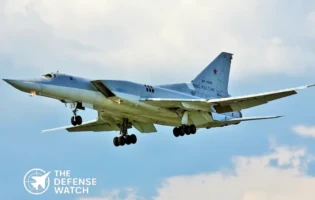
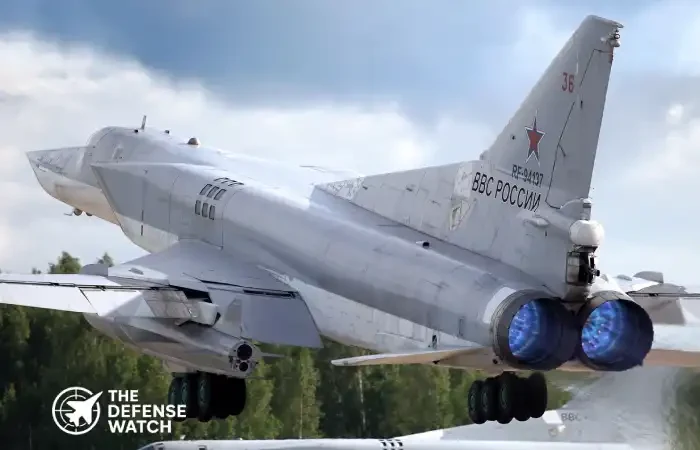
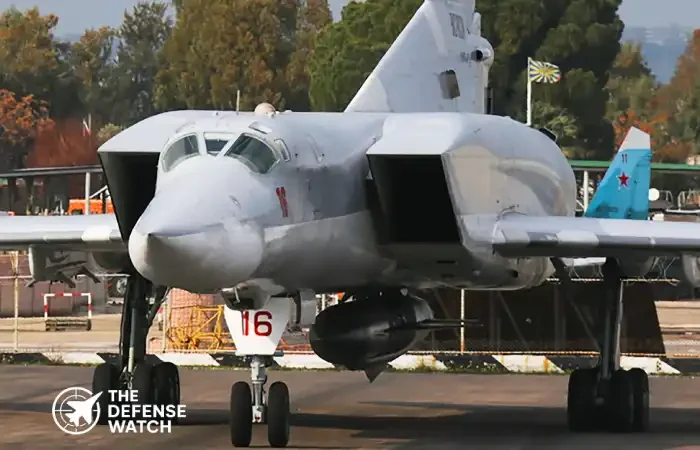
The Tupolev Tu-22M3, NATO reporting name “Backfire-C,” stands as a formidable supersonic long-range bomber developed during the Cold War era. This variable-geometry wing aircraft was engineered to deliver devastating strikes against naval task forces and land targets, serving as a key asset in Russia’s Long-Range Aviation and naval aviation forces. With its ability to penetrate defenses at high speeds and altitudes, the Tu-22M3 remains relevant in contemporary conflicts despite its Soviet origins.
Manufacturer
The Tu-22M3 was designed and produced by the Tupolev Design Bureau (OKB Tupolev) in the Soviet Union, now Russia. It represents an evolution of the earlier Tu-22M series, with the M3 variant entering service in the early 1980s (officially around 1983–1989).
Speed and Range
Powered by two Kuznetsov NK-25 turbofan engines, the Tu-22M3 achieves a maximum speed of approximately Mach 1.88–2.0 (around 1,997–2,300 km/h at altitude) and a cruise speed near Mach 0.8–0.9. Its ferry range exceeds 6,800 km, with a combat radius of roughly 2,400–2,500 km when carrying a typical 10,000 kg payload, extendable with aerial refueling.
The aircraft features advanced avionics for low-altitude penetration, a powerful radar system, and robust electronic warfare capabilities. It can carry up to 24,000 kg of ordnance, including Kh-22/Kh-32 anti-ship missiles, Kh-15 missiles, cruise missiles, and conventional or nuclear bombs. A rear 23mm cannon provides defensive armament. Recent modernizations (Tu-22M3M) have integrated improved navigation, precision weapons compatibility, and digital systems.
The Tu-22M3 has seen operational use in conflicts such as Chechnya, Syria, and Ukraine, demonstrating its versatility in both conventional and standoff strike roles. For U.S. defense analysts, it exemplifies Russia’s persistent emphasis on anti-access/area denial (A2/AD) capabilities against carrier strike groups and regional targets.
Disclaimer Note
The information provided on TheDefenseWatch.com is for general informational purposes only. While we strive to ensure the accuracy, completeness, and timeliness of our content regarding defense and aerospace products, technologies, and specifications, we cannot guarantee that all information is 100% accurate or up-to-date due to the evolving nature of military technology and classified data.TheDefenseWatch.com does not warrant the reliability, suitability, or availability of the information for any specific purpose. Users are advised to consult official sources, such as manufacturers, government publications, or defense agencies, for precise and verified data before making decisions based on our content.We are not affiliated with any defense manufacturers, governments, or military organizations mentioned. Opinions, reviews, and ratings reflect expert analysis but are subjective and should not be considered endorsements. TheDefenseWatch.com is not responsible for any errors, omissions, or consequences arising from the use of this website’s content.External links are provided for convenience and do not imply endorsement. TheDefenseWatch.com reserves the right to update or modify content without prior notice. By using this website, you agree to our Privacy & Cookies Policy.
New Arrivals
Popular Comparisons
-
 Su-57 Fighter Jet vs J-20 Fighter Jet: Stealth and Air Combat Compared
View Comparison →
Su-57 Fighter Jet vs J-20 Fighter Jet: Stealth and Air Combat Compared
View Comparison → -
Mirage 2000 vs Tejas Mk1A: Legacy Combat Power vs Indigenous Modernization
View Comparison →
-
Rafale Fighter Jet vs F-22 Raptor: Which Air Dominance Fighter Has the Edge?
View Comparison →
-
Tejas Fighter Jet vs. Rafale Fighter Jet: India’s Indigenous Fighter Meets France’s Proven Multirole Combat Aircraft
View Comparison →
-
F-22 Raptor vs. F-35 Joint Strike Fighter: Which Fifth Generation Fighter Has the Edge?
View Comparison →
-
F-35A vs. F-22 Raptor: Which U.S. Stealth Fighter Dominates Modern Air Combat?
View Comparison →
-
AGM-114 Hellfire vs. AGM-179 JAGM: Which U.S. Precision Missile Is Better?
View Comparison →
-
Patriot (PAC-3) vs. THAAD: Complete Missile Defense System Comparison, Capabilities, Range, and Strategic Roles
View Comparison →
-
AIM-120 AMRAAM vs. AIM-9X Sidewinder: Complete Air-to-Air Missile Comparison, Range, Speed, and Combat Roles
View Comparison →
-
BGM-109 Tomahawk vs. AGM-158 JASSM: Which Long Range Precision Strike Missile Offers Greater Strategic Advantage?
View Comparison →
- U.S. Air Force Plans Major F-15EX Technical Refresh as Production Expands

- Eutelsat Orders 229 OneWeb Satellites To Extend LEO Network Through 2034
- Australia Declares JASSM-ER and LRASM Operational on F/A-18F Super Hornets
- GCAP Electronics Contract Advances Integrated Sensing And Communications For Sixth Generation Fighter
- Northrop Grumman Expands B-21 Raider Production With New Utah Facility
- Kongsberg Integrates Echodyne Radar With PROTECTOR Stations for Counter-UAS Missio
- Anthropic Says Yemen Weapons Cell Used Claude Code to Develop Missile Guidance Software
- Northrop Grumman Expands Air Defense and Weapons Collaboration Across Central Europe
- Rolls-Royce B-52 Engine Contract Rises To $3.04 Billion
- General Dynamics Secures $184.25 Million NGEAU Contract For Navy Growler Upgrades