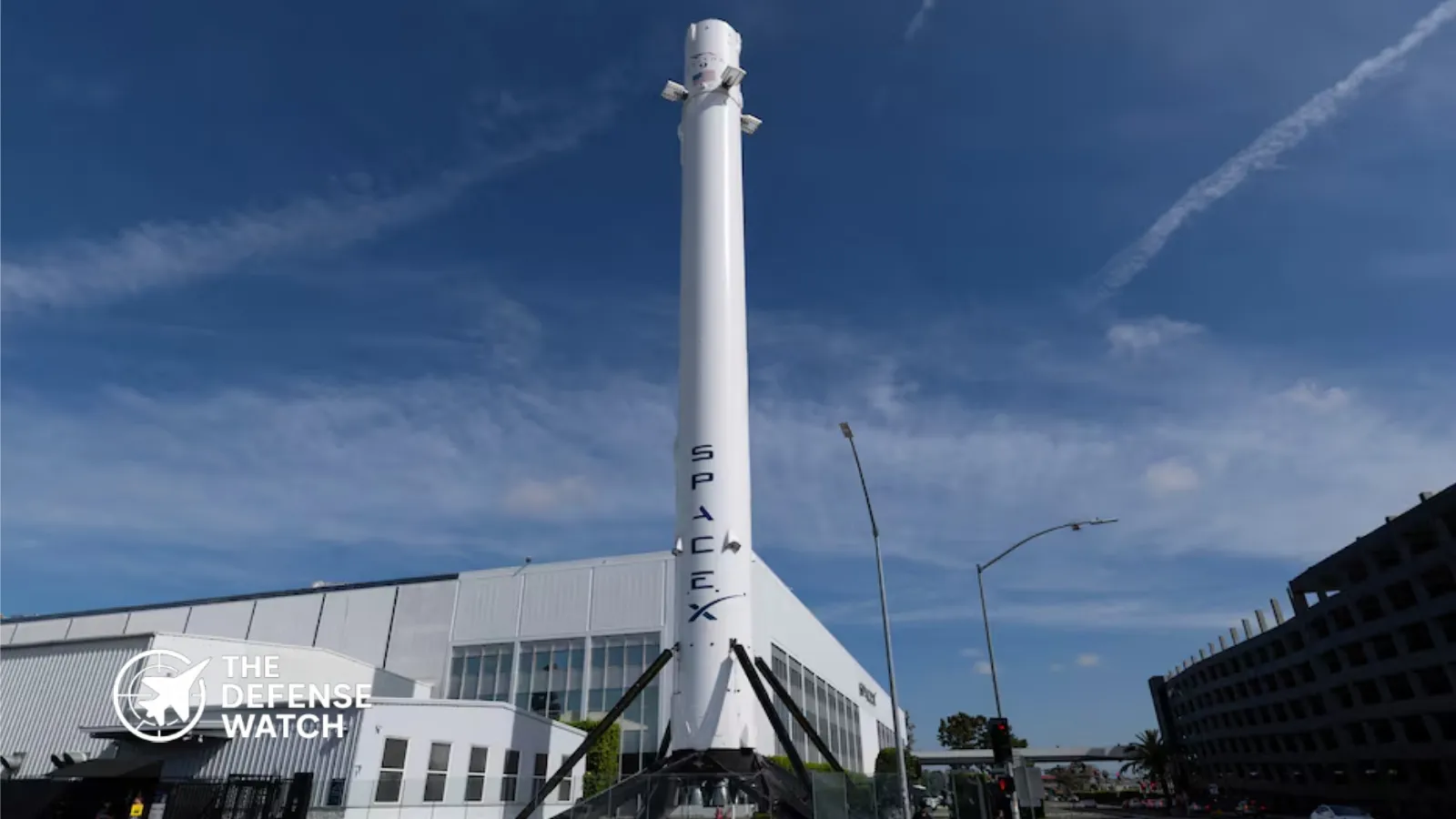
The U.S. Space Force has awarded SpaceX a new $1.6 billion contract covering 18 Falcon 9 launches through 2027, reinforcing the company’s central role in deploying America’s expanding military satellite architecture.
The award, announced by the U.S. Space Force under its National Security Space Launch procurement effort, will support the launch of defense satellites designed to improve missile warning, target tracking, secure communications, and other classified national security missions. The contract was reported by Reuters on July 29 and follows several major Pentagon awards already issued to SpaceX earlier this year.
- SpaceX secured a $1.6 billion U.S. Space Force order for 18 Falcon 9 national security launches through 2027.
- The launches will deploy military satellites supporting missile warning, target tracking, and secure defense communications.
- The award reflects the Space Force’s accelerated procurement strategy to expand U.S. military space capabilities.
- Falcon 9 remains the Pentagon’s most frequently used launch vehicle because of its reliability and rapid launch cadence.
- The contract comes as the United States rapidly expands its military satellite constellation to counter emerging threats.
Deep Technical & Strategic Context Analysis
The contract underscores how Falcon 9 has evolved into the backbone of U.S. national security launch operations. Certified for National Security Space Launch (NSSL) missions, the reusable rocket has demonstrated a combination of launch reliability, payload flexibility, and rapid turnaround that currently exceeds most competitors. While commercial customers value lower launch costs, military users place equal importance on schedule certainty, mission assurance, cybersecurity, and the ability to launch classified payloads on short notice.
The satellites expected to fly under this award will strengthen the Pentagon’s growing network of low Earth orbit and medium Earth orbit spacecraft supporting missile warning, missile tracking, tactical communications, and battlefield targeting. These constellations are becoming increasingly important as modern conflicts demonstrate the military value of resilient space architectures that are more difficult for adversaries to disable than traditional large satellites. Recent Space Development Agency missions launched by Falcon 9 are expanding the Proliferated Warfighter Space Architecture, which is intended to provide global tactical connectivity and missile tracking.
Unlike traditional government launch contracts that often required years between award and launch, this procurement was completed through an accelerated acquisition process lasting roughly two months. The faster timeline reflects the Space Force’s broader effort to reduce procurement delays and respond more rapidly to evolving operational requirements. Rather than relying on a handful of exquisite satellites, the service is increasingly investing in larger constellations that can be replenished quickly after losses.
Contract Breakdown & Details
Contract Overview
- Contract Value: $1.6 billion
- Prime Contractor: SpaceX
- Launch Vehicle: Falcon 9
- Number of Missions: 18
- Performance Period: Through 2027
- Customer: U.S. Space Force
- Program: National Security Space Launch procurement
What Will Falcon 9 Launch?
The missions are expected to place multiple categories of national security spacecraft into orbit, including:
- Missile warning satellites
- Airborne threat detection payloads
- Military communications satellites
- Classified defense spacecraft
- Space-based targeting and surveillance systems
Why This Contract Matters
- Expands U.S. military space resilience through additional satellite deployments.
- Supports Golden Dome-related capabilities, including space-based sensing and targeting networks that have received separate Pentagon funding this year.
- Maintains assured access to space while other launch providers continue developing or certifying new launch vehicles.
- Accelerates satellite deployment under the Space Force’s streamlined acquisition strategy.
Competitive Landscape
Although the National Security Space Launch program is designed to maintain competition among multiple providers, SpaceX currently holds a dominant position due to Falcon 9’s mature flight record. United Launch Alliance continues introducing its Vulcan launch system, while Blue Origin is progressing toward regular operations with New Glenn. The Space Force has repeatedly emphasized that sustaining multiple launch providers remains a strategic objective to reduce long term operational risk.