

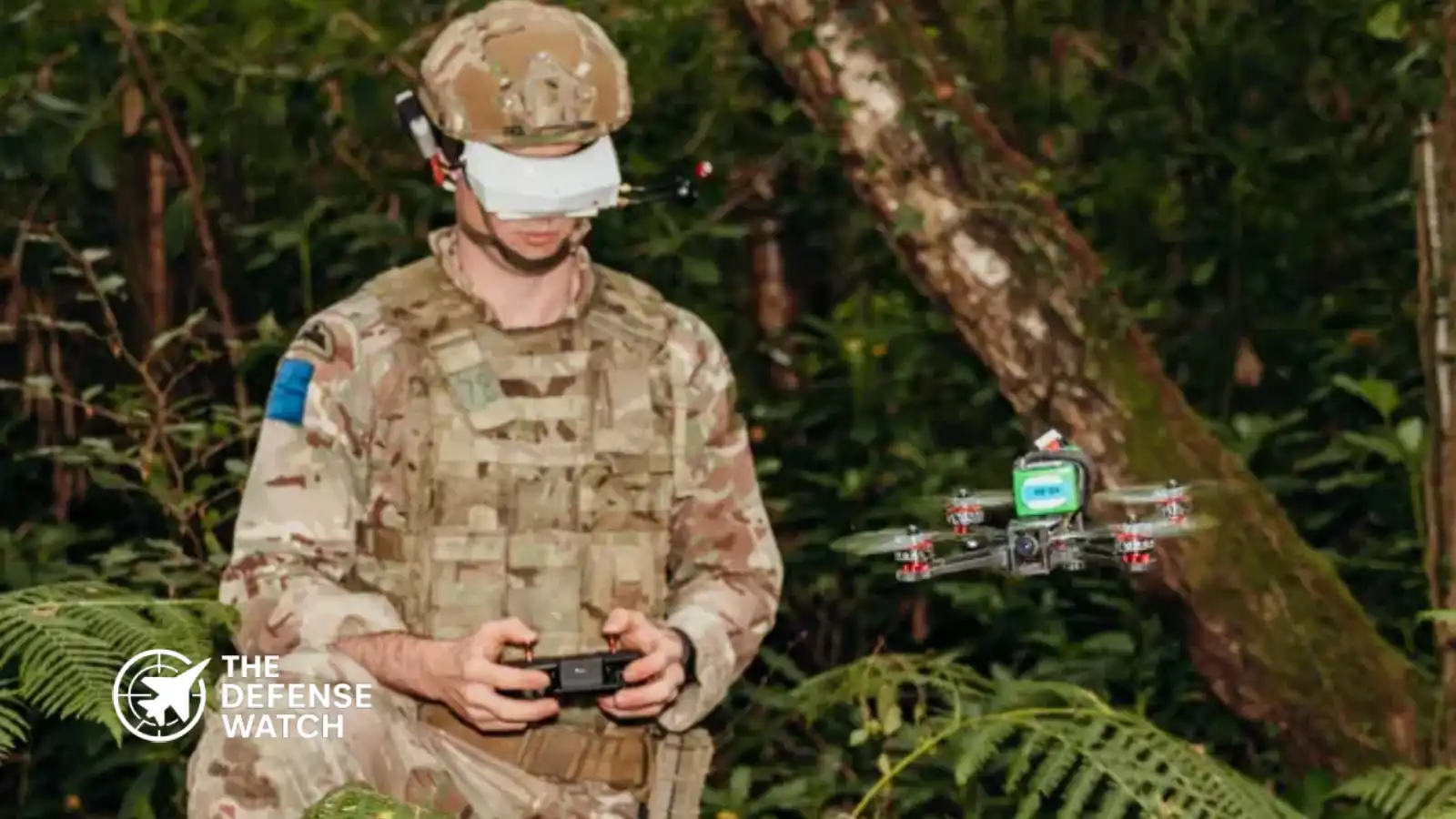
British forces are testing new drone warfare tactics just miles from Russia as NATO adapts lessons from Ukraine’s battlefield.
(adsbygoogle = window.adsbygoogle || []).push({});Executive Summary:
British Army troops have tested reconnaissance and strike drones during a major NATO exercise in Finland near the Russian border. The drills reflect growing efforts by the United Kingdom and its allies to integrate lessons from the Ukraine war into future combat operations. The exercise highlights the increasing role of autonomous systems and digital battlefield networks in modern warfare.
British Army Combat Drones Tested Near Russian Border
The British Army combat drones capability took center stage during a major multinational exercise in Finland, where British troops trained alongside NATO allies less than 70 kilometers (43 miles) from the Russian border.
According to reports from UK defense sources, approximately 4,500 troops from NATO member nations, including the United Kingdom, Finland, France, Hungary, and the United States, participated in Exercise Northern Star. British forces from 3rd Battalion, The Rifles (3 RIFLES), employed reconnaissance drones and loitering munitions designed to identify and engage targets while keeping soldiers outside direct enemy fire.
The exercise forms part of broader NATO efforts to improve readiness in northern Europe amid continued concerns over regional security and Russian military activity. British defense officials have previously noted an increase in Russian military operations in northern approaches and Arctic regions.
Drones and Digital Networks Reshape Infantry Operations
A key feature of the exercise was the integration of unmanned aerial systems with digital command-and-control networks.
British troops operated the Ghost reconnaissance drone alongside the Bolt loitering munition. These systems were connected through digital battlefield management tools that enabled soldiers to receive real-time intelligence feeds and rapidly share targeting information across units.
The approach mirrors lessons emerging from the war in Ukraine, where drones have become central to intelligence gathering, target acquisition, precision strikes, and battlefield surveillance. Ukrainian forces have used drones extensively to disrupt logistics networks, strike military infrastructure, and improve battlefield awareness.
For NATO militaries, the challenge is no longer simply acquiring drones. The focus has shifted toward integrating drones into broader combat formations and ensuring information gathered by unmanned systems can be rapidly distributed across the force.
(adsbygoogle = window.adsbygoogle || []).push({});Lessons From Ukraine Continue To Drive Military Modernization
The British Army’s recent drone initiatives demonstrate how rapidly battlefield requirements are evolving.
Over the past year, the United Kingdom has accelerated experimentation with autonomous systems, AI-enabled drones, drone swarms, and integrated reconnaissance-strike formations. Recent British Army exercises have included launching surveillance and strike drones from moving armored vehicles, testing allied drone swarm interoperability, and deploying AI-powered drones for explosive hazard detection.
These efforts align with the Ministry of Defence’s wider modernization strategy, which includes increased investment in autonomous technologies and unmanned systems. The UK government has stated its intention to significantly expand funding for autonomous military capabilities during the current parliamentary term.
Analysis: Why The Exercise Matters
The significance of this exercise extends beyond the deployment of individual drones.
The conflict in Ukraine has demonstrated that relatively inexpensive unmanned systems can deliver outsized battlefield effects against armored vehicles, logistics hubs, and critical infrastructure. Military planners across NATO increasingly view drones as an essential component of future combat operations rather than a supporting capability.
For the British Army, the exercise also reflects a broader shift toward distributed operations, faster targeting cycles, and digitally connected formations. By combining reconnaissance drones, loitering munitions, and real-time data sharing, commanders aim to identify threats and engage targets more rapidly than traditional infantry formations.
The location of the exercise is equally noteworthy. Finland joined NATO in 2023 and possesses one of the alliance’s longest borders with Russia. Training in Finnish terrain provides British troops with experience operating in conditions that closely resemble potential northern European conflict environments.
As NATO continues strengthening its northern flank, exercises such as Northern Star offer a practical venue for testing emerging technologies and refining tactics that may define future warfare.
Growing NATO Focus On Drone Warfare
The British Army combat drones program represents part of a broader alliance-wide effort to adapt to a rapidly changing battlefield.
Across NATO, military organizations are investing in autonomous systems, electronic warfare integration, AI-enabled targeting, and drone swarm technologies. Recent British-led experiments have focused on enabling allied drone systems to exchange data seamlessly across multinational formations, improving interoperability during coalition operations.
The growing emphasis on drone warfare reflects a wider recognition that future conflicts will likely feature persistent surveillance, rapid targeting, and increasingly autonomous systems operating alongside traditional ground forces.
For the United Kingdom, testing these capabilities near NATO’s eastern frontier provides valuable operational experience while demonstrating continued commitment to alliance deterrence and collective defense.
