

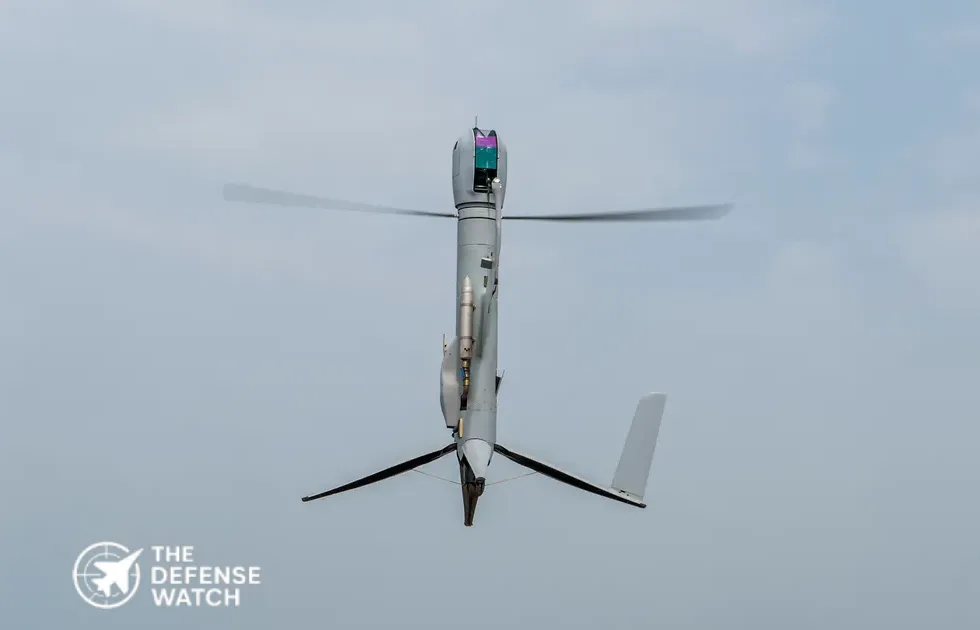
The Pentagon acknowledges that America’s drone manufacturing capacity remains well behind Ukraine’s wartime production, even as Washington accelerates domestic industrial investment.
Executive Summary:
The Pentagon says the United States remains years away from matching Ukraine’s wartime drone production despite investing more than $1 billion in domestic manufacturing. Officials argue that stricter U.S. supply chain rules and efforts to build an American industrial base will strengthen long term military readiness while reducing dependence on foreign components.
Pentagon Says U.S. Drone Production Still Trails Ukraine
The U.S. drone production effort remains in its early stages, according to senior Pentagon officials, who acknowledge that America’s defense industry is still years away from matching the scale of Ukraine’s wartime manufacturing.
Speaking to Reuters, Travis Metz, Deputy Director and Chief Operating Officer of the Defense Innovation Unit (DIU) and head of the Pentagon’s Drone Dominance Program, said Ukraine is expected to manufacture between six million and seven million first person view (FPV) attack drones during 2026, equivalent to roughly 500,000 drones every month. By comparison, the Pentagon’s $1.1 billion initiative will have ordered fewer than 200,000 drones by February under its current procurement plan.
The figures illustrate how rapidly Ukraine has transformed its drone industry since Russia’s full scale invasion, creating one of the world’s largest producers of inexpensive, combat proven unmanned systems.
Domestic Manufacturing Becomes Pentagon Priority
The Pentagon’s strategy extends beyond increasing production volume.
Officials are now emphasizing a resilient domestic industrial base capable of supplying military drones without relying on Chinese manufactured components such as electric motors, batteries, and other critical electronics.
Under new procurement rules introduced on July 23, companies participating in the Pentagon’s Drone Dominance Program must ensure their aircraft exclude banned Chinese parts. The requirement marks a significantly tougher standard than earlier acquisition rounds, where officials believe many systems still incorporated Chinese components.
According to Metz, building an entirely American supply chain represents one of the most difficult phases of expanding U.S. drone production, particularly for specialized electronic components that remain globally concentrated.
Ukraine Experience Feeding American Industry
Rather than simply purchasing foreign built drones, the Pentagon is encouraging Ukrainian manufacturers to establish production partnerships inside the United States.
Reuters reports that all six Ukrainian companies invited to participate in the upcoming Gauntlet II evaluation at Fort Carson, Colorado, have entered, or are moving toward, joint ventures with American manufacturers. These partnerships are intended to transfer battlefield experience gained in Ukraine into U.S. manufacturing facilities while creating domestic jobs and production capacity.
Examples include:
- Ukrainian company F Drones partnering with Ohio based Ukrainian Defense Drones.
- General Cherry forming a joint venture with New Hampshire based Wilcox Industries.
Winning future Pentagon contracts will require increasing levels of localized U.S. manufacturing, reinforcing Washington’s broader effort to strengthen the domestic defense industrial base.
Why Ukraine Produces So Many Drones
Ukraine’s extraordinary manufacturing scale reflects wartime necessity.
Low cost FPV drones have become one of the defining weapons of the conflict, allowing Ukrainian forces to conduct reconnaissance, strike armored vehicles, attack logistics routes, and intercept enemy drones at relatively low cost.
Unlike traditional defense procurement systems, Ukraine rapidly adapted commercial technology, decentralized production, and accelerated battlefield feedback into new drone designs.
This flexible ecosystem has enabled manufacturers to produce millions of expendable systems at speeds unmatched by most Western defense industries.
Analysis: The Challenge Is Industrial, Not Technological
The Pentagon’s assessment highlights an important distinction.
The United States possesses world leading aerospace companies and advanced defense technologies. The challenge is not inventing better drones. Instead, it is creating an industrial ecosystem capable of producing affordable, expendable unmanned aircraft in wartime quantities.
For decades, U.S. procurement prioritized sophisticated, high value platforms with lengthy development cycles. Modern conflicts, particularly in Ukraine, have demonstrated the operational value of inexpensive drones that can be produced rapidly and replaced just as quickly.
Building this manufacturing capacity requires more than increased funding. It demands secure supply chains, qualified suppliers, workforce expansion, domestic component production, and procurement processes that move faster than traditional acquisition programs.
The Pentagon’s insistence on eliminating Chinese sourced components may initially slow production growth, but it also reflects a strategic effort to reduce vulnerabilities during future conflicts. If successful, the approach could produce a more resilient American drone industry capable of sustaining large scale operations without dependence on overseas suppliers.
Looking Ahead
Despite the current production gap, Pentagon officials remain confident the United States can eventually compete with Ukraine’s manufacturing scale.
The Drone Dominance Program is expected to continue expanding through partnerships with American industry and Ukrainian manufacturers, while future procurement rounds emphasize domestically produced components and scalable manufacturing.
The effort reflects a broader shift across the U.S. defense establishment toward rebuilding industrial capacity for an era where low cost autonomous systems are increasingly central to modern warfare.
