

Executive Summary:
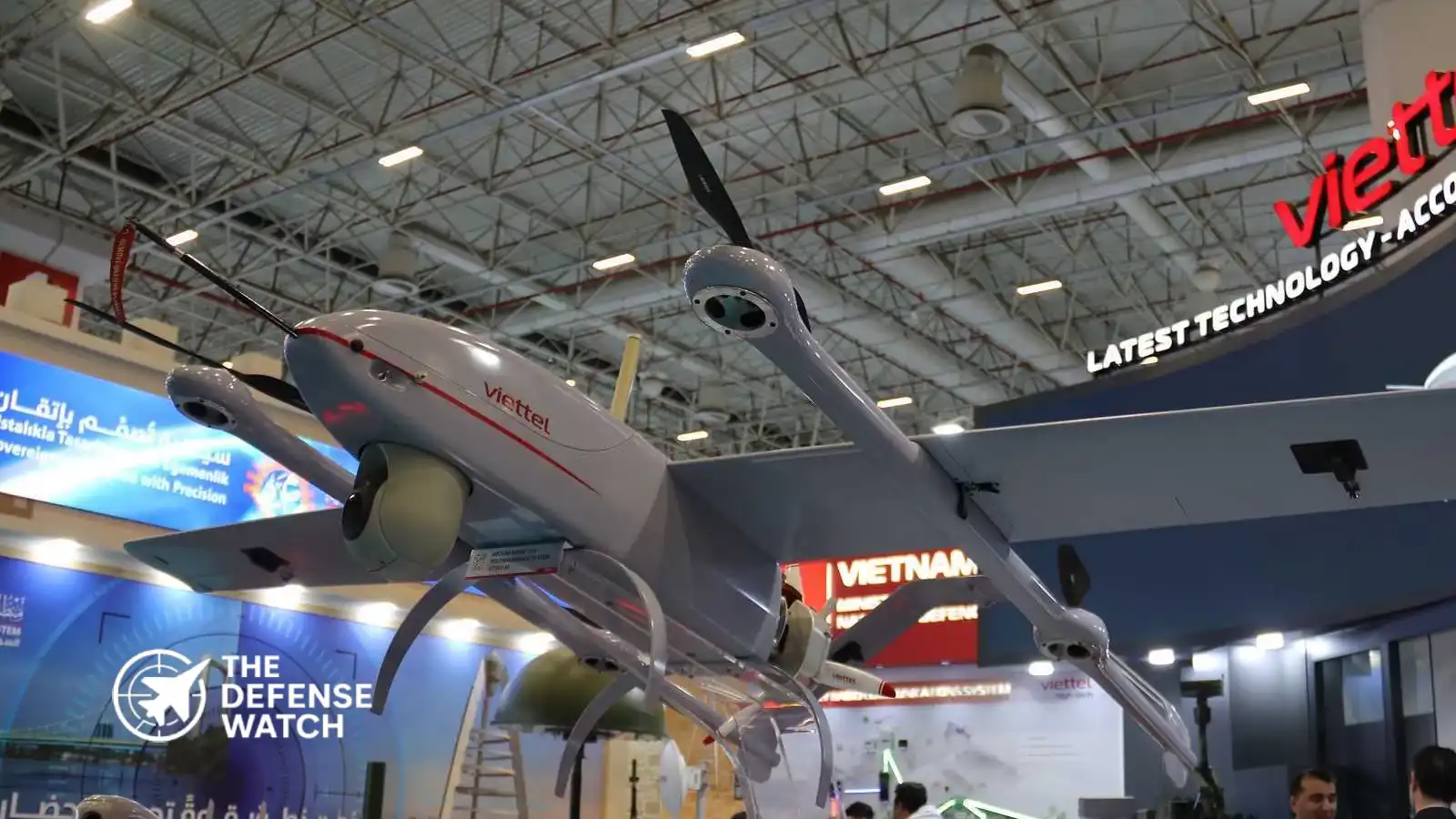
Vietnam has unveiled a new family of reconnaissance drones and loitering munitions developed by Viettel as part of the country’s broader military modernization strategy. The systems are intended to improve battlefield surveillance, target acquisition, and precision strike capabilities during high intensity combat operations.
Vietnam Expands Indigenous Drone Warfare Capability
Vietnam’s defense industry has introduced a new generation of domestically developed reconnaissance drones and loitering munitions as the country accelerates efforts to modernize its armed forces for future high intensity warfare scenarios.
The systems were presented by Vietnam’s military technology group Viettel Group during a defense exhibition focused on advanced battlefield systems and indigenous military technologies.
The unveiling reflects Vietnam’s growing emphasis on unmanned systems, precision strike technologies, and networked battlefield operations. Military planners across Asia are increasingly prioritizing drones after observing their operational impact in conflicts such as the Russia-Ukraine war and fighting in the Middle East.
New Reconnaissance Drones Designed For Tactical Battlefield Awareness
The newly introduced Viettel reconnaissance drones are designed to support intelligence, surveillance, and reconnaissance missions across contested operational environments.
Vietnam’s new UAV systems appear optimized for frontline tactical operations, including:
- Real time battlefield reconnaissance
- Artillery spotting and fire correction
- Target tracking and identification
- Persistent surveillance over combat zones
- Damage assessment after strikes
The lightweight drone platforms can provide frontline commanders with rapid situational awareness while reducing reliance on manned reconnaissance aircraft.
The development aligns with a broader global trend in which militaries increasingly depend on low cost unmanned aerial systems for tactical intelligence gathering. Small reconnaissance drones have become critical battlefield assets due to their relatively low operating costs and survivability in contested environments.
Analysts note that reconnaissance UAVs are now considered essential components of modern combined arms warfare, especially when integrated with artillery, electronic warfare systems, and precision strike assets.
Vietnam Introduces Loitering Munitions For Precision Strike Missions
In addition to surveillance drones, Viettel also revealed new loitering munitions designed to engage high value battlefield targets.
Loitering munitions, often referred to as kamikaze drones, combine reconnaissance and strike functions into a single expendable platform. Operators can launch the system toward a designated area where it can remain airborne while searching for targets before conducting a terminal attack.
The systems displayed by Viettel appear intended for missions against:
- Armored vehicles
- Command posts
- Artillery systems
- Air defense assets
- Mobile battlefield targets
The growing importance of loitering munitions has reshaped military procurement priorities worldwide. Conflicts over the last several years have demonstrated how relatively inexpensive attack drones can threaten far more expensive armored platforms and air defense systems.
Vietnam’s investment in this capability suggests the country aims to reduce dependence on foreign defense suppliers while strengthening domestic production capacity for modern battlefield systems.
Regional Militaries Accelerate Drone Modernization Efforts
Vietnam’s drone modernization effort comes amid intensifying regional competition in unmanned warfare technologies across Asia.
China, South Korea, India, Turkey, and Iran have all expanded drone production and export programs in recent years. Southeast Asian militaries are also increasing investments in UAV procurement as drone warfare becomes a central component of future military doctrine.
For Vietnam, indigenous production offers several strategic advantages:
- Reduced dependence on external suppliers
- Greater operational flexibility
- Lower long term acquisition costs
- Faster adaptation to battlefield lessons
- Improved defense industrial self sufficiency
The announcement also highlights Viettel’s expanding role within Vietnam’s defense technology sector. Originally known as a telecommunications provider, the company has evolved into one of the country’s leading defense electronics and military systems developers.
Operational Lessons From Ukraine Continue To Shape Global Procurement
The operational success of drones in Ukraine continues to influence defense planning worldwide.
Military analysts have observed that reconnaissance drones and loitering munitions now play a decisive role in detecting troop movements, guiding artillery fire, and conducting precision strikes against armored formations and logistical infrastructure.
Vietnam’s latest systems indicate that Hanoi is closely studying these battlefield developments and adapting its procurement priorities accordingly.
The increasing accessibility of drone technologies has also changed how smaller and mid sized militaries approach force modernization. Rather than relying solely on expensive traditional platforms, armed forces are increasingly investing in scalable unmanned systems that can be rapidly deployed and replaced during sustained combat operations.
While detailed technical specifications for the newly unveiled Viettel systems were not fully disclosed, the presentation demonstrates Vietnam’s intention to expand domestic expertise in unmanned warfare technologies and precision strike systems.
Strategic Implications For Southeast Asian Security
Vietnam’s continued investment in indigenous drone systems may also carry broader implications for regional security dynamics in Southeast Asia.
The South China Sea remains a major strategic concern for regional militaries, and unmanned systems are increasingly viewed as cost effective tools for maritime surveillance, reconnaissance, and deterrence operations.
Reconnaissance drones can support monitoring missions over disputed maritime zones, while loitering munitions provide asymmetric strike capabilities that could complicate adversary operations during potential regional crises.
Although Vietnam has traditionally focused on territorial defense and deterrence, the development of advanced UAV systems signals a broader shift toward technologically enabled military modernization.
