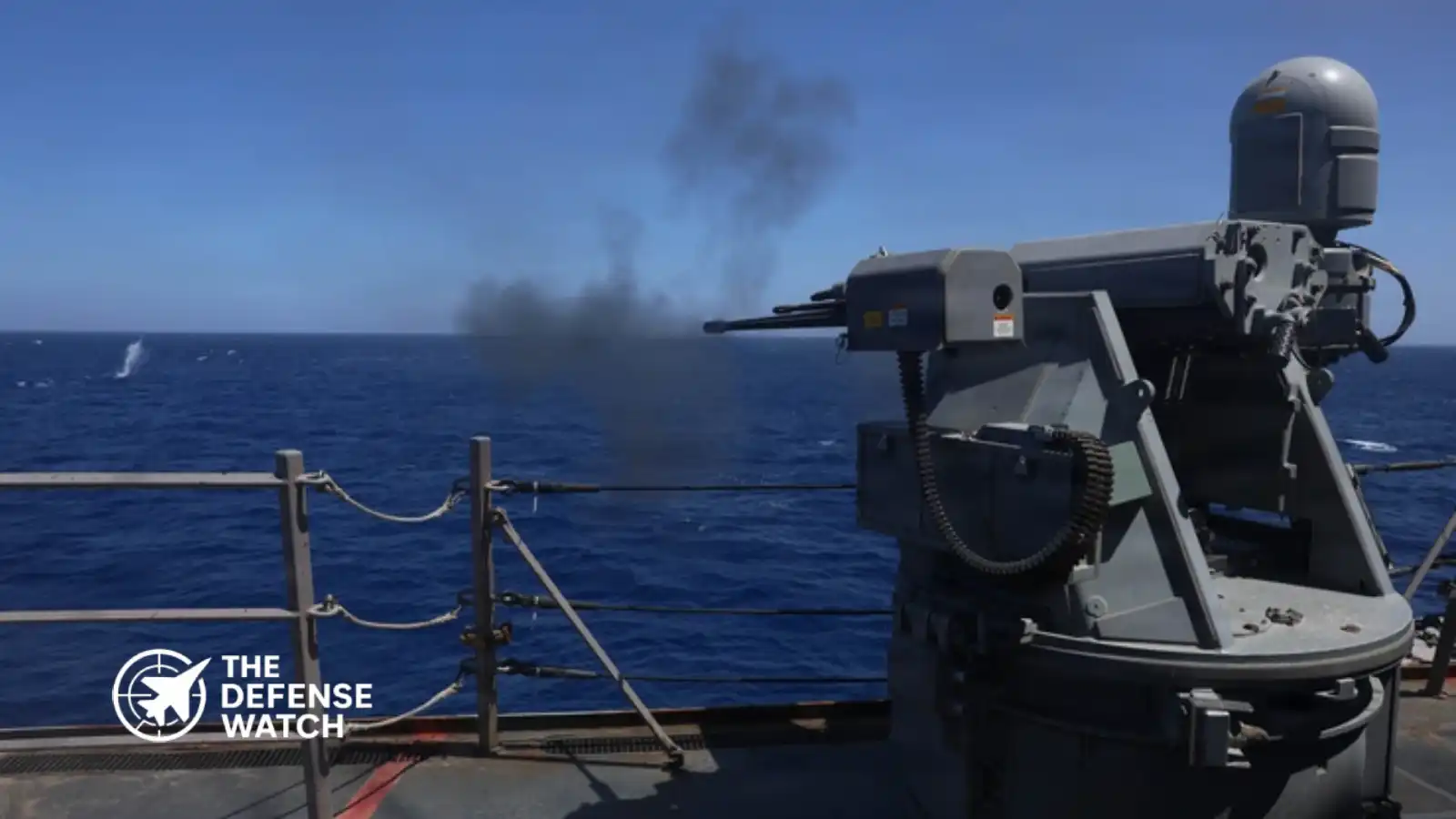
A U.S. Navy destroyer operating in the Mediterranean has reportedly engaged aerial threats, underscoring the increasing importance of naval air and missile defense missions amid ongoing regional tensions.
Executive Summary:
The U.S. Navy destroyer USS Thomas Hudner reportedly engaged aerial threats while operating in the Mediterranean Sea. The incident highlights the expanding role of American naval forces in protecting regional security, supporting allies, and countering missile and drone threats across a volatile strategic environment.
USS Thomas Hudner Opens Fire In Mediterranean During Active U.S. Navy Operations
The USS Thomas Hudner, an Arleigh Burke class guided missile destroyer, has reportedly opened fire while operating in the Mediterranean Sea, marking another example of the increasingly active role played by U.S. naval forces in regional security operations.
The destroyer used its Mk 45 five inch naval gun against an aerial threat during ongoing operations in the Mediterranean. The engagement occurred while the warship was deployed as part of broader U.S. Navy activities aimed at supporting regional stability and defending allied interests.
The vessel is one of the U.S. Navy’s most capable air and missile defense platforms, equipped with the Aegis Combat System, Standard Missile interceptors, Tomahawk cruise missiles, and advanced radar systems designed to detect and engage a wide range of threats.
A Combat Proven Destroyer
USS Thomas Hudner has become one of the most operationally active destroyers in the U.S. fleet over the past several years.
The ship has previously participated in missile defense operations, maritime security missions, and air defense activities across the Mediterranean, Red Sea, and Middle East. U.S. military officials have repeatedly highlighted the destroyer’s role in defending American and allied forces against evolving missile and drone threats.
Recent U.S. Navy statements show the destroyer has been operating within the U.S. Sixth Fleet area of responsibility, supporting NATO partners and maintaining a forward presence across Europe and the Mediterranean.
Growing Importance Of Mediterranean Air Defense
The reported engagement reflects a broader trend in which naval forces are increasingly being used as mobile air and missile defense assets.
In recent years, the Mediterranean has become a critical operating area for U.S. and NATO forces due to heightened security concerns involving missile attacks, drone threats, and regional instability. American destroyers equipped with the Aegis weapon system have repeatedly been positioned to provide ballistic missile defense coverage and support allied air defense networks.
Unlike land based systems, guided missile destroyers can rapidly reposition in response to emerging threats, providing commanders with greater flexibility during crises.
Why The Mk 45 Gun Still Matters
Although modern destroyers carry sophisticated missile interceptors, the Mk 45 five inch gun remains an important defensive weapon.
The gun can engage surface targets, small boats, and certain aerial threats while providing a lower cost engagement option compared with expensive missile interceptors. Recent operational experience has demonstrated that naval guns continue to play a valuable role against drones and other close range threats when missile systems may not be the most efficient response.
For naval planners, maintaining multiple layers of defense is increasingly important as adversaries employ larger numbers of unmanned systems and low cost attack platforms.
Strategic Analysis
The USS Thomas Hudner incident highlights how the Mediterranean is evolving from a traditional maritime transit corridor into a front line air and missile defense theater.
American destroyers operating in the region are no longer focused solely on deterrence patrols. They are increasingly serving as integrated air defense nodes capable of tracking, identifying, and engaging threats in real time.
This shift reflects broader U.S. and NATO efforts to adapt to an operating environment where drones, cruise missiles, and ballistic missiles can emerge with little warning. Naval forces offer a unique advantage because they can deploy advanced sensors and interceptors without requiring permanent land based infrastructure.
The reported engagement also demonstrates that even legacy naval weapons such as the Mk 45 gun remain relevant when integrated into modern combat systems. As military planners seek cost effective ways to counter large numbers of unmanned threats, layered defenses combining missiles, guns, and electronic warfare systems are likely to become increasingly important.
Looking Ahead
USS Thomas Hudner continues to operate as part of the U.S. Navy’s forward deployed force structure, supporting security objectives in the Mediterranean and surrounding regions.
As regional tensions persist and aerial threats continue to evolve, destroyers equipped with advanced air and missile defense capabilities will remain central to U.S. and allied maritime security efforts.