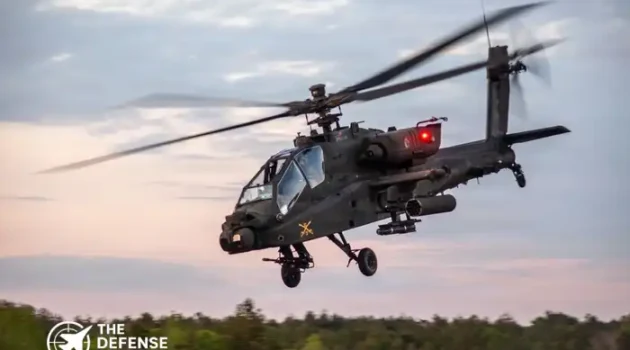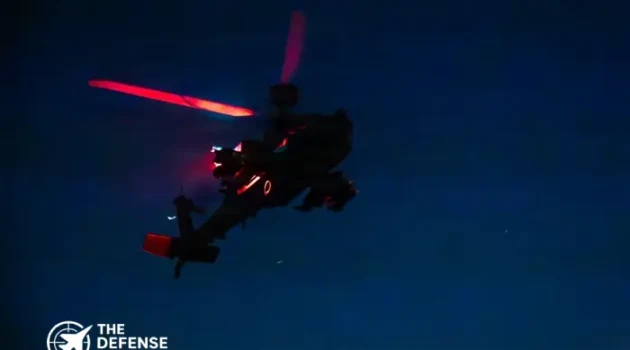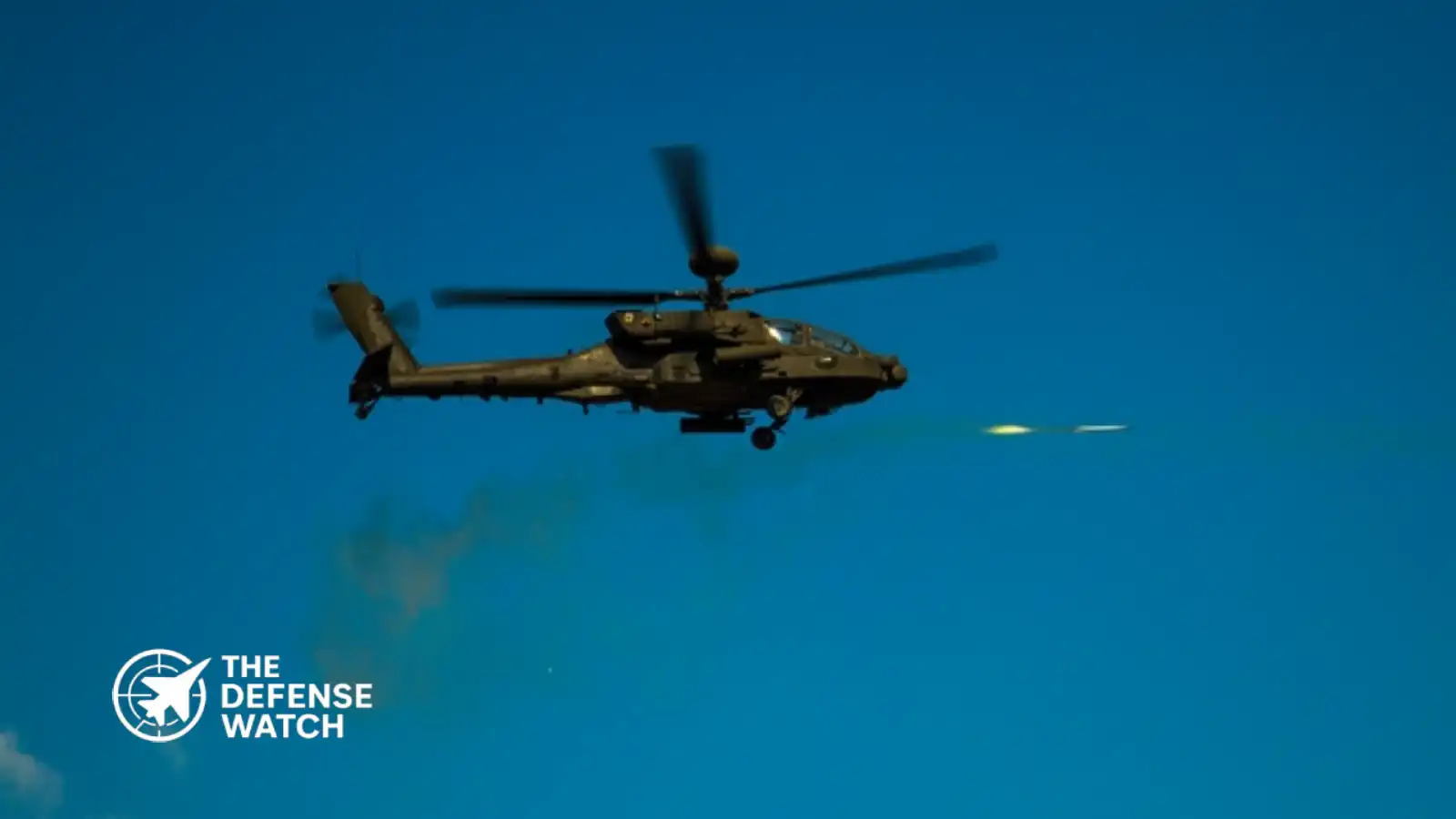
American attack helicopters demonstrated rapid strike capabilities near one of the world’s most heavily fortified borders.
(adsbygoogle = window.adsbygoogle || []).push({});Executive Summary:
U.S. Army AH-64 Apache attack helicopters conducted live-fire rocket training near the Korean Demilitarized Zone (DMZ) as part of ongoing readiness efforts with South Korean forces. The exercise highlighted the ability of allied forces to rapidly deploy precision firepower in one of the Indo-Pacific’s most strategically sensitive regions.
US Army Apaches Conduct Live Fire Near Korean DMZ
U.S. Army Apache helicopters carried out a live-fire training exercise near the Korean Demilitarized Zone, demonstrating combat readiness and allied interoperability on the Korean Peninsula. AH-64 Apache attack helicopters launched rockets during the exercise as part of routine training designed to maintain operational proficiency and reinforce deterrence in the region.
The Korean Peninsula remains one of the most heavily militarized areas in the world, with U.S. and South Korean forces regularly conducting combined training to maintain preparedness against potential threats. The latest Apache live-fire event showcased the aircraft’s ability to deliver rapid and precise fire support in a complex operational environment.
Apache Helicopters Remain Central To Allied Firepower
The AH-64 Apache is one of the U.S. Army’s primary attack helicopters, designed for close air support, armed reconnaissance, and anti-armor missions. Equipped with advanced sensors, guided and unguided weapons, and networked battlefield systems, the platform continues to play a critical role in forward-deployed operations across the Indo-Pacific.
Live-fire exercises involving Apache helicopters allow crews to practice target engagement procedures, refine coordination with ground forces, and validate operational tactics under realistic conditions. Such training is particularly important near the Korean DMZ, where rapid response capabilities remain essential.
(adsbygoogle = window.adsbygoogle || []).push({});Military officials routinely emphasize that these drills are defensive in nature and intended to ensure allied forces can operate together effectively if required.
(adsbygoogle = window.adsbygoogle || []).push({});(adsbygoogle = window.adsbygoogle || []).push({});Growing Focus On Readiness In Northeast Asia
The exercise comes amid continued security concerns across Northeast Asia. North Korea has continued testing missile and rocket systems while pursuing modernization of its military capabilities. Recent assessments indicate that Pyongyang is advancing multiple missile and artillery programs, including precision-guided rocket systems and tactical missile developments.
Against this backdrop, U.S. and South Korean forces have increased the frequency and complexity of joint training activities. Recent exercises have included long-range rocket artillery drills, combined arms training, aviation operations, and integrated fire support missions near key operational areas on the peninsula.
The Apache live-fire event fits within a broader effort to maintain a credible deterrent posture while demonstrating alliance cohesion.
Why The Exercise Matters
While live-fire drills near the DMZ are not uncommon, they serve several important operational purposes.
First, they ensure that aircrews remain proficient in employing weapons systems under realistic conditions. Second, they strengthen coordination between aviation units and ground forces. Third, they signal that U.S. and South Korean forces remain capable of responding quickly to potential contingencies.
From a strategic perspective, the presence of combat-ready attack helicopters provides commanders with a flexible tool for reconnaissance, precision strikes, and close air support. In a region characterized by short warning times and dense military deployments, rapid-response aviation assets remain highly valuable.
(adsbygoogle = window.adsbygoogle || []).push({});The exercise also reinforces the long-standing U.S. commitment to the defense of South Korea, a message repeatedly emphasized by U.S. Indo-Pacific Command amid ongoing regional security challenges.
Analysis: Apache Operations Reflect Broader Indo-Pacific Strategy
Beyond routine training, the deployment of U.S. Army Apache helicopters near the Korean DMZ reflects a wider shift toward maintaining highly responsive, forward-positioned combat forces across the Indo-Pacific.
The U.S. military increasingly emphasizes distributed operations, rapid deployment, and integrated joint capabilities to address evolving security challenges. Attack helicopters remain a key component of that approach because they can quickly provide precision firepower, reconnaissance, and support for maneuver forces.
For allied planners, readiness is not measured solely by equipment inventories but by the ability to employ those systems effectively under operational conditions. Live-fire exercises provide that validation while strengthening interoperability between allied forces.
As regional military modernization continues, exercises involving platforms such as the AH-64 Apache are likely to remain a regular feature of U.S. and South Korean defense cooperation.