
Executive Summary:
The Indian Navy has moved forward with the acquisition of an indigenous electro-optical infrared (EOIR) system as part of its broader effort to strengthen domestic defense manufacturing and improve fleet surveillance capabilities. The procurement supports India’s long-term naval modernization strategy by enhancing target detection, tracking, and situational awareness while reducing dependence on imported sensor technologies.
Indian Navy Acquires Indigenous EOIR System For Fleet Modernization
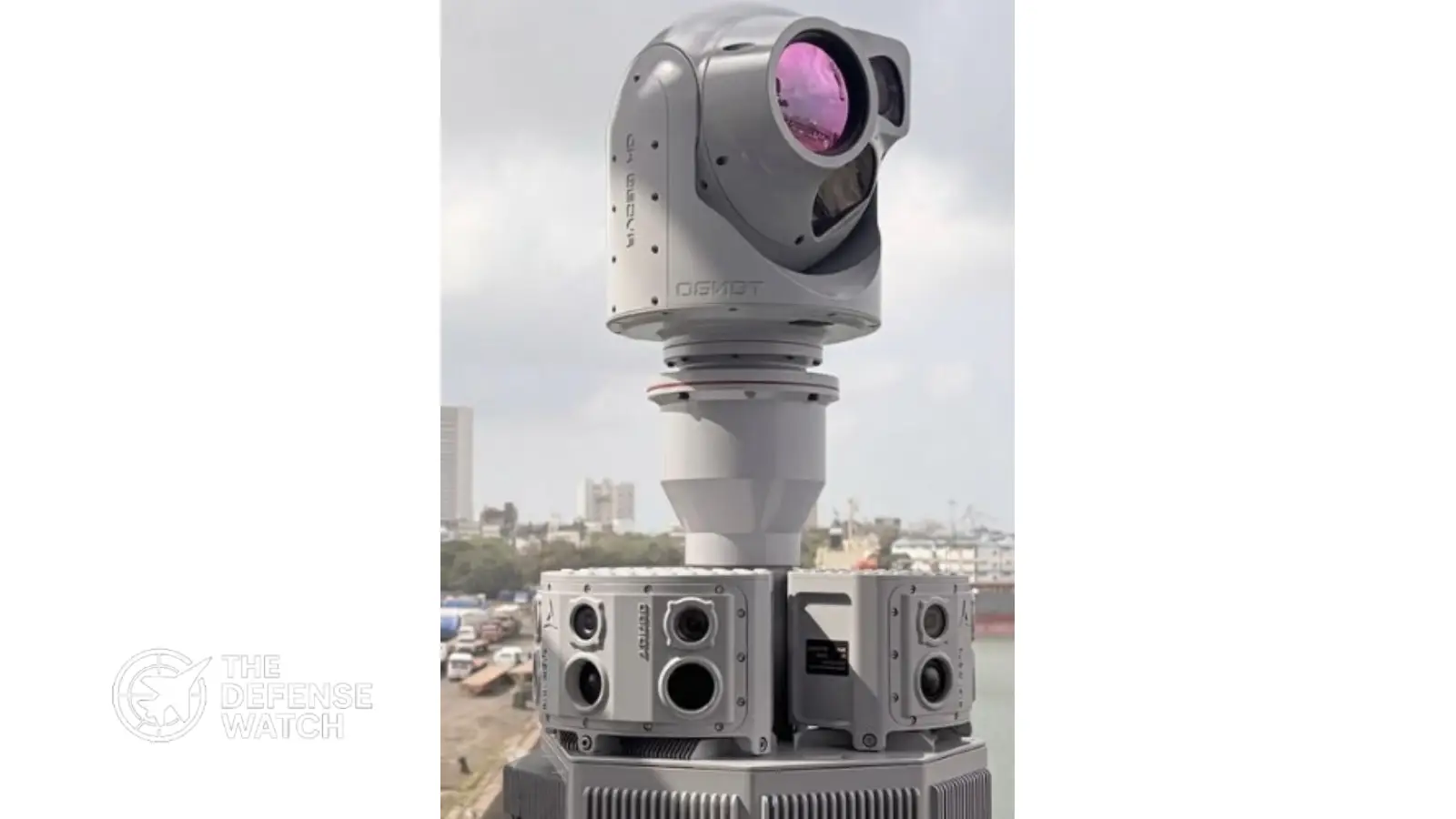
The Indian Navy has acquired a domestically developed electro-optical infrared (EOIR) system, reinforcing New Delhi’s ongoing push toward indigenous defense capabilities and greater self-reliance in critical military technologies.
The system will provide advanced surveillance, target tracking, and imaging capabilities for naval operations. EOIR systems have become a core component of modern maritime warfare, enabling naval platforms to identify, classify, and track threats in both day and night conditions while operating in complex maritime environments.
The acquisition aligns with India’s broader defense industrial strategy, which seeks to increase the share of domestically developed equipment across all military services while reducing reliance on foreign suppliers.
Why EOIR Systems Matter In Modern Naval Warfare
Electro-optical infrared systems combine multiple sensor technologies into a single surveillance package. These typically include:
| Capability | Operational Function |
|---|---|
| Daylight Cameras | Long-range visual identification |
| Thermal Imagers | Detection of heat signatures during day or night |
| Infrared Sensors | Tracking low-visibility targets |
| Laser Rangefinders | Precise distance measurement for targeting |
| Automated Tracking Software | Continuous monitoring of moving threats |
Unlike radar systems, EOIR sensors operate passively, meaning they do not emit signals that can reveal a vessel’s location. This characteristic makes them particularly valuable during intelligence gathering, maritime patrol, and contested naval operations.
Modern EOIR systems are increasingly used to monitor:
- Surface combatants
- Fast attack craft
- Unmanned surface vessels
- Maritime drones
- Low-flying aircraft
- Anti-ship missile threats
The technology also supports weapon guidance and fire-control functions, allowing naval crews to engage targets with greater accuracy.
Part Of A Wider Indigenous Naval Sensor Strategy
The procurement reflects a broader trend across the Indian Navy’s modernization efforts.
In recent years, India has accelerated investment in domestically developed sensors, combat management systems, electronic warfare suites, and fire-control technologies. Bharat Electronics Limited (BEL), one of India’s largest defense electronics companies, is already supplying electro-optic fire-control systems for multiple Indian Navy vessels under an ongoing modernization program. The EON-51 system, for example, supports surveillance, target tracking, and naval gunfire control through integrated thermal imaging, television cameras, and laser rangefinding technologies.
The Navy has also pursued indigenous navigation warfare systems, electronic attack capabilities, and advanced sensor integration programs designed to improve operational resilience in contested environments. Recent contracts for navigation satellite system jammers and directed-energy technologies further illustrate this trend.
Operational Impact For The Indian Fleet
The introduction of a domestic EOIR capability offers several operational advantages.
First, indigenous production improves long-term sustainment by reducing reliance on overseas supply chains. This becomes particularly important during crises or periods of geopolitical tension when access to foreign spare parts and upgrades may be constrained.
Second, domestic systems can be tailored more easily to Indian Navy requirements. Engineers can integrate software updates, adapt interfaces to local combat management systems, and incorporate emerging technologies without requiring foreign approval.
Third, indigenous EOIR systems can support a wider range of platforms, including:
- Destroyers
- Frigates
- Offshore patrol vessels
- Fast attack craft
- Coastal surveillance installations
- Future unmanned maritime systems
As maritime traffic and security challenges continue to grow across the Indian Ocean Region, improved surveillance capabilities are increasingly viewed as essential for maintaining maritime domain awareness.
Strategic Significance Beyond India
The acquisition carries significance beyond the Indian Navy itself.
Across the Indo-Pacific, navies are investing heavily in sensor technologies capable of detecting smaller and harder-to-track threats, particularly unmanned systems and low-signature platforms. Lessons from conflicts in the Black Sea, Red Sea, and other maritime theaters have demonstrated the growing importance of persistent surveillance and rapid target identification.
For regional defense planners, indigenous EOIR development represents a key step toward building a self-sustaining defense industrial base capable of supporting advanced naval operations without excessive dependence on foreign technology providers.
From a strategic perspective, the move strengthens India’s long-term objective of becoming a major defense manufacturing and technology power while enhancing operational readiness across its expanding naval fleet.
Assessment
The Indian Navy’s acquisition of an indigenous EOIR system represents more than a routine equipment purchase. It highlights the increasing role of domestically developed sensor technologies in India’s naval modernization program and reflects a broader shift toward sovereign control of critical surveillance and targeting capabilities.
As naval competition intensifies across the Indo-Pacific, advanced electro-optical systems are becoming essential components of maritime security architectures. The successful fielding of indigenous EOIR technology could provide India with greater operational flexibility, improved fleet awareness, and a stronger foundation for future naval innovation.
Get real time update about this post category directly on your device, subscribe now.
