Executive Summary:
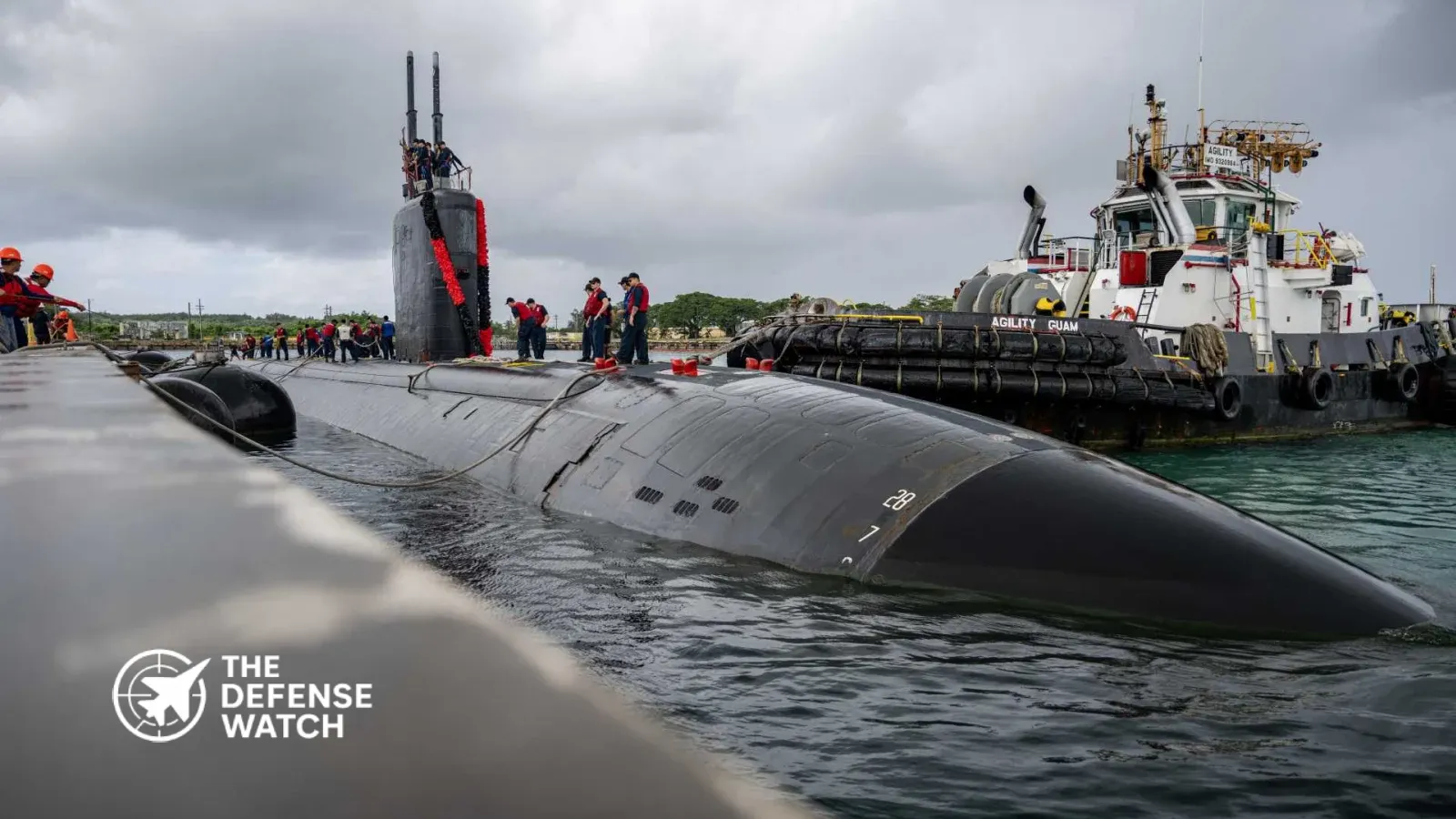
The U.S. Navy has announced that the Los Angeles-class fast attack submarine USS Jefferson City (SSN 759) will shift its homeport from Guam to Joint Base Pearl Harbor-Hickam in Hawaii. The move reflects an ongoing redistribution of U.S. submarine forces across the Indo-Pacific while maintaining forward undersea capabilities in one of the world’s most strategically contested maritime regions.
USS Jefferson City Homeport Change Marks Latest U.S. Navy Force Realignment
The USS Jefferson City homeport change represents another step in the U.S. Navy’s long-term effort to optimize submarine operations throughout the Indo-Pacific. According to the U.S. Navy, the Los Angeles-class attack submarine will relocate from Naval Base Guam to Joint Base Pearl Harbor-Hickam during 2026 following nearly four years of forward-deployed operations.
Navy officials stated that the relocation supports operational readiness while balancing maintenance requirements, crew sustainability, and fleet distribution across the Pacific theater.
USS Jefferson City has operated from Guam since November 2022, serving as one of several nuclear-powered attack submarines positioned close to potential operational hotspots in the Western Pacific.
Guam Remains A Critical Forward Submarine Hub
Although USS Jefferson City is leaving Guam, the island remains one of the U.S. Navy’s most important forward submarine bases.
Naval Base Guam enables attack submarines to operate significantly closer to the East China Sea, South China Sea, Philippine Sea, and Taiwan Strait than submarines deploying from Hawaii or the U.S. West Coast. The location reduces transit times and allows submarines to spend more time conducting intelligence collection, surveillance, anti-submarine warfare, and deterrence patrols.
The Navy routinely rotates Virginia-class and Los Angeles-class submarines through Guam to sustain a continuous forward presence.
Rather than indicating a reduction in regional commitment, the relocation appears to be part of the Navy’s broader rotational management of submarine assets.
USS Jefferson City’s Operational History
Commissioned in 1992, USS Jefferson City (SSN 759) is a Flight III Los Angeles-class nuclear-powered fast attack submarine built by Newport News Shipbuilding.
Designed for multi-mission operations, the submarine supports:
- Anti-submarine warfare
- Anti-surface warfare
- Intelligence, surveillance, and reconnaissance (ISR)
- Land-attack missions using Tomahawk cruise missiles
- Special operations support
- Maritime strike operations
Like other improved Los Angeles-class submarines, USS Jefferson City incorporates vertical launch tubes for Tomahawk missiles alongside torpedo tube-launched weapons.
USS Jefferson City Specifications
Specification Details Class Los Angeles-class (Flight III) Hull Number SSN 759 Commissioned 1992 Length Approximately 110.3 meters (362 feet) Beam 10 meters Displacement Approximately 6,900 tons submerged Propulsion S6G nuclear reactor Speed More than 25 knots submerged Primary Weapons Mk 48 torpedoes, Tomahawk cruise missiles, naval mines Homeport (Current) Naval Base Guam Future Homeport Joint Base Pearl Harbor-Hickam Why Pearl Harbor Matters
Joint Base Pearl Harbor-Hickam serves as one of the Navy’s principal submarine centers in the Pacific.
The installation supports multiple fast attack submarines, maintenance infrastructure, logistics facilities, submarine squadron headquarters, and extensive training resources.
Moving Jefferson City to Hawaii provides several operational advantages:
- Improved access to depot-level maintenance.
- Integration with Pacific Fleet training activities.
- Reduced operational strain on Guam’s expanding naval infrastructure.
- Greater flexibility for future submarine force rotations.
Pearl Harbor also acts as a central staging location for submarines deploying throughout the Indo-Pacific, enabling rapid movement toward Northeast Asia, Southeast Asia, or the Central Pacific depending on operational requirements.
Strategic Context: Balancing Forward Presence And Fleet Sustainment
The homeport change comes as the U.S. Navy continues modernizing its submarine force while maintaining persistent undersea deterrence across the Indo-Pacific.
Attack submarines remain among the Navy’s most valuable strategic assets because they can operate covertly for extended periods, conduct intelligence collection, strike land targets with precision weapons, and track adversary submarines without revealing their position.
At the same time, the Navy faces increasing maintenance demands across its submarine fleet. Efficiently distributing submarines among Guam, Pearl Harbor, San Diego, and other Pacific bases helps balance operational availability with long-term fleet readiness.
The Navy is also gradually expanding the number of Virginia-class submarines available for Pacific operations. As newer submarines enter service and older Los Angeles-class boats approach retirement, periodic homeport adjustments allow commanders to position the right capabilities where they are most needed.
Operational Implications For The Indo-Pacific
From a strategic perspective, the relocation does not significantly alter the United States’ undersea posture in the Western Pacific.
Instead, it reflects a force management approach that emphasizes rotational deployments rather than permanently assigning every submarine to forward bases.
Guam continues to host rotational attack submarines capable of rapidly responding to regional contingencies, while Pearl Harbor remains the primary logistics and sustainment hub supporting sustained Pacific submarine operations.
This balance allows the Navy to preserve high operational readiness while ensuring submarines receive timely maintenance, modernization, and crew support.
As competition intensifies across the Indo-Pacific maritime domain, maintaining an agile and resilient submarine force remains central to U.S. deterrence strategy. Homeport adjustments such as the USS Jefferson City relocation illustrate how logistical planning and force distribution contribute to broader operational effectiveness without reducing forward military presence.