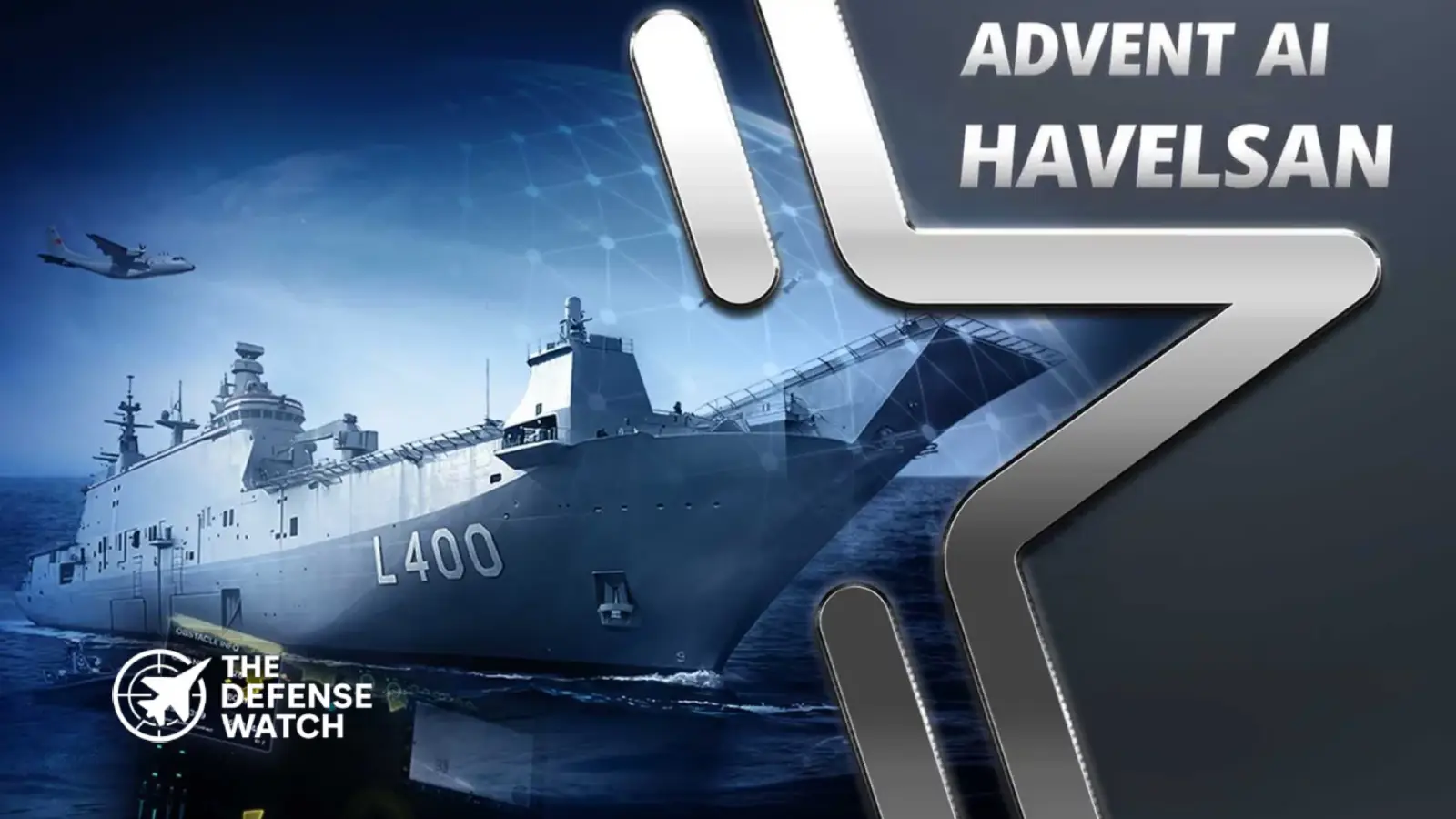
HAVELSAN Expands AI-Driven Naval Warfare Capabilities
HAVELSAN has unveiled its new ADVENT AI naval combat management system, a next-generation warfare platform developed to help naval forces counter increasingly complex threats including unmanned swarm attacks and electronic warfare operations.
The system builds on the company’s existing ADVENT combat management architecture already deployed across multiple Turkish naval platforms. The latest AI-enabled variant introduces advanced automation, decision-support tools, and enhanced data processing intended to reduce operator workload during high-intensity combat scenarios.
The announcement comes as navies worldwide accelerate investments in artificial intelligence, autonomous systems, and electronic warfare resilience amid evolving maritime threats in regions such as the Black Sea, Eastern Mediterranean, Red Sea, and Indo-Pacific.
AI Integration Targets Swarm And EW Threats
The ADVENT AI naval combat system is designed to process large volumes of battlefield data from multiple sensors and platforms simultaneously. HAVELSAN says the system can assist commanders by rapidly identifying threats, prioritizing targets, and recommending tactical responses in contested maritime environments.
One of the key operational focuses is defense against coordinated drone swarm attacks. Naval planners increasingly view low-cost unmanned aerial and surface systems as a major threat to high-value warships, especially after recent conflicts demonstrated the effectiveness of mass autonomous attacks against conventional defenses.
The platform reportedly incorporates AI-assisted threat analysis and real-time sensor fusion to improve detection and engagement timelines. By automating parts of the decision cycle, the system aims to help naval crews respond faster to saturation attacks where human operators may struggle to manage multiple simultaneous threats.
Electronic warfare resilience is another major component of the upgrade. Modern naval combat increasingly depends on secure communications, data links, and networked sensor systems, all of which are vulnerable to jamming, spoofing, and cyber intrusion attempts.
HAVELSAN stated that the ADVENT AI architecture is designed to maintain operational effectiveness in electronically contested environments by improving data integrity, network coordination, and system adaptability under degraded conditions.
Network-Centric Warfare Remains Central
The new system continues HAVELSAN’s broader push toward network-centric naval warfare, enabling ships, unmanned platforms, aircraft, and command centers to operate through a shared tactical picture.
The original ADVENT combat management system was jointly developed for the Turkish Naval Forces Command and has already been integrated into frigates, corvettes, patrol vessels, and amphibious ships. Turkey has also marketed the platform internationally as part of its expanding defense export strategy.
The AI-enhanced version reflects a broader defense industry trend toward incorporating machine learning and automated battle management tools into command-and-control systems.
Western and Asian defense companies are similarly developing AI-enabled combat management platforms capable of supporting distributed maritime operations, autonomous teaming, and multi-domain warfare.
Growing Demand For Autonomous Maritime Defense
The unveiling of ADVENT AI comes amid rising global interest in autonomous naval defense technologies. Recent maritime conflicts have highlighted the growing role of unmanned systems, particularly one-way attack drones, autonomous surface vessels, and electronic warfare platforms.
For many navies, defending against large numbers of low-cost drones has become a major operational concern. Traditional missile-based air defense systems can be expensive and inefficient when used against small autonomous targets deployed in large quantities.
As a result, defense firms are increasingly investing in AI-assisted command systems capable of shortening sensor-to-shooter timelines and coordinating layered defensive responses across multiple platforms.
Turkey has emerged as an increasingly active player in this sector, leveraging its domestic defense industry to expand indigenous capabilities in naval systems, drones, electronic warfare, and command-and-control technologies.
Strategic Implications For Regional Naval Competition
The development of the ADVENT AI naval combat system also reflects broader geopolitical competition in maritime technology and naval modernization.
Countries operating in contested maritime zones are seeking systems that can maintain operational effectiveness under electronic attack while managing rapidly evolving drone threats. AI-supported combat systems are expected to play an increasingly important role in future naval doctrines, particularly in distributed and autonomous operations.
Turkey’s continued investment in indigenous naval combat systems supports Ankara’s long-term strategy of reducing reliance on foreign defense suppliers while strengthening export competitiveness in international defense markets.
The ADVENT AI platform could also enhance interoperability across mixed fleets of crewed and uncrewed naval assets, an area many NATO and regional navies are prioritizing as part of future force structure planning.
Conclusion
HAVELSAN’s unveiling of the ADVENT AI naval combat management system highlights the accelerating integration of artificial intelligence into modern naval warfare. Designed to counter swarm attacks and electronic warfare threats, the system reflects growing demand for faster, more adaptive maritime battle management tools.
As autonomous threats continue to evolve, AI-enabled command systems are likely to become a central component of future naval modernization programs worldwide.