(adsbygoogle = window.adsbygoogle || []).push({});Executive Summary:
The U.S. Army’s adoption of the XM7 rifle marks the most significant infantry weapons transition since the M16 entered service in the Vietnam era. Combined with new ammunition, optics, suppressors, and fire-control systems, the program aims to increase lethality against modern armored threats while redefining how infantry squads fight on tomorrow’s battlefields.
The U.S. Army is replacing a rifle family that has dominated battlefields for more than half a century.
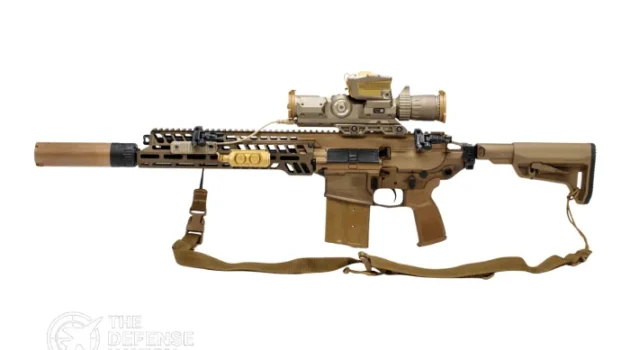
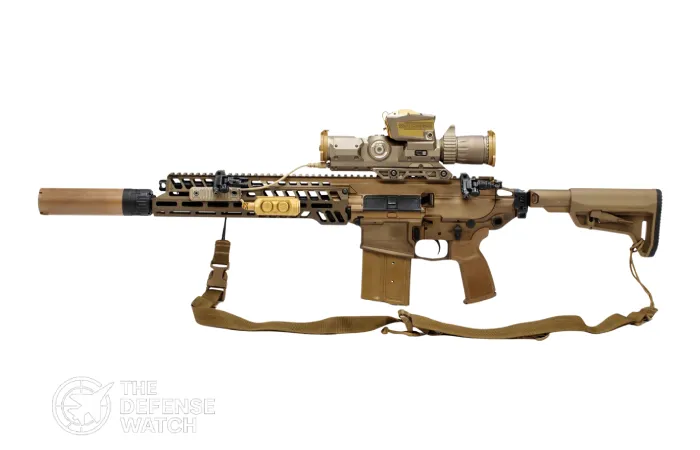
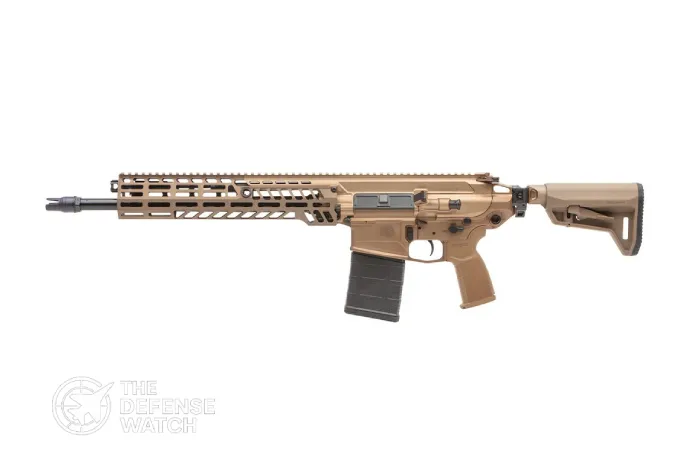
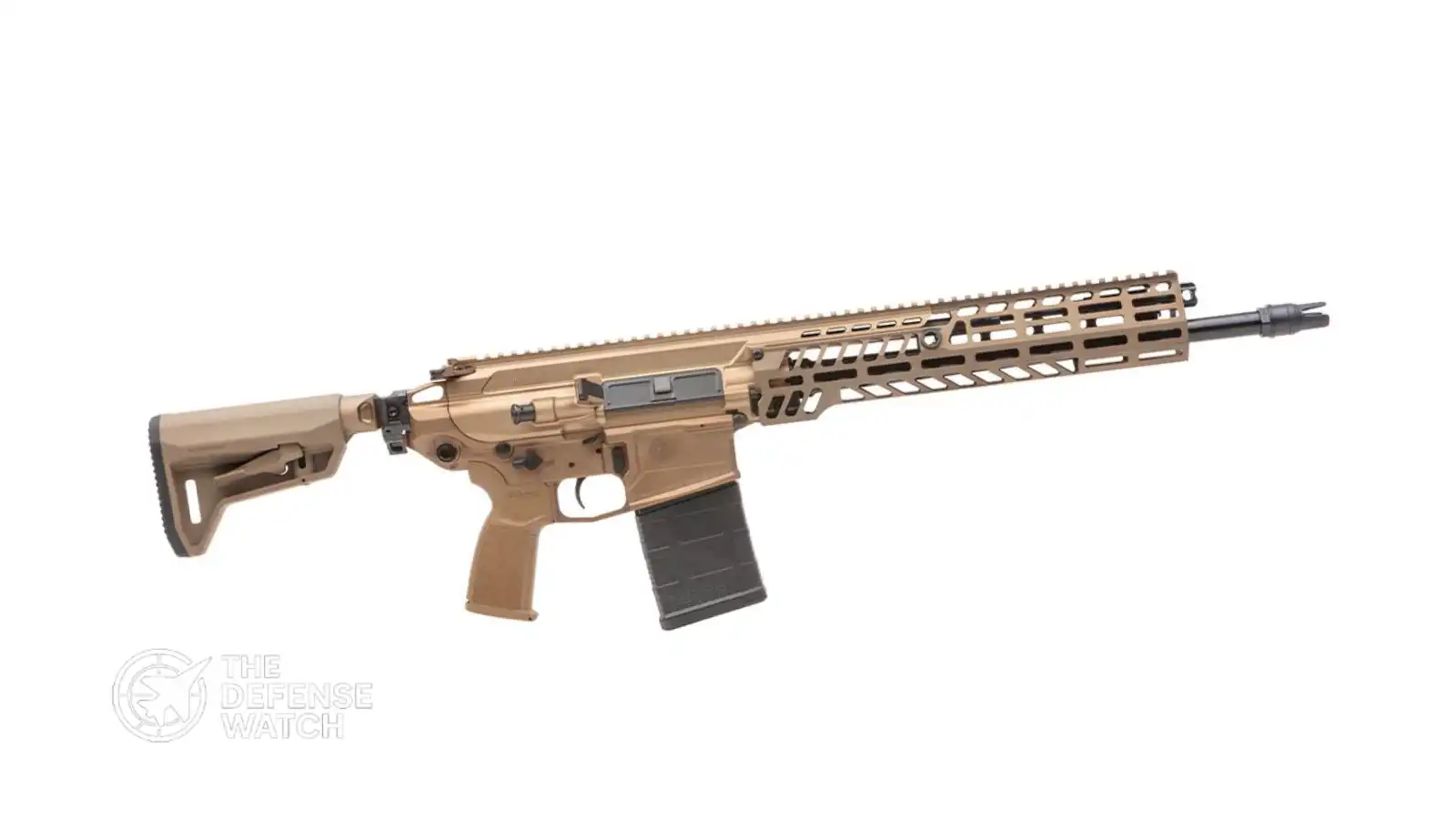
The XM7 rifle, formerly known as the XM5 during development, is at the center of the Army’s Next Generation Squad Weapon (NGSW) program. It is not simply a replacement for the M4 carbine. It represents a broader shift in how the Pentagon views infantry combat against near-peer adversaries equipped with advanced body armor, drones, electronic warfare systems, and longer-range weapons.
For the first time in decades, the Army is accepting higher weapon weight, increased ammunition costs, and greater logistical complexity in exchange for substantially improved range and terminal performance.
The decision signals a recognition that the battlefield environment of the 2030s will look very different from the counterinsurgency campaigns that shaped U.S. small arms doctrine after 2001.
Technical Analysis: Why The XM7 Rifle Exists
The XM7 rifle was selected alongside the XM250 automatic rifle as part of the NGSW effort led by SIG Sauer. The weapon fires the new 6.8×51mm cartridge, delivering significantly greater energy than the 5.56×45mm NATO round used by the M4 and the M27 Infantry Automatic Rifle.
The Army’s concern was straightforward. Potential adversaries are increasingly fielding advanced body armor capable of reducing the effectiveness of existing intermediate-caliber ammunition at longer ranges.
The XM7 addresses that challenge through a combination of higher chamber pressures, advanced ammunition design, and increased ballistic performance.
(adsbygoogle = window.adsbygoogle || []).push({});Unlike earlier modernization efforts, the program also integrates suppressors and advanced fire-control optics from the outset. The result is a weapon system rather than a standalone rifle.
How It Compares To Legacy Platforms
Weapon System Caliber Effective Range Primary Role Approx. Weight M4 Carbine 5.56×45mm NATO 500 m Standard Infantry Rifle 6.4 lbs XM7 Rifle 6.8×51mm 600+ m Next Generation Service Rifle 8.4 lbs M27 Infantry Automatic Rifle 5.56×45mm NATO 600 m Squad Automatic Weapon 7.9 lbs M110 SASS Marksman Rifle 7.62×51mm NATO 800+ m Designated Marksman 15+ lbs XM8 Rifle (Cancelled) 5.56×45mm NATO 500 m Proposed M4 Replacement 6.2 lbs The increased power of the XM7 comes with tradeoffs. Soldiers carry heavier ammunition and experience stronger recoil than with the M4 platform.
Army planners appear willing to accept those drawbacks because future combat scenarios are expected to involve engagements at longer distances, particularly in Eastern Europe, the Indo-Pacific, and other open terrain environments.
 (adsbygoogle = window.adsbygoogle || []).push({});
The XM8 Rifle Lesson
The XM7 is not the first attempt to replace the M4.
The XM8 rifle program emerged in the early 2000s as a lightweight modular weapon derived from the German G36. Despite promising testing results, the project ultimately collapsed amid procurement disputes, changing operational priorities, and concerns about cost versus capability gains.
The XM8 failed largely because it offered evolutionary improvements.
The XM7 survived because it offers a revolutionary increase in lethality.
That distinction matters. Military modernization programs rarely succeed unless they provide a dramatic battlefield advantage that justifies replacing entrenched systems and retraining entire forces.
Where The M27 Infantry Automatic Rifle Fits
The U.S. Marine Corps followed a different path.
Rather than pursuing an entirely new cartridge, the Marines expanded use of the M27 Infantry Automatic Rifle, based on the Heckler & Koch HK416 platform. The M27 improved accuracy, reliability, and controllability while retaining NATO-standard 5.56mm ammunition.
The Marine Corps prioritized precision and distributed firepower.
The Army prioritized penetration and range.
These contrasting decisions highlight two different interpretations of future infantry combat. One focuses on enhanced marksmanship within existing logistics networks. The other embraces a new caliber and weapon architecture to overcome emerging battlefield threats.
(adsbygoogle = window.adsbygoogle || []).push({});What Happens To The M110 SASS?
The M110 Semi-Automatic Sniper System helped bridge the gap between standard infantry rifles and dedicated sniper platforms.
However, the increased reach of the XM7 is beginning to blur traditional distinctions between riflemen and designated marksmen.
While the M110 SASS remains valuable for long-range precision engagements, the Army’s modernization effort effectively pushes more firepower down to the squad level. Infantry formations can now engage targets at ranges that previously required specialized marksman rifles.
This shift reflects a broader trend toward distributed lethality across small combat units.
The Insight: Why Gamers And Defense Analysts Should Pay Attention
Military modernization often mirrors concepts familiar to competitive gaming communities.
In tactical shooters, players frequently balance mobility, recoil control, damage output, and engagement range. The XM7 reflects the same tradeoff calculation.
The M4 was comparable to a highly versatile assault rifle build optimized for speed and adaptability.
The XM7 resembles a battle rifle configuration designed to dominate medium and long-range engagements, sacrificing some mobility for greater stopping power.
The comparison is useful because both environments reward optimization around expected threats.
The Army is effectively redesigning its infantry loadout for a different meta.
Future adversaries are expected to wear better armor, operate drones at scale, and engage from longer distances. The XM7 is a direct response to that changing combat environment.
The XM7 is not merely a new rifle. It is a signal that the U.S. Army believes future infantry battles will be fought farther away, against better-protected opponents, and under far more demanding conditions than the wars of the last two decades.
Conclusion & Takeaway
The XM7 rifle represents one of the most ambitious U.S. infantry modernization efforts in generations.
Unlike the cancelled XM8 rifle program, the XM7 delivers a measurable leap in range, penetration, and battlefield effectiveness. Its adoption also reshapes the relationship between traditional service rifles, automatic rifles, and designated marksman weapons such as the M110 SASS.
Whether the program ultimately achieves its long-term goals will depend on operational performance, logistics, and affordability. Yet one reality is already clear.
The era of incremental upgrades is ending. The U.S. Army’s new army rifle is part of a broader transformation that seeks to prepare infantry forces for a battlefield where range, protection, and lethality matter more than ever before.