(adsbygoogle = window.adsbygoogle || []).push({});Executive Summary:
Iron Dome is Israel’s short-range air defense system, built by Rafael and Israel Aerospace Industries to shoot down rockets, mortars, and drones before they hit populated areas. Since 2011 it has fired thousands of Tamir interceptors at a claimed success rate above 90%, but the math has always been brutal: each interceptor can cost more than a hundred times what the rocket it destroys costs to build. In 2026, cheap fiber-optic FPV drones are exposing the one gap that math never accounted for.
The $100,000 Answer to a $300 Problem
A Qassam rocket costs Hamas roughly $300 to $800 to build. The Tamir interceptor Israel fires to stop it costs somewhere between $40,000 and $100,000, and batteries frequently fire two per target to guarantee a kill, given Tamir interceptor costs ranging from $40,000 to $100,000 depending on production batch and variant, against Hamas rockets costing as little as $300. That’s not a rounding error in a defense budget. It’s a structural weakness written into the system on day one, and it’s the central tension that defines everything Iron Dome does.
Since its first live intercept on April 7, 2011, near Beersheba, Iron Dome has become the busiest missile defense system on Earth, having engaged and destroyed thousands of incoming rockets, mortar rounds, and short-range missiles since that first intercept, fundamentally changing the calculus of the Israeli-Palestinian conflict. It was never built to stop an army. It was built to buy Israeli civilians fifteen seconds of warning and a fighting chance.
Key Facts at a Glance
- Built by: Rafael Advanced Defense Systems and Israel Aerospace Industries, with Raytheon co-production support
- Operational since: March 27, 2011 (first intercept April 7, 2011)
- Interceptor: Tamir missile, ~3m long, 90kg at launch
- Engagement range: 4 to 70 km
- Interceptor cost: ~$40,000–$100,000 per unit
- Battery cost: ~$100 million (2012/13 estimate)
- Claimed success rate: Above 90% against threats heading for populated areas
The Deep Dive: How Iron Dome Actually Works
Every Iron Dome battery runs on three components working in sequence. First, the EL/M-2084 radar — an S-band active electronically scanned array built by Elta — picks up a launch and starts tracking it, detecting incoming targets and providing midcourse guidance for the Tamir interceptor. That radar can track threats out to 4 to 70 km, giving the system enough lead time to make a decision before the projectile becomes unstoppable.
That decision is the part competitors don’t talk about enough. A battle management computer — built for Rafael by mPrest Systems — takes the radar track and runs a trajectory projection, determining whether the incoming rocket or missile will land in an inhabited area, disregarding the projectile if it will not. Roughly a third to nearly half of all incoming fire gets ignored on purpose, because engaging it would waste a $50,000 missile on an empty field.
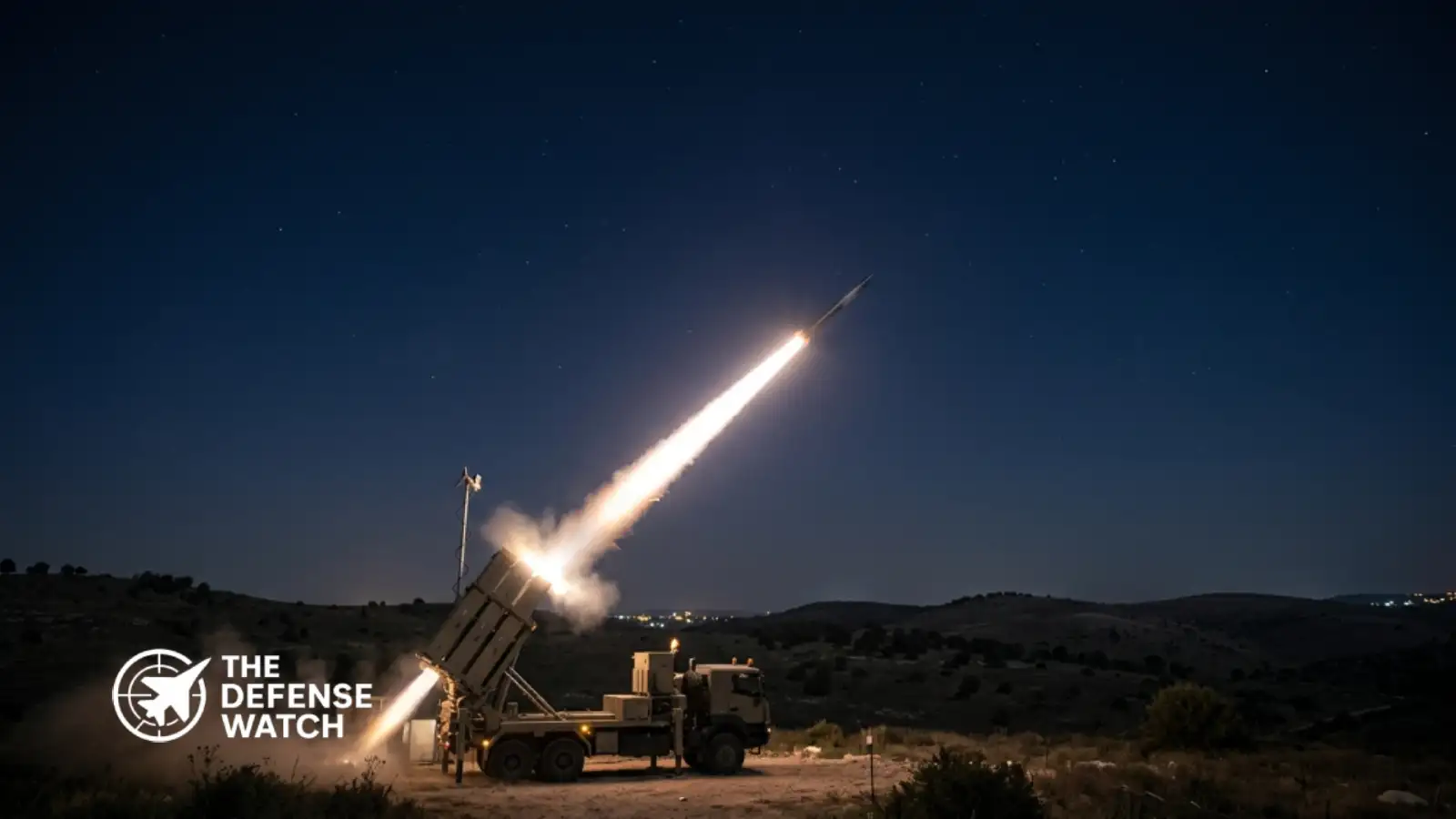
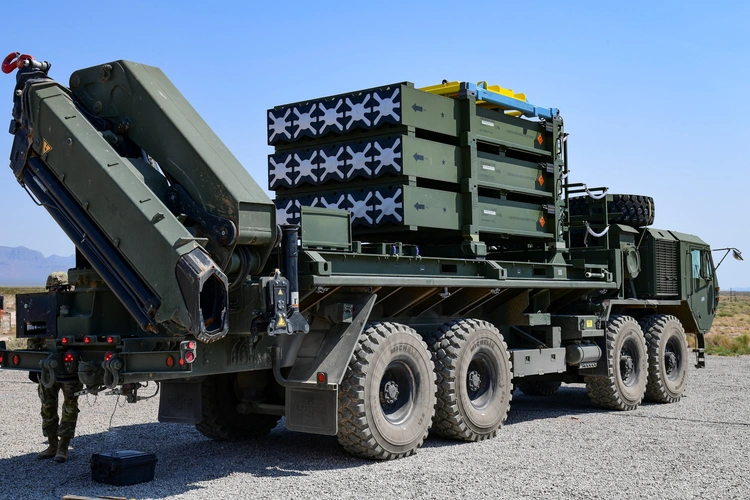
(adsbygoogle = window.adsbygoogle || []).push({});Only after that filter does a Tamir interceptor leave the launcher. Each launcher holds up to 20 Tamir missiles, and a full battery runs three to four launchers plus the radar and command post, with each Iron Dome battery covering up to 150 square kilometers against short-range missiles, mortars, and rockets. The Tamir itself closes using a datalink plus an onboard active radar seeker, detonating a blast-fragmentation warhead close enough to shred the incoming threat mid-air rather than needing a direct hit.
Cost has always shaped the design as much as physics has. Early Tamir estimates ran near $100,000 per unit; more recent figures from missile-defense trackers put it closer to $40,000 to $50,000 each, though estimates still vary by production batch, generally landing in the $40,000 to $100,000 range, compared with $2 million to $3 million for a Patriot interceptor. Either way, it’s the cheapest tier in Israel’s layered shield — Arrow 2 and Arrow 3 interceptors run into the millions of dollars apiece, reserved for genuine ballistic missile threats.
Data Block: Iron Dome vs. the Layer Above It
Metric Iron Dome (Tamir) Arrow 3 Primary role Rockets, mortars, short-range threats, drones Exo-atmospheric ballistic missile intercept Engagement range 4–70 km Hundreds of km, upper atmosphere/space Cost per interceptor ~$40,000–$100,000 ~$3–4 million Battery cost ~$100 million Significantly higher, program-classified Manufacturer Rafael / IAI, Raytheon co-production IAI, Boeing partnership Notable 2026 use UAE deployment, Iron Beam joint drills 12-Day War against Iranian ballistic salvos The layering matters more than either system alone. During the June 2025 12-Day War, Iran launched more than 500 ballistic missiles at Israel, and Arrow carried most of that load — but Iron Dome has since started doing work it was never designed for. Trackers posted footage of several possible Iron Dome missile interceptions during the day and night of March 11 in the 2026 conflict, suggesting the system has some ad hoc capability against ballistic debris and short-range missiles well outside its original spec sheet.
That improvisation is being stress-tested from a different direction, too. Half of Iran’s 2026 ballistic warheads reportedly carried cluster submunitions rather than a single payload, a tactic that exposed a vulnerability in Israeli defenses, forcing defenders to either ignore the dispersing bomblets or burn expensive interceptors engaging each one individually. Every workaround like this pulls Iron Dome further from its original job description — and further from its original economics.

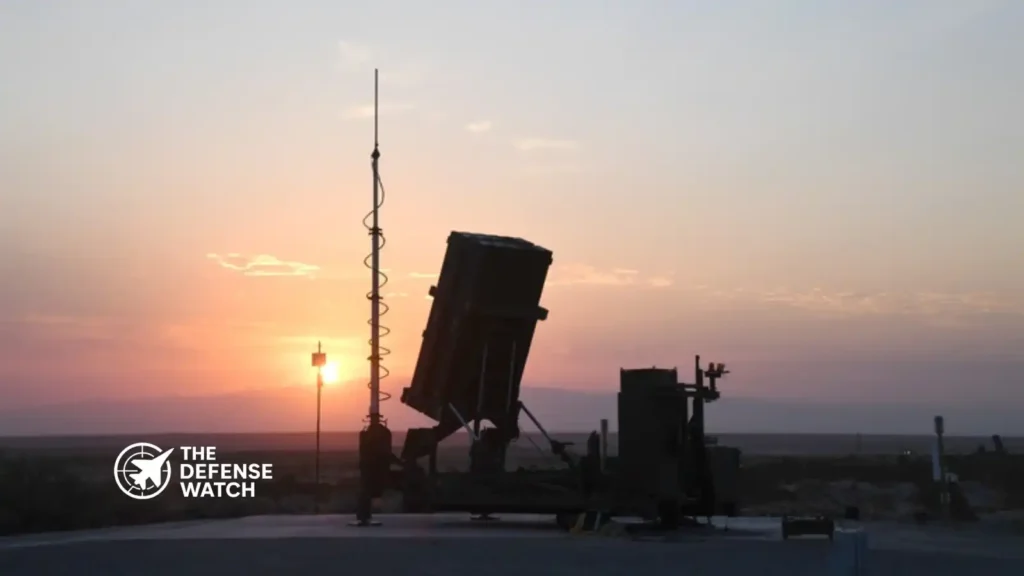
Image : Iron Dome missile defense system The Insight: Iron Dome Plays the “Anchor” Role, and Anchors Get Flanked
In tactical shooters, the anchor doesn’t chase kills — they hold a chokepoint, deny an angle, and let everyone else play around that certainty. Iron Dome has been Israel’s anchor since 2011: a fixed, reliable stop on the most common threat vector, freeing Arrow and David’s Sling to specialize against harder targets. That division of labor is exactly why Israel’s air defense has functioned as a system instead of a single point of failure.
But anchors lose to flanks, not to frontal assault. Iron Dome’s radar and battle-management logic were built to read ballistic arcs — predictable parabolas from unguided rockets. Hezbollah’s fiber-optic FPV drones don’t fly that profile at all, flying low and connected via fiber-optic cable rather than radio, so jamming doesn’t disrupt them, and they don’t climb high enough to register on radar built for ballistic threats. It’s the exact same lesson competitive shooter rosters relearn every patch cycle: a strategy optimized to counter one threat pattern creates a blind spot for anything that refuses to move the way the model expects.
(adsbygoogle = window.adsbygoogle || []).push({});The results are already visible in northern Israel. The IDF has logged 645 Hezbollah FPV drone attacks on military and civilian targets in northern Israel and southern Lebanon since a partial ceasefire took effect in April 2026, and Hezbollah has circulated footage claiming direct hits on Iron Dome launchers. Independent visual analysis of some of that footage found the “hits” actually struck decoys, lacking the hydraulic struts and structural components a real launcher requires — which cuts both ways: Israel is fielding decoys because the drone threat is real enough to warrant them.
The lesson that matters: No air defense architecture is threat-agnostic. Iron Dome solved the ballistic-arc problem so completely that it became a symbol of Israeli technological superiority — and that same specialization is what an adversary studies to find the gap. The system that wins today’s meta gets flanked by tomorrow’s off-meta pick.
Why This Still Matters
Israel is already answering the flank. Iron Beam, the directed-energy laser system meant to kill drones for pennies instead of tens of thousands of dollars, completed a joint drill with Iron Dome in late June 2026, with the Defense Ministry running a multi-threat scenario combining the laser and interceptor-based systems, focused mainly on drones but also covering rockets and cruise missiles. Production of Tamir interceptors is also scaling internationally: a $1.25 billion Raytheon-Rafael joint venture began building Tamir interceptors in Arkansas in November 2025, and Rafael is now in early talks to add an Indian production line aimed at export markets, as global demand for the Iron Dome system continues to outpace existing manufacturing capacity in Israel and the US.
None of that fixes the underlying cost-exchange problem — a $40,000 interceptor against a $300 rocket was never sustainable at scale, and a laser only closes that gap if it can survive the same electronic and physical threats the radar-guided system struggles with. What Iron Dome proves, fifteen years and thousands of intercepts in, is that a defense built around one threat profile buys real time — right up until an adversary stops attacking the way you built your system to expect.
FAQ
What is the Iron Dome?Iron Dome is Israel’s short-range, mobile air defense system, designed to detect and shoot down rockets, artillery shells, mortars, and some drones before they reach populated areas.
How much does an Iron Dome interceptor cost?Each Tamir interceptor is generally estimated at $40,000 to $100,000, though batteries often fire two per target to raise kill probability.
What is Iron Dome’s success rate?Israel states a success rate above 90% against threats it classifies as heading for populated areas; independent estimates vary and tend to drop during large, saturated barrages.
Who makes the Iron Dome system?Rafael Advanced Defense Systems and Israel Aerospace Industries developed it, with Raytheon as a co-production partner on the Tamir interceptor.
Can Iron Dome stop drones?Yes, against drones flying at altitude on radar-visible profiles. Low-flying, fiber-optic-guided FPV drones have proven far harder to detect and intercept.