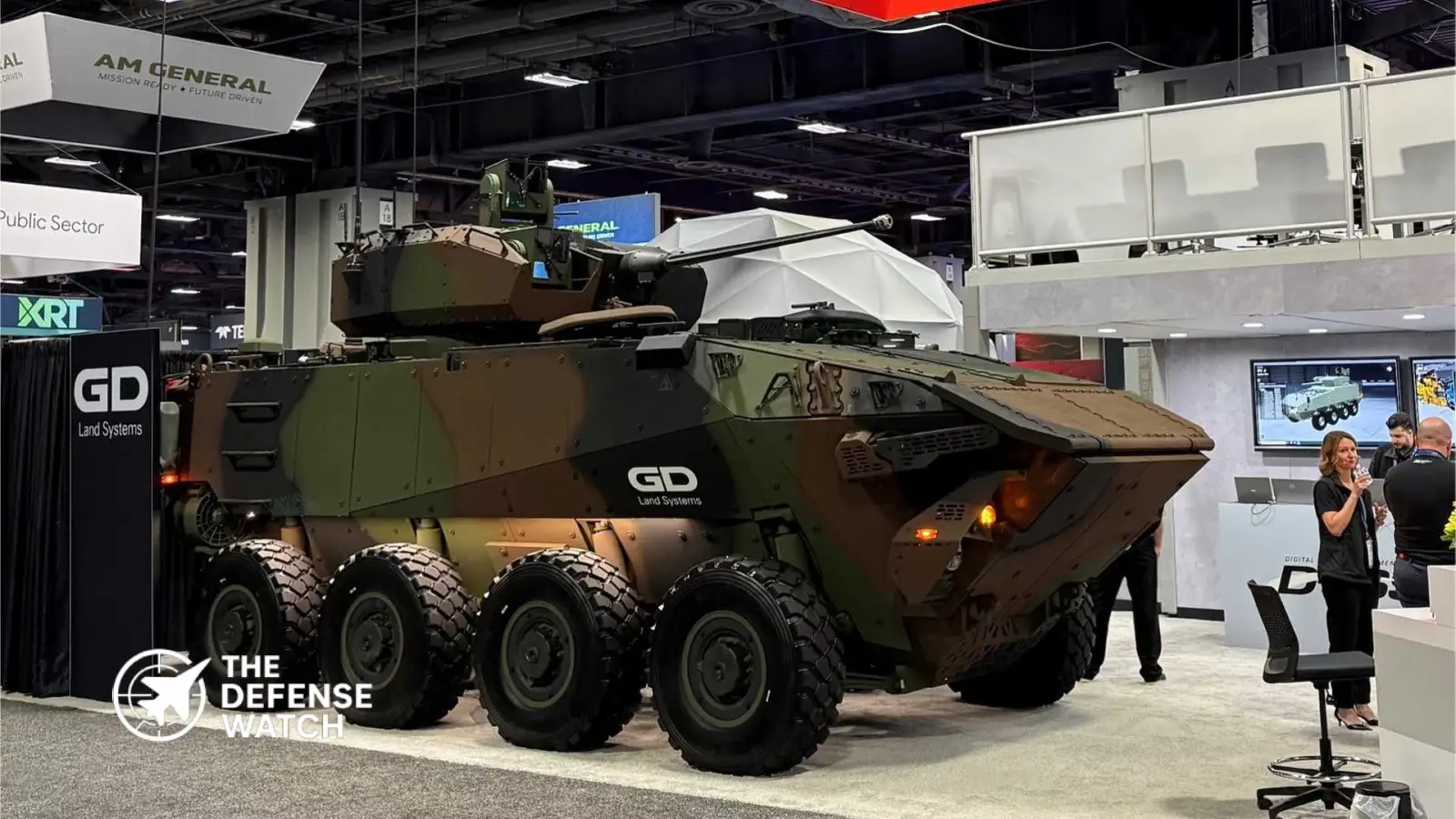
General Dynamics ARV-30 Signals New Direction For Marine Recon Forces
General Dynamics ARV-30 has emerged as one of the most important new ground combat systems tied to U.S. Marine Corps modernization. The company recently highlighted the platform as part of the service’s push toward faster, more survivable, and better-networked reconnaissance units built for future expeditionary warfare.
The ARV-30 is part of the broader Advanced Reconnaissance Vehicle program intended to replace the aging LAV-25 fleet that has served Marine light armored units for decades. Unlike legacy scout vehicles built primarily around speed and mobility, the new design places equal weight on sensing, communications, survivability, and direct firepower.
- General Dynamics has showcased the ARV-30 Advanced Reconnaissance Vehicle for the U.S. Marine Corps.
- The vehicle mounts a stabilized 30mm cannon for greater lethality against light armor and fortified targets.
- ARV-30 is designed for amphibious and shore-to-shore missions in contested littoral environments.
- The platform integrates sensors, unmanned systems links, and digital battle management tools.
- The program supports Marine Corps Force Design modernization and LAV-25 replacement efforts.
That shift reflects how reconnaissance missions have changed. Modern scout units are now expected to locate enemy forces, survive drone surveillance, share targeting data instantly, and if necessary fight through first contact. The ARV-30 appears built for exactly that environment.
30mm Firepower Changes Reconnaissance Missions
A key feature of the ARV-30 recon combat vehicle is its remotely operated 30mm cannon turret. That gives Marine reconnaissance formations significantly more punch than older light scout vehicles armed with smaller caliber weapons.
A modern 30mm weapon can engage light armored vehicles, defensive positions, drones, and small maritime threats. For Marine units operating across islands, coastlines, and narrow sea lanes, that extra reach matters.
In practical terms, this means reconnaissance teams no longer need to disengage immediately after contact. They gain the ability to suppress threats, create maneuver space, and continue passing battlefield intelligence to larger formations.
Built For Littoral And Amphibious Warfare
The U.S. Marine Corps increasingly focuses on contested coastal regions, especially in the Indo-Pacific. That requires vehicles able to move from ship to shore, cross water obstacles, and operate in dispersed island chains.
General Dynamics says the ARV-30 has undergone ocean swim and mobility testing, indicating a serious emphasis on amphibious performance rather than simple road mobility.
This is important because many armored vehicles perform well on land but lose usefulness in maritime environments. If the ARV-30 can maintain combat power after sea insertion, it fills a niche few Western wheeled combat vehicles currently occupy.
A Battlefield Node, Not Just A Vehicle
Perhaps the most significant part of the ARV-30 is what cannot be seen from the outside. The vehicle is intended to network onboard sensors, offboard drones, and future robotic systems while feeding data into wider Marine and joint force networks.
That turns the platform into a mobile sensor hub rather than only a troop carrier or gun vehicle.
This trend mirrors broader U.S. military doctrine. Future platforms are expected to collect data, distribute targeting information, and support precision fires in real time. Vehicles that cannot connect may become obsolete faster than vehicles lacking armor or guns.
Why The Program Matters
The Marine Corps has accepted risk by reducing some traditional heavy formations under Force Design reforms. In exchange, it seeks lighter, more deployable units with longer-range sensing and strike capability.
The General Dynamics ARV-30 helps close that gap by giving mobile reconnaissance battalions better protection and more firepower without requiring the logistics footprint of a heavy tracked vehicle.
If selected for full-rate production, the ARV-30 could become one of the defining U.S. Marine Corps ground systems of the next decade.
Outlook
The ARV competition remains active, with government evaluations continuing through 2026. A final production decision will shape the Marine Corps reconnaissance fleet for years to come.
For now, the ARV-30 demonstrates a clear reality: future reconnaissance vehicles must scout, fight, survive, and connect all at once.
Get real time update about this post category directly on your device, subscribe now.