Executive Summary:
The British Army has selected Digital Concepts Engineering (DCE) to provide its first operational fleet of unmanned ground vehicles (UGVs), marking a significant milestone in the UK’s military robotics program.
The move transitions British Army ground robotics efforts from experimentation into operational service, reflecting growing demand for autonomous logistics, reconnaissance, and force protection capabilities.
British Army Selects DCE For First Operational UGV Fleet
The British Army UGV fleet program has reached a major milestone with the selection of Digital Concepts Engineering (DCE) to supply the service’s first operational unmanned ground vehicle capability.
The decision signals a shift from years of trials and technology demonstrations toward the fielding of deployable robotic ground systems capable of supporting military operations. The development comes as NATO militaries increasingly pursue autonomous and semi-autonomous systems to improve battlefield effectiveness while reducing risks to personnel.
The procurement represents the first operational UGV fleet acquired by the British Army, establishing a formal capability rather than an experimental or developmental program.
From Trials To Operational Service
The British Army has spent years evaluating robotic and autonomous systems through a range of experimentation efforts, including Army Warfighting Experiments, logistics demonstrations, and heavy UGV trials.
DCE has been closely involved in many of these activities. The company previously developed autonomous and remotely operated ground systems for British military experimentation and has demonstrated capabilities ranging from logistics support to deception operations and reconnaissance missions.
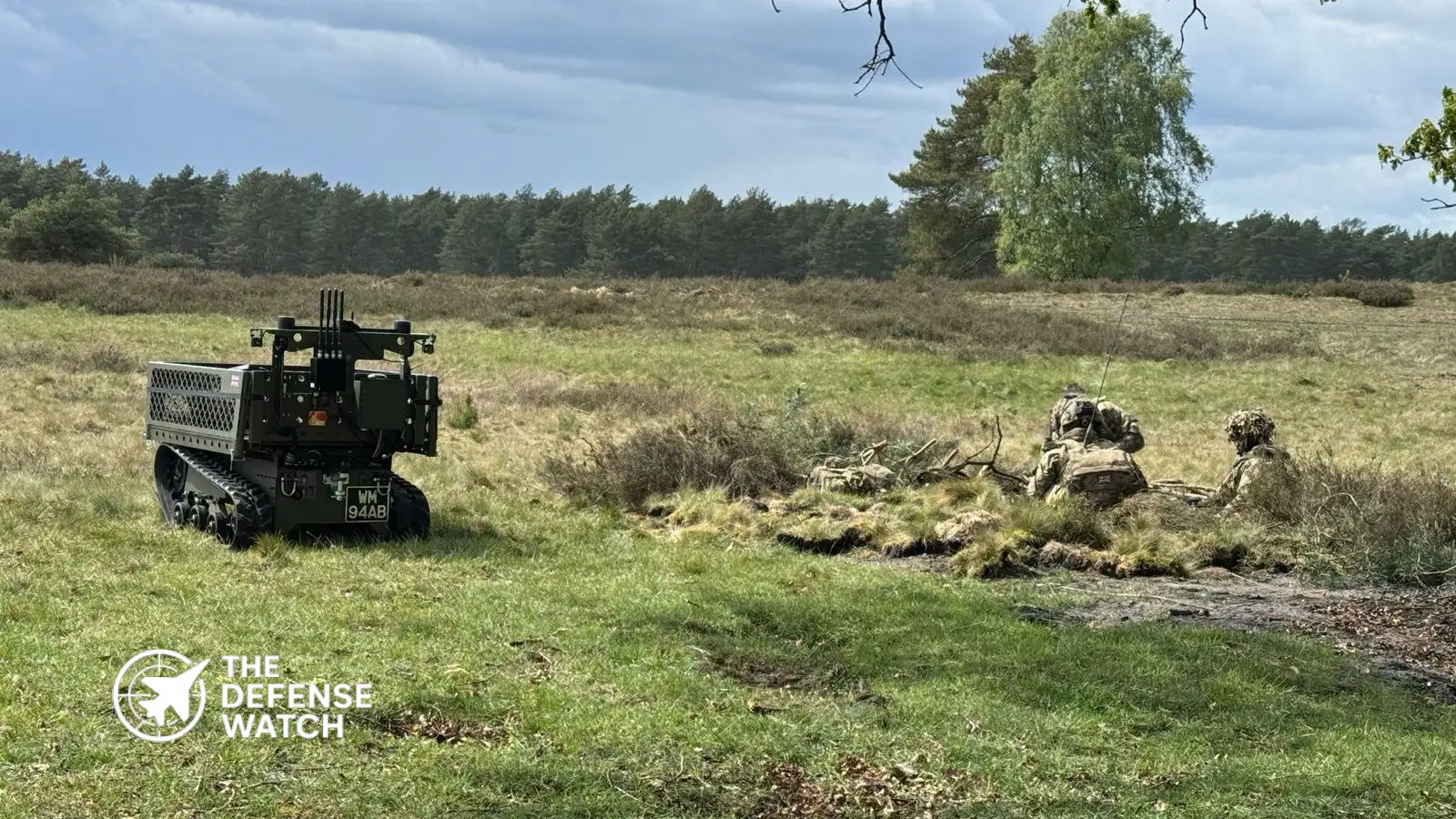
The firm’s X-Series robotic vehicles have evolved through multiple development cycles. The latest X3 platform features a modular design capable of carrying payloads, towing equipment, and operating across difficult terrain including mud, sand, rubble, and steep gradients.
The British Army’s decision to move forward with an operational fleet suggests confidence that the technology has matured sufficiently for military service.
Why Unmanned Ground Vehicles Matter
The introduction of a British Army UGV fleet reflects broader changes in modern warfare.
Recent conflicts have demonstrated the growing value of unmanned systems across land, air, and maritime domains. While aerial drones have received significant attention, ground robots are increasingly viewed as critical tools for logistics, casualty evacuation, reconnaissance, engineering support, and force protection.
Military planners see several advantages:
- Reduced exposure of soldiers to enemy fire.
- Increased operational endurance.
- Improved logistics support in contested environments.
- Enhanced reconnaissance capabilities.
- Greater flexibility in dispersed operations.
These advantages align with the British Army’s ongoing modernization efforts, which emphasize digital integration, human-machine teaming, and increased battlefield survivability.
Part Of A Larger UK Defense Robotics Strategy
The contract also reflects years of investment by the UK Ministry of Defence in autonomous ground systems.
Earlier initiatives such as Project Theseus and the Autonomous Last Mile Challenge explored the use of robotic vehicles for battlefield resupply missions. Those efforts sought to understand the capabilities and limitations of autonomous logistics systems while reducing risk to frontline personnel.
The UK’s Defence Science and Technology Laboratory (Dstl) and Defence Equipment & Support (DE&S) have repeatedly tested unmanned ground vehicles to determine how they can be integrated into future force structures.
The DCE selection appears to be a direct continuation of that long-term effort.
Analysis: A Significant Shift In British Army Modernization
The importance of this contract extends beyond the number of vehicles involved.
For years, Western militaries treated unmanned ground vehicles primarily as experimental technologies. The British Army’s move toward an operational fleet indicates that robotic systems are increasingly viewed as deployable military assets rather than future concepts.
This transition mirrors developments across NATO, where armed forces are examining how autonomous systems can supplement traditional combat formations.
The decision is particularly notable because ground robotics has historically progressed more slowly than aerial drone technology. Terrain complexity, communications challenges, and mobility requirements have made land-based autonomy difficult to operationalize.
By selecting DCE for an operational capability, the British Army is effectively acknowledging that certain UGV missions have matured enough for routine military use.
The move may also influence future procurement decisions involving logistics robots, reconnaissance platforms, engineering support vehicles, and potentially armed robotic systems.
As lessons from Ukraine continue to highlight the growing role of unmanned technologies on the battlefield, Western armies are under increasing pressure to accelerate robotic integration across their force structures. Recent operational trends suggest that human-machine teaming is becoming a core element of modern military doctrine rather than a niche capability.
Looking Ahead
The introduction of the first operational British Army UGV fleet represents a significant step in the service’s modernization roadmap.
While details regarding fleet size, deployment timelines, and specific operational roles remain limited, the procurement demonstrates a clear commitment to expanding robotic capabilities within the Army.
For DCE, the contract represents a major achievement after years of involvement in British military robotics development. For the British Army, it marks the beginning of operational ground robotics as a permanent part of its force structure.