Executive Summary:
Israel Aerospace Industries (IAI) has unveiled HYPNOSIS, a new navigation warfare electronic warfare system designed to counter drone swarms and other GNSS guided aerial threats. Rather than destroying incoming drones with missiles, the system disrupts their satellite navigation, providing a cost effective soft kill layer that complements traditional air defense systems.
IAI Unveils HYPNOSIS Electronic Warfare System To Counter Drone Swarms
Israel Aerospace Industries (IAI) has introduced HYPNOSIS, a new navigation warfare electronic warfare system developed to defeat large numbers of GNSS guided drones and other precision guided aerial threats. The company announced the system this week, describing it as a complementary layer within modern integrated air defense architectures rather than a replacement for conventional interceptors.
The unveiling comes as militaries worldwide continue adapting to the growing use of inexpensive unmanned aircraft in conflicts across Europe and the Middle East. Drone saturation attacks have demonstrated that relying exclusively on kinetic interceptors can rapidly increase operational costs while depleting missile inventories.
How HYPNOSIS Works
Unlike traditional air defense systems that physically destroy incoming targets, HYPNOSIS focuses on denying hostile aircraft access to reliable satellite navigation.
The system attacks Global Navigation Satellite System (GNSS) signals through a combination of electronic jamming and spoofing technologies. By disrupting positioning and timing data, drones and other GNSS dependent weapons lose the ability to accurately navigate toward their intended targets.
IAI said HYPNOSIS consists of:
| Capability | Description |
|---|---|
| Navigation warfare | Jamming and spoofing of GNSS signals |
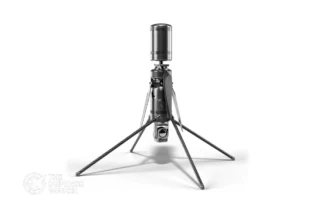
| Distributed architecture | Multiple mobile electronic warfare stations |
| Command and Control | Centralized network for threat coordination |
| Autonomous operation | Automated detection and response |
| Integration | Works alongside kinetic air defense systems |
Rather than operating as a standalone defense asset, the system is designed to integrate into existing multi layered air defense networks.
Designed For High Volume Drone Attacks
According to IAI, HYPNOSIS is specifically intended to defend fixed strategic locations against simultaneous attacks arriving from multiple directions.
Potential protected sites include:
- Military bases
- Air defense batteries
- Government facilities
- Energy infrastructure
- Critical national assets
The company stated that distributed electronic warfare stations communicate with a centralized command system, allowing coordinated responses against multiple airborne threats at the same time.
Supporting Layered Air Defense
IAI emphasized that HYPNOSIS is intended to strengthen, not replace, missile based air defense.
Company Chairman Boaz Levy described the system as another layer within increasingly integrated air defense architectures designed to counter evolving aerial threats. Executive Vice President Guy Barlev also characterized HYPNOSIS as a soft kill capability that complements hard kill interceptors while reducing the burden placed on expensive missile systems.
This reflects a broader trend across NATO members and other defense organizations toward combining electronic warfare, directed energy weapons, kinetic interceptors, and advanced sensors into unified defensive networks.
Why Navigation Warfare Is Becoming More Important
The operational environment has changed significantly over the past several years.
Commercial drones modified for military use now employ satellite navigation to execute autonomous missions with limited reliance on radio communications. Swarm attacks involving dozens or even hundreds of inexpensive drones have exposed the economic imbalance between low cost unmanned systems and high value interceptor missiles.
Electronic warfare offers an alternative approach.
Instead of engaging every incoming target with a missile, navigation warfare attempts to deny drones the positioning data required to complete their missions. Successfully disrupting GNSS guidance can force hostile drones off course before they reach defended assets, preserving interceptor inventories for more complex threats.
However, navigation warfare is not universally effective. Some advanced drones increasingly combine satellite navigation with inertial navigation systems, terrain matching, visual navigation, or artificial intelligence based autonomy. As a result, electronic warfare remains most effective when integrated with radar, electro optical sensors, command and control networks, and kinetic interceptors as part of a layered defense architecture.
Strategic Significance
The introduction of HYPNOSIS highlights the growing importance of soft kill technologies in modern air defense planning.
Recent conflicts have demonstrated that defending against mass drone attacks requires more than missiles alone. Electronic warfare systems capable of disrupting navigation, communications, and targeting functions are becoming essential components of integrated air and missile defense.
For the United States and allied militaries, systems such as HYPNOSIS illustrate a broader shift toward combining electronic attack capabilities with traditional missile defenses to improve operational endurance while lowering engagement costs.
As drone technology continues to proliferate globally, navigation warfare is expected to become an increasingly important element of protecting critical infrastructure and military installations against large scale unmanned aerial attacks.