(adsbygoogle = window.adsbygoogle || []).push({});Executive Summary
British Challenger 2 tanks and approximately 1,500 UK troops participated in Exercise Spring Storm in Estonia, operating close to the Russian border. The deployment highlights NATO’s continued effort to strengthen deterrence and rapid reinforcement capabilities along its eastern flank amid ongoing regional security concerns.
British Challenger 2 Tanks Train Near Russian Border During Major NATO Exercise
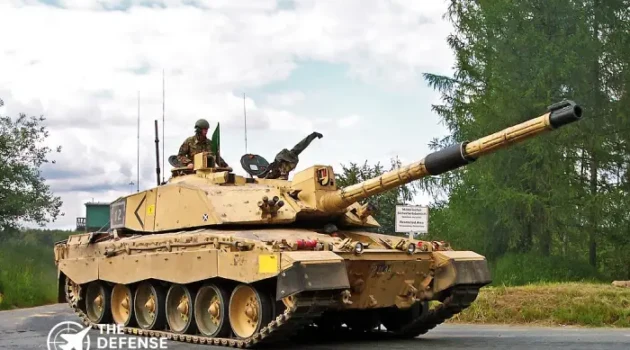
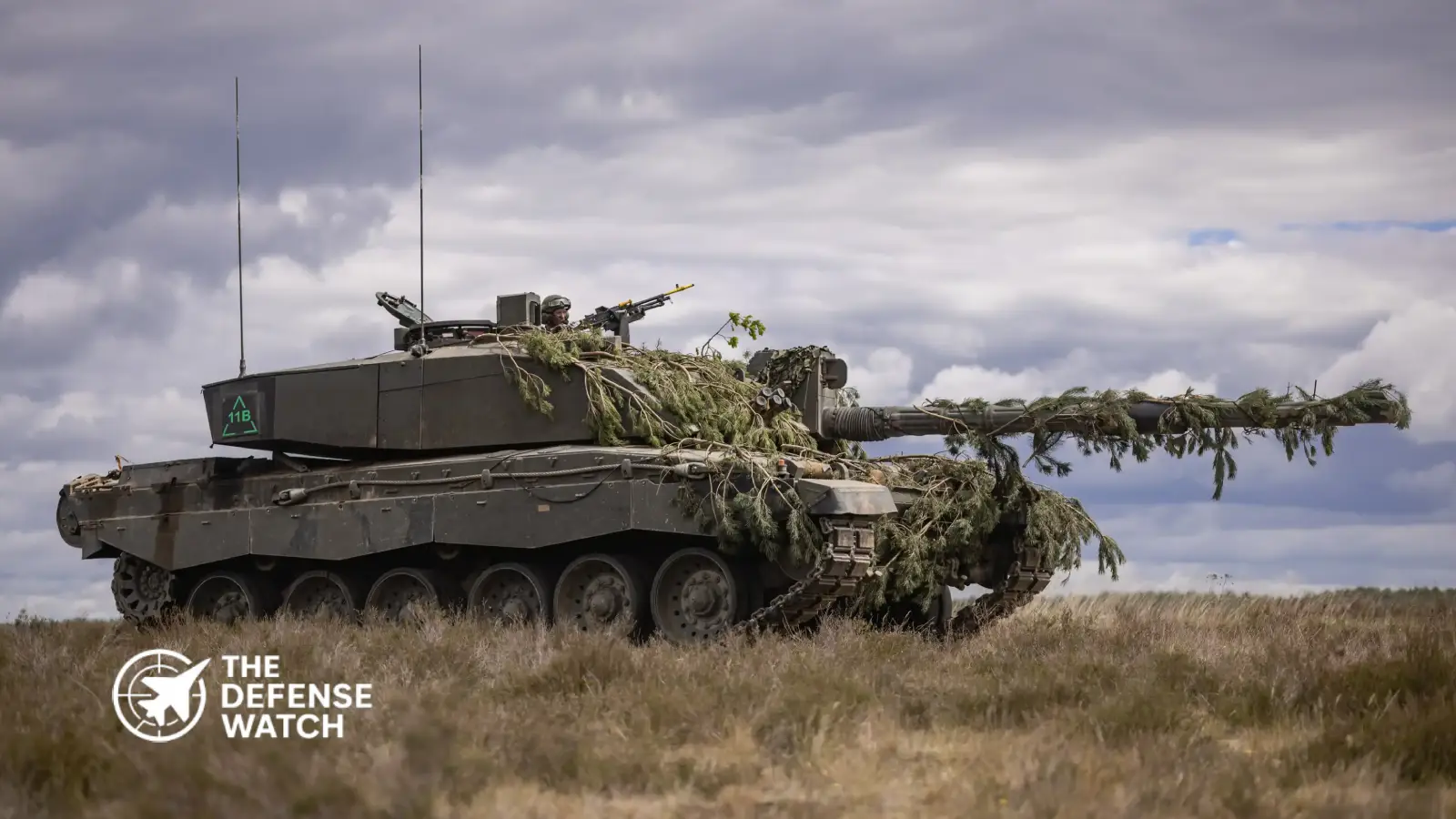
British Challenger 2 tanks have taken part in a large-scale NATO exercise in Estonia, demonstrating the United Kingdom’s ability to rapidly deploy armored forces to the alliance’s eastern frontier.
The exercise, known as Spring Storm (Kevadtorm), involved around 1,500 British troops from the UK’s 4th Brigade alongside Estonian and allied forces. Training activities occurred in southeastern Estonia, less than 25 kilometers from the Russian border, making it one of the most strategically significant military drills conducted by NATO members in the region this year.
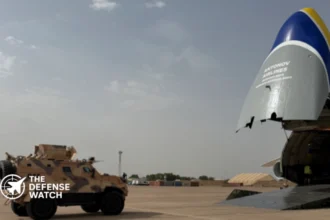
Images released by the UK Ministry of Defence showed Challenger 2 main battle tanks being transported into the operational area before conducting maneuver exercises under simulated combat conditions. The training scenario centered on defending Estonian territory against a mock cross-border incursion by a hostile neighboring state.
Strengthening NATO’s Forward Land Force
The exercise forms part of NATO’s evolving Forward Land Force concept, designed to reinforce the alliance’s eastern flank following Russia’s 2022 invasion of Ukraine.
Under the framework, multinational combat formations are stationed in frontline NATO states while larger reinforcement units remain at high readiness for rapid deployment if required. For the United Kingdom, this includes maintaining a permanent military presence in Estonia while preparing additional forces capable of deploying quickly during a crisis.
(adsbygoogle = window.adsbygoogle || []).push({});Exercise Spring Storm provided an opportunity to rehearse these reinforcement procedures, testing the movement of heavy armor, logistics networks, command structures, and multinational coordination under realistic field conditions.
Operation Cabrit Remains Central To UK Commitment
British forces have maintained a continuous presence in Estonia since 2017 through Operation Cabrit, the UK’s contribution to NATO’s enhanced Forward Presence mission.
The mission was established after Russia’s 2014 annexation of Crimea and aims to reassure NATO allies located along the alliance’s eastern borders. The United Kingdom serves as the lead nation for the multinational battlegroup stationed at Tapa, Estonia.
Estonia occupies a strategically important position within NATO due to its direct border with Russia. As a result, military exercises conducted there carry particular significance for alliance planning and deterrence efforts.
Why The Exercise Matters
Beyond routine military training, Spring Storm reflects broader changes in NATO force posture across Europe.
Since 2022, NATO members have increased investments in readiness, pre-positioned equipment, and rapid deployment capabilities. Exercises involving heavy armor remain particularly important because they test the alliance’s ability to move combat power quickly across national borders and integrate multinational forces into a unified command structure.
The deployment of Challenger 2 tanks also underscores the continuing relevance of armored forces despite the growing prominence of drones, electronic warfare systems, and precision-guided munitions seen in the Ukraine conflict.
From a strategic perspective, conducting realistic defensive exercises close to NATO’s eastern frontier serves both military and political objectives. Militarily, it validates readiness and interoperability. Politically, it signals alliance cohesion and commitment to collective defense obligations under Article 5.
(adsbygoogle = window.adsbygoogle || []).push({});NATO’s Eastern Flank Remains A Priority
The latest exercise comes amid continued military activity across NATO’s northern and eastern regions. The alliance has steadily expanded training programs, force rotations, and readiness initiatives in countries bordering Russia as part of a long-term deterrence strategy.
For the United Kingdom, participation in Spring Storm reinforces its role as one of NATO’s leading contributors to collective defense in the Baltic region. The exercise demonstrated not only the deployment of British Challenger 2 tanks but also the broader ability of UK forces to integrate rapidly with allied units in a potential high-intensity conflict environment.