











@2026 – All Right Reserved. TheDefenseWatch.com
- Home
- Defense Systems
- Compare
- Eurofighter Typhoon vs Dassault Rafale: 2026 Head-to-Head Comparison of Europe’s Top 4.5-Gen Fighters
Eurofighter Typhoon vs Dassault Rafale: 2026 Head-to-Head Comparison of Europe's Top 4.5-Gen Fighters
1. Executive Summary / Tactical Overview
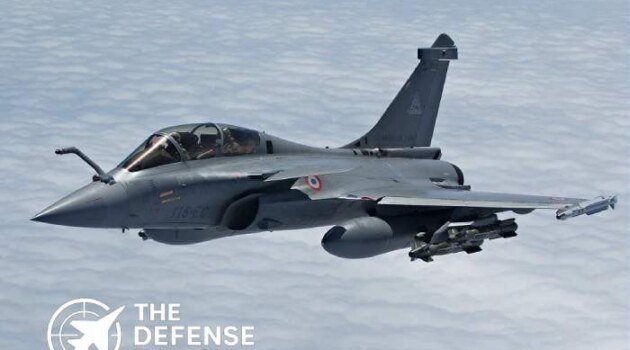
The Eurofighter Typhoon and Dassault Rafale are Europe’s premier 4.5-generation multirole fighters, both featuring twin-engine, canard-delta designs optimized for agility and versatility. The Typhoon emphasizes raw kinematic performance, supercruise, and high-altitude air superiority with exceptional thrust-to-weight ratio. In contrast, the Rafale excels as a true “omnirole” platform with superior multirole flexibility, advanced electronic warfare survivability, and carrier operations capability.
While the Typhoon dominates in pure speed and high-end BVR (beyond visual range) engagements, the Rafale offers better low-speed handling, heavier practical payload integration, and a highly regarded EW suite for contested environments.
2. Technical Specifications Table
| Metric | Eurofighter Typhoon | Dassault Rafale |
|---|---|---|
| Generation | 4.5 Generation | 4.5 Generation (Omnirole) |
| Max Speed | Mach 2.0+ (supercruise ~Mach 1.5) | Mach 1.8 (supercruise ~Mach 1.4) |
| Combat Radius | ~1,389 km (hi-lo-hi ground attack) | ~1,000–1,850 km (varies by mission) |
| Ferry Range | ~2,900–3,790 km | ~3,700+ km |
| Service Ceiling | >55,000 ft | ~50,000 ft |
| Empty Weight | ~11,000 kg | ~10,300 kg |
| Max Takeoff Weight | 23,500 kg | 24,500 kg |
| Internal Payload | Limited (focus on external) | Optimized multirole bays/configs |
| External Payload | ~7,500+ kg (13 hardpoints) | ~9,500 kg (14 hardpoints) |
| Primary Radar | CAPTOR-E AESA (Tranche 4) | RBE2 AESA |
| Engines | 2 × Eurojet EJ200 (~90 kN each AB) | 2 × Snecma M88 (~75 kN each AB) |
3. Key Capability Pillars
Stealth & Survivability: Neither is a true stealth fighter like the F-35, but both incorporate RCS-reduction measures. The Typhoon uses radar-absorbent materials, S-duct intakes to shield engine fans, and frontal-aspect optimization. The Rafale benefits from careful shaping and composites (70% of surface), but stands out with the SPECTRA integrated electronic warfare suite. SPECTRA provides advanced ESM, jamming, and threat countermeasures, often giving it an edge in penetrating defended airspace compared to the Typhoon’s Praetorian DASS.
Avionics & Sensor Fusion: The Typhoon’s CAPTOR-E AESA radar (with mechanical steering in later variants) excels in long-range detection and air-to-air, paired with the PIRATE IRST for passive tracking. The Rafale’s RBE2 AESA and OSF suite deliver mature sensor fusion and excellent multifunction performance. Rafale’s cockpit and data presentation are highly praised for situational awareness in multirole scenarios. Both offer strong sensor fusion, but the Rafale’s SPECTRA gives it a reputation for superior electronic attack/self-protection.
Payload & Mission Profiles: The Rafale carries more external load (~9.5 tons) and integrates a wider array of French/European weapons seamlessly (MICA, SCALP, Exocet, Hammer). It shines in strike, SEAD, and naval missions. The Typhoon, with 13 hardpoints, carries potent air-to-air options like Meteor and Storm Shadow but can be more restricted with heavy asymmetric loads without upgrades. Typhoon favors high-altitude interception and air superiority; Rafale is more versatile across the envelope, especially subsonic/low-level with heavy stores.
4. Strategic Verdict
The Eurofighter Typhoon is favored in high-tempo air superiority, contested high-altitude BVR, and scenarios requiring maximum speed, climb rate, and agility (e.g., defending NATO airspace). Its kinematics and supercruise give it an edge against peer threats in clear skies.
The Dassault Rafale excels in complex multirole operations, expeditionary strikes, carrier ops, and electronically contested environments where survivability and payload flexibility matter most. Its omnirole design and SPECTRA suite make it ideal for independent operations or SEAD/DEAD missions.
Overall, they are closely matched peers with complementary strengths. Choice often depends on operator needs, doctrine, and integration (e.g., Typhoon for UK/Germany/Italy/Spain fleets; Rafale for France and export customers valuing versatility). In a joint European force, they would be highly complementary. Future upgrades (Typhoon T4/ECRS, Rafale F5) will keep both relevant well into the 2030s and beyond.
Get real time update about this post category directly on your device, subscribe now.

| |
| Price | |
| Our Rating | |
| Manufacturer | Airbus Dassault Aviation |
| Category | Fighter Jets Fighter Jets |
General Information
| Name | Eurofighter Typhoon Dassault Rafale |
| Manufacturer | Airbus, BAE Systems, Leonardo Dassault Aviation |
| Country of Origin | UK / Germany / Italy / Spain France |
| Type / Role | Multirole Fighter Multirole Fighter |
| Generation | 4.5th 4.5th |
| Status | Active Service Active Service |
| First Flight | March 27, 1994 July 4, 1986 |
| Introduction / In Service Since | 2003 2001 |
| Number Built | 600+ 240+ |
| Operators | UK, Germany, Italy, Spain, Saudi Arabia, Qatar, Austria, Kuwait France, India, Egypt, Qatar, Greece, Indonesia |
Dimensions & Structure
| Length | 15.96 m (52.4 ft) 15.27 m |
| Wingspan | 10.95 m (35.9 ft) 10.9 m |
| Height | 5.28 m (17.3 ft) 5.3 m |
| Wing Area | 51.2 m² 45.7 m² |
| Empty Weight | 11,000 kg 10,600 kg |
| Maximum Takeoff Weight (MTOW) | 23,500 kg 24,500 kg |
| Internal Weapons Bay | None None |
| External Hardpoints | 13 14 |
Performance
| Maximum Speed | Mach 2.0 (2,495 km/h) Mach 1.8 (2,223 km/h) |
| Range | 2,900 km 3,700 km |
| Combat Radius | 1,390 km 1,000–1,850 km |
| Service Ceiling | 55,000 ft 50,000 ft |
| Rate of Climb | 62,000 ft/min 305 m/s |
| Thrust-to-Weight Ratio | 1.15 1.13 |
| G Limits | +9g +9 / -3.6 |
Powerplant
| Engine Type | Eurojet EJ200 Turbofan Snecma M88-2 Turbofan |
| No. of Engines | 2 2 |
| Thrust (each) | 20,000 lbf 16,500 lbf |
| Thrust Vectoring | Optional (prototype) No |
| Fuel Capacity | ~5,000 kg internal 4,700 kg (internal) |
Armament
| Gun | 1× 27mm Mauser BK-27 cannon GIAT 30mm cannon |
| Missiles (Air-to-Air) | AIM-120 AMRAAM, Meteor, IRIS-T MICA, Meteor |
| Missiles (Air-to-Ground) | Brimstone, Storm Shadow SCALP-EG, AM39 Exocet |
| Bombs | Paveway IV, JDAM Paveway, AASM |
| Hardpoints | 13 14 |
| Payload Capacity | 9,000 kg 9,500 kg |
Avionics & Systems
| Radar | Captor-E AESA Thales RBE2 AESA |
| Radar Range | ~160 km 200+ km |
| Electronic Warfare (EW) System | DASS suite SPECTRA Suite |
| Targeting System | Litening III pod Thales Damocles / TALIOS Pod |
| Helmet Display | Striker II Integrated HMD |
| Navigation | INS/GPS GPS/INS |
| Autopilot / AI Assistance | Digital flight control Semi-Automated |
| Communication | Secure data link, MIDS Secure Datalink, SATCOM |
Stealth & Technology
| Radar Cross Section (RCS) | ~1–2 m² ~1 m² |
| Stealth Features | Reduced radar signature materials Radar-absorbent materials |
| Infrared Signature Reduction | Moderate Yes |
| Sensor Fusion | Advanced data integration Full |
| Networking Capabilities | NATO Link-16, future FCAS integration NATO-compatible datalink |
Variants
| Special Export Versions | Kuwait, Qatar (enhanced avionics) Rafale EH/IH (India), Rafale EM/QM (Egypt/Qatar) |
Operational History
| Major Conflicts / Deployments | Libya (2011), Baltic Air Policing Libya, Mali, Iraq, Syria |
| Notable Operators | RAF, Luftwaffe, Italian Air Force France, India, Egypt |
| Combat Proven? | Yes Yes |
| Mission Types | Air superiority, strike, reconnaissance Air superiority, strike, reconnaissance, deterrence |
Cost & Program
| Unit Cost | ~$95 million $85–115 million |
| Development Cost | ~$45 billion total ~$45 billion |
| Program Name | Eurofighter Program Rafale Program |
| Funding Countries | UK, Germany, Italy, Spain France |
Additional Information
| Upgrades Planned | Radar and weapons modernization F4 & F5 standard upgrades |
| Future Replacement | FCAS (Future Combat Air System) Next-Gen Fighter (FCAS) |
| Export Restrictions | Limited by EU arms policy Minimal (case-by-case) |
| Notable Achievements | Key NATO air defense asset Combat-proven multirole success |
| Competitors | F-16V, Rafale, Gripen E Eurofighter Typhoon, F/A-18E/F, Gripen E |


|
Disclaimer Note
The information provided on TheDefenseWatch.com is for general informational purposes only. While we strive to ensure the accuracy, completeness, and timeliness of our content regarding defense and aerospace products, technologies, and specifications, we cannot guarantee that all information is 100% accurate or up-to-date due to the evolving nature of military technology and classified data.TheDefenseWatch.com does not warrant the reliability, suitability, or availability of the information for any specific purpose. Users are advised to consult official sources, such as manufacturers, government publications, or defense agencies, for precise and verified data before making decisions based on our content.We are not affiliated with any defense manufacturers, governments, or military organizations mentioned. Opinions, reviews, and ratings reflect expert analysis but are subjective and should not be considered endorsements. TheDefenseWatch.com is not responsible for any errors, omissions, or consequences arising from the use of this website’s content.External links are provided for convenience and do not imply endorsement. TheDefenseWatch.com reserves the right to update or modify content without prior notice. By using this website, you agree to our Privacy & Cookies Policy.
New Arrivals
Popular Comparisons
-
 Tejas vs Gripen: Key Differences and Capabilities
View Comparison →
Tejas vs Gripen: Key Differences and Capabilities
View Comparison → -
Tejas vs MiG-21 Bison: How India Replaced Its Iconic Supersonic Fighter
View Comparison →
-
F-35 vs F-16: Stealth, Sensors and Combat Roles
View Comparison →
-
Tejas Fighter Jet vs F-16 Fighting Falcon: Capability Compared
View Comparison →
-
Rafale Fighter Jet vs F-16 Fighting Falcon : Which Fighter Has the Edge?
View Comparison →
-
Su-57 Fighter Jet vs J-20 Fighter Jet: Stealth and Air Combat Compared
View Comparison →
-
Mirage 2000 vs Tejas Mk1A: Legacy Combat Power vs Indigenous Modernization
View Comparison →
-
Rafale Fighter Jet vs F-22 Raptor: Which Air Dominance Fighter Has the Edge?
View Comparison →
-
Tejas Fighter Jet vs. Rafale Fighter Jet: India’s Indigenous Fighter Meets France’s Proven Multirole Combat Aircraft
View Comparison →
-
F-22 Raptor vs. F-35 Joint Strike Fighter: Which Fifth Generation Fighter Has the Edge?
View Comparison →
- Army Report Finds Systemic Failures Behind Fatal 2025 Midair Collision

- Lockheed Martin to Supply Black Hawk Training Systems to Philippine Air Force
- US Air Force Expands B-21 Raider Production Capacity by 25%
- Boeing Wins $10.9 Million VC-25B Test Maintenance Contract Modification
- Raytheon Wins $6.34 Billion Contract for SM-3 Block IB Missile Production
- USS Abraham Lincoln CO Addresses Crew Welfare Concerns After 322-Day Deployment
- General Dynamics, Primordial Labs to Add Voice Control to Abrams and XM30
- Turkey’s KAAN Advances Toward New Flight Tests as F-35 Comparison Remains Premature
- Mach 2.4 at 65,000 Feet: IAF Pilots Reveal the Real Story Behind the 1997 MiG-25 Islamabad Recon Mission
- Saab and GKN Aerospace Strengthen Gripen E/F Engine Cooperation