Executive Summary:
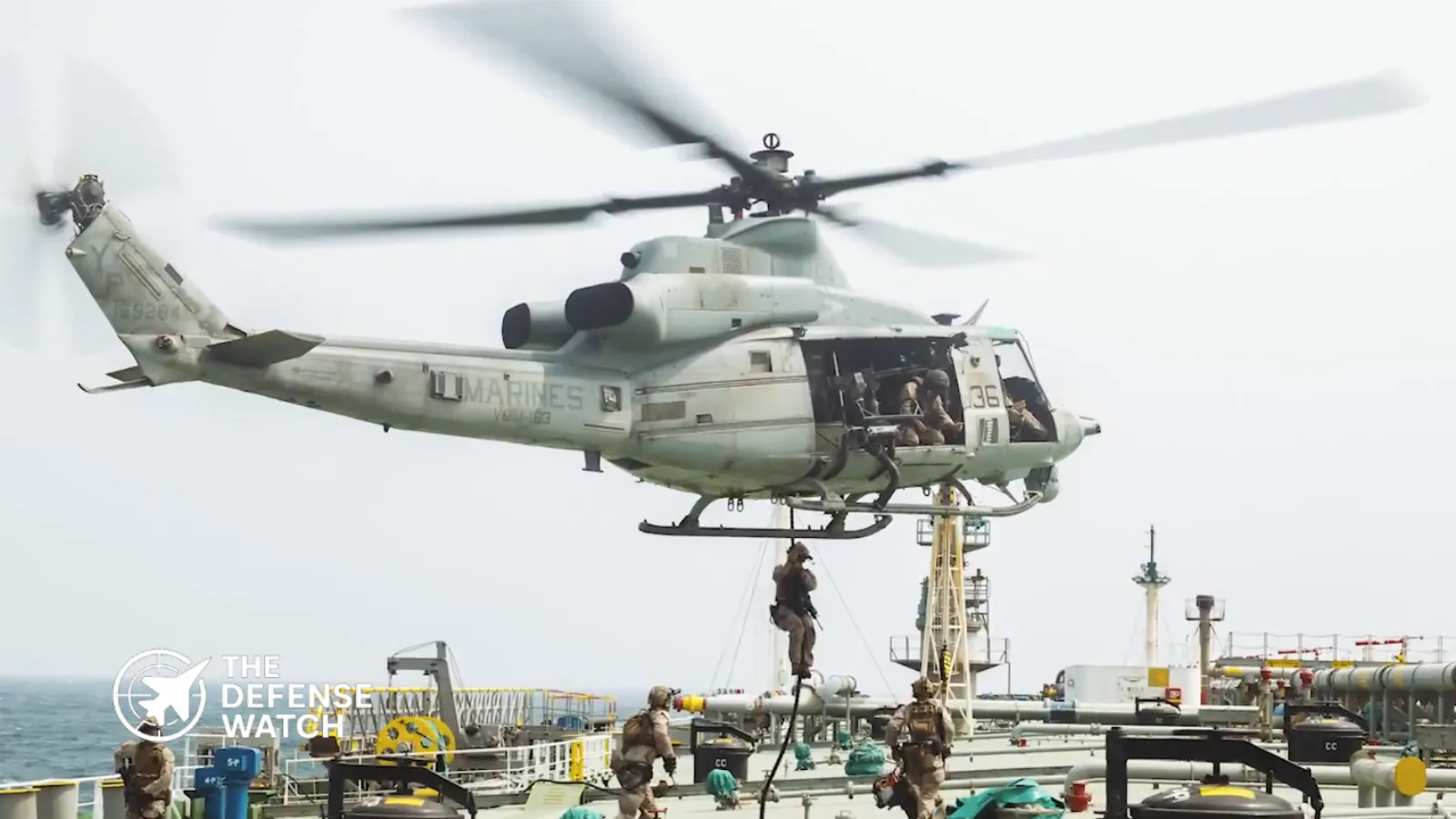
U.S. Marines assigned to the 11th Marine Expeditionary Unit conducted a verification boarding of the commercial tanker M/T Wen Yao in the Gulf of Oman on July 16 as part of ongoing American maritime security operations. U.S. officials stated that forces have redirected multiple commercial vessels, disabled one non-compliant vessel, and boarded another while enforcing the current U.S. naval blockade targeting maritime traffic associated with Iran.
U.S. Naval Blockade Operations Expand With Marine Boarding In Gulf Of Oman
The U.S. naval blockade entered a new operational phase after Marines from the 11th Marine Expeditionary Unit (MEU) conducted a verification boarding of the commercial tanker M/T Wen Yao in the Gulf of Oman on July 16. According to official U.S. military statements, the operation formed part of broader maritime security activities supporting the ongoing blockade directed against Iran.
American officials stated that, as of July 17, U.S. forces had redirected three commercial vessels attempting to pass through the blockade, disabled one vessel after it failed to comply with instructions, and completed one verification boarding to ensure compliance with U.S. maritime enforcement measures.
The operation comes amid heightened military activity across the northern Arabian Sea and the Strait of Hormuz, one of the world’s most strategically important maritime chokepoints.
Marines Execute Verification Boarding
The boarding operation involved Marines from the 11th Marine Expeditionary Unit, a forward deployed crisis response force that routinely operates alongside U.S. Navy amphibious ready groups throughout the Indo-Pacific and Middle East.
Verification boardings are standard maritime interdiction procedures designed to:
- Confirm vessel identity
- Inspect cargo documentation
- Verify compliance with applicable military directives
- Ensure no prohibited materials or sanctioned cargo are being transported
Unlike full seizures, verification boardings are generally intended to establish compliance while minimizing disruption to lawful commercial shipping.
According to the U.S. military, the boarding of M/T Wen Yao concluded after Marines verified the vessel’s status.
U.S. Reports Multiple Enforcement Actions
American military officials stated that blockade enforcement has produced several operational outcomes since implementation.
| Reported Enforcement Action | Status |
|---|---|
| Commercial vessels redirected | 3 |
| Vessel disabled after non-compliance | 1 |
| Verification boarding completed | 1 |
Officials said the Strait of Hormuz and surrounding international waters remain open to lawful maritime traffic while enforcement actions continue against vessels attempting to violate the U.S. blockade.
No additional operational details regarding the disabled vessel or redirected ships were immediately released.
Why The Strait Of Hormuz Matters
The Strait of Hormuz remains one of the world’s most strategically significant maritime corridors.
Approximately one-fifth of globally traded crude oil typically transits through the narrow waterway, linking Gulf energy producers with markets across Asia, Europe, and North America. Any sustained military activity in the region has immediate implications for global shipping, insurance costs, and naval force posture.
The Gulf of Oman serves as the primary approach to the Strait, making it a key operating area for U.S. and coalition naval forces responsible for monitoring commercial shipping and maintaining maritime security.
Maritime Interdiction Is A Core Naval Capability
Verification boardings are conducted under established maritime interdiction procedures using specially trained boarding teams.
Marine Expeditionary Units routinely maintain Visit, Board, Search, and Seizure (VBSS) capabilities that allow personnel to:
- Conduct compliant boardings
- Inspect commercial vessels
- Secure crews when required
- Verify manifests and cargo
- Support sanctions and embargo enforcement
These missions are typically supported by helicopters, rigid hull inflatable boats, unmanned surveillance assets, and nearby U.S. Navy surface combatants that provide force protection throughout the operation.
Strategic Analysis
The latest boarding demonstrates that the current U.S. operation extends beyond maintaining naval presence to active maritime enforcement.
Verification boardings provide commanders with an intermediate option between passive monitoring and kinetic action. They enable U.S. forces to inspect vessels, gather intelligence, verify cargo documentation, and reinforce compliance without immediately escalating to vessel seizure.
The reported redirection of commercial ships, combined with the disabling of a non-compliant vessel, indicates that enforcement measures now include graduated responses based on vessel behavior. Such actions are intended to preserve freedom of navigation for lawful commercial traffic while preventing movement that U.S. authorities consider inconsistent with blockade requirements.
Operationally, maintaining continuous enforcement across the Gulf of Oman and Strait of Hormuz requires significant naval resources. Surface combatants, maritime patrol aircraft, intelligence assets, logistics support ships, and Marine boarding teams must operate together to monitor one of the world’s busiest maritime transit routes.
From a broader defense perspective, the operation highlights the importance of expeditionary Marine forces in maritime security missions. Modern Marine Expeditionary Units are increasingly employed not only for amphibious assault and crisis response, but also for interdiction, shipping security, and enforcement operations in contested maritime environments.
Regional Security Outlook
The Gulf of Oman and Strait of Hormuz remain central to regional security planning due to their importance for global commerce and military mobility.
Continued U.S. enforcement operations are expected to maintain a significant naval presence in the area while monitoring commercial shipping and responding to vessels that fail to comply with operational directives.
Military officials have emphasized that lawful commercial navigation remains open while enforcement efforts focus specifically on vessels determined to be violating the blockade.