(adsbygoogle = window.adsbygoogle || []).push({});Executive Summary:
Australia has selected Electro Optic Systems (EOS) to further develop the R400 SLINGER counter unmanned aerial system under the Australian government’s Mission Syracuse initiative. The new contract expands Canberra’s investment in sovereign counter drone technologies as armed forces worldwide seek affordable and scalable defenses against rapidly evolving unmanned aerial threats.
Australia Expands R400 SLINGER Counter Drone Program Under Mission Syracuse
Australia has selected Electro Optic Systems (EOS) to accelerate development of the R400 SLINGER counter drone system through the government’s Mission Syracuse initiative, marking another step in strengthening sovereign counter unmanned aerial system (C UAS) capabilities for the Australian Defence Force (ADF).
The announcement was made by Australia’s Department of Defence under the Advanced Strategic Capabilities Accelerator (ASCA) program. The latest contract, valued at AUD 5.7 million, increases total government investment under Mission Syracuse to AUD 37.4 million, reflecting Canberra’s growing emphasis on rapidly fielding indigenous counter drone technologies.
EOS To Develop Next Generation R400 SLINGER Capability
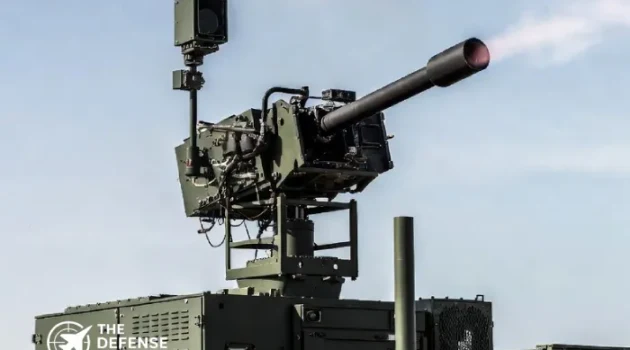
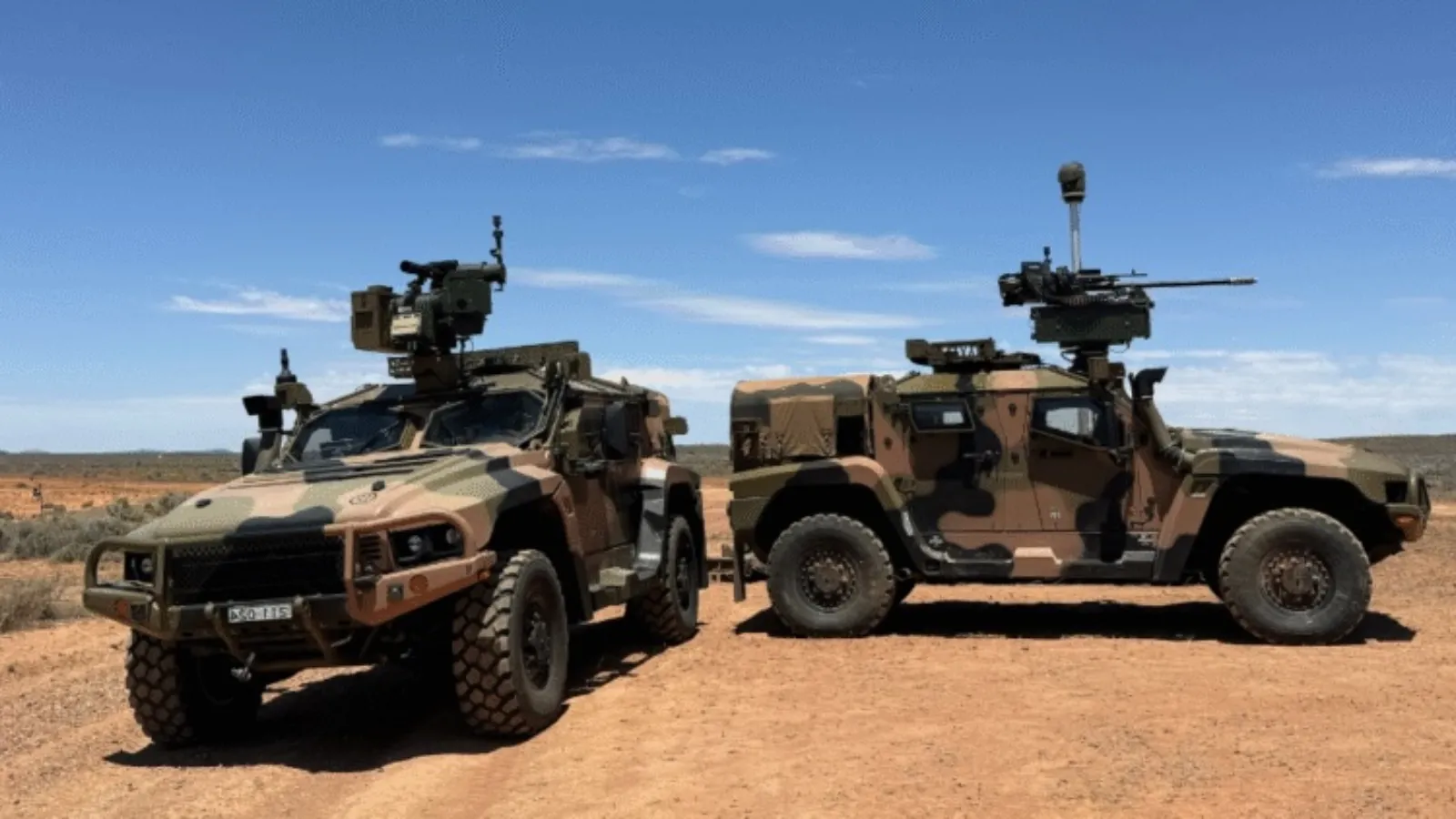
Under the new agreement, EOS will continue development of the R400 SLINGER C UAS, an integrated remote weapon system designed to defeat small and medium sized unmanned aerial vehicles.
According to Australia’s Department of Defence and EOS, the upgraded system combines:
| Capability | Description |
|---|---|
| Remote weapon station | EOS R400 stabilized platform |
| Primary effectors | Machine gun and laser guided rocket |
| Target type | Small and medium UAVs |
| Manufacturing | Australia |
| Sustainment | Australian industry |
The contract also supports domestic production and long term sustainment by an Australian owned company, aligning with Canberra’s objective of expanding sovereign defense industrial capacity.
(adsbygoogle = window.adsbygoogle || []).push({});Mission Syracuse Targets Rapid Counter Drone Innovation
Mission Syracuse was established through ASCA to shorten the time required to move promising technologies from industry into military service.
Rather than relying on traditional acquisition timelines that often extend for years, the initiative emphasizes rapid prototyping, operational testing, and accelerated capability delivery.
The EOS award represents the third major contract under Mission Syracuse and highlights Australia’s broader effort to keep pace with the rapid evolution of unmanned threats observed in recent conflicts.
R400 SLINGER Builds On A Combat Proven Design
The R400 SLINGER is derived from EOS’ established R400 Remote Weapon Station family, which has already gained international attention for its precision counter drone role.
Previous SLINGER variants integrate:
- Bushmaster M230LF 30×113 mm cannon
- Advanced electro optical targeting sensors
- Four axis stabilized fire control
- Echodyne 4D radar
- Proximity fused 30 mm ammunition
- Accurate engagement against drones beyond approximately 800 meters
The latest Mission Syracuse variant introduces a laser guided rocket alongside conventional kinetic weapons, providing greater flexibility against a wider range of aerial threats while maintaining a relatively low cost per engagement compared with traditional surface to air missiles.
Why The Program Matters
The rapid expansion of inexpensive drones has fundamentally changed battlefield air defense.
Conflicts in Ukraine and the Middle East have demonstrated that commercial quadcopters, loitering munitions, and one way attack drones can threaten armored formations, logistics hubs, command posts, and critical infrastructure. Traditional air defense missiles remain highly effective, but they often cost significantly more than the drones they intercept.
This cost imbalance has driven demand for layered counter drone systems that combine radar, electro optical sensors, electronic warfare, guns, rockets, and directed energy technologies.
Australia’s investment reflects this global trend by focusing on affordable, scalable systems capable of protecting deployed forces and fixed installations without relying exclusively on expensive interceptor missiles.
Strategic Importance For Australia’s Defense Industry
Beyond improving military capability, the contract strengthens Australia’s domestic defense industrial base.
By designing, manufacturing, integrating, and sustaining the system locally, Australia reduces dependence on overseas suppliers while developing expertise in one of the fastest growing defense technology sectors.
The program also supports broader government efforts to create sovereign capabilities that can be upgraded as drone technologies continue to evolve.
For allies, including the United States and other Indo Pacific partners, Australia’s progress in counter drone technologies contributes to regional interoperability and strengthens coalition resilience against increasingly sophisticated unmanned threats.
Operational Outlook
Mission Syracuse is expected to generate technologies that extend beyond a single weapon system.
According to EOS, advances made during the program could inform future counter drone capabilities across multiple Australian Defence Force platforms and operational environments. This approach allows the government to leverage one technology investment across land, infrastructure protection, and potentially additional military applications as requirements evolve.
Get real time update about this post category directly on your device, subscribe now.