(adsbygoogle = window.adsbygoogle || []).push({});Executive Summary:
German defense manufacturer Diehl Defence says its new IRIS T SLX long range air defense system is being developed to complement existing IRIS T batteries while reducing reliance on scarce Patriot interceptor missiles. The announcement comes as European nations continue expanding integrated air and missile defense capabilities following increased demand driven by the war in Ukraine and broader regional security challenges.
Diehl Defence Advances IRIS T SLX As Demand For Air Defense Grows
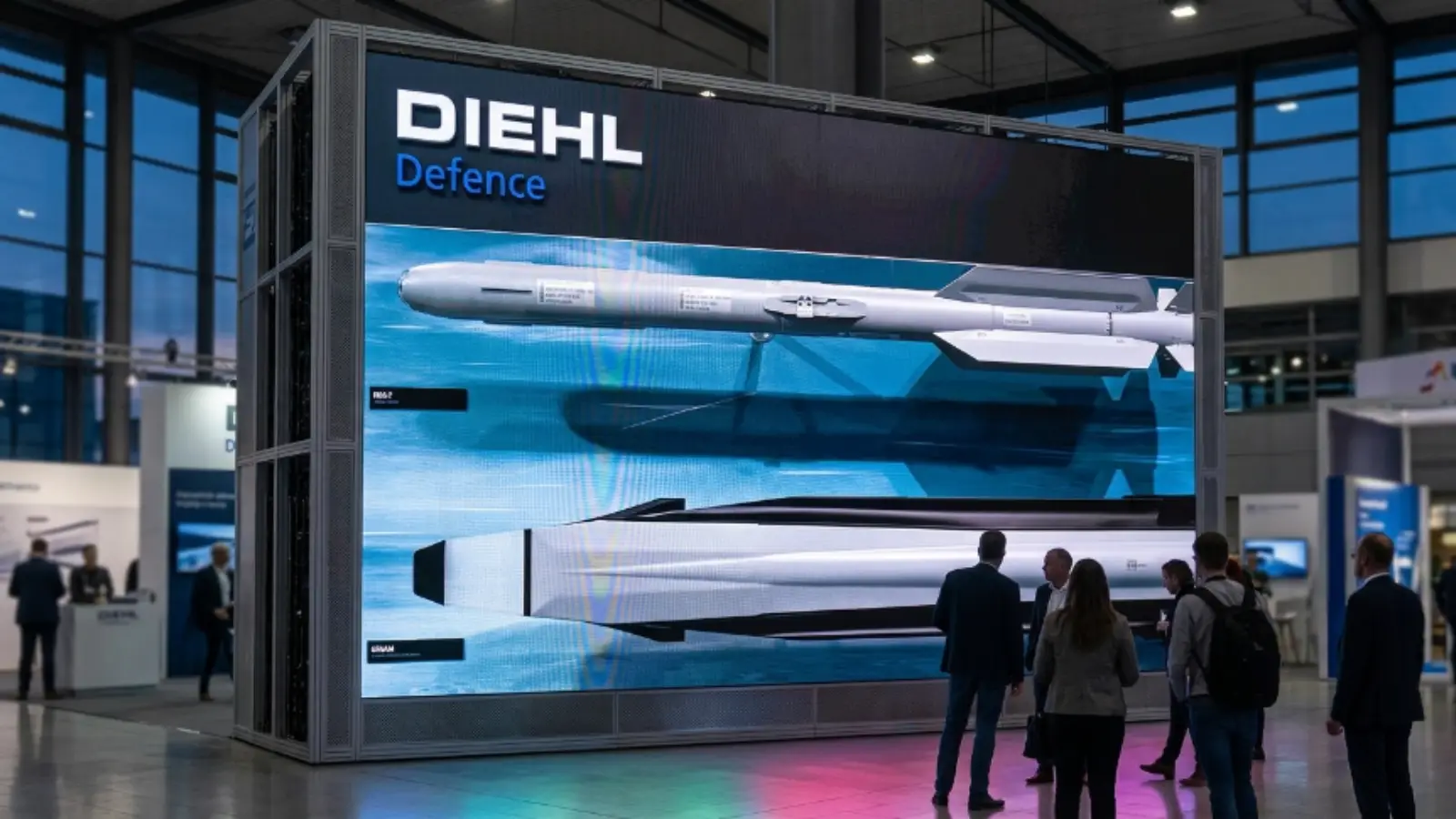
German missile manufacturer Diehl Defence has announced that its next generation IRIS T SLX air defense system is being developed to help reduce dependence on the widely used Patriot missile system, whose interceptors remain in high demand worldwide.
Speaking during the company’s 2025 financial results briefing, Chief Executive Officer Helmut Rauch said the IRIS T SLX is intended to complement the existing IRIS T SLM system rather than replace it. The new variant is designed to extend engagement range while expanding Europe’s indigenous missile defense capabilities.
The announcement comes as NATO members and partner nations continue investing heavily in layered air and missile defense following Russia’s invasion of Ukraine and increasing missile and drone threats across Europe and the Middle East.
IRIS T Family Continues Expanding Across Europe
According to Diehl Defence, 21 countries have now ordered IRIS T air defense systems, with Switzerland, Sweden, and Denmark among the newest customers. Ukraine has become one of the most visible operators after receiving 20 IRIS T SLM systems to defend critical infrastructure against Russian cruise missiles, drones, and aircraft.
The company also reported that deliveries have increased dramatically since 2022, although it declined to disclose total production figures. Earlier this year, Diehl said it planned to significantly increase annual production capacity for IRIS T launch units to meet rising international demand.
What Is The IRIS T SLX?
The IRIS T SLX represents the long range evolution of the IRIS T surface launched missile family.
While Diehl has not released complete technical specifications, previous company statements indicate the system is being designed to provide substantially greater engagement range than the current IRIS T SLM while remaining compatible with the existing command, radar, and launcher architecture.
Expected Capability Comparison
| Feature | IRIS T SLM | IRIS T SLX (Development) | Patriot PAC Family |
|---|---|---|---|
| Primary Role | Medium range air defense | Extended range air defense | Long range air and missile defense |
| Intended Targets | Aircraft, cruise missiles, UAVs | Aircraft, cruise missiles, advanced aerial threats | Aircraft, cruise missiles, ballistic missiles |
| Integration | Existing IRIS architecture | Compatible with IRIS ecosystem | Patriot ecosystem |
| Operational Status | In service | Under development | Operational worldwide |
Specifications for IRIS T SLX remain subject to final development and certification.
Why Reducing Dependence On Patriot Matters
Patriot remains one of the world’s most capable air and missile defense systems, particularly against ballistic missile threats. However, growing global demand has created production bottlenecks as multiple allies seek additional interceptors amid conflicts in Europe and the Middle East.
Developing European produced alternatives offers several strategic advantages.
- Expands available interceptor inventories.
- Reduces dependence on a single supply chain.
- Strengthens NATO’s layered air defense architecture.
- Supports faster replenishment during sustained operations.
- Increases European defense industrial capacity.
Importantly, Diehl has emphasized that the IRIS T SLX is intended to complement Patriot rather than replace it. Layered air defense depends on multiple systems optimized for different ranges and threat types, with Patriot continuing to play a critical role in ballistic missile defense.
atOptions = { ‘key’ : ‘3d48d603f906e3fe9f205be3c4433835’, ‘format’ : ‘iframe’, ‘height’ : 250, ‘width’ : 300, ‘params’ : {} };Growing Interest Beyond Europe
Diehl Defence also reported increasing interest from Gulf countries following heightened regional tensions.
According to Rauch, the company has begun discussions with representatives from several Gulf states, while Saudi Arabia has remained an established customer for more than a decade. The growing demand reflects broader concerns about cruise missile, drone, and ballistic missile threats across the region.
Defense Business Continues Strong Growth
The expanding market has translated into significant business growth for Diehl Defence.
The company reported defense revenue of €2.33 billion during 2025, representing a 28 percent increase over the previous year. The defense division now accounts for approximately 43 percent of the broader Diehl Group’s total sales, underscoring the rapid expansion of Europe’s missile defense industry.
Strategic Analysis: Why The IRIS T SLX Matters
The development of the IRIS T SLX reflects a broader shift in European defense planning.
Rather than relying primarily on imported strategic air defense systems, European governments are increasingly investing in domestic production to improve resilience during prolonged crises. This trend has accelerated since 2022, when large scale missile attacks exposed the importance of maintaining sustainable interceptor inventories.
For the United States, the emergence of systems like IRIS T SLX is unlikely to diminish Patriot’s importance. Instead, it could reduce pressure on U.S. production lines by allowing European allies to assume a greater share of regional air defense requirements using indigenous capabilities.
From NATO’s perspective, a more diversified missile defense inventory improves operational flexibility. Different systems can be assigned to specific threat sets, enabling Patriot batteries to focus on higher end ballistic missile defense missions while systems such as IRIS T protect infrastructure, logistics hubs, and maneuver forces against aircraft, drones, and cruise missiles.
The long term success of the IRIS T SLX will ultimately depend on production capacity, interoperability with NATO command networks, operational testing, and sustained procurement commitments from European governments.