Executive Summary:
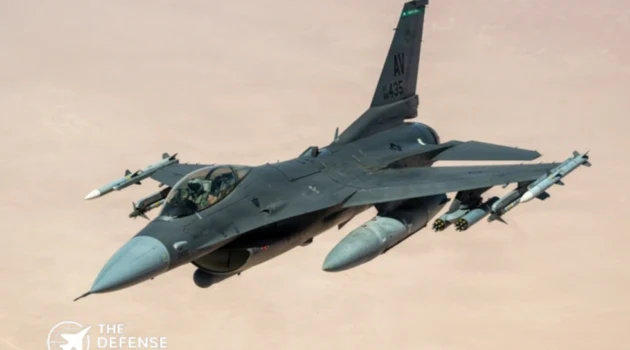
The Defense Advanced Research Projects Agency (DARPA) and the US Air Force have conducted flights of frontline Lockheed Martin F-16 fighters equipped with the Viper Experimentation and Next-generation Operations Model (VENOM) autonomy kit. The aftermarket modification enables pilots to switch between traditional manual controls and AI-driven autonomous flight with the flip of a switch. This development, announced in July 2026, builds directly on prior X-62 VISTA testing to mature AI for aerial combat and support future Collaborative Combat Aircraft (CCA) operations.
VENOM Autonomy Kit Brings AI to Operational F-16 Fleet
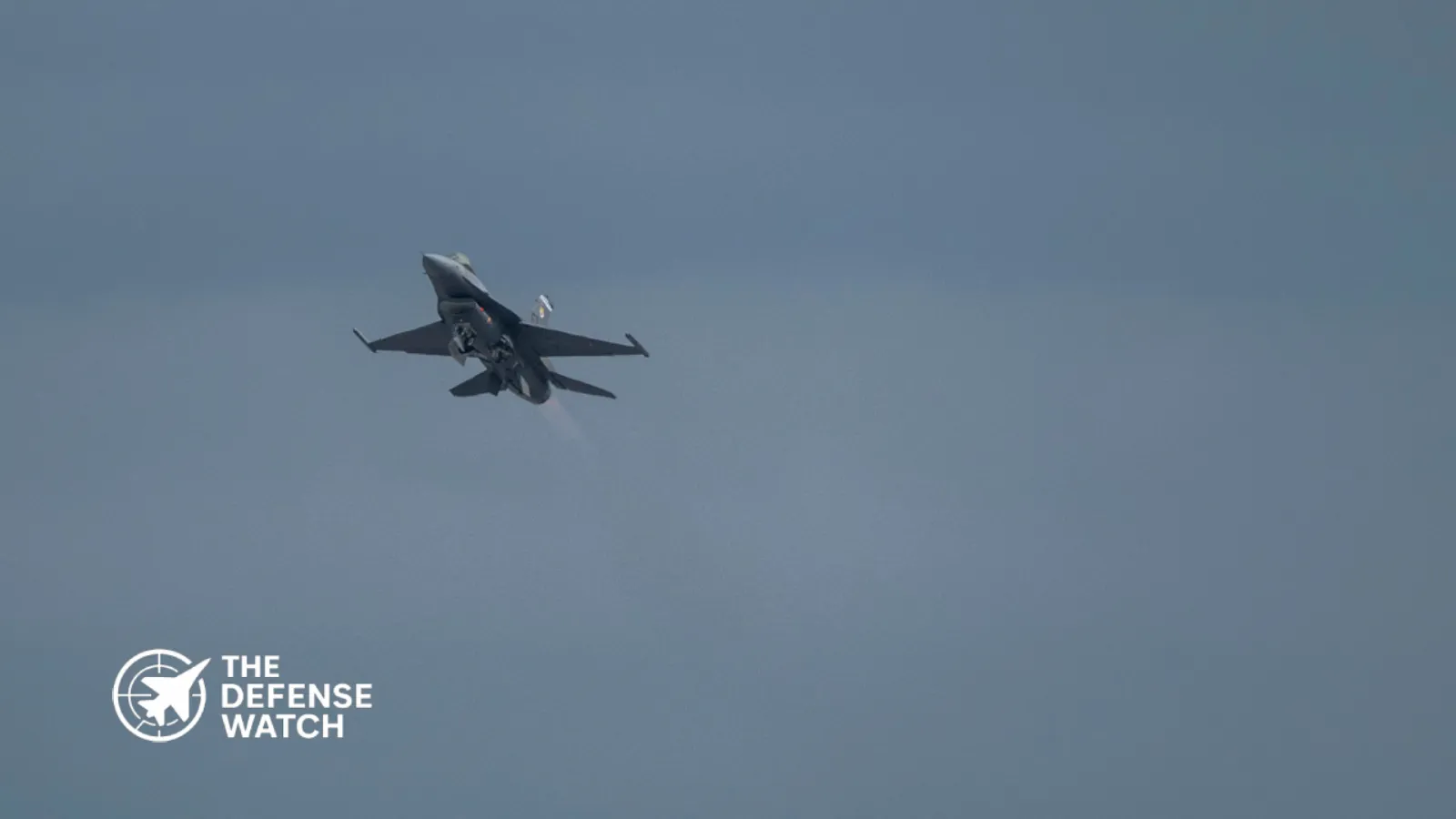
The US Air Force and DARPA have successfully flown F-16s modified with the VENOM kit at Eglin Air Force Base in Florida. At least one modified aircraft operates with the 96th Test Wing, with additional jets modified as part of the program.
The VENOM kit interfaces with the F-16’s existing flight controls and mission systems without altering core software. It includes hardware additions such as an auto-throttle for AI regulation of thrust and control surfaces. This design supports safe “human-on-the-loop” experimentation, where a pilot remains aboard to monitor and intervene if necessary.
Brigadier General James Valpiani, DARPA tactical technology office program manager, stated: “The air force and DARPA team has automated flight controls and sensors on a standard F-16 without changing the jet’s core software. This enables an efficient pipeline for developing dominant AI for aerial combat.”
Evolution from X-62 VISTA Demonstrator
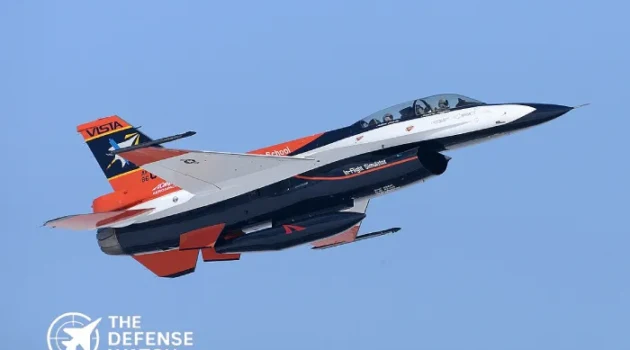
VENOM extends technologies proven on the unique X-62A VISTA (Variable Stability In-flight Simulator Test Aircraft), a heavily modified F-16D used by the Air Force Test Pilot School at Edwards AFB, California. Under DARPA’s Air Combat Evolution (ACE) program, the X-62 demonstrated AI-controlled within-visual-range dogfighting against human-piloted F-16s in 2023, completing 21 sorties with increasingly complex scenarios.
These tests involved high-speed, close-proximity maneuvers, including passes within 2,000 feet at speeds up to 1,040 knots. Participants included algorithms from Shield AI and others, which showed capabilities to improvise novel tactics.
While the X-62 remains a one-of-a-kind experimental platform, VENOM proves the concept on standard, frontline-configured F-16s drawn from operational fleets. At least four jets have received modifications, with arrivals at Eglin documented in 2024 and 2025.
Technical and Operational Implications
The VENOM approach prioritizes modularity and safety. The kit creates a reliable environment for testing multiple AI agents in live scenarios while maintaining human oversight. This addresses key challenges in combat AI trustworthiness amid the “fog and friction” of warfare, including incomplete sensor data, electronic warfare, and rapid decision timelines.
Key VENOM Program Elements:
- Switchable Control: Pilot can toggle between human and autonomous modes instantly.
- Hardware Additions: Auto-throttle and specialized instrumentation for AI control.
- Software Integration: Interfaces with existing F-16 systems without core software changes.
- Test Focus: Multi-agent AI evaluation, human-machine teaming, and CCA command-and-control methods.
This configuration supports broader USAF goals for Collaborative Combat Aircraft such as the General Atomics FQ-42 and Anduril FQ-44. VENOM-modified F-16s will help develop tactics for human pilots to direct teams of autonomous platforms in contested environments.
Strategic Context for US Air Force Modernization
Autonomous enhancements to legacy platforms like the F-16 offer a cost-effective bridge to sixth-generation capabilities. By leveraging existing airframes, the program accelerates AI maturation while reducing risk to high-value assets in high-threat scenarios. It also provides workload relief for pilots managing complex sensor, communications, and weapons suites.
Operationally, this supports the USAF’s shift toward distributed, attritable force structures. Autonomous F-16 testbeds enable realistic experimentation in beyond-visual-range coordination, electronic warfare integration, and multi-ship tactics—critical for maintaining advantage against peer adversaries.
Technical hurdles remain, particularly in ensuring AI reliability under real-world variables differing from simulation. VENOM’s human-on-the-loop design mitigates these by allowing iterative refinement in live flight. The program’s rapid progress—from X-62 dogfighting in 2023 to VENOM flights in 2026—demonstrates effective transition of autonomy technologies.
Future Testing and Broader Impact
Upcoming VENOM activities will expand to multi-agent live-flight testing and refine human control interfaces for CCA operations. Success here could influence not only uncrewed loyal wingmen but also optionally-manned configurations that enhance safety and mission effectiveness across the fighter fleet.
This effort aligns with ongoing USAF investments in mission autonomy software from providers including Shield AI, Anduril, and others, positioning the service to field production CCA systems in the coming years.