















@2026 – All Right Reserved. TheDefenseWatch.com
- Home
- Defense Systems
- Compare
- Typhoon FGR4 vs F-35B Lightning II: Eurofighter Speed & Agility vs Stealth Fighter Superiority
Typhoon FGR4 vs F-35B Lightning II: Eurofighter Speed & Agility vs Stealth Fighter Superiority
1. Executive Summary / Tactical Overview
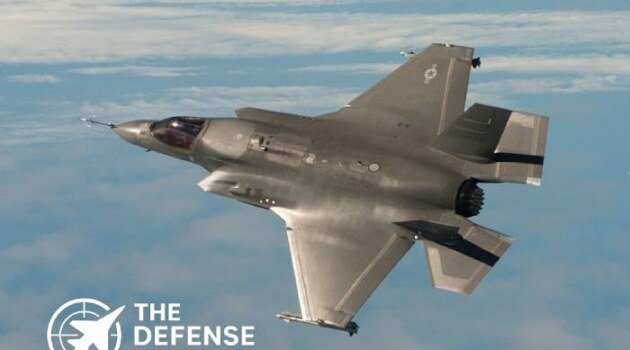
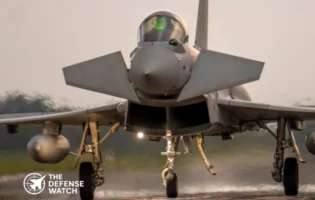
The Eurofighter Typhoon FGR4 embodies 4.5-generation agility, emphasizing exceptional kinematics, supercruise capability, and high payload for air superiority and multirole missions. In contrast, the F-35B Lightning II is a 5th-generation STOVL stealth platform optimized for sensor fusion, survivability in contested airspace, and network-centric warfare.
While the Typhoon excels in raw speed, maneuverability, and beyond-visual-range (BVR) engagements with weapons like Meteor, the F-35B leverages low-observable design and advanced avionics to achieve first-look, first-kill advantages in high-threat environments.
2. Technical Specifications Table
| Metric | Typhoon FGR4 (Eurofighter) | F-35B Lightning II |
|---|---|---|
| Generation | 4.5th Generation | 5th Generation (STOVL) |
| Max Speed | Mach 2.0+ (supercruise capable ~Mach 1.5) | Mach 1.6 |
| Combat Radius | ~1,389 km (hi-lo-hi, internal) | ~833 km (internal fuel, USMC profile) |
| Internal Payload | Limited (external heavy focus) | 4–6 missiles/bombs (e.g., 2x AIM-120 + bombs) |
| Primary Radar | Captor-E (AESA, Tranche upgrades) | AN/APG-81 AESA |
| Engines | 2 × Eurojet EJ200 | 1 × Pratt & Whitney F135 (with lift fan) |
| Service Ceiling | 55,000+ ft | 50,000 ft |
| Thrust-to-Weight | Excellent (~1.15) | Good (lower than Typhoon due to STOVL) |
| Hardpoints | 13 (up to ~7,500+ kg external) | Internal bays + limited external |
3. Key Capability Pillars
Stealth & Survivability: The F-35B features a very low observable (VLO) airframe with radar-absorbent materials, internal weapons bays, and shaped design for minimal radar cross-section (RCS often cited in the 0.001–0.01 m² range in key aspects). This enables deep penetration of contested anti-access/area-denial (A2/AD) environments. The Typhoon FGR4 uses composites for reduced RCS but remains a conventional signature platform reliant on speed, altitude, and electronic warfare (Praetorian DASS) for survivability rather than outright stealth.
Avionics & Sensor Fusion: The F-35B’s Distributed Aperture System (DAS) combined with AN/APG-81 AESA radar and electronic warfare suite delivers unmatched 360° situational awareness, sensor fusion, and data sharing, allowing pilots to “see” threats before detection. The Typhoon’s Captor-E AESA and PIRATE IRST provide strong passive detection and fusion via its Attack and Identification System, excelling in high-speed intercepts but generally trailing in integrated stealthy networking.
Payload & Mission Profiles: Typhoon FGR4 shines in “beast mode” with 13 hardpoints for massive external ordnance (air-to-air like Meteor/AMRAAM or heavy strike loads), ideal for high-tempo air dominance once airspace is contested. The F-35B prioritizes internal carriage for stealth missions (typically 4–6 weapons) but can add external stores when stealth is less critical, supporting multirole operations from austere or carrier/amphibious decks due to STOVL capability.
4. Strategic Verdict
In highly contested A2/AD airspace with advanced air defenses, the F-35B Lightning II holds the edge through stealth, sensor dominance, and survivability—enabling it to operate effectively on “Day 1” of conflict. The Typhoon FGR4 excels in permissive or semi-contested environments, high-speed intercepts, visual-range dogfights, and heavy payload delivery once threats are suppressed.
Modern forces like the RAF leverage both synergistically: F-35B for penetration and targeting, Typhoon for kinetic mass and agility. The Typhoon FGR4 remains a formidable, cost-effective supplement rather than a direct replacement for the F-35B.

| |
| Price | |
| Our Rating | |
| Manufacturer | Lockheed Martin Eurofighter GmbH |
| Category | Fighter Jets Fighter Jets |
General Information
| Name | F-35B Lightning II Eurofighter Typhoon FGR4 |
| Manufacturer | Lockheed Martin Eurofighter GmbH |
| Country of Origin | United States United Kingdom and Europe |
| Type / Role | Stealth Multirole Fighter (STOVL) Multirole Fighter Aircraft |
| Generation | 5th Generation 4.5 |
| Status | In service Active Service |
| First Flight | June 11, 2008 1994 |
| Introduction / In Service Since | 2015 2007 |
| Number Built | 180+ 570 plus |
| Operators | U.S. Marine Corps, Royal Navy, Royal Air Force, Italy, Japan United Kingdom, Germany, Italy, Spain, others |
Dimensions & Structure
| Length | 51.2 ft (15.6 m) 15.96 m |
| Wingspan | 35 ft (10.7 m) 10.95 m |
| Height | 14.3 ft (4.36 m) 5.28 m |
| Wing Area | 460 sq ft (42.7 m²) 50 square meters |
| Empty Weight | 32,300 lb (14,650 kg) 11,000 kg |
| Maximum Takeoff Weight (MTOW) | 60,000 lb (27,216 kg) 23,500 kg |
| Internal Weapons Bay | 2 bays None |
| External Hardpoints | 6 13 |
Performance
| Maximum Speed | Mach 1.6 Mach 2 |
| Range | 900 nm (1,670 km) 2,900 km |
| Combat Radius | 450 nm (833 km) 1,390 km |
| Service Ceiling | 50,000 ft 55,000 ft |
| Rate of Climb | 45,000 ft/min 315 meters per second |
| Thrust-to-Weight Ratio | 0.87 Greater than 1 |
| G Limits | +9 plus 9 g |
Powerplant
| Engine Type | Pratt & Whitney F135-PW-600 Eurojet EJ200 turbofan |
| No. of Engines | 1 2 |
| Thrust (each) | 40,000 lbf (with afterburner) 20,000 lbf with afterburner |
| Thrust Vectoring | Yes (3-bearing nozzle + lift fan) No |
| Fuel Capacity | 13,500 lb (6,123 kg) Approx. 5,000 kg internal |
Armament
| Gun | GAU-22/A 25mm cannon (external pod) 27 mm Mauser BK 27 cannon |
| Missiles (Air-to-Air) | AIM-120 AMRAAM, AIM-9X Sidewinder Meteor, AMRAAM, ASRAAM |
| Missiles (Air-to-Ground) | AGM-154 JSOW, AGM-158 JASSM Brimstone, Storm Shadow |
| Bombs | JDAM, GBU-12, SDB Paveway II, Paveway IV |
| Hardpoints | 6 external + 2 internal 13 |
| Payload Capacity | 15,000 lb (6,800 kg) Up to 7,500 kg |
Avionics & Systems
| Radar | AN/APG-81 AESA Captor E AESA |
| Radar Range | 150+ miles 160 km plus |
| Electronic Warfare (EW) System | AN/ASQ-239 Praetorian Defensive Aids Suite |
| Targeting System | EOTS (Electro-Optical Targeting System) Litening III pod |
| Helmet Display | Gen III HMDS Striker II helmet |
| Navigation | GPS/INS INS with GPS |
| Autopilot / AI Assistance | Yes Digital flight control system |
| Communication | MADL, Link-16, SATCOM Secure NATO data links |
Stealth & Technology
| Radar Cross Section (RCS) | 0.0015 m² Reduced |
| Stealth Features | Radar-absorbent materials, edge alignment Airframe shaping, radar absorbing materials |
| Infrared Signature Reduction | Yes Engine and exhaust design |
| Sensor Fusion | Full 360° situational awareness Yes |
| Networking Capabilities | Multi-domain data sharing Link 16 |
Variants
| Special Export Versions | F-35I (Israel), F-35A (Japan) RAF multirole fighter variant |
Operational History
| Major Conflicts / Deployments | Syria (USMC), Pacific deterrence missions Middle East operations, Baltic Air Policing |
| Notable Operators | USMC, RAF, Royal Navy Royal Air Force |
| Combat Proven? | Yes Yes |
| Mission Types | Strike, reconnaissance, air defense, EW Air superiority, ground attack, interception |
Cost & Program
| Unit Cost | ~$101 million (FY2024) 120 to 140 million USD |
| Development Cost | $400+ billion (JSF program) Over 20 billion USD |
| Program Name | Joint Strike Fighter (JSF) Eurofighter Typhoon |
| Funding Countries | USA, UK, Italy, Japan, others UK, Germany, Italy, Spain |
Additional Information
| Upgrades Planned | Block 4 software, new weapons integration Radar and weapons integration |
| Future Replacement | None (mid-century service life) Tempest program |
| Export Restrictions | Yes (US approval required) Government approval required |
| Notable Achievements | First operational stealth VTOL jet Meteor missile operational integration |
| Competitors | Su-57, J-35, J-20, FCAS Rafale, F 15EX |

|
Disclaimer Note
The information provided on TheDefenseWatch.com is for general informational purposes only. While we strive to ensure the accuracy, completeness, and timeliness of our content regarding defense and aerospace products, technologies, and specifications, we cannot guarantee that all information is 100% accurate or up-to-date due to the evolving nature of military technology and classified data.TheDefenseWatch.com does not warrant the reliability, suitability, or availability of the information for any specific purpose. Users are advised to consult official sources, such as manufacturers, government publications, or defense agencies, for precise and verified data before making decisions based on our content.We are not affiliated with any defense manufacturers, governments, or military organizations mentioned. Opinions, reviews, and ratings reflect expert analysis but are subjective and should not be considered endorsements. TheDefenseWatch.com is not responsible for any errors, omissions, or consequences arising from the use of this website’s content.External links are provided for convenience and do not imply endorsement. TheDefenseWatch.com reserves the right to update or modify content without prior notice. By using this website, you agree to our Privacy & Cookies Policy.
New Arrivals
Popular Comparisons
-
 Tejas Fighter Jet vs F-16 Fighting Falcon: Capability Compared
View Comparison →
Tejas Fighter Jet vs F-16 Fighting Falcon: Capability Compared
View Comparison → -
Rafale Fighter Jet vs F-16 Fighting Falcon : Which Fighter Has the Edge?
View Comparison →
-
Su-57 Fighter Jet vs J-20 Fighter Jet: Stealth and Air Combat Compared
View Comparison →
-
Mirage 2000 vs Tejas Mk1A: Legacy Combat Power vs Indigenous Modernization
View Comparison →
-
Rafale Fighter Jet vs F-22 Raptor: Which Air Dominance Fighter Has the Edge?
View Comparison →
-
Tejas Fighter Jet vs. Rafale Fighter Jet: India’s Indigenous Fighter Meets France’s Proven Multirole Combat Aircraft
View Comparison →
-
F-22 Raptor vs. F-35 Joint Strike Fighter: Which Fifth Generation Fighter Has the Edge?
View Comparison →
-
F-35A vs. F-22 Raptor: Which U.S. Stealth Fighter Dominates Modern Air Combat?
View Comparison →
-
AGM-114 Hellfire vs. AGM-179 JAGM: Which U.S. Precision Missile Is Better?
View Comparison →
-
Patriot (PAC-3) vs. THAAD: Complete Missile Defense System Comparison, Capabilities, Range, and Strategic Roles
View Comparison →
- Lockheed Martin Wins $19.3M H-1 Helicopter Electronics Contract

- Saab Secures $51.45 Million U.S. Navy Deal For Multi-Mode Radar
- Houthis Release Video Claiming Saudi F-15 Was Shot Down Over Yemen
- General Dynamics Wins $99.3M Virginia-Class Submarine Parts Contract
- Amentum Secures $150 Million Contract for New Air Force Survivability Test Stand
- 1991 Agreement Between India and Pakistan: Rules for Military Exercises and Naval Safety
- India And Pakistan Protest After Naval Collision In Arabian Sea
- UK Advances Sovereign Turbojet Production With Alloyed and MOD Partnership
- Indra Unveils SQUALL Cruise Missile With 300-Kilometer-Plus Range
- Lockheed Martin Says Sustained Hypersonic Flight Is the Real Engineering Frontier