










@2026 – All Right Reserved. TheDefenseWatch.com
- Home
- Defense Systems
- Compare
- F-35 Lightning II vs F-22 Raptor: Stealth, Speed, Sensors & Combat Comparison
F-35 Lightning II vs F-22 Raptor: Stealth, Speed, Sensors & Combat Comparison
1. Executive Summary / Tactical Overview
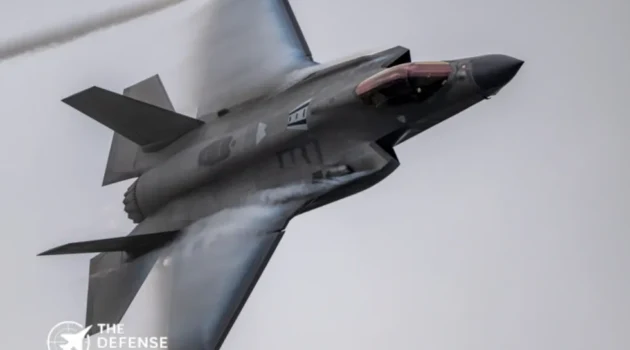
The F-22 Raptor and F-35 Lightning II represent the pinnacle of U.S. 5th-generation fighter technology, but they were designed for complementary roles. The F-22 optimizes for air superiority with unmatched kinematics, supercruise, and all-aspect stealth, excelling as a high-end dogfighter and penetrator. The F-35, a multirole platform, leverages superior sensor fusion, network-centric warfare capabilities, and affordability to dominate the information battlespace across air-to-air, air-to-ground, and electronic warfare missions. While the Raptor brings raw performance, the Lightning II emphasizes versatility and survivability through data dominance.
2. Technical Specifications Table
| Metric | F-35A Lightning II | F-22 Raptor |
|---|---|---|
| Generation | 5th Generation | 5th Generation |
| Max Speed | Mach 1.6 | Mach 2.25 (supercruise ~Mach 1.8) |
| Combat Radius | ~670 nmi / 1,239 km (internal fuel) | ~460-590 nmi (varies by profile) |
| Internal Payload | Up to 18,000 lb (e.g., 4+ AIM-120) | 6x AIM-120 + 2x AIM-9 or mixed bombs |
| Primary Radar | AN/APG-81 AESA | AN/APG-77 AESA |
| Engines | 1x Pratt & Whitney F135 (43k lb thrust) | 2x Pratt & Whitney F119 (35k lb each) |
| Stealth | Very low observable (golf ball RCS est.) | Extremely low (marble/smaller RCS) |
| Service Ceiling | ~50,000 ft | >65,000 ft |
Sources note variations by mission configuration and classification. F-22 generally edges in pure kinematics; F-35 in range/payload for multirole.
3. Key Capability Pillars
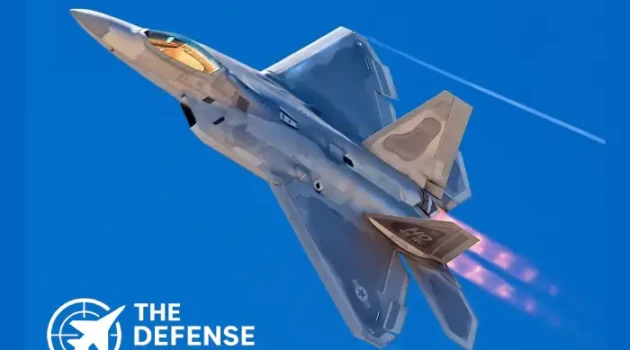
Stealth & Survivability: The F-22 holds an edge in all-aspect stealth with its carefully shaped airframe, thrust-vectoring nozzles with chevrons for reduced infrared signature, and optimized RAM coatings—often described as having a radar cross-section akin to a marble. The F-35 uses advanced shaping and materials but features a single larger round nozzle, resulting in a slightly larger signature (golf ball equivalent). Both are highly survivable in contested airspace, but the Raptor is generally considered stealthier from multiple angles.
Avionics & Sensor Fusion: This is where the F-35 truly shines. Its AN/AAQ-37 Distributed Aperture System (DAS) provides 360-degree spherical awareness, feeding real-time data to the pilot’s helmet-mounted display—allowing pilots to “see through” the aircraft. Combined with the APG-81 AESA radar and advanced electronic warfare suite, the F-35 excels at sensor fusion and sharing targeting data across networks. The F-22’s APG-77 is formidable, but the Raptor’s avionics, while advanced for its era, are less integrated for multirole information dominance compared to the F-35.
Payload & Mission Profiles: In stealth configuration, both rely on internal weapons bays to maintain low observability. The F-22 carries a potent air-to-air loadout (e.g., 6 AMRAAMs). The F-35 offers strong multirole flexibility with internal bays plus significant external hardpoints for “Beast Mode” when stealth is less critical, enabling higher overall payload (up to 18,000+ lb). The F-35 is better suited for strike missions and coalition operations, while the F-22 dominates high-threat air superiority.
4. Strategic Verdict
The F-22 Raptor is the preferred platform for high-intensity, contested anti-access/area-denial (A2/AD) environments requiring supreme speed, maneuverability, and first-look/first-kill capability in air-to-air combat. It excels in clearing the skies for follow-on forces.
The F-35 Lightning II is the strategic winner for modern network-centric warfare, offering unmatched versatility, sensor-driven situational awareness, and cost-effectiveness for a wide range of missions—including deep strikes, ISR, and supporting ground forces. In most future scenarios, the two are designed to operate together: F-22s as elite penetrators and F-35s as the “quarterback” multiplying force effectiveness.
Neither is universally “better”—they fulfill different but vital roles in the U.S. airpower arsenal.
| |
| Price | |
| Our Rating | |
| Manufacturer | Lockheed Martin Lockheed Martin |
| Category | Fighter Jets Fighter Jets |
General Information
| Name | F-35 Lightning II F-22 Raptor |
| Manufacturer | Lockheed Martin Lockheed Martin, Boeing Defense |
| Country of Origin | United States United States |
| Type / Role | Multirole Stealth Fighter Air Superiority Stealth Fighter |
| Generation | 5th Fifth Generation |
| Status | In Service In active service |
| First Flight | December 15, 2006 September 7, 1997 |
| Introduction / In Service Since | 2015 December 15, 2005 |
| Number Built | 1,200+ (as of 2025) 187 operational units |
| Operators | USA, UK, Japan, Israel, Italy, Australia, and others United States Air Force |
Dimensions & Structure
| Length | 51.2 ft (15.6 m) 62 ft (18.9 m) |
| Wingspan | 35 ft (10.7 m) 44.5 ft (13.6 m) |
| Height | 14.4 ft (4.38 m) 16.7 ft (5.1 m) |
| Wing Area | 460 sq ft (42.7 m²) 840 sq ft (78 m²) |
| Empty Weight | 29,300 lb (13,300 kg) 43,340 lb (19,700 kg) |
| Maximum Takeoff Weight (MTOW) | 70,000 lb (31,800 kg) 83,500 lb (38,000 kg) |
| Internal Weapons Bay | 2 (up to 5,700 lb payload) 3 total (1 centerline, 2 side) |
| External Hardpoints | 6–10 (up to 18,000 lb total) 4 (non-stealth configuration) |
Performance
| Maximum Speed | Mach 1.6 Mach 2.25 (2,414 km/h) |
| Range | 1,380 mi (2,220 km) 1,840 miles (2,960 km) |
| Combat Radius | ~670 mi (1,080 km) 530 miles (850 km) |
| Service Ceiling | 50,000 ft (15,240 m) 65,000 ft (19,800 m) |
| Rate of Climb | 45,000 ft/min 62,000 ft/min (315 m/s) |
| Thrust-to-Weight Ratio | 0.87 1.26 |
| G Limits | +9 +9 G |
Powerplant
| Engine Type | Pratt & Whitney F135-PW-100 Pratt & Whitney F119-PW-100 turbofan |
| No. of Engines | 1 2 |
| Thrust (each) | 43,000 lbf 35,000 lbf (156 kN) |
| Thrust Vectoring | Yes (on F-35B variant) Yes (2D pitch vectoring) |
| Fuel Capacity | ~18,500 lb internal 18,000 lb (8,200 kg) internal |
Armament
| Gun | GAU-22/A 25mm cannon (F-35A) 1× M61A2 Vulcan 20mm cannon |
| Missiles (Air-to-Air) | AIM-120 AMRAAM, AIM-9X AIM-120 AMRAAM, AIM-9 Sidewinder |
| Missiles (Air-to-Ground) | AGM-154 JSOW, AGM-158 JASSM JDAM, SDB |
| Bombs | JDAM, Paveway II/III, SDB I/II GBU-32 JDAM, GBU-39 SDB |
| Hardpoints | 6 external + 2 internal 4 external (optional) |
| Payload Capacity | ~18,000 lb 18,000 lb (8,200 kg) |
Avionics & Systems
| Radar | AN/APG-81 AESA AN/APG-77 AESA radar |
| Radar Range | ~150+ km 125+ miles (200+ km) |
| Electronic Warfare (EW) System | AN/ASQ-239 suite AN/ALR-94 suite |
| Targeting System | EOTS (Electro-Optical Targeting System) Integrated multi-sensor fusion |
| Helmet Display | HMDS Gen III Standard HUD (no HMD in baseline) |
| Navigation | GPS/INS with terrain-following GPS/INS |
| Autopilot / AI Assistance | Advanced flight management Digital fly-by-wire |
| Communication | MADL & Link 16 secure data links Intra-flight data link, secure comms |
Stealth & Technology
| Radar Cross Section (RCS) | ~0.001 m² ~0.0001 m² |
| Stealth Features | RAM coating, internal weapons bay, edge alignment Radar-absorbent materials, internal weapons |
| Infrared Signature Reduction | Yes Engine exhaust shielding |
| Sensor Fusion | Full 360° data integration Yes |
| Networking Capabilities | Distributed data-sharing with allied units Limited Link-16, proprietary data link |
Variants
| Special Export Versions | F-35I (Israel), F-35A (Japan), etc. None (export restricted) |
Operational History
| Major Conflicts / Deployments | Middle East operations (Iraq, Syria) Syria (2014–present) |
| Notable Operators | USAF, USN, USMC, RAF, IDF USAF (Air Combat Command, PACAF) |
| Combat Proven? | Yes Yes |
| Mission Types | Air superiority, strike, SEAD, ISR Air superiority, interception, precision strike |
Cost & Program
| Unit Cost | $80–100 million (variant-dependent) ~$150 million (flyaway) |
| Development Cost | ~$400 billion (program total) ~$67 billion (program total) |
| Program Name | Joint Strike Fighter (JSF) Advanced Tactical Fighter (ATF) |
| Funding Countries | USA, UK, Italy, Netherlands, Canada, Australia, etc. United States only |
Additional Information
| Upgrades Planned | Block 4, Tech Refresh 3 Avionics, radar, networking, sensors |
| Future Replacement | NGAD (2035+) NGAD (Next Generation Air Dominance) |
| Export Restrictions | U.S. FMS approval required U.S. Congress export ban |
| Notable Achievements | Widest global fighter program in history First operational 5th-gen fighter |
| Competitors | Su-57, J-20, Tempest, KF-21 F-35 Lightning II, Su-57, J-20 |
|
Disclaimer Note
The information provided on TheDefenseWatch.com is for general informational purposes only. While we strive to ensure the accuracy, completeness, and timeliness of our content regarding defense and aerospace products, technologies, and specifications, we cannot guarantee that all information is 100% accurate or up-to-date due to the evolving nature of military technology and classified data.TheDefenseWatch.com does not warrant the reliability, suitability, or availability of the information for any specific purpose. Users are advised to consult official sources, such as manufacturers, government publications, or defense agencies, for precise and verified data before making decisions based on our content.We are not affiliated with any defense manufacturers, governments, or military organizations mentioned. Opinions, reviews, and ratings reflect expert analysis but are subjective and should not be considered endorsements. TheDefenseWatch.com is not responsible for any errors, omissions, or consequences arising from the use of this website’s content.External links are provided for convenience and do not imply endorsement. TheDefenseWatch.com reserves the right to update or modify content without prior notice. By using this website, you agree to our Privacy & Cookies Policy.
New Arrivals
Popular Comparisons
-
 Tejas Fighter Jet vs F-16 Fighting Falcon: Capability Compared
View Comparison →
Tejas Fighter Jet vs F-16 Fighting Falcon: Capability Compared
View Comparison → -
Rafale Fighter Jet vs F-16 Fighting Falcon : Which Fighter Has the Edge?
View Comparison →
-
Su-57 Fighter Jet vs J-20 Fighter Jet: Stealth and Air Combat Compared
View Comparison →
-
Mirage 2000 vs Tejas Mk1A: Legacy Combat Power vs Indigenous Modernization
View Comparison →
-
Rafale Fighter Jet vs F-22 Raptor: Which Air Dominance Fighter Has the Edge?
View Comparison →
-
Tejas Fighter Jet vs. Rafale Fighter Jet: India’s Indigenous Fighter Meets France’s Proven Multirole Combat Aircraft
View Comparison →
-
F-22 Raptor vs. F-35 Joint Strike Fighter: Which Fifth Generation Fighter Has the Edge?
View Comparison →
-
F-35A vs. F-22 Raptor: Which U.S. Stealth Fighter Dominates Modern Air Combat?
View Comparison →
-
AGM-114 Hellfire vs. AGM-179 JAGM: Which U.S. Precision Missile Is Better?
View Comparison →
-
Patriot (PAC-3) vs. THAAD: Complete Missile Defense System Comparison, Capabilities, Range, and Strategic Roles
View Comparison →
- Finland deepens European F-35 cooperation with first pilot flight in Europe

- Luxembourg Deploys Additional Detection Assets After Drone Sightings
- China’s J-XDS Prototype May Be Testing a New Radar
- L3Harris Pushes Modular, Distributed Architecture for Electronic Warfare
- Northrop Grumman to Deliver GHOST-R Prototype for U.S. Space Force
- Airborne Early Warning Aircraft Ranked: E-7 vs E-2D vs A-50
- Lockheed Martin Shifts Hypersonic Focus From Peak Speed to Sustained Flight and Production
- Spanish F-18s Conduct 15 Scrambles in Romania During First Month of NATO Mission
- South Korean Army Helicopter Crossed DMZ After Firefighting Mission Error
- Trump Announces Greenland Security Agreement With Denmark and Greenland