

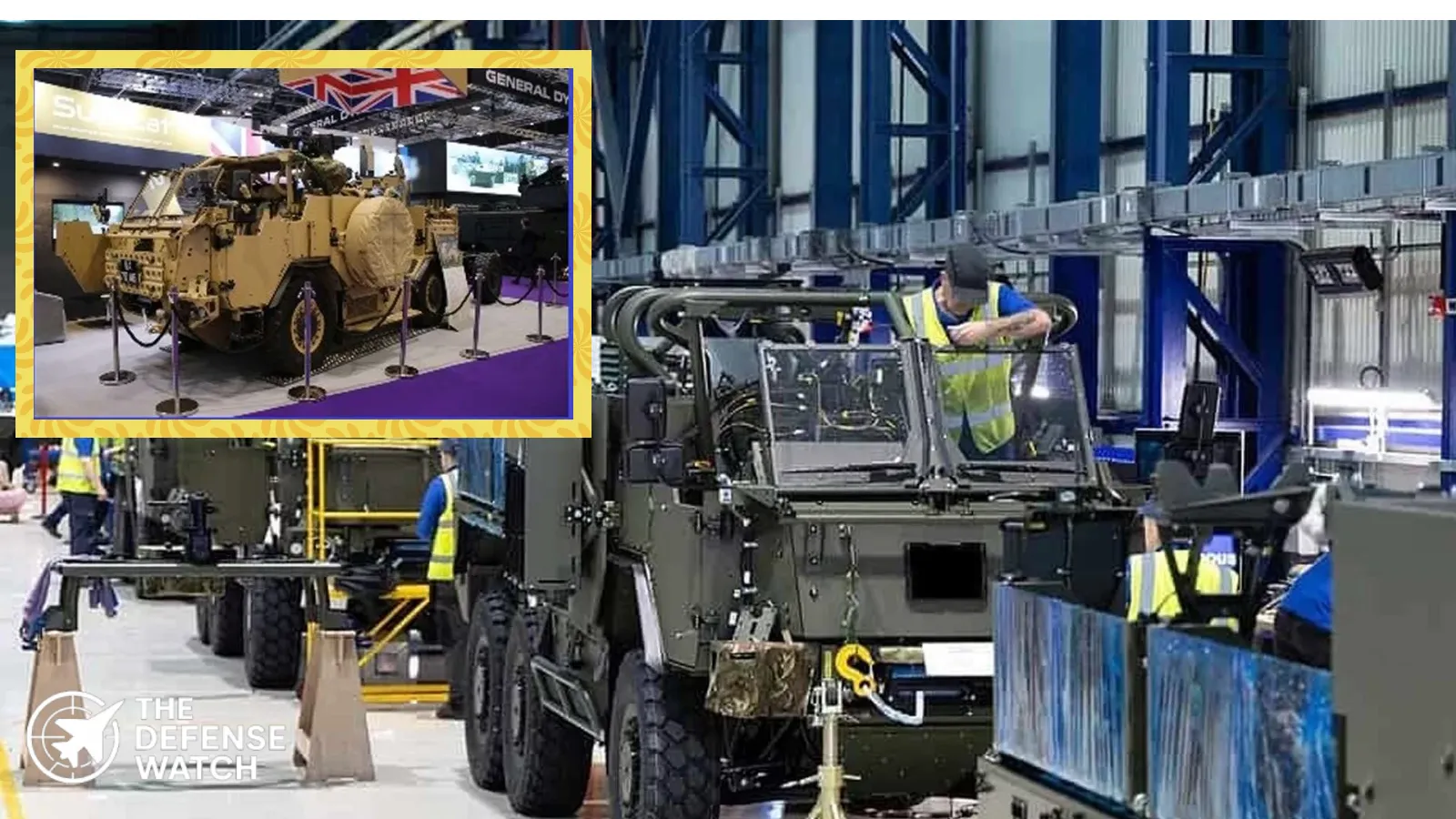
Babcock Launches Jackal 3 Extenda All-Terrain Vehicle Production
Babcock International has formally launched production of the Jackal 3 Extenda all-terrain vehicle for the British Army, marking a key step in the modernization of the United Kingdom’s light mobility and reconnaissance fleet. The production start was announced in early 2025 at Babcock’s UK facilities, where the company is delivering the latest variant of the combat proven Jackal family under an ongoing support and manufacturing agreement with the Ministry of Defence.
The Jackal 3 Extenda all-terrain vehicle is designed to enhance the British Army’s ability to operate across dispersed and demanding environments, while maintaining speed, protection, and operational flexibility. The new production phase signals a transition from development and testing into sustained manufacturing for frontline units.
Background: Evolution of the Jackal Vehicle Family
The Jackal vehicle series has been a cornerstone of British Army light forces since its introduction in the late 2000s. Originally developed to meet urgent operational requirements, the Jackal gained a strong reputation for mobility, firepower, and adaptability during operations in Afghanistan and other theaters.
The Jackal 3 Extenda all-terrain vehicle represents the latest evolution of the platform. Building on the earlier Jackal 2 and standard Jackal 3 variants, the Extenda configuration introduces a modular design that allows the vehicle to operate in both short and extended wheelbase modes. This flexibility enables commanders to tailor the vehicle for specific mission profiles, including reconnaissance, patrol, command and control, and rapid response tasks.
Production Details and Industrial Role
Babcock is responsible for manufacturing, integration, and long term support of the Jackal 3 Extenda all-terrain vehicle fleet. The company has emphasized that the production effort supports skilled jobs across the UK and reinforces domestic defense manufacturing capacity.
According to company statements, production activities include final vehicle assembly, systems integration, quality assurance, and testing. Babcock is also leveraging lessons learned from previous Jackal variants to improve reliability, maintainability, and through life support.
The Jackal 3 Extenda all-terrain vehicle incorporates upgrades to suspension, powertrain performance, and onboard systems. These improvements are intended to support sustained operations over rough terrain while reducing crew fatigue and maintenance demands.
Vehicle Capabilities and Design Features
The Jackal 3 Extenda all-terrain vehicle is optimized for high mobility in off road conditions. Its open architecture design supports a range of mission equipment, including communications systems, sensors, and weapon mounts.
A defining feature of the Extenda variant is its adjustable configuration. The vehicle can be reconfigured to carry additional personnel or equipment without compromising mobility. This modular approach allows a single vehicle type to fulfill multiple operational roles within a unit.
Protection enhancements focus on blast mitigation and survivability, while maintaining the low weight needed for air transport and rapid deployment. The Jackal platform is typically armed with heavy machine guns or automatic grenade launchers, providing organic fire support to light forces.
British Army Modernization Context
The start of production for the Jackal 3 Extenda all-terrain vehicle aligns with the British Army’s broader modernization efforts under its Future Soldier program. This initiative aims to restructure land forces to be more agile, digitally connected, and deployable across a range of conflict scenarios.
Light mobility platforms like the Jackal 3 Extenda play a critical role in this concept, particularly for reconnaissance units and rapid reaction forces. The vehicle supports operations in environments where heavier armored vehicles may be restricted by terrain or infrastructure.
Defense officials have highlighted the importance of retaining proven platforms while incrementally upgrading their capabilities. The Jackal 3 Extenda all-terrain vehicle reflects this approach by combining an established design with targeted enhancements.
Industry and Policy Perspective
From an industrial perspective, the program underscores the UK Ministry of Defence’s emphasis on sustaining domestic defense suppliers. Babcock’s role in producing and supporting the Jackal 3 Extenda all-terrain vehicle demonstrates the value placed on long term partnerships with industry.
Analysts note that continued investment in light tactical vehicles remains relevant despite growing attention on high end warfare. Mobility, situational awareness, and adaptability remain essential for expeditionary operations, counterinsurgency missions, and deterrence activities in contested regions.
The Jackal 3 Extenda all-terrain vehicle also offers potential export appeal, given the widespread interest in flexible and air deployable ground platforms among allied and partner nations.
What Comes Next
With production now underway, the focus will shift to deliveries, crew training, and integration into operational units. Babcock is expected to continue providing in service support throughout the vehicle’s operational life, ensuring availability and readiness.
As the British Army refines its force structure, the Jackal 3 Extenda all-terrain vehicle is set to remain a key asset for light forces. The program highlights how incremental upgrades and sustained industrial support can extend the relevance of proven military platforms in a changing security environment.

7 comments
[…] French Army officials see hydrogen propulsion as a way to reduce acoustic and thermal signatures while improving energy efficiency. This aligns with NATO wide interest in alternative power sources for future military vehicles. […]
[…] to the upgrade is a NATO standard 120 mm smoothbore gun, replacing the rifled gun used on earlier British tanks. The manned firing trials confirmed the gun’s performance, crew safety, and system reliability, […]
[…] RCH 155 system is developed by Rheinmetall, with the UK variant tied closely to the British Army’s Boxer mechanized infantry vehicle program. Rheinmetall BAE Systems Land, the UK based joint venture, is expected to play a central […]
[…] Minister Luke Pollard confirmed that the programme will begin production in British facilities within weeks, with early units sent to Ukraine for operational evaluation. […]
[…] phase will be required before the British Army formally declares the tank combat […]
[…] exercise near Camp Viking in Øverbygd, mortar troops deployed their weapons from Viking and BV206 all-terrain vehicles, practicing rapid-fire missions both day and night. The training emphasized mobility and […]
[…] LD-1 armored all-terrain vehicle is designed from the ground up as a protected platform rather than a modified utility ATV. It […]