

(adsbygoogle = window.adsbygoogle || []).push({});Executive Summary:
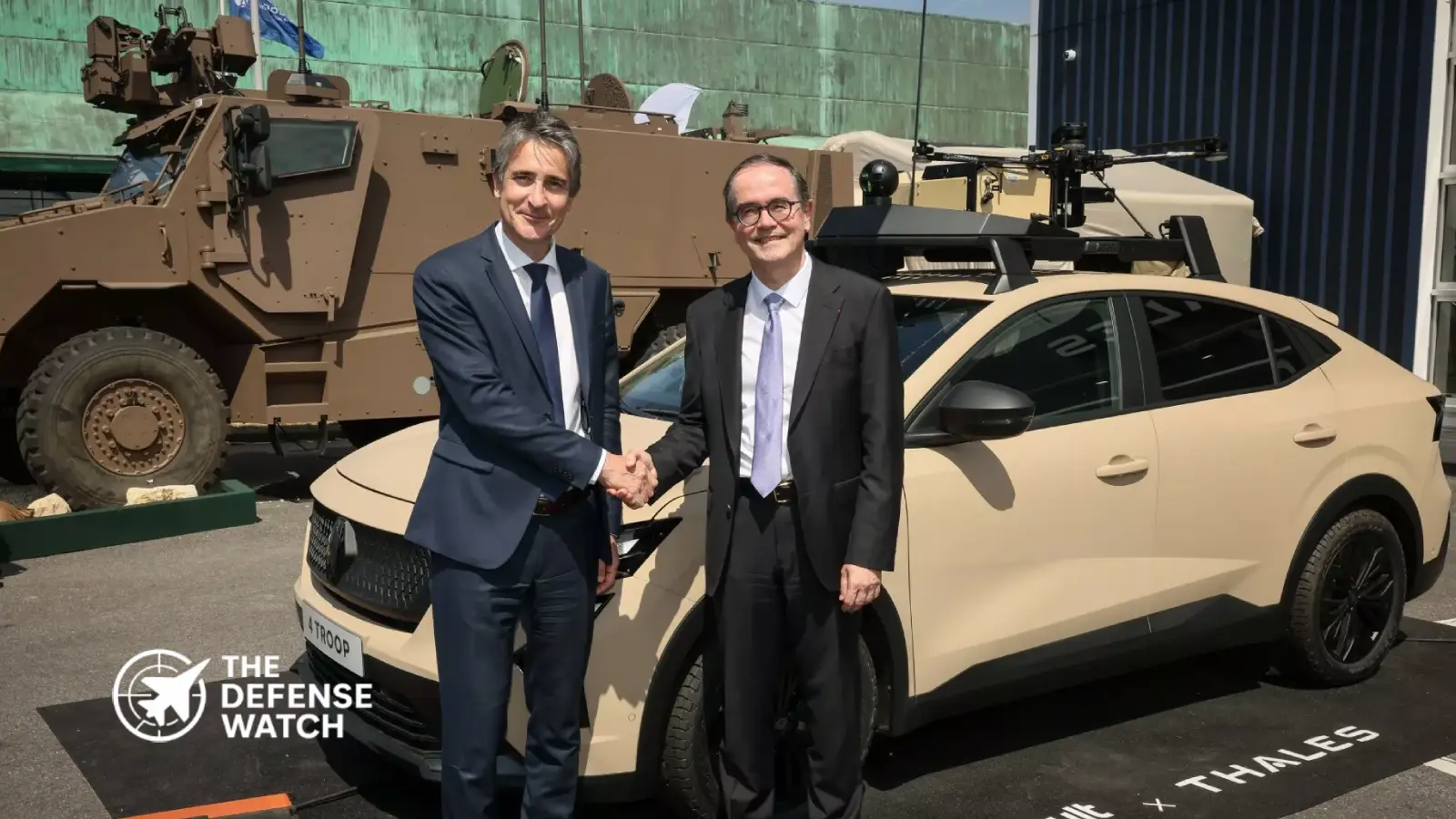
Renault and Thales have launched a strategic partnership to mass produce the Toutatis loitering munition, marking a significant expansion of France’s defense industrial base. The agreement combines Renault’s automotive manufacturing expertise with Thales’ defense technology capabilities to scale production and strengthen Europe’s growing demand for unmanned systems.
Renault And Thales Deepen Defense Partnership
Renault drone production is entering a new phase as the French automaker partners with Thales to manufacture the Toutatis loitering munition, a short range remotely operated strike drone designed for modern high intensity warfare.
The agreement was announced during the Eurosatory 2026 defense exhibition near Paris. Under the partnership, Renault will manufacture the Toutatis system at one of its French production facilities, with output expected to reach approximately 1,000 units per month beginning as early as 2027. The companies said the project will significantly expand France’s industrial capacity in a strategically important defense sector.
The deal marks the second major defense collaboration between Renault and Thales. The two companies are already working together on the development of the 4 TROOP military vehicle, unveiled earlier at Eurosatory 2026.
What Is The Toutatis Loitering Munition?
Developed by Thales, the Toutatis is a short range loitering munition designed to support military forces operating in contested environments.
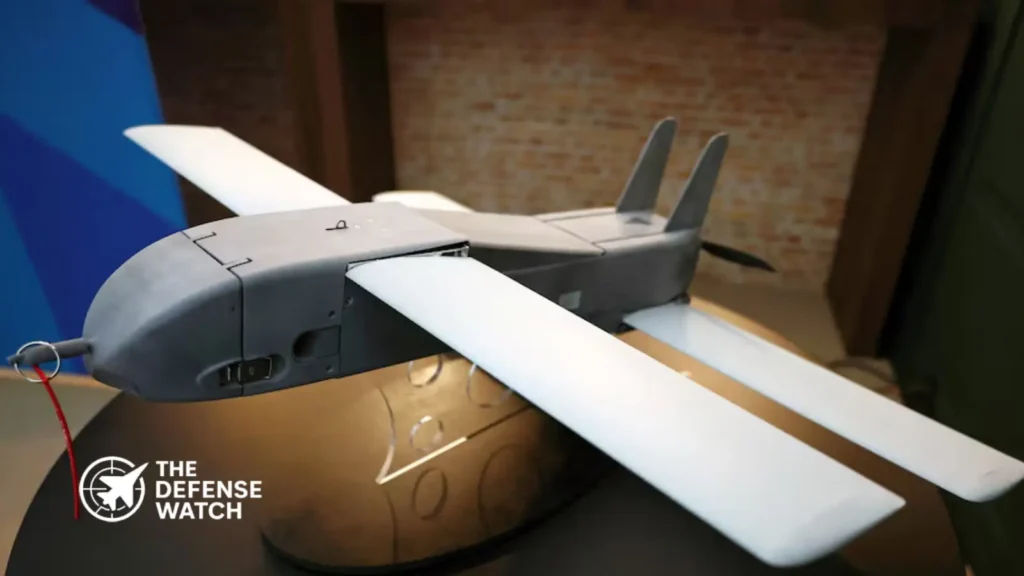
According to Thales and Renault, the system can be deployed by individual soldiers or launched from combat vehicles, aircraft, and naval platforms. It is designed to resist electromagnetic jamming and can carry mission specific warheads against a variety of targets, including armored vehicles. The platform can also operate as part of coordinated drone swarms while maintaining human control over engagement decisions.
Loitering munitions have become a central feature of modern warfare, particularly following their extensive use during the war in Ukraine, where relatively low cost drones have demonstrated the ability to destroy high value military assets.
Why Renault’s Entry Matters
The partnership reflects a broader trend across Europe as governments seek to rapidly increase defense production capacity in response to evolving security challenges.
Rather than building new defense factories from scratch, European governments and defense companies are increasingly turning to established industrial manufacturers with proven large scale production expertise. Renault brings decades of experience in high volume manufacturing, supply chain management, and cost optimization.
Involvement will allow production of the Toutatis drone to transition from limited 3D printed manufacturing methods to more efficient plastic injection molding processes. The companies expect this shift to reduce production costs while simplifying the design through a significant reduction in component count.
This approach highlights an emerging defense industrial strategy across Europe, leveraging civilian manufacturing infrastructure to accelerate military production timelines.
Strategic Implications For France And Europe
The Renault and Thales agreement aligns with France’s effort to strengthen a sovereign domestic drone industry and reduce dependence on foreign suppliers. The companies described the initiative as part of a broader effort to establish a national drone production ecosystem capable of supporting future military requirements.
While France currently has no major procurement program specifically tied to the Toutatis drone, international demand for loitering munitions continues to grow as armed forces seek affordable precision strike capabilities. Reuters reported that much of the expected production will target export markets.
The announcement also comes amid a wider acceleration of European defense investment following Russia’s invasion of Ukraine and increasing concerns about long term security requirements across the continent. Governments and industry leaders are placing greater emphasis on scalable production capacity, resilient supply chains, and rapid fielding of new technologies.
Analysis: A New Model For Defense Manufacturing
Beyond the immediate production numbers, the Renault Thales partnership may represent one of the clearest examples of how Europe intends to expand defense output in the coming decade.
Traditional defense manufacturers often face production bottlenecks when demand rises sharply. By integrating automotive manufacturing expertise into defense programs, companies can access established industrial processes, workforce experience, and supply networks that would otherwise take years to develop.
The Toutatis program demonstrates how commercial industrial capacity can be adapted for military requirements without requiring entirely new production infrastructure. If successful, the model could be replicated across other European defense programs involving drones, autonomous systems, tactical vehicles, and munitions.
The partnership also signals that future defense competitiveness may depend not only on advanced technology but on the ability to manufacture systems rapidly, affordably, and at scale. In an era where attritable drones are becoming increasingly important on the battlefield, production capacity itself is emerging as a strategic capability.
Conclusion
The Renault and Thales agreement marks a significant step in France’s effort to expand domestic drone production and strengthen its defense industrial base. By combining automotive manufacturing expertise with advanced defense technology, the partnership aims to deliver large scale production of the Toutatis loitering munition while supporting broader European defense modernization efforts.
As demand for unmanned systems continues to rise, the success of the program could serve as a model for future collaborations between civilian industry and defense manufacturers across Europe.
