

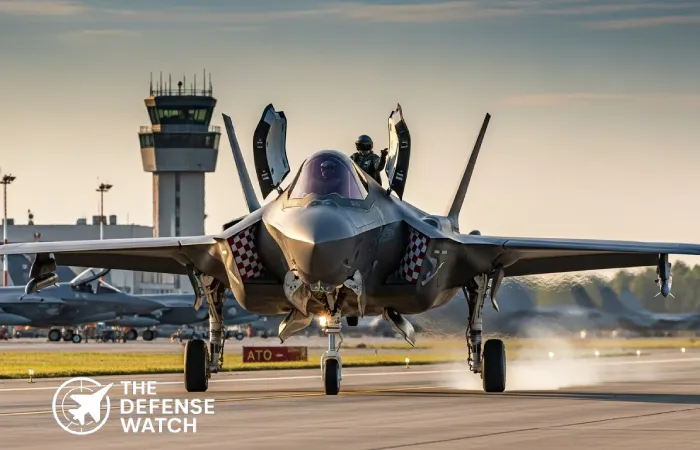
Poland has signed a deal worth approximately US$500 million to acquire the latest variant of the AIM-120D-3 AMRAAM air-to-air missiles for use with its upcoming fleet of F-35A Lightning II stealth fighters.
The agreement — formally approved via the Defense Security Cooperation Agency (DSCA) notification to Congress on April 29, 2025 — will see Poland receive missiles, associated guidance equipment, test hardware, and support infrastructure.
Polish officials have confirmed the missiles are earmarked for integration into the future F-35A fleet, set to begin deliveries in 2026 under Warsaw’s modernization plan.
Background: Why it matters
The AIM-120 AMRAAM (Advanced Medium-Range Air-to-Air Missile) family has long been a backbone of Western air-to-air capability, offering active-radar, fire-and-forget engagement.
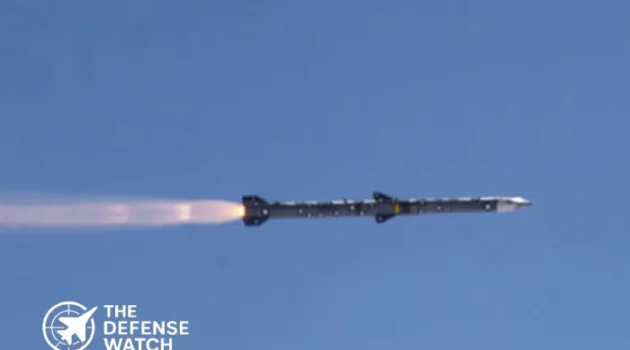
The D-3 variant — part of the “Form, Fit, Function Refresh” (F3R) upgrade — provides significant enhancements: a two-way data link enabling mid-course updates, inertial navigation augmented by encrypted GPS, and upgraded electronics that bolster resistance to electronic countermeasures.
Performance parameters commonly cited for the AIM-120D-3 include speeds up to Mach 4 and an estimated maximum engagement range of 160–180 km, depending on launch conditions.
This increased range and networked guidance significantly extend Poland’s beyond-visual-range (BVR) air-to-air reach — a key capability in modern high-threat environments where advanced enemy aircraft, cruise missiles or UAVs may pose a threat.
Poland’s air force already operates earlier AMRAAM variants, and integration of D-3 is seen as compatible with existing infrastructure.
Details of the Deal
What Poland Gets
- Up to 400 AIM-120D-3 missiles.
- 16 associated guidance sections — equipped with Selective Availability Anti-Spoofing Module (SAASM) or M-Code GPS encryption hardware.
- One instrumented AIM-120 test vehicle for evaluation and certification.
- A full package of spare parts, containers, maintenance/test gear (e.g., ADU-891, CMBRE), encryption devices (KGV-135A), plus technical documentation, software, logistical support, and transport.
Prime contractor responsibilities lie with RTX Corporation (formerly Raytheon), based in Tucson, AZ.
The total FMS package is valued at roughly $1.33 billion — though the publicly announced figure for the missile tranche itself is about $500 million.
Deployment Path
Initially, Poland plans to integrate the missiles with existing fourth-generation fighters (e.g., F-16C/D Block 52+), before transitioning to full deployment on F-35A jets once deliveries begin in 2026.
The D-3 missiles could also be incorporated into layered air-defense architectures (e.g., ground-based systems such as NASAMS), offering flexibility beyond just fighter employment.
Strategic Implications for Poland and NATO
Bolstering Eastern Flank Air Defense
For Poland — bordering Belarus and Ukraine, with proximity to Russia’s Western Military District — the acquisition deepens Warsaw’s ability to counter advanced aerial threats. The extended range and networked guidance of the AIM-120D-3 translate into robust beyond-visual-range intercept capability, which is critical given the region’s growing aerial and missile threat environment.
The integration of these missiles into F-35As enhances the survivability and lethality of Poland’s stealth fleet, allowing Warsaw to field a credible air-combat force capable of contributing to air superiority and NATO collective defense missions.
Interoperability and NATO Cohesion
By aligning with U.S.-standard missiles, Poland enhances interoperability with NATO allies — particularly in joint air patrols, integrated air defense, and coalition operations. The two-way data link and modern guidance suite also make Polish interceptors more capable in network-centric warfare environments where shared sensor data and third-party targeting are the norm.
Additionally, the deal signals the U.S. commitment to reinforcing NATO’s eastern flank. Supplying advanced air-to-air missiles to frontline allies like Poland strengthens collective deterrence and addresses alliance concerns over air-space security in the face of hybrid and asymmetric threats.
Expert Perspective: What This Move Indicates
Poland’s selection of the AIM-120D-3 — the top-tier exportable AMRAAM — suggests a strategic calculation that air superiority remains central to future conflict scenarios in Europe. The choice reflects growing recognition that legacy short-range missiles and outdated air-defense hardware may not suffice against modern threats like high-performance fighters, cruise missiles, and armed UAVs.
With the D-3, Poland multiplexes value: retaining compatibility with its existing fleet (F-16s), while future-proofing for the incoming F-35As. The support package — including test hardware, encryption, and maintenance tools — ensures Warsaw can sustain a reliable supply chain without immediate reliance on U.S. personnel or on-site infrastructure.
Moreover, this procurement may stimulate further upgrades — including integration of advanced radars, sensor fusion, and networked combat systems — as Poland transforms toward a truly modern, survivable air force capable of defensive and offensive operations in contested airspace.
What’s Next
Poland is set to receive the first AIM-120D-3 missiles in the coming years, likely timed to coincide with or precede the arrival of its first F-35A fighters in 2026. Operational trials and integration with both legacy F-16s and new F-35As will be critical, followed by readiness certification.
Analysts and NATO planners will monitor how Warsaw integrates the missiles — whether purely for air-to-air intercept, or also via ground-based platforms to reinforce a layered air-defense umbrella. Poland’s modernization drive may also spur neighboring NATO members to follow suit, leading to wider adoption of D-3 technology across the alliance’s eastern flank.

1 comment
[…] approved in 2021 with a contract signed in 2022, the F-35A deal was expected to secure a fixed price for the Swiss order. However, communications from the U.S. […]