Executive Summary:
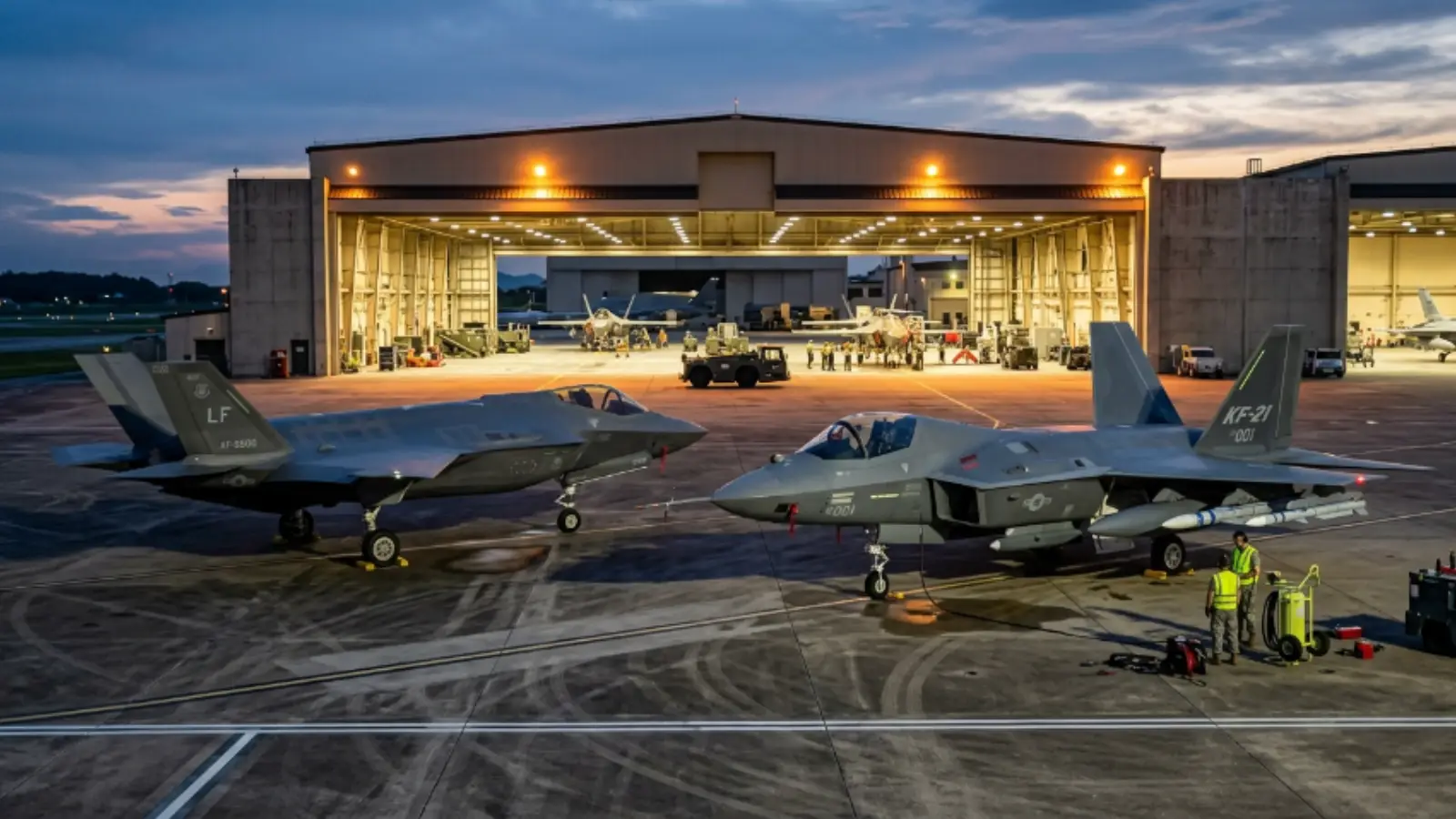
South Korea’s KF-21 Boramae rolled off the production line in March 2026, and its first Block I jets are already reaching the ROKAF — but the airframe still carries its missiles externally, with no internal weapons bay until Block III arrives in the next decade. The F-35A remains the only one of the two built around genuine low observability from the ground up. This is where the “semi-stealth” label stops being marketing language and becomes an operational limitation.
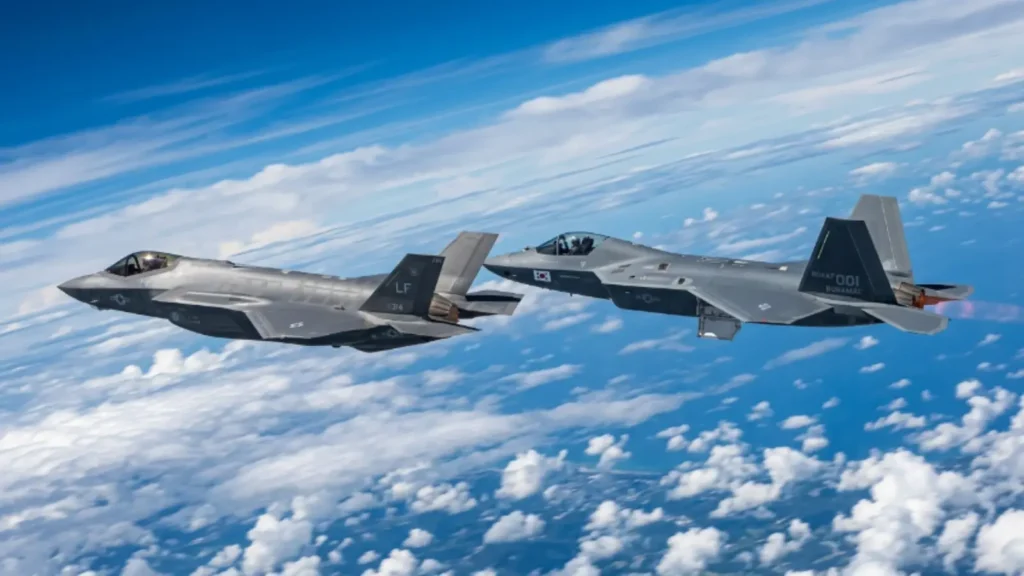
F-35A vs. KF-21 Boramae: Inside the Stealth Gap Splitting Asia’s Skies
A jet doesn’t need a radar cross-section rated in square meters to change the balance of power in a region. It just needs to be cheaper, available now, and good enough. That’s the bet South Korea is making with the KF-21 Boramae, and the first production airframe left the Sacheon assembly line in March 2026 to prove it.
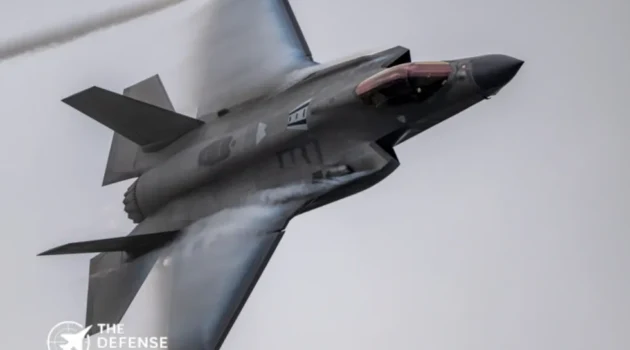
The F-35A, by contrast, has spent over a decade answering a different question: what does it cost to make an airframe effectively invisible to enemy radar? The two jets are being marketed as complementary. The numbers say something more complicated.
The Deep Dive: Two Different Definitions of Stealth
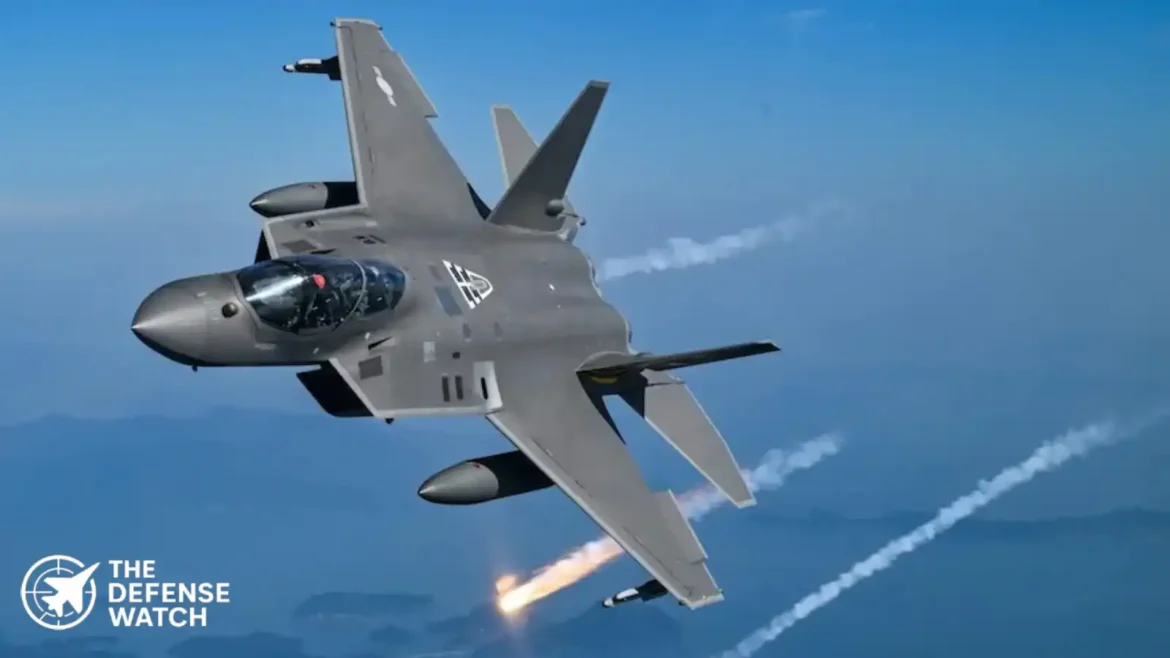
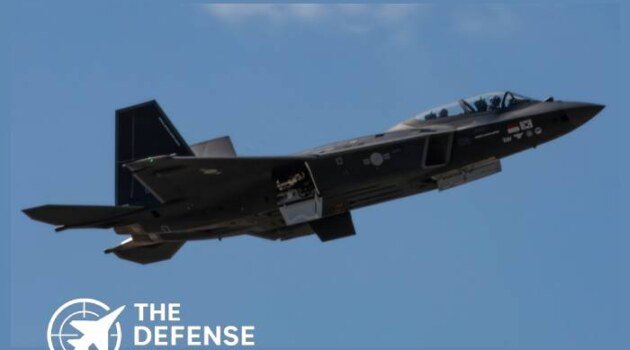
The KF-21 Block I, now entering ROKAF service, carries its weapons the old-fashioned way — bolted to four semi-recessed stations under the fuselage and six wing hardpoints. Korea Aerospace Industries calls this “semi-stealth,” and that’s an honest description, not a euphemism.
Semi-recessed carriage shrinks radar return compared to a fully external pylon, but it’s nowhere near an internal bay. The airframe also skips radar-absorbent coatings on Block I and II, deferring that upgrade to the still-distant Block III, sometimes referred to as the KF-21EX.
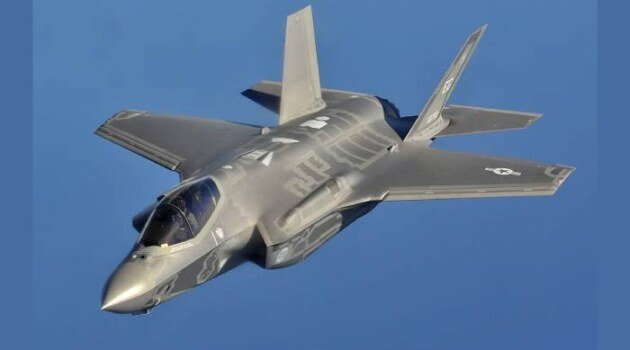
The F-35A was designed in reverse order. Lockheed Martin built the internal weapons bay and RAM coating into the mold line from day one, which is why the jet can carry AIM-120 AMRAAMs and JDAMs without ever exposing a hardpoint to a hostile radar sweep.

That single design choice cascades through everything else. Internal carriage costs the F-35A payload capacity — it can only haul so much before pilots start bolting weapons externally and sacrificing the stealth they paid for. External carriage costs the KF-21 survivability against modern integrated air defense networks, full stop.
Where the Boramae claws back ground is avionics maturity delivered ahead of schedule. Its domestically built APY-016K AESA radar, fielded by Hanwha Systems, uses roughly 1,000 transmit-receive modules to detect targets out to 150–200 km and track around 20 simultaneously. Combined with an indigenous MUM-T (manned-unmanned teaming) architecture, the jet isn’t trying to out-stealth the F-35 — it’s trying to out-network it in cost-effective numbers.
The program’s pace has genuinely surprised skeptics. Flight testing wrapped in January 2026 after 1,600 accident-free sorties across 42 months, two months ahead of schedule. Air-to-ground weapons testing, originally targeted for 2028, has been pulled forward to the first half of 2027. Forty Block I jets are contracted, with eight delivering in 2026 alone, followed by 80 Block II aircraft with expanded strike capability arriving by 2032.
Data Block: Head-to-Head Metrics
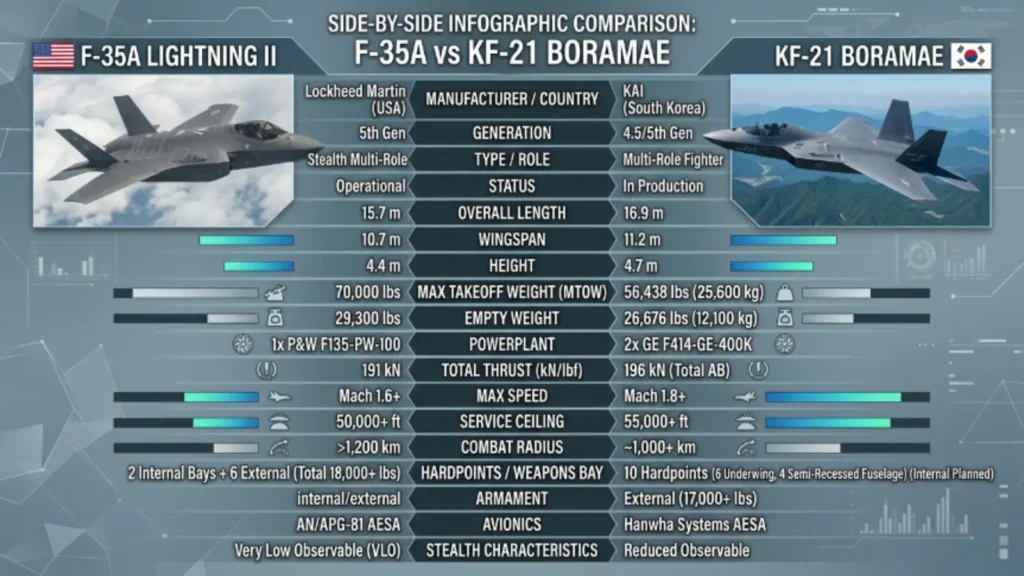
Metric F-35A Lightning II KF-21 Boramae (Block I/II) Generation classification True 5th-generation 4.5-generation, semi-stealth Weapons carriage Internal bay + external hardpoints External / semi-recessed only (internal bay deferred to Block III) Radar-absorbent materials Full airframe RAM coating Not applied until Block III/KF-21EX Primary radar AN/APG-81 AESA APY-016K AESA (~1,000 TR modules, 150–200 km detection) Engine Single Pratt & Whitney F135 (43,000 lbf w/ afterburner) Twin GE F414-GE-400K (indigenous Hanwha engine planned for Block III) Flyaway unit cost (recent lots) ~$82.5 million ~$83 million (Block I) / ~$112 million (Block II) Combat-configured cost ~$95–120 million Comparable once mission systems are added Cost per flight hour ~$34,000–$42,000 Not yet publicly disaggregated; projected lower given simpler airframe Total planned units (initial phases) 2,470+ (multi-nation program) 40 Block I + 80 Block II (120 total through 2032) Weapons bay / MUM-T Bay only; limited teaming autonomy No bay; strong MUM-T/loyal wingman focus Service entry Operational since 2016 Block I entering service 2026 The Insight: Why This Is a Rush Strategy, Not a Stealth Strategy
Competitive gaming has a term for this exact tradeoff: the rush build. In real-time strategy titles, a rush composition sacrifices the late-game power spike for board presence right now — cheaper units, faster production, overwhelming numbers before the opponent’s expensive tech tree finishes.
The KF-21 is South Korea’s rush build. It skips the most expensive, most time-consuming part of fifth-generation design — the internal bay and full-spectrum RAM treatment — to get combat-credible airframes into squadron service years before a from-scratch stealth program could deliver. Block I entered service in 2026. A comparable clean-sheet stealth program elsewhere, like Turkey’s Kaan or the European GCAP effort, isn’t expected to field operational jets until well into the 2030s.
The F-35 is the maxed-out unit that takes longer to reach the field but wins the direct engagement when it arrives. It was never meant to be cheap or fast to produce in year one; the entire program logic bet on economies of scale eventually driving flyaway costs below $80 million; a bet that’s now paying off after years of criticism.
What makes this genuinely interesting from a strategy standpoint isn’t which jet is “better” in isolation. It’s that South Korea isn’t trying to replace its F-35A fleet with the Boramae at all. ROKAF pilots are explicit that the KF-21 shoulders routine air-defense and quick-reaction alert missions, freeing the F-35A for the missions where low observability actually matters — first-look, first-kill strikes against contested, radar-dense airspace.
Finally, South Korea has become a nation that possesses weapons to safeguard peace through its own technology and willpower — not only on land and sea but also in the skies.” — President Lee Jae-myung, at the KF-21 production rollout ceremony, March 25, 2026
What This Means Going Forward
The Boramae isn’t trying to beat the F-35A on stealth, and pretending otherwise misreads the program entirely. It’s trying to make sure South Korea never has to choose between an aircraft it can produce domestically in volume and one it has to wait a decade to import.
Block III, with its planned internal weapons bay, RAM coating, and 16,000-lb-thrust indigenous engine, is where the real fifth-generation claim gets tested — and that airframe is still years from cutting metal. Until then, the F-35A remains the only jet in Korean service built around low observability from the first line drawn on the mold.
For an air force squaring off against China’s J-20, J-35, and a rapidly modernizing North Korean posture, that gap between “semi-stealth today” and “full stealth eventually” isn’t academic. It’s the difference between deterrence on paper and deterrence in the air.
FAQ
Does the KF-21 Boramae have an internal weapons bay?No. Block I and Block II carry weapons externally on semi-recessed fuselage stations and wing hardpoints. An internal bay is planned only for the future Block III/KF-21EX variant.
Is the KF-21 considered a fifth-generation fighter?Officially, no. KAI and DAPA classify Block I/II as 4.5-generation “semi-stealth” aircraft. Full fifth-generation features are reserved for Block III.
How does the KF-21’s cost compare to the F-35A?Recent reporting places Block I units around $83 million and Block II around $112 million, close to the F-35A’s flyaway cost of roughly $82.5 million — though final combat-configured pricing depends on mission systems fitted to each.
When does the KF-21 enter full operational service?Block I aircraft began deliveries in 2026, with initial operational capability targeted before the full 40-jet batch completes by 2028. Block II, adding ground-attack capability, is scheduled through 2032.
KEY FACTS AT A GLANCE
| Specification | Detail |
|---|---|
| Manufacturer | Korea Aerospace Industries (KAI), Sacheon, South Korea |
| Generation | 4.5 / Pre-5th Gen (Block III targets full stealth) |
| First Flight | 19 July 2022 |
| Combat Suitability | Final approval granted 7 May 2026 (DAPA) |
| Powerplant | 2× Hanwha/GE F414-GE-400K (~98 kN / 22,000 lbf each) |
| Max Speed | Mach 1.81 (~2,223 km/h) |
| Service Ceiling | ~16,700 m (54,800 ft) |
| Combat Radius | ~900–1,000 km (Block I, clean config) |
| Ferry Range | ~2,900 km (with external tanks) |
| Key Radar | APY-016K AESA — ~1,000 T/R modules, 150–200 km detection, 20+ simultaneous tracks |
| EW Suite | ALQ-200K (indigenous) |
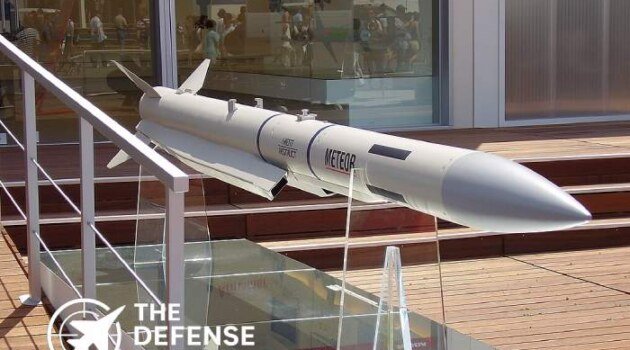
| Primary Armament | 4× MBDA Meteor (semi-recessed) + 2× IRIS-T + 20 mm cannon |
| Max Payload | ~7,700 kg across 10 hardpoints |
| Unit Cost (est.) | USD ~65–70 M (Block I) |
| ROKAF Order | 40 Block I; 80 Block II planned; 120+ total by early 2030s |
| IOC Target | September 2026 |
Executive Summary
On 7 May 2026, South Korea’s Defense Acquisition Program Administration (DAPA) granted Final Combat Suitability approval to the KF-21 Boramae — formally certifying Korea Aerospace Industries’ twin-engine 4.5-generation fighter as ready for real-world combat operations. The announcement, coming barely six weeks after the first serial production aircraft rolled out of KAI’s Sacheon factory on 25 March 2026 and completed its maiden flight just 22 days later on 15 April 2026, marks the definitive transition of the KAI KF-21 Boramae from an ambitious national programme into a frontline weapon system.
The road to this moment covered more than two decades of sustained investment. Six prototypes flew approximately 1,600 accident-free sorties and validated over 13,000 individual test conditions between July 2022 and January 2026 — a campaign DAPA closed two months ahead of schedule. With an initial batch of 40 Block I aircraft under contract and ROKAF deliveries commencing in September 2026, the boramae kf 21 is now entering a decade of progressive capability expansion that will eventually see it evolve into a genuine stealth fighter. This report provides the definitive technical and strategic analysis for defence professionals tracking one of the Indo-Pacific’s most consequential aviation programmes.
Airframe & Low-Observable Design
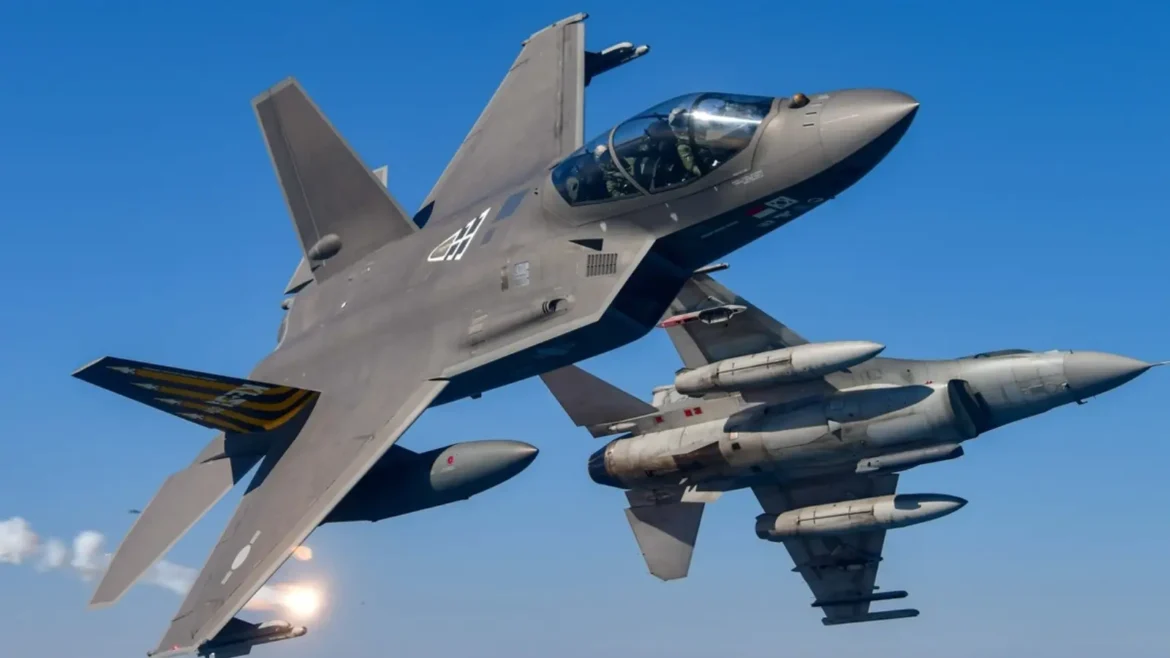
The KF-21 Boramae airframe blends a cranked-arrow delta wing with a canted twin tail and carefully sculpted bifurcated intake ramps, producing a planform clearly optimised for reduced frontal radar cross-section. At 16.9 m in length and 11.2 m wingspan, the aircraft sits in the medium class — broadly comparable to the Dassault Rafale — but is substantially heavier at a maximum take-off weight approaching 25,600 kg, reflecting the fuel and payload margins demanded by ROKAF’s long-range patrol requirements over the Korean Peninsula and East Sea.
Block I does not incorporate a full Radar Absorbent Material (RAM) coating or an internal weapons bay. Instead, KAI engineered four semi-recessed fuselage stations positioned along the centreline for Meteor missiles. This arrangement dramatically reduces the frontal RCS penalty compared to conventional external pylons while stopping short of true internal carriage — a deliberate cost-and-schedule trade-off for the initial variant. Intake edge alignment, exhaust shaping, and canopy frame design all draw from low-observable engineering principles, providing a stealth signature that independent analysts broadly place well below legacy fourth-generation platforms such as the F-15 or F-16 but above F-35-class levels.
The Block III roadmap — sometimes designated KF-21EX in DAPA documentation — targets the full stealth package: internal weapons bays, broadband RAM coating, and an indigenous next-generation engine. DAPA has already launched the Advanced Aviation Engine Development Project to produce a domestic turbofan generating 16,000 lb dry and 24,000 lb afterburning thrust, approximately 25% more power than the current F414-GE-400K, fully eliminating propulsion dependence on foreign suppliers.
Avionics, Sensors & Sensor Fusion
APY-016K AESA Radar
The centrepiece of the KF-21’s mission system architecture is the domestically developed APY-016K Active Electronically Scanned Array radar, produced by Hanwha Systems. The first mass-produced unit rolled off Hanwha’s line on 5 August 2025. Equipped with approximately 1,000 transmit-receive (T/R) modules, the APY-016K delivers target detection at ranges of 150–200 km and can simultaneously track more than 20 contacts. Its Low Probability of Intercept (LPI) emission modes reduce the aircraft’s electromagnetic signature during tactical engagements — a critical attribute in Northeast Asian threat environments saturated with Russian and Chinese-derived electronic warfare assets.
Electro-Optical Targeting Pod & IRST
A chin-mounted indigenous Electro-Optical Targeting Pod (EO TGP), also developed by Hanwha Systems, occupies a dedicated hardpoint below the right engine intake. Positioning the targeting sensor here preserves all ten primary hardpoints for weapons and fuel, while providing a passive Infra-Red Search and Track (IRST) channel that operates silently — detecting heat signatures without any radar emission. This dual role mirrors the philosophy behind the F-35’s EOTS installation.
Electronic Warfare Suite
The ALQ-200K Electronic Warfare System — an indigenous development integrating radar warning receivers, missile approach warning sensors, and active countermeasures — is designed specifically for the dense electromagnetic environment of Korean Peninsula air combat. The suite feeds threat-geolocation data directly into the mission computer, enabling automated countermeasure responses and pilot cueing within milliseconds of a radar lock-on.
Sensor Fusion & Mission Computer
A high-throughput domestic mission computer fuses AESA radar tracks, IRST bearings, EW threat data, and tactical data-link feeds from the ROKAF network into a single integrated tactical picture. The cockpit features a wide-angle HUD, colour multi-function displays, and a voice-and-HOTAS interface designed to reduce cognitive load during high-g engagements. This fusion architecture is the foundation upon which Block II strike capabilities and Block III collaborative engagement with Unmanned Loyal Wingman assets will be layered.
Propulsion & Performance Envelope
Each KF-21 Boramae is powered by two Hanwha/General Electric F414-GE-400K turbofans, each producing approximately 98 kN (22,000 lbf) with afterburner — a combined plant equivalent to roughly 110,000 hp. The F414 family traces its lineage to the F/A-18E/F Super Hornet’s powerplant, providing a mature, combat-proven reliability baseline that materially reduced development risk during the KF-X programme. The “K” suffix denotes the Korean-specific variant, with Hanwha Aerospace licensed to produce and maintain the engines domestically.
The twin-engine configuration delivers:
Parameter Performance Maximum Speed Mach 1.81 (~2,223 km/h) at altitude First Supersonic Flight 17 January 2023 — Mach 1+ at 40,000 ft Service Ceiling ~16,700 m (54,800 ft) Combat Radius ~900–1,000 km (clean, Block I) Ferry Range ~2,900 km (external tanks) Internal Fuel ~6,000 kg The twin-engine layout also provides an important survivability advantage over single-engine alternatives in overwater and deep-penetration scenarios — a key ROKAF requirement when operating over the East Sea or across the demilitarized zone.
Armament & Weapons Integration
Block I is optimised for the Beyond Visual Range (BVR) air superiority role. The primary loadout exploits four semi-recessed stations for MBDA Meteor active-radar BVRAAMs — the world’s most capable beyond-visual-range missile, with a no-escape zone reported to exceed that of the AIM-120 AMRACON by a substantial margin. This is complemented by Diehl IRIS-T infrared short-range missiles on inner wing pylons for close-in combat.
Block II (targeting entry around early 2027, some 18 months ahead of the original schedule per DAPA’s August 2025 announcement) will certify the full strike toolkit:
- Korea Air-Launched Cruise Missile (KALCM) for stand-off land attack
- Indigenous Korean Guided Bomb Units (KGBUs) for precision strike
- JDAM-compatible tail kits for GPS-aided delivery
- Anti-ship missile integration
- Air-to-air refuelling probe (already validated in prototype testing)
The 10-hardpoint configuration — four semi-recessed fuselage stations plus six wing pylons — provides flexibility to balance fuel tanks, air-to-air missiles, and future strike weapons across a wide range of mission profiles.
Strategic & Export Outlook
The Block Development Roadmap
Block IOC Key Capability Aircraft Qty Block I Sep 2026 BVR air-to-air; APY-016K AESA; Meteor/IRIS-T 40 (contracted 2024) Block II Early 2027 Full A2G multirole; KALCM; guided bombs; refuelling 80 aircraft; ROKAF total ~120 Block III / KF-21EX 2030s+ Internal bays; full RAM; domestic engine; CCA; true 5th-gen TBD — export variant likely International Export Prospects
Beyond Indonesia, countries in Southeast Asia, the Middle East, and Africa have been linked to potential interest, including the Philippines, Malaysia, Poland, and the UAE. South Korea’s growing credibility as a defence exporter, built on recent sales of the K9 howitzer, K2 tank, FA-50 light fighter, and T-50 trainer, has strengthened the Boramae’s export prospects.
Key prospective customers include:
- Philippines — Active contender for PAF Multi-Role Fighter programme
- Indonesia — Jane’s reported in January 2026 that Indonesia is interested in purchasing sixteen KF-21 Block II.
- Malaysia — The Royal Malaysian Air Force is reportedly considering the KF-21 Boramae for its Multi-Role Combat Aircraft programme; the RMAF Chief of Air Force visited KAI in February 2025 to inspect the production line.
- UAE — Confirmed interest reports; financing discussions reportedly active
- Poland — High interest as part of the broader South Korean arms relationship
- Peru — KAI signed an MoU with SAMAN for domestic KF-21 component manufacture
At an estimated USD 65–70 million per Block I aircraft — roughly half the cost of an F-35A — the kai kf 21 boramae offers a compelling proposition for air forces requiring genuine 4th+ generation capability with a credible upgrade path, without US foreign military sales policy constraints.
Programme Milestones: Key Dates
Date Milestone Mar 2001 KF-X programme first announced Dec 2015 Full-scale development contract signed with KAI Apr 2021 Prototype No. 1 unveiled at Sacheon rollout 19 Jul 2022 Maiden flight of Prototype No. 1 17 Jan 2023 First supersonic flight — Mach 1+ at 40,000 ft Jul 2024 Serial production contract signed; 40 Block I aircraft 5 Aug 2025 First mass-produced APY-016K AESA radar delivered by Hanwha Systems 8 Aug 2025 DAPA confirms Block II A2G capability accelerated by 18 months 13 Jan 2026 DAPA announces completion of full 1,600-sortie flight-test campaign — 2 months ahead of schedule 25 Mar 2026 First serial production KF-21 Boramae rollout ceremony; President Lee Jae-myung presides 15 Apr 2026 First serial aircraft completes maiden flight — 22 days after rollout 7 May 2026 DAPA grants Final Combat Suitability approval — Block I certified for combat operations Sep 2026 First ROKAF deliveries scheduled (Initial Operating Capability) 2027 Block II full multirole capability; 31 aircraft planned for delivery that year 2028 47 aircraft delivery target; Full Operational Capability reached 2030s+ Block III / KF-21EX — full stealth variant with domestic engine Conclusion
The KF-21 Boramae has crossed every threshold that separates a national prestige project from a credible operational weapon system. The Final Combat Suitability approval granted by DAPA confirms that the aircraft can conduct missions in actual combat, with the agency stating that South Korea has fully secured independent fighter jet development capabilities. With the first serial production aircraft rolled out on 25 March 2026 and the production facility at Sacheon planning to deliver 31 aircraft in 2027 and 47 overall in 2028, the programme is ahead of schedule across every major metric.
For regional air power, the implications are significant. A ROKAF fleet of 120+ aircraft equipped with Meteor BVRAAMs, a domestically sovereign AESA radar, and an accelerated path to Block II multirole strike capability forces adversary planners to account for an entirely new South Korean kill-chain — one no longer dependent on foreign technology transfer approval for sustainment or upgrade. As Block III matures toward internal weapons bays, full RAM, and an indigenous turbofan, the kai kf-21 boramae will close the capability gap with fifth-generation platforms at a fraction of their lifecycle cost.
South Korea has joined a very small group of nations — the United States, Russia, China, France, the United Kingdom, Sweden, and Japan — capable of designing, testing, industrialising, and fielding an advanced supersonic combat aircraft through sovereign means. The kf 21 boramae is not merely a fighter jet. It is the proof of concept for an entire generation of Korean defence industrial capability — and its most consequential chapters are still being written.

KF-21 Boramae Reaches First Production Flight Milestone
The KF-21 Boramae has entered a critical new phase after the first production aircraft successfully completed its maiden flight in South Korea, according to reporting by Defence Industry Europe citing program developments from Korea Aerospace Industries (KAI).
The successful test marks the transition from prototype development into serial production, one of the most important steps for any modern fighter aircraft program. It also signals that South Korea remains on track to begin delivering the new combat jet to the Republic of Korea Air Force later this year.
¦ KEY FACTS AT A GLANCE- First KF-21 Boramae production aircraft completed its maiden flight in South Korea.
- The milestone comes ahead of initial deliveries scheduled later in 2026.
- KF-21 is being developed by Korea Aerospace Industries for the Republic of Korea Air Force.
- The aircraft is intended to replace older F-4 and F-5 fighter fleets.
- The program supports South Korea’s drive for greater defense self-reliance and export growth.
For Seoul, the event is more than symbolic. It reflects years of investment aimed at reducing dependence on foreign fighter imports while strengthening domestic aerospace manufacturing capacity.
Why The KF-21 Boramae Matters
The KF-21 Boramae was designed as a next-generation multirole fighter positioned between legacy fourth-generation aircraft and more expensive fifth-generation stealth platforms.
That makes the aircraft strategically important. Many air forces need modern sensors, advanced avionics, networked warfare capability, and lower radar signature, but cannot afford or access top-tier stealth fleets in large numbers.
South Korea appears to be targeting that gap.
The KF-21 is expected to replace aging F-4 Phantom II and F-5 aircraft while operating alongside existing advanced fleets such as the F-35. This mixed-force model gives South Korea both high-end stealth capability and larger affordable fighter mass.
Production Milestone Shows Program Confidence
Moving a prototype into production is where many aerospace programs face delays, cost growth, or redesign pressure. Completing a maiden flight with the first production-standard aircraft suggests that engineering maturity is improving and manufacturing systems are stabilizing.
That matters for future customers as much as for South Korea itself.
Export buyers typically watch three indicators closely:
- Has the aircraft entered production
- Are deliveries happening on schedule
- Is the home nation fully committed
The KF-21 Boramae now strengthens its position on all three points.
Regional Security Context
The timing is notable. Indo-Pacific airpower competition continues to intensify as regional states modernize fleets and expand missile defense networks.
South Korea faces persistent threats from North Korea while also navigating a broader environment shaped by Chinese military expansion and increased great-power rivalry across Asia.
A credible domestically built fighter gives Seoul more flexibility in sustainment, upgrades, weapons integration, and long-term fleet planning.
What Comes Next
The next major benchmarks for the KF-21 Boramae program are expected to include:
- Delivery of first operational aircraft
- Continued flight testing and weapons integration
- Expanded production output
- Potential export negotiations with partner nations
If these stages proceed smoothly, the KF-21 could become one of the most significant non-U.S. fighter programs of the decade.
Bottom Line
The maiden flight of the first production KF-21 Boramae is a meaningful achievement for South Korea’s defense industry. It demonstrates growing industrial confidence, strengthens national airpower modernization, and could open future export opportunities in a highly competitive fighter market.
For Washington and allied planners, the rise of capable partner-built combat aircraft also adds resilience to broader regional security networks.
Philippines Requests KF-21 Fighter Jet Delivery Timeline
The Philippines has formally requested the delivery of the KF-21 fighter jet from South Korea between 2027 and 2029, marking a potential step forward in Philippine Air Force modernization. The request was reported by Reportera, citing defense industry and government sources familiar with the discussions.
(adsbygoogle = window.adsbygoogle || []).push({});Manila’s interest in the KF-21 fighter jet reflects growing focus on restoring credible air combat capability after decades without a modern multirole fighter fleet. The Philippine Air Force currently operates FA-50 light combat aircraft acquired from Korea Aerospace Industries, which have strengthened bilateral defense ties with Seoul.
KF-21 Boramae and Regional Context
The KF-21 Boramae is a 4.5 generation fighter developed by South Korea to replace older F-4 and F-5 aircraft. It is designed to bridge the gap between legacy fighters and fifth generation platforms, offering advanced sensors, modern avionics, and multirole capability.
Philippine defense officials have indicated a preference for a delivery window that aligns with the aircraft’s production schedule and the country’s long term capability development plan. Any acquisition would be subject to budget approvals and contract negotiations.
Air Force Modernization Goals
The Philippine Department of National Defense has prioritized air defense, maritime surveillance, and territorial awareness under its ongoing modernization program. A potential KF-21 acquisition would complement existing FA-50 aircraft and improve interoperability with regional partners.
(adsbygoogle = window.adsbygoogle || []).push({});South Korea has positioned the KF-21 as an export friendly platform for allied air forces seeking advanced capability without the political and cost barriers associated with fifth generation fighters.
Broader Defense Implications
If pursued, the KF-21 fighter jet would represent one of the most advanced combat aircraft ever considered by the Philippines. It would also deepen defense industrial cooperation between Manila and Seoul, which already includes training, logistics, and aircraft support.

South Korea will begin deliveries of the first locally developed KF-21 Boramae fighter jets to the Republic of Korea Air Force in 2026, marking a major milestone in the country’s defense modernization and indigenous aerospace capability. The twin-engine multirole aircraft is designed to replace older platforms and expand Seoul’s defense industrial base.
(adsbygoogle = window.adsbygoogle || []).push({});Program Background
The KF-21 Boramae, developed by Korea Aerospace Industries under the KF-X program, is South Korea’s most ambitious aircraft project to date. Initiated to replace aging F-4 and F-5 fighters, the program moved from design and prototyping to production after its first flight in 2022 and extensive flight tests.
Production and Delivery Timeline
Serial production of the KF-21 began in July 2024 with Block-I aircraft, and the initial batch of 20 jets is now scheduled for delivery in 2026. These first aircraft are expected to reach limited operational capability with the ROK Air Force, with full operational status targeted by 2028.
Design and Capabilities
The KF-21 Boramae is classed as a 4.5-generation multirole fighter, featuring advanced fly-by-wire controls, stealth-shaped airframe, and an active electronically scanned array radar. Although it lacks internal weapons bays typical of fifth-generation designs, it offers a balance of modern sensors, avionics, and survivability for regional missions.
(adsbygoogle = window.adsbygoogle || []).push({});Fleet Plans and Export Prospects
South Korea plans to buy at least 120 KF-21 fighters by the early 2030s to modernize its air fleet. The Boramae’s competitive cost and performance have also drawn interest from potential export customers, including Southeast Asian and Middle Eastern air forces. Indonesia remains a development partner, while other countries are keeping watch on export opportunities.
Strategic Impact
The KF-21 program advances South Korea’s defense self-reliance and adds a significant new platform to its aerospace exports. Deliveries in 2026 signal the transition from development to operational fielding, underscoring Seoul’s role in global military aviation amid rising regional threats.
BAE Systems to Upgrade IFF System on KF-21 Boramae Fighter
BAE Systems Inc. has been awarded an $11 million contract to provide updated identification friend or foe (IFF) equipment for South Korea’s in-development KF-21 Boramae fighter. The announcement was made on 15 December, with Korea Aerospace Industries (KAI) overseeing integration of the system.
The contract covers the supply of BAE’s APX-127(V)1 combined interrogator transponder (CIT), designed as a direct replacement for the APX-126(V) units currently used on flight-test examples of the Boramae. Delivery of the CIT units is scheduled ahead of the KF-21’s first production deliveries in 2026.
Advanced Identification Capabilities
The APX-127(V)1 represents a significant upgrade in IFF functionality, providing improved signal processing, faster interrogation, and enhanced reliability in contested environments. IFF systems are critical for modern combat aircraft, allowing pilots and allied forces to distinguish friendly aircraft from potential threats, reducing the risk of fratricide during joint operations.
According to KAI, the Boramae’s integration of BAE’s CIT units ensures the aircraft meets both current operational requirements and future NATO interoperability standards. The upgrade aligns with broader modernization efforts for South Korea’s air force as it prepares to field a domestically produced, fourth-plus generation fighter.
Program Background
The KF-21 Boramae is a multirole fighter developed by KAI with partial technology support from the United States. It is designed to replace older F-4 and F-5 aircraft in South Korea’s air fleet. The program, which began in the early 2010s, emphasizes advanced avionics, stealth features, and improved weapons integration. The first production models are expected in 2026, with an initial batch planned for domestic service before potential exports in the wider Asian market.
Industry Perspective
Experts note that upgrading the IFF system is a critical step in ensuring operational readiness and international compatibility. BAE Systems has previously supplied similar systems to NATO allies and the U.S., giving South Korea access to mature, field-tested technology. The APX-127(V)1’s modular design also simplifies future upgrades, allowing the Boramae to adapt to evolving electronic warfare threats.
Looking Ahead
As the KF-21 nears production, the integration of the APX-127(V)1 CIT units strengthens South Korea’s strategic air defense posture. The move highlights the ongoing collaboration between U.S. defense contractors and South Korean aerospace industries, supporting the development of indigenous high-tech military capabilities.
This IFF upgrade positions the KF-21 as a technologically advanced platform capable of operating alongside allied forces while maintaining robust situational awareness and identification reliability in complex airspace environments.