atOptions = { ‘key’ : ‘e7d18db8b7513fb2a224cf4c3f18bbf0’, ‘format’ : ‘iframe’, ‘height’ : 90, ‘width’ : 728, ‘params’ : {} };Executive Summary:
The Danish Ministry of Defence confirmed the acquisition of two Boeing P-8A Poseidon maritime patrol aircraft from the United States. The purchase, part of the 2024-2033 Danish Defence Agreement, aims to rebuild Denmark’s long-range maritime surveillance and anti-submarine warfare (ASW) capabilities across Greenland, the Faroe Islands, and the North Atlantic. This move addresses critical gaps in monitoring vast Arctic approaches and supports NATO objectives for tracking Russian submarines through the GIUK gap.
Denmark Procures P-8A Poseidon for Arctic Sovereignty
The Danish Ministry of Defence announced, that it will purchase two Boeing P-8A Poseidon aircraft to enhance its ability to conduct persistent maritime surveillance and anti-submarine operations in strategically vital northern waters.
This decision fulfills priorities outlined in Denmark’s 2024-2033 Defence Agreement, particularly its Arctic and North Atlantic components, which emphasize strengthened sovereignty enforcement and information dominance in regions beyond the reach of surface ships and helicopters.
Background and Procurement Timeline
Denmark’s interest in the P-8A dates back to at least September 2025, when Defence Minister Troels Lund Poulsen publicly discussed the need for advanced maritime patrol aircraft. The U.S. State Department approved a potential Foreign Military Sale of up to three P-8A aircraft and associated systems on December 29, 2025, with an estimated value of $1.8 billion.
Copenhagen has opted for an initial batch of two airframes, leaving open the possibility of acquiring the third approved aircraft later. The rapid timeline—from evaluation to acquisition in under a year—reflects heightened urgency driven by evolving security dynamics in the High North.
- (adsbygoogle = window.adsbygoogle || []).push({});
P-8A Poseidon Capabilities and Technical Specifications
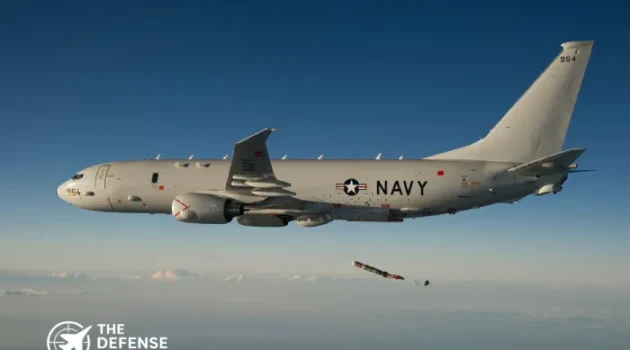
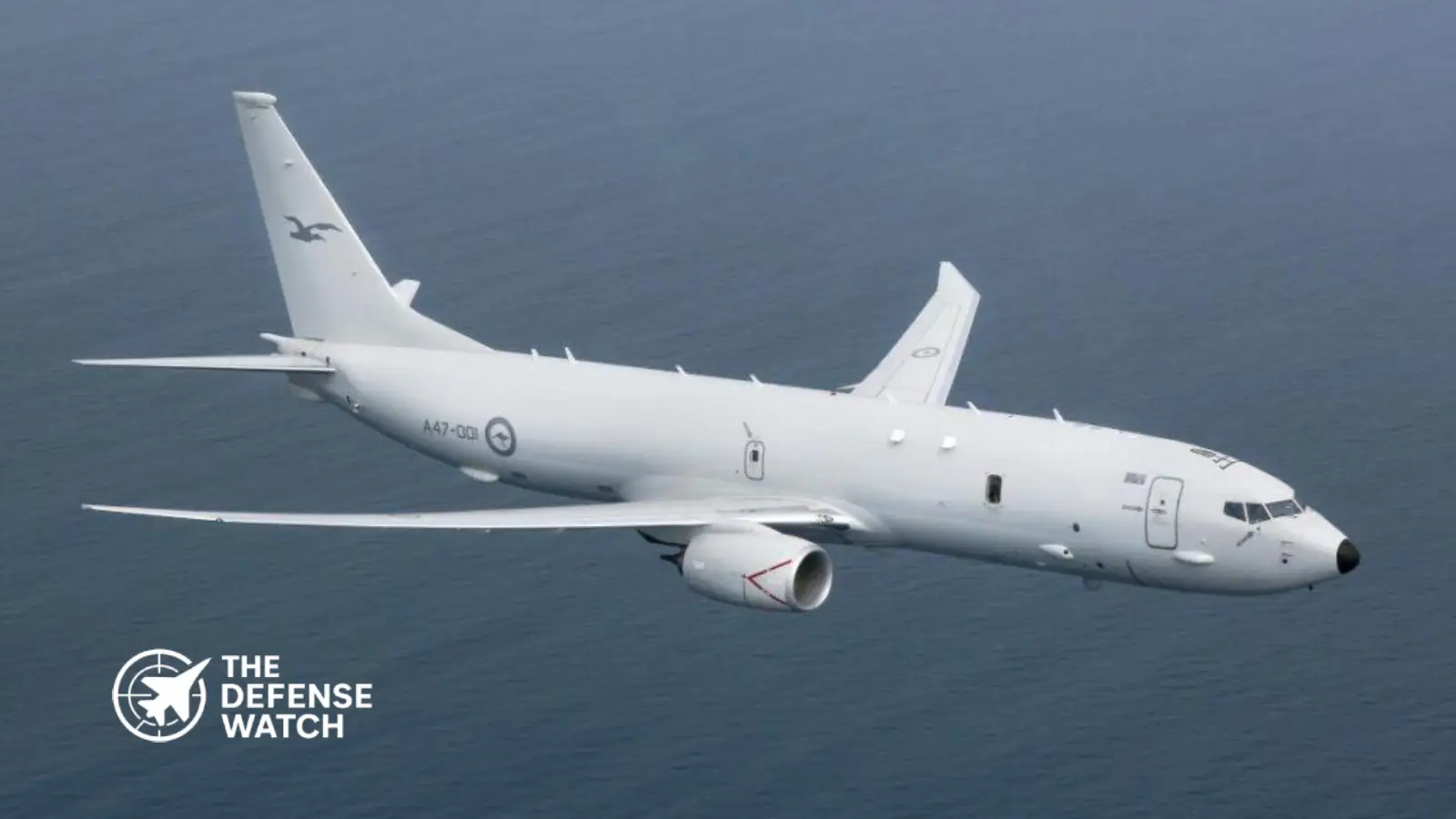
The P-8A Poseidon, derived from the Boeing 737-800 commercial airliner, provides a significant leap in performance over legacy maritime patrol platforms. Key specifications include:
- Crew: 9 (2 flight crew + 7 mission specialists)
- Engines: 2 × CFM56-7B turbofans (27,300 lbf thrust each)
- Maximum Speed: 490 knots
- Ceiling: 41,000 feet
- Range: Over 1,200 nautical miles radius with 4+ hours on station
- Sensors: AN/APY-10 multi-mode radar, MX-20HD electro-optical/infrared turret, AN/AAQ-2(V) acoustic processing system, and advanced electronic support measures
- Armament: Internal bays for Mk 54 lightweight torpedoes (weapons not included in initial Danish package)
These features enable high-altitude, long-endurance patrols with superior sensor fusion for detecting submerged and surface threats.
Capability P-8A Poseidon Advantage Altitude & Speed Operates above weather and commercial traffic for broader sensor coverage Sensor Suite Integrated radar, acoustics, and EO/IR for multi-domain maritime domain awareness Endurance Extended loiter time over remote Arctic areas Interoperability NATO-compatible data links for shared operational picture Strategic Context: The GIUK Gap and Russian Submarine Threat
The acquisition directly supports NATO’s focus on the Greenland-Iceland-United Kingdom (GIUK) gap, a critical chokepoint for Russian submarines transiting from the Kola Peninsula into the Atlantic. Denmark’s responsibilities for Greenland and the Faroe Islands place it at the forefront of monitoring these expansive maritime domains, where traditional assets struggle to maintain continuous presence.
(adsbygoogle = window.adsbygoogle || []).push({});Chief of Defence General Michael Wiggers Hyldgaard highlighted the need for long-range information gathering to defend the entire Kingdom of Denmark. The P-8A will complement existing assets and reduce dependence on allied aircraft for routine patrols.
Analysis: Implications for U.S. and NATO Strategy
This procurement strengthens NATO’s collective ASW posture in the North Atlantic at a time when Russian undersea activity has increased. For the United States, it bolsters a key ally’s capabilities while promoting interoperability across the P-8 operator community, which includes the U.S. Navy, UK, Norway, Australia, and others. Shared maintenance and training arrangements could emerge, enhancing overall alliance efficiency.
Operationally, the P-8A’s high-altitude operations and advanced acoustics offer advantages in the challenging Arctic environment, though cold-weather performance and logistical support in remote areas present technical hurdles that Denmark and Boeing/Terma will need to address through their existing MoU for potential local MRO capabilities.
From a U.S. perspective, the sale reinforces American defense exports and industrial base while advancing shared security interests without direct American forward presence. It also signals to adversaries that NATO members are investing in high-end capabilities to close surveillance gaps.
Future Outlook and Potential Expansion
Denmark’s initial two-aircraft fleet provides a foundational capability, with potential for growth to three or more depending on availability requirements for training, maintenance, and sustained operations. Integration with NATO command structures and data-sharing networks will be key to maximizing effectiveness.
(adsbygoogle = window.adsbygoogle || []).push({});The program also includes significant support elements such as training, logistics, and systems like the AN/APY-10 radar and acoustic processors, ensuring rapid operational readiness.